
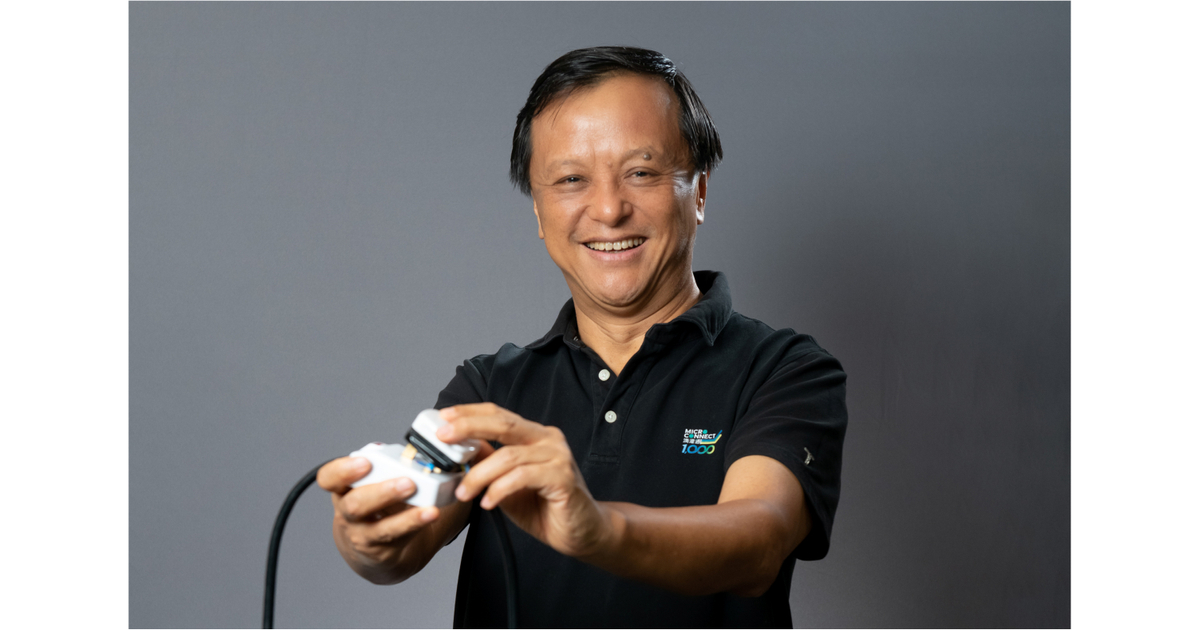
Charles Li is renowned as a pioneer within Asia’s financial markets. Having started his working life as a teenager in the oilfields of north-eastern China, it was in the 1990s that he emerged as an up-and-coming lawyer on the Wall Street scene, before further rising to serve in leadership roles at international banks, Merrill Lynch and JPMorgan.
But it is perhaps his service from 2010 as chief executive of Hong Kong Exchanges and Clearing (HKEX) that solidified his status within the region’s capital markets. He orchestrated a number of strategic initiatives that would transform Hong Kong’s position as a truly international finance hub, including the bourse’s acquisition of the London Metal Exchange (LME) in 2012, and the introduction of key listing reforms in 2018.
While he may have retired from the stock exchange in 2020, the sixty-something football fanatic is far from sitting on the sidelines. In fact, following his successful introduction of the Stock Connect cross-border trading schemes in 2014 and Bond Connect in 2017, he is set to score a hat-trick through the launch of his new consumer-focussed vision: Micro Connect.
Founded in early 2021 alongside his contemporary, Gary Zhang, the digitally forward Hong Kong and Shenzhen-based firm has a clear objective: to alter China’s financial ecosystem through a new asset class for trade and investment – daily revenue contracts (DRCs).
In line with the market’s ambition to deliver ‘Common Prosperity’, Micro Connect seeks to identify quality investment opportunities in China’s vibrant – but crucially, underserved – micro, small and medium enterprise (MSME) economy. Its ultimate aim? To connect global capital with China’s consumer cash flow.
So far, the firm has invested in 2,300 brick-and-mortar stores in 164 cities, across 168 sub-sectors ranging from food and beverage (F&B) to culture and sports, and it is cultivating a proprietary data platform. With a live US dollar-denominated fund, and a recently acquired licence to operate a Financial Assets Exchange in Macau, it plans to invest in over 500,000 shops over the next five years.
FA: How did you conceive of the idea for Micro Connect, alongside Zhang?
CL: Gary and I have been friends for a quarter of a century now. We met in Tianjin back in the mid-1990s, during the early days of red chip IPOs. Over the years, we’ve formed a habit of getting together to discuss projects and pick up ideas.
 Although we pursued quite distinct career journeys, we kept in touch. While I was involved in landmark deals at HKEX, Gary was involved in exciting projects related to biotech and Belt and Road. We are both adventure-seeking individuals.
Towards the end of my tenure at HKEX, I started considering what to do next. I bounced around ideas with a few close contacts that I trusted and during our spare time, we began exploring business proposals.
The underlying theme was clear: we wanted to find a way to leverage China’s digital progress to expand beyond the financing available via traditional markets, to support the “little guys” – China’s mom-and-pop shops, its MSMEs, which is where real money can be made.
 It was at this point that I started to involve Gary in periodical Zoom calls. We were right in the middle of the pandemic and things developed quite rapidly. As Covid-19 meant that we couldn’t go to an office or go out to eat, we would hike together in the mountains. We became quite committed to this activity and as we spent more time discussing the idea behind Micro Connect, we began to think “this is going to work, this is going to be very new”.
In 4Q20, I departed the exchange and embarked on setting things up. I camped out in Gary’s office for a few weeks before renting a small space on the 29th floor of Two Exchange Square. It started from there.
FA: Would Micro Connect have been able to progress from concept to fruition at speed if it weren’t for the pandemic?
CL: The pandemic was not a good thing. But without it, we wouldn’t have been able to materialise our concept so quickly. The early stages required us to talk to local chains and franchises on the ground in China.
In “normal” times, we would have had to travel to conduct the usual business formalities with brand founders in person. But the pandemic facilitated quick, virtual introductions.
We were able to execute business quickly and to implement an important feedback loop. We tested and flooded out what didn’t work, and solidified what did. The pandemic accelerated the start-up’s progress by at least a couple of years.
FA: You published a white paper identifying China’s consumer economy as accounting for 60% of the market’s GDP. Yet, the segment is massively underserved. What opportunity does Micro Connect seek to address?
CL: Our data and intelligence supports that Micro Connect will contribute to the development of China’s MSME sector from an economic perspective – by facilitating investment and offering returns to investors, as well as through social impact.
Working in the financial sector, we had not really felt the harsh realities of the “real economy”, which is propped up by MSMEs. Despite constituting a vital component of the economy, these have always been kept from the core financial services offered by Wall Street. Equally, China’s blue ocean of opportunity is not easily accessible by global capital.
Typically, the largest source of business funding comes from banks and the fixed income universe. But the very nature of fixed income is based on “fixed” or limited risk, so it doesn’t sit well with the high-volatility, high-risk nature of China’s vast consumer economy. This has led to a gaping chasm between the world’s biggest source of capital, and the largest potential source of returns. It is a divide that can only be addressed through digitalisation – by exploring digital synergies that can help close the gap.
Micro Connect’s role aims to “neutralise” the equity pool between these entities. Instead of pursuing a traditional finance path involving shareholders, we enable a kind of mutual equity pool where investment is made into small little businesses and small cash flows. This equity-like funding is much smaller than the offerings of the fixed income space. But the model we propose offers secondary potential – bigger players can become involved at a later stage.

We operate as a vehicle that can facilitate equity investment from the middle – it can protect external investors from excessive risk exposure and instead, absorb risk directly. We take on the risk and enjoy the high returns. Meanwhile, investors pay cash for limited risk and return, which allows capital to flow immediately back into the business in a cyclical manner. This cycle brings benefits – it shields banks from risk, so there’s no need to charge small businesses high fees.
Diversification helps mitigate our own risk. Micro Connect aims to invest in many MSMEs, so that while individually, these businesses may be considered unbankable or may be subject to a 30% failure rate, when considered as a whole, overall risk exposure is low.
The concept is similar to the Shanghai-Hong Kong Connect and the Shanghai-Shenzhen Connect. We aim to connect micro businesses with the global economy – hence “Micro Connect”. But the key point here is the digitally forward nature of China’s economy. It enables us to make a connection.
FA: You’re targeting China’s MSME population of digital natives. How exactly did you connect with domestic stores so quickly?
CL: Following our formal launch in August 2021, it took us four months to do our first deal and to ascertain whether our concept really worked. In 1Q22 we did another 100, and by September, we’d hit the 1,000 mark. At the end of 2022 we exceeded 2000 deals and the business continues to grow rapidly.
While Gary and I conceptualised the business, one of the most important partners is Li Hui (Ramon Li), who joined as China CEO. While we provide the air cover, ammunition, radar services and GPS surveillance, he’s the one who commands the troops on the ground. As former chief development officer at McDonald’s China, he knows exactly how China-based brands operate.
FA: Why hasn’t this been done before and why doesn’t a traditional investment model fit?
CL: The digitalisation taking place in China means that we are able to fundamentally change the way we invest in the market.

 The traditional equity investment model involves lending based on a commitment to pay back. This involves risk, and often, equity investors team up with a business for the long-haul. Businesses need to become hugely successful before an equity share can become worth something. It’s a long-term game. So, if an investor considers a pool of MSMEs, what’s the point of becoming a shareholder? Being a shareholder means that you can only distribute profit after tax, and to do this, you need to pay an accountant to process your profit correctly. Once this is complete, there’s little left of it to justify the trouble and risk involved.
This is why traditional products don’t fit with China’s MSME market and why we’ve developed a new investment system: DRCs. DRCs enable access to a very liquid, moving market. Daily recovery is key and means that we can exit our positions every day and reinvest as we see fit. The churning of capital ensures that the MSME owners experience reasonable, tangible returns that they can afford. When it comes to signing the contracts, we can do so in batches and can collect daily revenue in real time.
FA: What kind of returns are you targeting?
CL: With some variation, we charge 13-14% per business to take on their “equity risk” for around three to four years. For business owners, this is great – if something goes wrong, they don’t have to pay us back, but due to the short-term nature of our investment, if they become hugely successful, they’re not tied to us over the longer term.
What’s the draw for the investor? Well, 13% returns over a 3-4 year period is pretty decent. But what’s even better is that, with daily returns, the cash can be reinvested immediately into a wider pool. In aggregate, this means an investor is actually getting something closer to 25-28% in returns.If this can be maintained, an investor will make a 25% every day, every year.
For the store owner, the investee, they can open another shop and pass on the message of success. This opens up the Micro Connect universe to a wider pool and it’s win-win. It breaks the zero-sum game of traditional finance.
FA: You propose a new operating system, the Micro Star. Can you talk us through why the Micro Connect model targets chain stores?
CL: Our Micro Star model requires that we invest in chain stores. By investing in stores that are already …operationally successful, we can partly de-risk our capital. The Chinese expression, 顺藤摸瓜, “follow the vine” comes to mind.

The Micro Star, Source: Micro Connect
There are certain plants that rely on vines as support systems, such as melons. We choose to invest in the melons and not the vine. Stores that operate as part of a chain or franchise automatically have a better chance of success. They can rely on already-established supply chains and control systems.
We’ve identified more than 168 sectors for investment. We have already worked with more than 159 brands and chains, and we’re in negotiations with over 1,200 others. China’s MSME universe is vast and within each sector, is a sub-sector. The beauty of the chain model is that the shops and brands themselves do the work.
We’re just the ones putting the money in the melons. We facilitate the capital injections and extractions, as needed, but they’ve already established their brand, they have real estate, a management team and a collections system. They’re up and running.
Once these firms have invested in the vines, it can be challenging for them to secure more capital to establish more shops. The more shops you have, the greater economy of scale you achieve, but capital-full shops are capital heavy. We facilitate capital recycling, which is the most difficult part.
The concept of chains or franchises in China differs to that of advanced economies. In the US, Japan and Europe, there are fewer recognised franchises, but they are larger in number – think McDonald’s or 7-Eleven. It’s the opposite in China.
China is a huge society and has a diverse economy. There are many more different chains, but most only have a dozen or so individual shops, maximum. So, the capital we provide is very important, because if somebody can consistently fund their shop investment, then they can grow.
Elsewhere, you’d establish 100 or so shops before pursuing an IPO, or before you could attract interest from a large PE firm – you have to demonstrate ability to grow. But in China, accelerated growth potential is less of a concern. If you’re a hot pot brand, you might be very successful in the cool climate of Henan province, but you might not succeed elsewhere.
But if there is consistent capital, you can open shops and explore natural growth. You might want to consider offering new tastes, new branding, renovation. The calculus has the capacity to continue.
FA: Micro Connect is expanding at pace: you’re aiming for 500,000 investments over the next five years. How will you be able to keep on top of 500,000 DRCs?
CL: As we need to collect money daily, our fingers need to be directly on the pulse of every company we’re invested in. To do this, we set a digital device alongside the store which is already reporting daily collections to its headquarters. Digital information is key to cash collection control.
 Today, we have already deployed RMB757 million ($113 million) and the average size per investment is RMB350,000. We are everywhere in China, from the coastal areas to inland in Chongqing and Sichuan, and even Lhasa, in Tibet. To measure the success of an investment, we look at daily cash yield (DCY), which shows the daily return on every RMB10,000 of investment.
 What’s really valuable is the real time view we have across China as an economy – we have visibility across different sectors, provinces and demographics. We can even rank performance by shop. If you want to know what’s going on day-to-day in China, we have the granular data. It’s in this arena that we have big plans around the development of a data repository.

But in terms of pace of growth, we are a team of 178 people, 133 of whom are based in Shenzhen. To succeed, we have to be smart and use automation. It’s really important to develop our own intelligence systems that offer metric comparison.
We screen targets via a 10-step process. We use an algorithm to review a business. Digital data collection informs our due diligence and if successful, a term sheet is approved and funding is provided. Everything is automated and algorithm-driven. It’s very digital on both ends.
FA: Could your business model be deployed outside of China?
CL: The model is currently best suited to China due to the market’s significant community of digital natives. Unless a company is completely digitalised at the store level, it is difficult for us to fund them and to have visibility across the business’s cash flows.
Traditional investment markets don’t fully understand the nature of Chinese finance. They use banking money to flood the retail system, and then make a spread on it. This is an effective business model and can be very profitable. However, its fundamental flaw is that it doesn’t involve investment – it’s all about extending credit and charging a risk-free interest spread.
This model means that investors benefit from the loans that they’ve helped to create, without any constraints on capital. From China’s regulatory perspective, this isn’t sustainable and enables potential for moral hazard. China sees those responsible for creating loan obligations, as needing to be disciplined through capital adequacy measures and regulatory liquidity and risk controls.
Meanwhile, our business model is regulatorily compliant because we create the assets with our own risk capital. If something goes wrong with the business we’ve invested in, we are the ones who face the repercussions. The risk cannot be transferred to the sovereign and seep into the domestic banking system.
If the big e-commerce companies in markets such as India or Southeast Asia take precedent from China’s burgeoning digital consumer market, they might succeed in developing an even more advanced consumer economy than the one we’re exploring with China, as they could develop and implement the necessary digital infrastructure with us, from scratch.
FA: You plan to expand the DRC asset universe – you’ve a US dollar-denominated fund and you’ve just secured a licence for a Macau-based exchange. What’s in the pipeline?
CL: The development of this asset class is dependent on investment demand from two groups. The first comprises fixed income investors who buy and hold cash flows and get paid a reasonably affordable fixed rate. They are the largest investor pool likely to participate in this new asset class. The other includes those institutional investors who would initially access our market through a traditional fund structure.
While open-end structures appeal to family offices and HNWIs, institutional LPs traditionally prefer a closed-end structure, similar to traditional PE funds. Our plan would be to manage institutional LP commitments and charge a fee and carry. We’re not quite at the stage of opening up to this community yet. This will happen when we have a portfolio of 40-100,000 investments.
Separately, we plan to attract specialist investors who are motivated by impact investment, ESG or their own particular requirements. We can offer bespoke investment portfolios. Because our daily cash flows are from individual shops, we can review individual data and curate investor exposure accordingly. In order to satisfy future bespoke demand, we need to have a system in place in order to track, trade and settle transparently. This is why we’re building a blockchain-enabled exchange, licensed in Macau. It will handle investment demand as our portfolio grows.
The firm’s capacity to contribute to China’s social landscape through impact investment is enormous and is something that would be particularly rewarding at this stage of my career.
¬ Haymarket Media Limited. All rights reserved.


Discussion about this post