
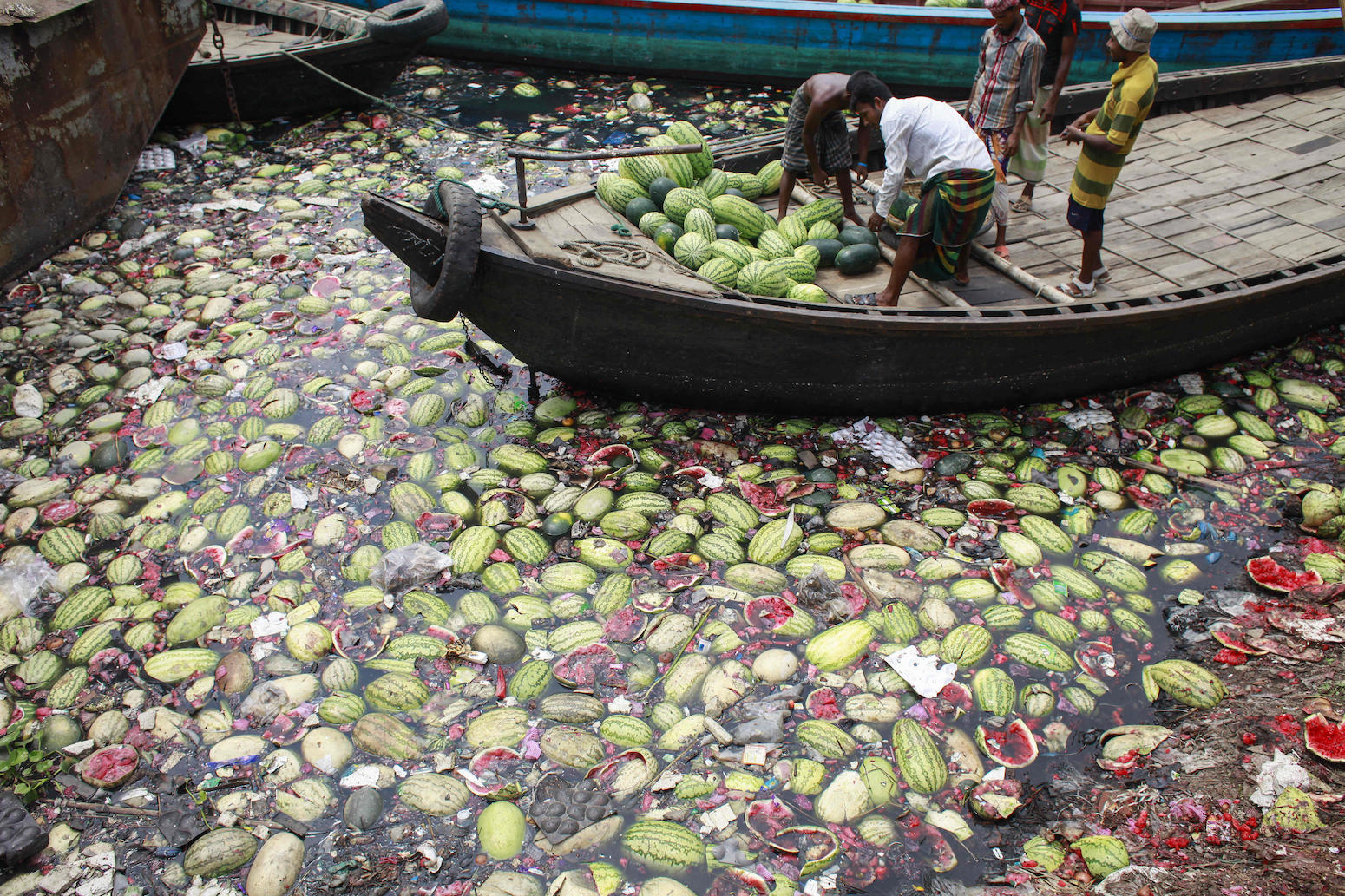
• Home
  • Insight
  • Blog
  • Business
  • Entertainment
  • Health
  • Politics
  • Shop
    • Gift Shop
    • Value Shop
    • Store
    • Bargain Shop
    • Discount
  • Sports
  • Tech
  • Travel
  • USA
  • Video
  • World
    • Asia
    • Africa
    • South America
    • North America
    • Europe
    • Oceania
Thursday, July 30, 2026
No Result
View All Result
Subscribe Now
  • Home
  • Insight
  • Blog
  • Business
  • Entertainment
  • Health
  • Politics
  • Shop
    • Gift Shop
    • Value Shop
    • Store
    • Bargain Shop
    • Discount
  • Sports
  • Tech
  • Travel
  • USA
    TX Rep. Brandon Gill Mocks James Talarico Over Fauci Action Figure Post

    TX Rep. Brandon Gill Mocks James Talarico Over Fauci Action Figure Post

    NBA players are ‘being taught’ to flop

    NBA players are ‘being taught’ to flop

    Industry was warned for years about chemical ‘runaway’ dangers. Then came near-catastrophe in O.C.

    Industry was warned for years about chemical ‘runaway’ dangers. Then came near-catastrophe in O.C.

    Trump administration seeks government-wide NDAs to stop leaks : NPR

    Trump administration seeks government-wide NDAs to stop leaks : NPR

    Dog discharges shotgun inside truck, striking woman at Nebraska traffic light

    Dog discharges shotgun inside truck, striking woman at Nebraska traffic light

    Toshifumi Suzuki, Japan’s ‘God’ of Convenience Stores, Dies at 93

    Toshifumi Suzuki, Japan’s ‘God’ of Convenience Stores, Dies at 93

     Judge Sanctioned CoreCivic for Destroying Video in ICE Death Suit

     Judge Sanctioned CoreCivic for Destroying Video in ICE Death Suit

    Suspect dead after opening fire near White House security checkpoint, Secret Service says

    Suspect dead after opening fire near White House security checkpoint, Secret Service says

    Trump trashes Colbert’s high-rated finale as “no ratings”

    Trump trashes Colbert’s high-rated finale as “no ratings”

  • Video
  • World
    • Asia
    • Africa
    • South America
    • North America
    • Europe
    • Oceania
The Insight Post
  • Home
  • Insight
  • Blog
  • Business
  • Entertainment
  • Health
  • Politics
  • Shop
    • Gift Shop
    • Value Shop
    • Store
    • Bargain Shop
    • Discount
  • Sports
  • Tech
  • Travel
  • USA
    TX Rep. Brandon Gill Mocks James Talarico Over Fauci Action Figure Post

    TX Rep. Brandon Gill Mocks James Talarico Over Fauci Action Figure Post

    NBA players are ‘being taught’ to flop

    NBA players are ‘being taught’ to flop

    Industry was warned for years about chemical ‘runaway’ dangers. Then came near-catastrophe in O.C.

    Industry was warned for years about chemical ‘runaway’ dangers. Then came near-catastrophe in O.C.

    Trump administration seeks government-wide NDAs to stop leaks : NPR

    Trump administration seeks government-wide NDAs to stop leaks : NPR

    Dog discharges shotgun inside truck, striking woman at Nebraska traffic light

    Dog discharges shotgun inside truck, striking woman at Nebraska traffic light

    Toshifumi Suzuki, Japan’s ‘God’ of Convenience Stores, Dies at 93

    Toshifumi Suzuki, Japan’s ‘God’ of Convenience Stores, Dies at 93

     Judge Sanctioned CoreCivic for Destroying Video in ICE Death Suit

     Judge Sanctioned CoreCivic for Destroying Video in ICE Death Suit

    Suspect dead after opening fire near White House security checkpoint, Secret Service says

    Suspect dead after opening fire near White House security checkpoint, Secret Service says

    Trump trashes Colbert’s high-rated finale as “no ratings”

    Trump trashes Colbert’s high-rated finale as “no ratings”

  • Video
  • World
    • Asia
    • Africa
    • South America
    • North America
    • Europe
    • Oceania
No Result
View All Result
No Result
View All Result
Home Energy

Better refrigeration could avoid almost 2bn tonnes of CO2 per year from food loss

by Theinsightpost
June 6, 2024
in Energy
0 0
0
Better refrigeration could avoid almost 2bn tonnes of CO2 per year from food loss

More consistent refrigeration of foods as they move from one part of the supply chain to another could cut almost 2bn tonnes of greenhouse gas emissions from food loss each year, according to a new study. 

Around one-third of all food produced goes to waste, producing climate-warming greenhouse gases as it rots. 

New research, published in Environmental Research Letters, finds that poorly temperature-controlled food supply chains could be causing up to 620m tonnes of food losses each year. 

This loss results in 1.8bn tonnes of CO2-equivalent (GtCO2e) emissions – more than three times the annual emissions of Canada. 

Using more refrigeration when food is processed and transported could more than halve the food-loss emissions in south and south-east Asia, the study says. 

In addition, shortening food supply chains could significantly reduce emissions and prevent food loss around the world, the study finds. 

A scientist who was not involved in the research tells Carbon Brief that the results “reflect a worrying reality” on food waste, but notes that the findings are “uncertain”. 

The lead author of the study says that there are caveats to some of the findings and adds that not every region can, or should, base their food supply system on refrigeration. 

Wasted food

Along a supply chain that sees food grown, processed, transported and consumed, around one-third of all food goes to waste. 

If it were a country, this food waste would be the third-largest source of greenhouse gas emissions in the world, according to the UN Food and Agriculture Organization. 

A 2023 study also found that greenhouse gases from food loss and waste make up almost half of all food-system emissions.

Food loss refers to all of the edible parts of food that are thrown away in the early parts of the supply chain, according to a report from the UN Environment Programme.

This includes vegetables that rot in fields before being picked, crops hit by disease and meat that spoils due to lack of transport refrigeration. 

Discarded pile of rotting apples. Credit: Photochur / Alamy Stock Photo

Food waste, on the other hand, is discarded food that is not consumed by people at a retail, food service or household level. 

Food loss and waste produces methane as it rots in landfills or dump sites. Emissions from food loss also stem from the land-use change, energy and resources required to grow the food in the first place, particularly animal products. 

The new study examines whether more consistent access to refrigeration throughout the supply chain could impact food loss – and the resulting greenhouse gas emissions – for different food types around the world. 

Alongside the benefits of refrigeration, the study finds that supplying foods more locally can greatly reduce food losses. 

This was the most surprising finding, according to Aaron Friedman-Heiman, the lead author of the study. Friedman-Heiman, a recent graduate from the school for environment and sustainability at the University of Michigan, tells Carbon Brief: 

“The thing that shocked me the most was actually how comparable shortened food supply chains were to technologically optimised food supply chains. 

“We can make all these systems really efficient, but also if we just get rid of a lot of the steps, that is another kind of way of optimising these systems.” 

A truck with a refrigerated trailer in Salo, Finland in May 2022.
A truck with a refrigerated trailer in Salo, Finland in May 2022. Credit: Taina Sohlman / Alamy Stock Photo.

Prof Ian Vázquez-Rowe, an engineering professor at the Pontifical Catholic University of Peru who was not involved in the research, says that the study is “thorough” and relevant, “especially in countries and households with poor refrigeration systems”. He tells Carbon Brief: 

“The results are probably quite uncertain, as in most planetary-based estimations, but they reflect a worrying reality: food supply chains are inefficient, especially in emerging and developing nations, and this leads to higher amounts of food loss and waste in the agri-food sector.” 

Estimating food loss

The researchers developed a model to see whether consistent access to refrigeration could impact food losses and greenhouse gas emissions for seven groups of food: seafood; fruit and vegetable; oilseeds and pulses; root and tuber crops; meat; dairy; and cereals.

The study focuses solely on food that is lost between harvesting and reaching a supermarket shelf. It does not look at food waste, which is the food discarded in shops, restaurants and households. 

The researchers look at the improvements that could occur with better refrigeration throughout the food supply chain. They also look at the impact of making food more locally available, thereby shortening these supply chains. 

The study focuses on seven regions around the world: Europe, “industrialised Asia” (countries such as China), Latin America, north Africa and central Asia, North America and Oceania, south and south-east Asia and sub-Saharan Africa.

For each combination of region and food type, the researchers investigate three scenarios: a “baseline” scenario, using current loss rates; an “optimised” scenario, using minimum loss rates with added refrigeration capacity; and a “short” scenario, using current loss rates across a reduced supply chain. 

The chart below outlines the baseline and optimised scenarios for food loss and the resulting greenhouse gas emissions. It shows that although fruit and vegetable losses are largest in terms of weight, meat losses are the source of the largest emissions by far.
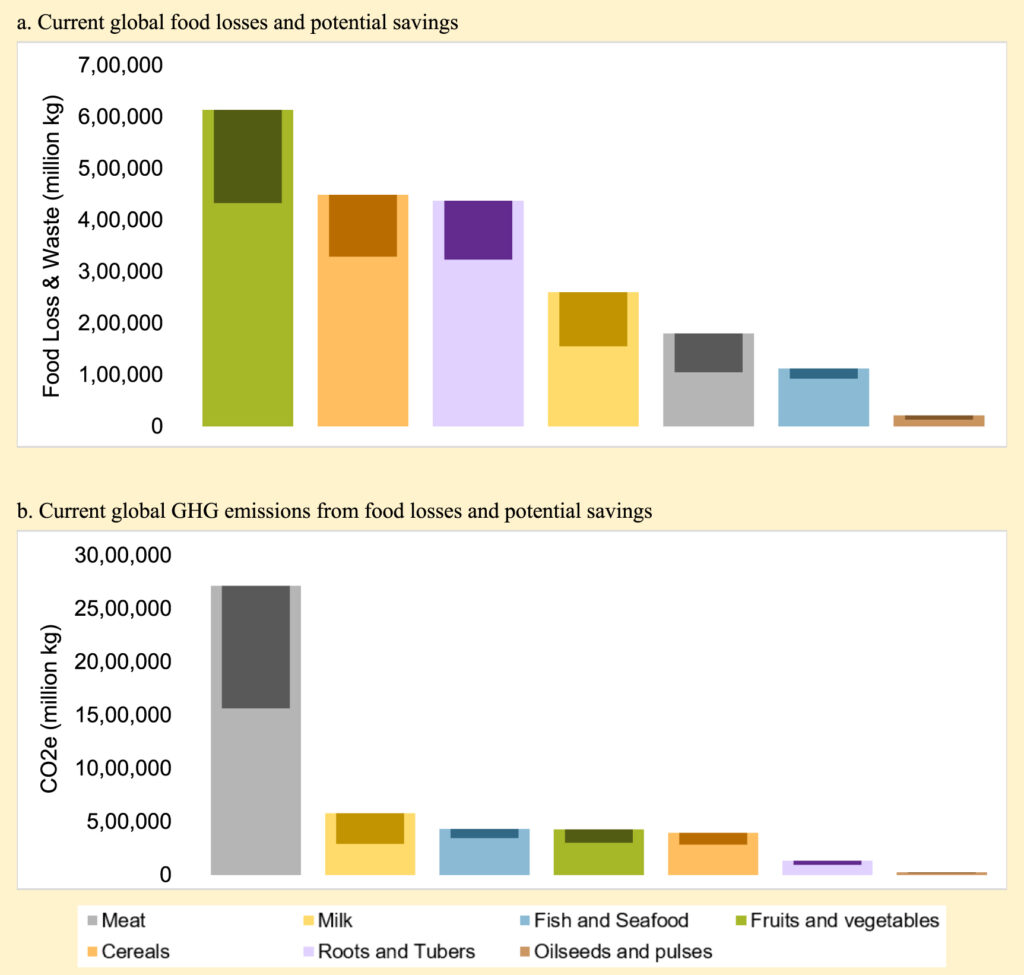
Global food loss in millions of kilograms (top) and the resulting greenhouse gas emissions in millions of kilograms of CO2e (bottom) modelled in two scenarios: current (lighter block) and better refrigerated (darker block) food supply chains. The study focuses on seven food groups: meat (grey), milk (yellow), fish and seafood (blue), fruits and vegetables (green), cereals (orange), roots and tubers (purple), and oilseeds and pulses (brown). Source: Friedman-Heiman & Miller (2024)

Combining refrigeration and shorter supply chains

Sub-Saharan Africa and south and south-east Asia would stand to see the biggest reductions in food loss and related greenhouse gas emissions with better refrigeration and localised supply chains, the study finds. 

For example, improved refrigeration could save more than 100m tonnes of fruit and vegetables each year in south and south-east Asia. It could also reduce overall food loss in the region by 45% and more than halve the associated emissions. In sub-Saharan Africa, it could cut these emissions by two-thirds.

Globally, better refrigeration of meat could cut emissions linked to meat loss by more than 40%. 

Meat accounts for more than half (2.7 gigatonnes) of food loss and waste greenhouse gas emissions – despite making up less than 10% of global food loss and waste, the study says. 

Drone panoramic aerial view of forest trees next to deforested agricultural land in Mato Grosso, Brazil.
Drone panoramic aerial view of forest trees next to deforested agricultural land in Mato Grosso, Brazil. Credit: Paralaxis / Alamy Stock Photo.

The benefits of refrigeration in reducing food loss are more modest in global north countries with existing temperature-controlled food supply chains. 

The study finds that, on a global level, making food supply chains more local can have a bigger impact on saving food than improving refrigeration. 

Localised supply chains could reduce emissions from rotting meat in industrialised countries by more than 300m tonnes of CO2e emissions each year, the study adds. 

Combining the two solutions – shorter supply chains and better refrigeration – can help to reduce food losses and slash the energy burden and emissions from refrigeration. 

Other factors

Vázquez-Rowe says that the study findings are “plausible” and that they “reflect a structural problem of food systems”. But, he adds: 

“There is a lack of uncertainty and sensitivity analyses, which does not allow for a full analysis of the certainty of the results they provide.” 

The authors acknowledge other limitations in the study, such as not considering the emissions from refrigerators in their calculations.

Previous research indicates that refrigeration may even increase food emissions through higher energy use and the dietary shifts that refrigeration allows.

The study also does not consider various social, cultural, political, nutritional and economic factors that influence food systems.

Areas with unreliable energy systems may not want to – or may not be able to – rely more heavily on refrigeration technologies. Friedman-Heiman explains: 

“If a region doesn’t have stable energy infrastructure, then the idea of basing a food system off of refrigeration is actually maybe less sustainable in terms of food loss and waste than what they currently have.” 

He is hopeful researchers, policymakers and others in the food industry can use the model and further the research on a wider level. He tells Carbon Brief: 

“I would love for this model to incorporate regional energy grids and what that impact might be in terms of changing the emissions equation…[alongside] pitting the food savings against the refrigeration [emissions].”

The study also acknowledges that shorter supply chains are not always feasible, depending on geographical location and the seasonality of different foods. 

Friedman-Heiman. A. & Miller, S. A. (2024) The impact of refrigeration on food losses and associated greenhouse gas emissions throughout the supply chain, Environmental Research Letters, doi:10.1088/1748-9326/ad4c7b

Sharelines from this story

ShareTweetSend
Previous Post

Best of OOH on show in Hong Kong

Next Post

Putin plotting to unleash chaos at Paris Olympics warns ex-FBI agent | World | News

Related News

World falling short on 22 of 23 nature targets for 2030, says draft UN report
Energy

World falling short on 22 of 23 nature targets for 2030, says draft UN report

July 30, 2026
Q&A: Can China turn hydrogen into its next clean-energy industry?
Energy

Q&A: Can China turn hydrogen into its next clean-energy industry?

May 27, 2026
Analysis: China’s new carbon metric leaves Germany-sized gap in its emissions
Energy

Analysis: China’s new carbon metric leaves Germany-sized gap in its emissions

May 26, 2026
Revealed: Floods have forced at least 67 closures at NHS hospitals since 2021
Energy

Revealed: Floods have forced at least 67 closures at NHS hospitals since 2021

May 25, 2026
Next Post
Putin plotting to unleash chaos at Paris Olympics warns ex-FBI agent | World | News

Putin plotting to unleash chaos at Paris Olympics warns ex-FBI agent | World | News

Discussion about this post

Subscribe To Our Newsletters

    Customer Support


    1251 Wilcrest Drive
    Houston, Texas
    77042 USA
    Call-832.795.1420
    e-mail – news@theinsightpost.com

    Subscribe To Our Newsletters

      Categories

      • Africa
      • Africa-East
      • African Sports
      • American Sports
      • Arts
      • Asia
      • Australia
      • Business
      • Business Asia
      • Business- Africa
      • Canada
      • Defense
      • Education
      • Egypt
      • Energy
      • Entertainment
      • Europe
      • European Soccer
      • Finance
      • Germany
      • Ghana
      • Health
      • Insight
      • International
      • Investing
      • Japan
      • Latest Headlines
      • Life & Living
      • Markets
      • Mobile
      • Movies
      • New Zealand
      • Nigeria
      • Politics
      • Scholarships
      • Science
      • South Africa
      • South America
      • Sports
      • Tech
      • Travel
      • UK
      • USA
      • Weather
      • World
      No Result
      View All Result

      Recent News

      US Navy to overhaul torpedo stockpile under new two-war strategy

      US Navy to overhaul torpedo stockpile under new two-war strategy

      July 30, 2026
      Free Cloud Computing Course | AWS Re/Start Program 

      Free Cloud Computing Course | AWS Re/Start Program 

      July 30, 2026
      Thirty Years Later

      Thirty Years Later

      July 30, 2026
      Announcing Codemagic Patch: an open-source CodePush rebuild for React Native

      Announcing Codemagic Patch: an open-source CodePush rebuild for React Native

      July 30, 2026
      • Home
      • Advertise With Us
      • About Us
      • Corporate
      • Consumer Rewards
      • Forum
      • Privacy Policy
      • Social Trends

      Theinsightpost ©2026 | All Rights Reserved. Theinsightpost is an Elnegy LLC company, registered in Texas, USA

      Welcome Back!

      Login to your account below

      Forgotten Password?

      Retrieve your password

      Please enter your username or email address to reset your password.

      Log In

      Add New Playlist

      We are using cookies to give you the best experience on our website.

      You can find out more about which cookies we are using or switch them off in .

      No Result
      View All Result
      • Home
      • Insight
      • Blog
      • Business
      • Entertainment
      • Health
      • Politics
      • Shop
        • Gift Shop
        • Value Shop
        • Store
        • Bargain Shop
        • Discount
      • Sports
      • Tech
      • Travel
      • USA
      • Video
      • World
        • Asia
        • Africa
        • South America
        • North America
        • Europe
        • Oceania

      Theinsightpost ©2026 | All Rights Reserved. Theinsightpost is an Elnegy LLC company, registered in Texas, USA

      The Insight Post
      Powered by  GDPR Cookie Compliance
      Privacy Overview

      This website uses cookies so that we can provide you with the best user experience possible. Cookie information is stored in your browser and performs functions such as recognising you when you return to our website and helping our team to understand which sections of the website you find most interesting and useful.

      Strictly Necessary Cookies

      Strictly Necessary Cookie should be enabled at all times so that we can save your preferences for cookie settings.

      Cookie Policy

      More information about our Cookie Policy