
• Home
  • Insight
  • Blog
  • Business
  • Entertainment
  • Health
  • Politics
  • Shop
    • Gift Shop
    • Value Shop
    • Store
    • Bargain Shop
    • Discount
  • Sports
  • Tech
  • Travel
  • USA
  • Video
  • World
    • Asia
    • Africa
    • South America
    • North America
    • Europe
    • Oceania
Wednesday, October 7, 2026
No Result
View All Result
Subscribe Now
  • Home
  • Insight
  • Blog
  • Business
  • Entertainment
  • Health
  • Politics
  • Shop
    • Gift Shop
    • Value Shop
    • Store
    • Bargain Shop
    • Discount
  • Sports
  • Tech
  • Travel
  • USA

    Washington state man charged with helping Canadian mass shooter plan for attack

    Border Security, Public Safety, and American Sovereignty with Markwayne Mullin

    Students injured as NJ high school bleachers collapse in scary scene

    California man in incest case busted in Mexico; teen daughter rescued

    Cornell president calls gang rape allegations ‘deeply disturbing’ : NPR

    France’s violent student protests raise warning for America: ‘A cautionary tale’

    Birmingham’s WBHM Public Radio Station Forced to Use “Gulf of America”

    Eminem gets online backlash from fans over Kid Rock Christian album collab

    Trump leans into Iran war, admits it could cost Republicans the midterms

  • Video
  • World
    • Asia
    • Africa
    • South America
    • North America
    • Europe
    • Oceania
The Insight Post
  • Home
  • Insight
  • Blog
  • Business
  • Entertainment
  • Health
  • Politics
  • Shop
    • Gift Shop
    • Value Shop
    • Store
    • Bargain Shop
    • Discount
  • Sports
  • Tech
  • Travel
  • USA

    Washington state man charged with helping Canadian mass shooter plan for attack

    Border Security, Public Safety, and American Sovereignty with Markwayne Mullin

    Students injured as NJ high school bleachers collapse in scary scene

    California man in incest case busted in Mexico; teen daughter rescued

    Cornell president calls gang rape allegations ‘deeply disturbing’ : NPR

    France’s violent student protests raise warning for America: ‘A cautionary tale’

    Birmingham’s WBHM Public Radio Station Forced to Use “Gulf of America”

    Eminem gets online backlash from fans over Kid Rock Christian album collab

    Trump leans into Iran war, admits it could cost Republicans the midterms

  • Video
  • World
    • Asia
    • Africa
    • South America
    • North America
    • Europe
    • Oceania
No Result
View All Result
No Result
View All Result
Home Energy

Guest post: Why the recent slowdown in Arctic sea ice loss is only temporary

by Theinsightpost
August 19, 2025
in Energy
0 0
0
Guest post: Why the recent slowdown in Arctic sea ice loss is only temporary

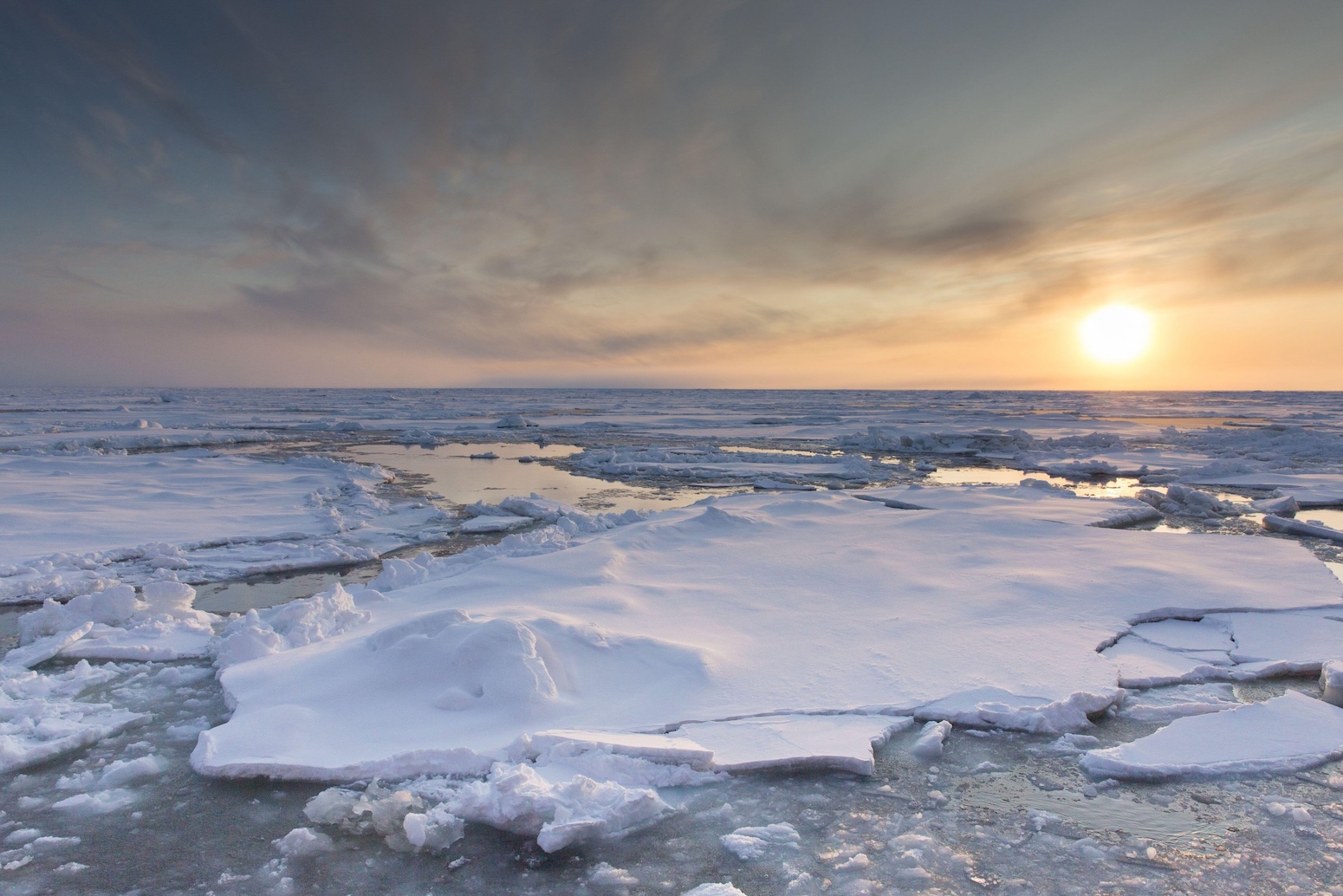
The retreat of sea ice in the Arctic has long been a prominent symbol of climate change.

Observations reveal that Arctic sea ice extent at the end of summer has halved, since satellite records began in the late 1970s.

Yet, since the late 2000s, the pace of Arctic sea ice loss has slowed markedly, with no statistically significant decline for about 20 years.

In new research, published in Geophysical Research Letters, my colleagues and I explore the reasons for the recent slowdown of Arctic sea ice – and turn to climate models to understand what might happen next.

Our findings show that, rather than being an unexpected or rare event, climate model simulations suggest we should expect periods like this to occur relatively frequently.

This current slowdown is likely caused by natural fluctuations of the climate system – just as they played a part in an acceleration of sea ice loss in the decades prior. 

Were it not for human-caused warming, it is likely that sea ice would have increased over this period.

According to our simulations, the slowdown could even last for another five or 10 years – even as the world continues to warm.

Widespread slowdown

The changes in the Arctic are one of the most clear and well-known indicators of a warming climate.

With the Arctic warming up to four times the rate of the global average, the region has lost more than 10,000 cubic kilometres of sea ice since the 1980s. (The volume of ice lost is roughly equivalent to 4bn Olympic swimming pools).

Arctic sea ice reached its smallest extent on record in September 2012, dwindling to 3.41m square kilometres (km2). This triggered discussions of when the Arctic might see its first “ice-free” summer, where sea ice extent drops below 1m km2.

Research has shown that human-caused warming is responsible for up to two-thirds of this decline, with the remainder down to natural fluctuations in the climate system, also known as “internal climate variability”.

Despite the record low of 2012, satellite data reveals a widespread slowdown in Arctic sea ice loss over the past two decades.

Climate model simulations of Arctic sea ice thickness and volume further reinforce these observations, indicating little or no significant decline over the past 15 years.

This data is laid out in the charts below, which show average sea ice extent in September (left) and for the whole year (middle), as well as how annual average sea ice volume differs from the long-term average (right). 

(September is typically the point in the year where sea ice reaches its annual minimum, at the end of the Arctic summer.)

The coloured lines indicate that the data originates from the National Snow and Ice Data Centre (NSIDC, orange), the Ocean and Sea Ice Satellite Application Facility (OSISAF, red) and the Pan-Arctic Ice Ocean Modeling and Assimilation System (PIOMAS, blue).

Arctic sea ice extent in September (left) and the annual-average (centre) observed by OSISAF (red) and NSIDC (orange) for the period 1979-2024. The right panel shows the estimated Arctic sea ice volume anomaly according to the PIOMAS model for the same period. This anomaly is relative to the 1979-2024 long-term average volume. Credit: England et al (2025).

These observational records show how the precipitous decline in sea ice seen over much of the satellite data has slowed since the late 2000s.

It also shows that the slowdown is not limited to summer months, but is occurring year-round. 

Our study is not the first to highlight this slowdown – several recent studies have also examined various aspects of this phenomenon. Meanwhile, a 2015 paper was remarkably prescient in suggesting such a slowdown could occur.

Is the slowdown surprising?

The loss of sea ice around the north pole is both a cause and effect of Arctic amplification – the term given to the rapid warming in the region.

Melting snow and ice reduces the reflectiveness, or “albedo”, of the Arctic’s surface, meaning less incoming sunlight is reflected back out to space. This causes greater warming and even more melting of ice and snow.

This “surface-albedo feedback” is one of several drivers of Arctic amplification.

Given global warming is caused by the continued rise in greenhouse gas emissions, it might seem puzzling – or even impossible – that Arctic sea ice loss could slow down. 

However, the recent generations of climate models used for the Coupled Model Intercomparison Project (CMIP) – the international modelling effort that feeds into the influential reports from the Intergovernmental Panel on Climate Change (IPCC) – illustrate why this might be happening.

Models from CMIP5 and CMIP6, which simulate the historical period and explore different future warming scenarios, indicate that slowdowns in Arctic sea ice loss lasting multiple decades are relatively common – happening in roughly 20% of model runs.

This is due to natural variability in the climate system, which can temporarily counteract decline of sea ice – even under high-emission scenarios. 

One way that climate scientists investigate natural variability is by running multiple simulations of a model, each with identical levels of human-caused emissions of carbon dioxide, aerosols and methane. These are known as “ensembles”.

Due to the chaotic nature of the climate system, which results in different phases of natural variability, the different model runs produce different outcomes – even if the long-term climate change signal from human activity remains constant.

Large ensembles help us to understand how to interpret the Earth’s observed climate record, which has been influenced by both human-induced climate change and natural variations. 

In our research, we examine how many individual model runs within the ensemble exhibit a similar or greater slowdown in sea ice loss than the observed record over 2005-24.

The models show that natural climate variability can accelerate sea ice loss, as seen during the dramatic record-lows in 2007 and 2012. However, this natural variability can also temporarily slow the longer-term downward trend. 

The primary suspects behind this multi-decade variability are natural fluctuations linked to the tropical Pacific and the North Atlantic, although the precise causes are yet to be quantified. 

For example, a shift from the positive, warm phase to the negative, cool phase of a natural cycle in the Interdecadal Pacific Oscillation is associated with bringing much cooler waters close to the North American coastline and into the Arctic. This could potentially lead to sea ice growth.

What might happen to Arctic sea ice cover next?

So how long could this current slowdown persist? 

Climate model simulations suggest the current slowdown might continue for another five or 10 years.

However, there is an important caveat: slowdowns like this often set the stage for faster declines later. 

Climate models suggest that when the slowdown inevitably ends, the rate of sea ice loss could rapidly accelerate. 

Thousands of simulations analysed in our research reveal that September sea ice loss ramps up at a rate of more than 500,000km2 per decade after prolonged periods of minimal sea ice loss. 

This would equate to more than 10% of current sea ice cover in September.

An analogy of Arctic sea ice extent behaving like a ball bouncing downhill – set out in a 2015 Carbon Brief article by Prof Ed Hawkins – is particularly apt here.

Just like the ball – which eventually reaches the bottom due to gravity, despite an erratic journey – Arctic sea ice loss may temporarily seem to defy expectations at present. 

Ultimately, however, sea ice loss will resume, reflecting the underlying human-induced warming trend.

While it may seem contradictory that Arctic sea ice loss can slow even as global temperatures climb, climate models clearly show that such periods are expected parts of climate variability. 

As a result, the recent slowdown in Arctic sea ice does not signal an end to climate change or lessen the urgency of cutting greenhouse gas emissions, if global goals are to be met.

While the current slowdown might persist for some years to come, when sea ice loss resumes, it could do so with renewed intensity.

England, M. R. et al. (2025) Minimal Arctic sea ice loss in the last 20 years, consistent with internal climate variability, Geophysical Research Letters, doi:10.1029/2025GL116175

ShareTweetSend
Previous Post

A tired teacher explains why they’re striking tomorrow

Next Post

Steve Keister Conjures Mythological Creatures from Clay, Wood, and Cardboard — Colossal

Related News

Energy

Analysis: Wind and solar save UK from gas imports worth £5.9bn during Hormuz crisis

September 30, 2026
Energy

Analysis: Lula presidency saved at least 20,000km2 of Brazilian Amazon since 2022

September 28, 2026
Energy

‘Concerning’ low sea ice persists as Antarctic hits third-lowest winter peak

September 25, 2026
Energy

Analysis: EVs are now nine times cheaper than petrol or diesel to drive in the UK 

September 24, 2026
Next Post
Steve Keister Conjures Mythological Creatures from Clay, Wood, and Cardboard — Colossal

Steve Keister Conjures Mythological Creatures from Clay, Wood, and Cardboard — Colossal

Discussion about this post

Subscribe To Our Newsletters

    Customer Support


    1251 Wilcrest Drive
    Houston, Texas
    77042 USA
    Call-832.795.1420
    e-mail – news@theinsightpost.com

    Subscribe To Our Newsletters

      Categories

      • Africa
      • Africa-East
      • African Sports
      • American Sports
      • Arts
      • Asia
      • Australia
      • Business
      • Business Asia
      • Business- Africa
      • Canada
      • Defense
      • Education
      • Egypt
      • Energy
      • Entertainment
      • Europe
      • European Soccer
      • Finance
      • Germany
      • Ghana
      • Health
      • Insight
      • International
      • Investing
      • Japan
      • Latest Headlines
      • Life & Living
      • Markets
      • Mobile
      • Movies
      • New Zealand
      • Nigeria
      • Politics
      • Scholarships
      • Science
      • South Africa
      • South America
      • Sports
      • Tech
      • Travel
      • UK
      • USA
      • Weather
      • World
      No Result
      View All Result

      Recent News

      Boxing legend Mike Tyson talks going to juvie and trading cigarettes for cookies as a young boy

      October 7, 2026

      Hogbetsotso 2026 to promote tourism, local businesses

      October 7, 2026

      Mikel Arteta’s new contract: The challenges facing Arsenal boss as he enters ‘step five’ of his project | Football News

      October 7, 2026

      Spotify expands audiobooks to over 180 markets

      October 7, 2026
      • Home
      • Advertise With Us
      • About Us
      • Corporate
      • Consumer Rewards
      • Forum
      • Privacy Policy
      • Social Trends

      Theinsightpost ©2026 | All Rights Reserved. Theinsightpost is an Elnegy LLC company, registered in Texas, USA

      Welcome Back!

      Login to your account below

      Forgotten Password?

      Retrieve your password

      Please enter your username or email address to reset your password.

      Log In

      Add New Playlist

      We are using cookies to give you the best experience on our website.

      You can find out more about which cookies we are using or switch them off in .

      No Result
      View All Result
      • Home
      • Insight
      • Blog
      • Business
      • Entertainment
      • Health
      • Politics
      • Shop
        • Gift Shop
        • Value Shop
        • Store
        • Bargain Shop
        • Discount
      • Sports
      • Tech
      • Travel
      • USA
      • Video
      • World
        • Asia
        • Africa
        • South America
        • North America
        • Europe
        • Oceania

      Theinsightpost ©2026 | All Rights Reserved. Theinsightpost is an Elnegy LLC company, registered in Texas, USA

      The Insight Post
      Powered by  GDPR Cookie Compliance
      Privacy Overview

      This website uses cookies so that we can provide you with the best user experience possible. Cookie information is stored in your browser and performs functions such as recognising you when you return to our website and helping our team to understand which sections of the website you find most interesting and useful.

      Strictly Necessary Cookies

      Strictly Necessary Cookie should be enabled at all times so that we can save your preferences for cookie settings.

      Cookie Policy

      More information about our Cookie Policy

      Clear examples do more than decorate an explanation: they show how an idea behaves under recognizable conditions. In education and software documentation alike, strong illustrations begin with a defined goal, then reveal the steps, assumptions, and result without unnecessary detail. A practical test example should state the input, expected output, and boundary condition, because these elements show whether a rule works beyond the simplest case. Including a contrasting case also helps readers distinguish a valid application from a tempting but incorrect one, while concise notes explain why the outcomes differ. When examples are updated with current data and checked against the underlying rule, they remain useful across classrooms, product guides, and professional training.