
As a key node in several lead firms’ electronics production supply chains, Malaysia’s recent trade agreement with the United States presents an opportunity to attract increased investment from U.S. firms and for its firms to further integrate into regional lead firm supply chains from countries like South Korea and Taiwan. The agreement lowers import and export duties on electronics components, equipment, and machinery, and places limits on Malaysia’s ability to impose a digital transmission tax, incentivizing investment in digital infrastructure like data centers.
Also included in the agreement is Section 2.9 on labor, which requires Malaysia to ban imported goods made with forced labor within two years. Commentators have interpreted these provisions as directed at China, given the wording of the agreement and the advisory role the U.S. may play with respect to how Malaysia enforces its ban.
However, even if Malaysia enacts a forced labor ban, it may not only be Chinese imports that attract enforcement. Many firms from Malaysia’s key regional trading partners, including the United States, have been accused of committing forced labor. India, another important trade partner for Malaysia, is estimated to have the highest prevalence of forced labor in the world.
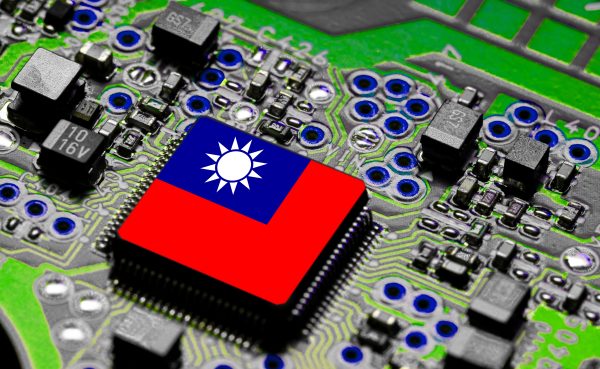
In the case of electronics production, and indeed across the manufacturing sector, investigations have uncovered forced migrant labor in Taiwan, too. And more recently, Taiwanese electronics firms have become key investors in Malaysia. These related trends, in combination with Malaysia potentially passing a robust forced labor import ban, could generate new risks for Taiwanese firms. Yet, if approached strategically, Malaysia’s law could also encourage policymakers and businesses in Taiwan, and across the region, to address the root causes of forced labor.
The Taiwan-Malaysia Electronics Trade
In June 2024, the Taiwan Expo was held in Kuala Lumpur, reflecting the deepening trade and investment relationship between Malaysia and Taiwan. According to the Malaysia External Trade Development Corporation, Taiwan overtook Japan to become Malaysia’s fourth largest trading partner in 2024. Its exports to Taiwan grew by more than 54 percent, while Taiwanese imports grew by 30 percent, resulting in a trade relationship valued at roughly 176.10 billion Malaysian ringgit (around $34.49 billion). At the heart of that growth is the electronics sector, with electronics products accounting for 39 percent ($13.45 billion) of the value of Malaysian exports in 2024.
Malaysia has long served as a key investment destination and production node for several Taiwanese electronics firms, and this relationship has only grown in recent years through partnerships with Malaysian firms specializing in semiconductor assembly, packaging, and testing. In 2024, the Taiwan Ministry of Finance valued electronics exports to Malaysia at around $15 billion, an increase of about $5 billion from 2023. A briefing from the Global Taiwan Institute on Taiwanese-Malaysian economic relations describes the deepening investment and trade relationship. In 2022, for example, Taiwanese chip fabricator Foxconn invested in a plant in Malaysia making chips for electric vehicles, and other firms like ASE Technology have made commitments to invest in Malaysia as part of a long-term effort by Taiwanese firms to make their supply chains more resilient in the event of potential disruption. Beyond electronics production, Malaysia has also received significant investment in data center construction, dominated mostly by U.S. and Chinese firms. This growth represents another factor driving increases in Taiwanese electronics imports since the production of server equipment is dominated by Taiwanese firms.
In light of the significance of this growing trade and investment relationship in electronics, are there risks of forced labor in Taiwanese electronics production?
Forced Labor in Taiwanese Electronics
Taiwan’s labor laws have been historically weak and labor rights violations, including forced labor, have been widely reported across the economy and in electronics production. Migrant workers are the most common victims of forced labor, which reflects their vulnerable legal position under Taiwanese law, as well as the country’s heavy reliance on migrant workers in the industrial sector.
According to data from Taiwan’s Ministry of Labor, as of the end of October 2025, migrant workers made up 9.12 percent of the country’s total workforce (9,449,000). They are typically employed in jobs regulated under Articles 46(1)(8–10) of the Employment Service Act, which are often described as “3D” (dirty, dangerous, and demeaning), and characterized as physically demanding, blue-collar labor.
In the “Electronic Parts and Components Manufacturing (電子零組件製造業) and “Computers, Electronic and Optical Products Manufacturing (電腦、電子產品及光學製品製造業) subsectors, there were 83,666 migrant workers in the former and 27,285 in the latter, respectively ranking as the second and the sixth largest among all 25 industries allowed to employ migrant workers in the manufacturing sector.
Combined, the number of migrant workers (110,951) comprised 13.84 percent of all employees (802,000) in the electronics sector, and 23.06 percent of all migrant workers (481,175) employed in manufacturing.
In Taiwan, employers must obtain government approval to hire blue-collar migrant workers, and the relevant regulations and procedures are extremely complicated. Employers unable or unwilling to navigate this process usually hire a labor broker to manage the recruitment process. Consequently, migrant workers must go through brokers to obtain employment, and since there are more workers than jobs available, brokers are sometimes incentivized to charge migrants exorbitant fees to secure employment — sometimes as high as $8,000. To pay these fees, workers often borrow from brokers before coming to Taiwan and then repay their loans through deductions from their wages, usually taking 12 to 18 months to settle the debt.
In addition to recruitment fees and debt, Taiwanese law also places restrictions on migrant workers that make them vulnerable to exploitation. Article 59 of the Employment Service Act, for instance, further stipulates that, except under a few special circumstances, migrant workers are not allowed to change employers. This means that if they encounter harsh working conditions, they cannot search for better employment without jeopardizing their immigration status and potentially going further into debt. In addition, Articles 46 and 52 of the Employment Service Act allow only fixed-term labor contracts between migrant workers and employers, with a maximum term of three years. This allows employers to easily sack workers who dare to express dissatisfaction or assert their rights by simply not renewing their contracts, effectively suppressing migrant workers’ ability to exercise their legally guaranteed rights, such as applying for mediation and inspections with government authorities, or joining a union for negotiation and industrial action.
It is not uncommon for migrant workers to find themselves trapped in debt bondage, stripped of the right to freely move in the labor market, and restricted in their ability to access effective legal remedies. Under these conditions, they are sometimes subjected to treatment that constitutes “forced labor.”
Since 2006, the U.S. Department of State’s annual Trafficking in Persons Report has repeatedly pointed to the existence of debt bondage among migrant workers in Taiwan, along with other conditions consistent with the International Labour Organization’s (ILO) indicators of forced labor. In addition, numerous international organizations and media outlets have released detailed investigations and reports on different sectors, exposing the harsh conditions faced by migrant workers in Taiwan. A report published earlier this year by journalists Michael Beltran and Hsiuwen Liu, for instance, once again found migrant workers in electronics subject to demanding and exploitative labor conditions. The time for change is long overdue.
From Trade Risk to Reform Opportunity: Setting a Regional Example
To comply with the new trade agreement, Malaysia has two years to enact a forced labor import ban. Inside the country, opposition leaders have already voiced concerns that the agreement cedes too much of the country’s sovereignty by giving the U.S. an advisory role on enforcement. Enabling legislation is likely to pursue a non-discrimination enforcement framework that applies to any imports entering the country, potentially creating new risks for many of Malaysia’s trade partners.
To defray enforcement costs and channel enforcement focus, Malaysia may create a complaint process similar to Mexico’s and allow Malaysian citizens, businesses, and civil society groups to submit claims and evidence that a state authority investigates. Linkages already exist between Malaysian labor rights organizations and their Taiwanese counterparts, with the new law further incentivizing collaboration.
Regardless of the enforcement path the country chooses, Malaysia’s failure to comply with the agreement could be consequential. In the case of Taiwanese electronics, rather than wait and see, companies could treat this moment as an opportunity to implement long-overdue changes in migrant labor recruitment, pay, and treatment.
Ending the practice of migrants paying recruitment fees is one example of low-hanging fruit, and a policy endorsed by Taiwanese migrant worker organizations and business associations like the Responsible Business Alliance. Some companies like Acer and Delta have already instituted these practices, though the extent to which this is standard practice in the industry remains unknown, given the lack of company transparency and the absence of comprehensive sectoral research. Over the next two years, Taiwan’s electronics sector could shift gears and engage in concerted efforts to transparently institute policies that end recruitment fees as well as address other longstanding issues like occupational health and safety, gender and migrant discrimination, and unequal pay.
Eliminating recruitment fees would be a win, but they are only a symptom of a deeper problem related to Taiwan’s highly restrictive immigration system and the way it creates the conditions for forced labor to occur. Since migrant workers’ employment and visa status are tied to their jobs, both employers and migrants assume a certain degree of risk. In the case of employers, this risk happens when a worker arrives and does not like their job or may not be as qualified as they claimed. This becomes a liability for the business and the recruiter, especially if a worker decides to return home. Since the pool of migrant workers is larger than the number of available jobs, recruitment fees emerge as a market-based solution for mitigating this risk. The power imbalances between recruiters and workers in sending countries are what create the perverse incentives for exploitation and forced labor, and any systemic reform will need to address these underlying political and economic inequalities.
One proposal is for Taiwan to end the practice of tying a migrant worker’s visa to a particular employer, which would allow migrant workers to leave bad employers and compete freely in the labor market. It would also allow employers to compete for migrant labor, since the supply of labor could still be capped. Given its influential position in the Taiwanese economy, the electronics sector in Taiwan could spearhead these reforms, seizing on the prospect of Malaysia implementing a forced labor import ban to justify long-overdue reforms to the country’s migrant labor regulations. While the path to reform remains uncertain, what is clear is that Malaysia’s forced labor import ban presents Taiwanese electronics firms with a potential risk that could be transformed into an opportunity.


Discussion about this post