





Under President Trump’s leadership, the United States has given German leaders reason to question the stability of their alliance. Meeting in Munich over the weekend, officials on both sides said they wanted to continue to work together.
In the world of geopolitics all eyes were on Southern Germany over the weekend where the Munich Security Conference (MSC) served as the latest make or break moment for Germany-US relations.
German Chancellor Friedrich Merz delivered the event’s opening speech in which he acknowledged that “a rift has opened up with the US”, and urged trans-Atlantic partners to “repair and revive” trust.
MSC was attended by a number of US leaders, including Secretary of State Marco Rubio who represented President Donald Trump’s administration, as well as Democratic lawmakers who voiced opposition to Trump’s politics.
Overall it appeared that both European and US leaders wanted to take steps toward mending trans-Atlantic relations. But the conference also made clear that old alliances, which had been secure for decades, have now been injured and won’t be easily healed.
‘An era of great-power politics’
Last year US Vice President JD Vance delivered a speech at the MSC that left European leaders floored and was largely seen as marking a new era in European-US relations.
Vance’s speech made clear that US leadership under President Donald Trump saw itself as opposed to many of Europe’s democratic policies, and more closely aligned with far-right parties and Russia.
Since then the Trump Administration had underlined these positions in the US’s latest National Security Strategy. Trump also threatened to annex Greenland, as well as threatening tariff threats over the issue.
Regarding Ukraine the US has also proven to be a shaky ally at best, with Trump pausing military aid to the embattled country last year and attempting to cut Europe out of the loop on Russia-Ukraine peace talks.
READ ALSO: ‘Unacceptable’ – German leaders react to Trump’s National Security Strategy
Echoing recent statements by Canadian Prime Minister Mark Carney, at MSC Merz acknowledged that relations with the US, and also globally, have shifted: “we have crossed the threshold into an era that is once again openly characterised by…great-power politics.”
To that end, Merz has noted that he has spoken to French President Emmanuel Macron about nuclear deterrence.
Put simply Germany’s position at present is to keep the door open for cooperation with the US, but also to watch its ally cautiously and to try and build up its own defences and resilience in the meantime.
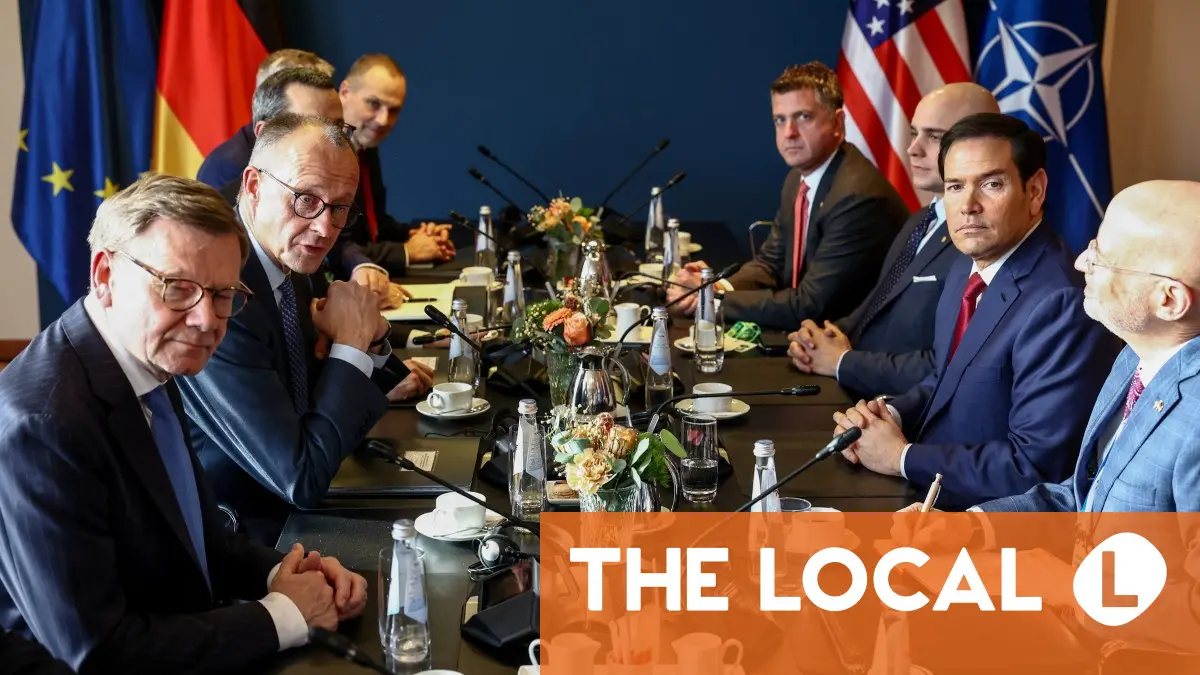
German Chancellor Friedrich Merz (R) and US Secretary of State Marco Rubio attend a bilateral meeting on the sidelines of the Munich Security Conference. (Photo by Liesa Johannssen / POOL / AFP)
What are leaders from the US saying?
Addressing the MSC, US Secretary of State Marco Rubio suggested that the Trump government was working toward “renewal and restoration” and hopes to do so with its “friends here in Europe”.
The restoration Rubio referred to was specifically the restoration of “Western civilisation”, which he suggests is threatened by migration.
Rubio emphasised several Trumpian ideas: that countries should look out for their own self-interests, that tight-immigration policies are a must, and a staunch denial of the existential threat of climate change.
Also at the MSC were several Democratic party leaders from the US, including vocal critics of Trump like California Governor Gavin Newsom and Congresswoman Alexandria Ocasio-Cortez (AOC).
Voicing strong opposition to Trump’s agenda, Newsom and AOC effectively urged European leaders not to turn their backs on the US just yet.
In an interview with the German public broadcaster, Newsom told DW News that “Donald Trump’s on retreat”, and urged German and European leaders to stand up to him.
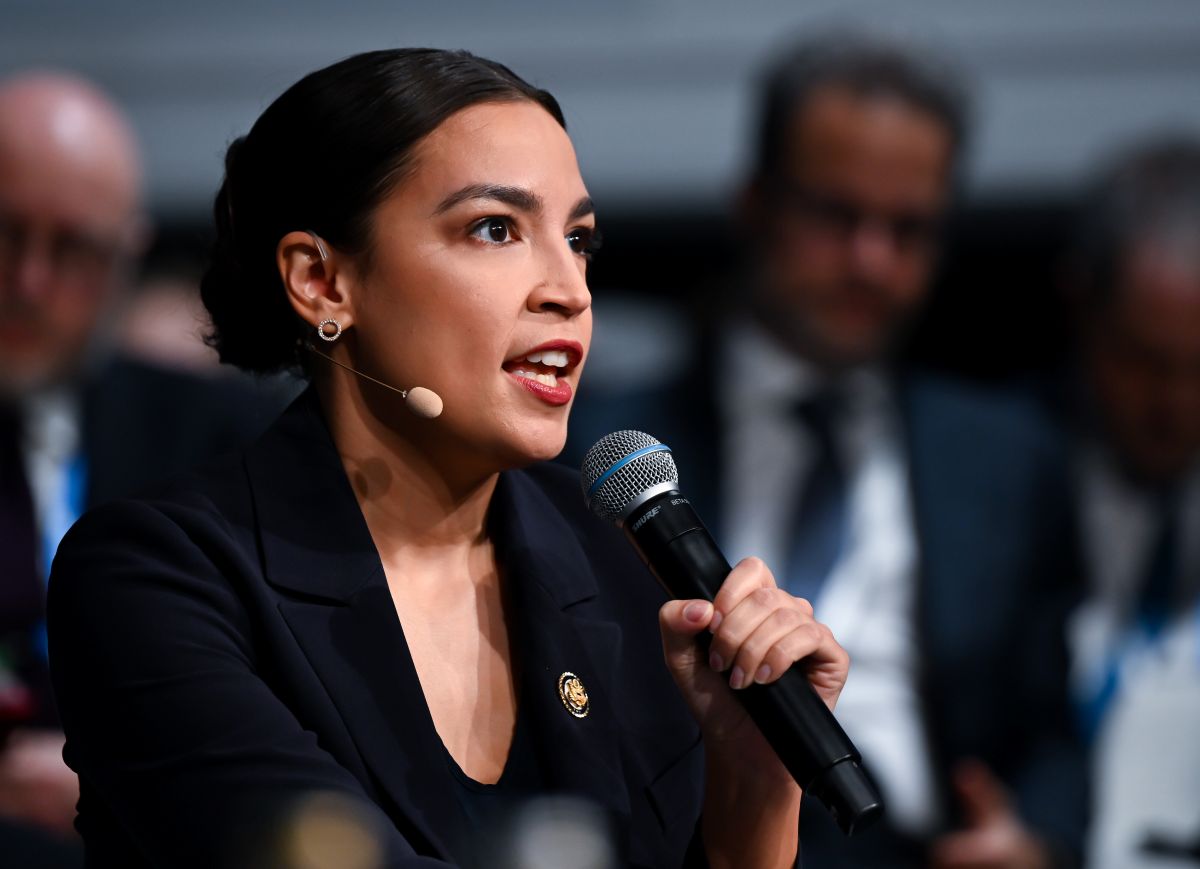
Alexandria Ocasio-Cortez, US politician, takes part in the Munich Security Conference. Photo: picture alliance/dpa | Sven Hoppe
For her part, AOC said while speaking on a panel at MSC that “the vast majority of the American people don’t want to see relationships [with Europe] frayed”.
READ ALSO: ‘Insanely frustrated’ – Americans in Germany react to Trump’s threats against Europe
How did German leaders react?
Especially in comparison to the dramatic, sometimes even hostile, tone which marked Germany-US relations at times in recent months, the meeting in Munich this week was read by many German leaders as a step in the right direction.
Commenting after Rubio’s speech, Germany’s Foreign Minister, Johann Wadephul, told DW News that he saw “common ground for a bright future between the US and Europe” despite the two not having “100 percent overlapping” priorities.
European Commission President Ursula von der Leyen also said she was “very much reassured” by Rubio’s comments.
On the other hand, a stern rebuke of Rubio’s worldview came from EU foreign policy chief Kaja Kallas, who countered that “Europe is not facing civilizational erasure,” in her own comments at MSC.
Shortly after MSC, Rubio travelled to Hungary where he strongly voiced support for Hungarian Prime Minister Viktor Orbán, telling him publicly that Trump was “deeply committed to [his] success”.
Orbán has been a thorn in the side of the EU, and has undermined the bloc’s efforts to support Ukraine. He recently called the EU a bigger threat to his country than Russia.








Discussion about this post