






On February 28, under the direct authorization of U.S. President Donald Trump, a coordinated Israeli-U.S. decapitation strike targeted a high-level security summit in Tehran. The operation resulted in the death of Iran’s Supreme Leader, Ayatollah Ali Khamenei, along with top commanders of the Islamic Revolutionary Guard Corps (IRGC). This unprecedented move to eliminate the head of a sovereign state has plunged the international community into a state of profound uncertainty.
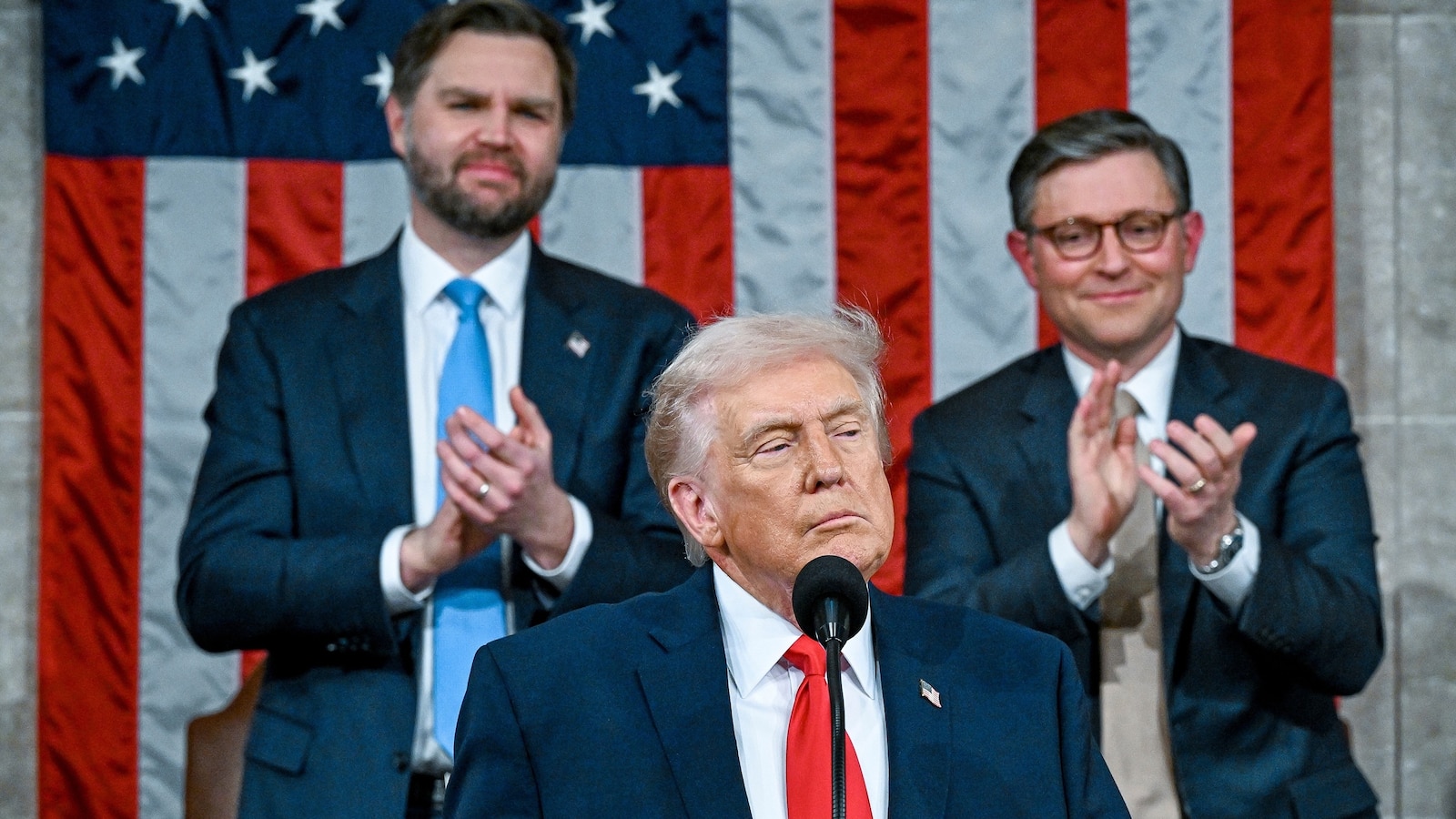
“To the members of the Islamic Revolutionary Guard, the armed forces and all of the police, I say tonight that you must lay down your weapons and have complete immunity,” Trump said in a recorded video posted on his Social Truth account. “Or in the alternative, face certain death.”
The surgical strike occurred less than two months after the high-profile U.S. capture of Venezuelan President Nicolas Maduro on January 3. Neutralizing two sovereign leaders of adversarial regimes in such a short window effectively challenges long-standing diplomatic norms and the traditional application of state sovereignty. Following the strike, the White House issued a declaration of unlimited retribution against any force threatening American interests, a stance that suggests a strategic pivot toward using unilateral military decisiveness as a primary instrument of national security.
However, beneath the triumphalist rhetoric of the White House lies the prospect of a protracted regional conflict. Historical precedents, such as the intervention in Iraq, suggest that decapitating a regime’s leadership can trigger a disorganized but relentless asymmetric war rather than a swift collapse. The death of Khamenei has already seen hardline clerics and IRGC remnants consolidate under an interim leadership committed to long-term resistance. Under these conditions, the United States may face the risk of becoming entrenched in a conflict far more sophisticated than past insurgencies, potentially redirecting U.S. military and economic resources into a Middle Eastern quagmire for the foreseeable future.
On the other hand, the strategic gains for the U.S. should the operation succeed are substantial. A decisive victory could facilitate a fundamental reordering of the Middle East, potentially positioning Israel as the undisputed regional hegemon and a primary security provider. Under a “Peace through Strength” framework, the Trump administration appears to be moving toward consolidating a pro-Western bloc with Israel’s military and technological prowess at its core. By degrading Iran’s nuclear and naval capabilities, the U.S. effectively removes the primary kinetic threat to the Abraham Accords, potentially paving the way for a historic normalization between Israel and Saudi Arabia. Such a realignment would not only secure global energy corridors but also cement U.S. influence over the region’s economic future, transforming the Middle East into a unified front against rival global powers.
Shockwaves from these developments are already reaching the Korean Peninsula, where the “Iran Model” of threshold nuclear survival is being reassessed. The Kim regime in North Korea has already witnessed the collapse of the “Libya Model,” where disarmament was followed by regime change. For Kim Jong Un, the demise of Khamenei may be interpreted as a final confirmation that only a functional and survivable nuclear arsenal ensures continuity. Even before the Israeli-U.S. strikes on Iran, Pyongyang had hardened its stance, moving away from any diplomatic framework with the end goal of denuclearization.
Under no circumstances is the regime expected to engage in negotiations from a position of nuclear vulnerability. Instead, there are signs that North Korea may seek to solidify its role within a broader New Cold War architecture in East Asia, accelerating its strategic alignment with Beijing and Moscow to counter U.S.-led pressure. This trajectory could involve leveraging Pyongyang’s deepening military alliance with Russia to secure critical satellite and submarine technology for a guaranteed second-strike capability, fundamentally altering the strategic balance in Northeast Asia.
The shift in U.S. strategy is simultaneously recalibrating regional security dynamics from Europe to East Asia. On March 2, French President Emmanuel Macron announced an unprecedented plan to expand France’s nuclear arsenal, marking the country’s first increase in its warhead stockpile since the end of the Cold War. By ordering an upgrade to France’s deterrent and offering to deploy nuclear-capable assets to allies like Germany and Poland, Macron is effectively signaling the end of total reliance on the U.S. nuclear umbrella. This shift toward advanced deterrence suggests a fundamental restructuring of European collective security, where the European Union seeks to establish an autonomous strategic depth to insulate itself from an increasingly unpredictable Washington.
A similar pivot toward self-reliance could be found in Japan. Following a decisive landslide victory in the February 2026 general elections, Prime Minister Takaichi Sanae now commands a supermajority that provides her with the political capital to potentially pursue a fundamental revision of Japan’s pacifist constitution. Within this context, the combined shock of the Tehran strike and France’s nuclear rearmament may serve as a critical catalyst for Japan to accelerate its own transition toward an autonomous defense posture.
There is an increasing possibility that Tokyo will move to transform the Self-Defense Forces into a regular military and initiate serious domestic debates on sovereign nuclear deterrence, aiming to secure its own national defense in an era where traditional security guarantees appear increasingly transactional and regional powers feel compelled to provide their own assured destructive power.
Amid this rising tide of hard power, South Korea may seek a distinct path under President Lee Jae-myung. There is a possibility that Lee will continue to navigate this crisis by leveraging revisions to the South Korea-U.S. Nuclear Cooperation Agreement, potentially clearing a path for nuclear-powered submarines to counter regional threats. Seoul’s broader strategy could be rooted in principled autonomy, positioning itself as a potential leader of a new multilateralism based on democratic values.
Unlike other countries who may build up a nuclear arsenal for self-defense, South Korea seeks to architect a resilient and rule-based order by attempting to fill the leadership vacuum left by an unpredictable international environment. The potential goal of the Lee administration would be to ensure that in the post-Trump era, South Korea emerges as a moral and diplomatic anchor for global peace, grounding its security in leadership rather than an unrestrained arms race.







Discussion about this post