








100 km/62 mi is a required minimum to walk on the Camino de Santiago for getting the Compostela certificate. The certificate is issued in Santiago de Compostela to any pilgrim who completed at least 100 km/62 mi on any Camino route and has a Credential with stamps as a proof.
In this post I will give my opinion on the best parts of different Camino routes to walk 100 km/62 mi.
Why 100 km?
According to the new requirements of the Pilgrim’s Reception Office in Santiago for getting the Compostela certificate a pilgrims should walk:
- at least 100 km/62 mi on any recognized Camino de Santiago route*. Any route that is a part of the Camino de Santiago network.
- 70 km/43 mi out of 100 km/62 mi should be through Spain. If you start walking in another country e.g. in Portugal or France at least 70 km/43 mi of your walk should be through Spain. Even if you walk more than 100 km/62 mi on the Camino in another country you still have to walk at least 70 km/43 mi in Spain if you want to get the certificate.
- the walk should include the last stage on the chosen route to Santiago de Compostela.
*Keep in mind that the walk should be towards Santiago. For example you can’t first walk the last stage to Santiago, then go back on the route and walk the rest of 100 km/62 mi.
The above requirements matter only if you want to get the Compostela. Otherwise there are no rules on how to walk the Camino.
What is different in the new rules?
The main difference is that you don’t have to walk the last 100 km/62 mi to Santiago but any 100 km/62 mi on the Camino route including the last stage to Santiago. I personally like this change and here is why. In the past you had no choice but to walk the last 100 km/62 mi to Santiago which was overcrowded because everybody who wanted to get the Compostela had to walk it. Now you can choose any part of any officially recognized Camino route.
In my opinion, the last 100 km/62 mi to Santiago are not the most picturesque part of the Camino. For some routes they are the same. For example the last stages to Santiago on the Camino Frances, Camino del Norte, and Camino Primitivo are the same. Now you can choose any part that looks the most interesting to you and walk it.
The proof of walking
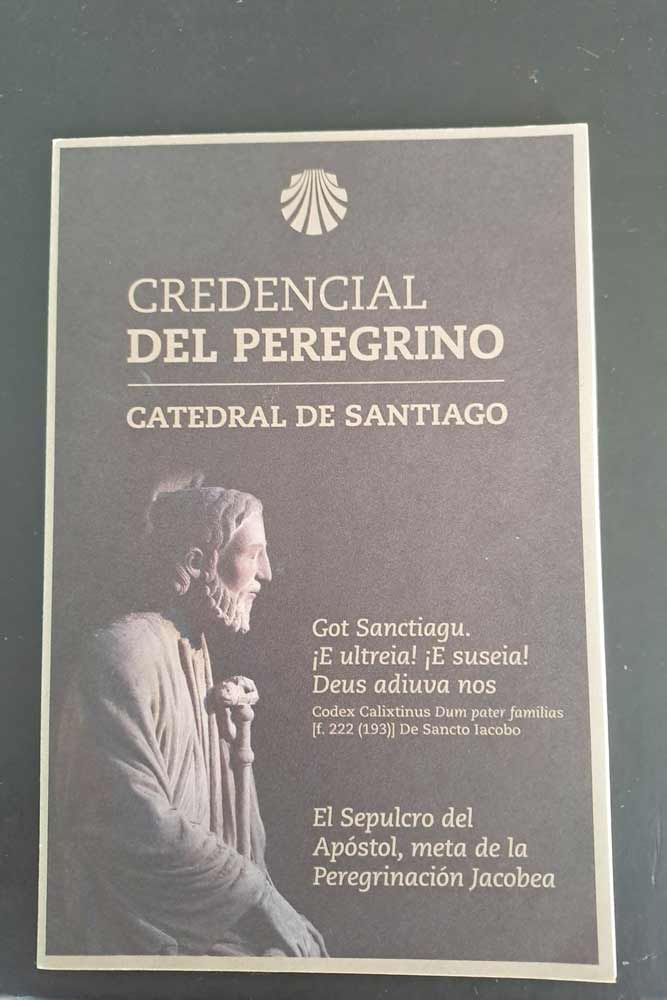
Each pilgrim who wants to get the Compostela certificate should collect stamps in his/her Credential (pilgrim’s passport) along the route. Stamps can be collected from albergues, hotels, hostels, churches, cathedrals, restaurants, and cafes along the Camino. Those who walk only 100 km/62 mi should collect 2 stamps per day. You can collect more if you want.
After presenting your Credential with stamps at the Pilgrim’s Reception Office in Santiago you receive your Compostela certificate.
Do I have to walk 100 km continuously?
No, you don’t have to walk 100 km/62 mi or any other distance uninterrupted. You can walk a stage then skip a part of the route and walk another stage or two. As long as you move towards Santiago and you walk the required minimum of 100 km/62 mi including the last stage to Santiago de Compostela. 100 km/62 mi is a minimum you can walk more if you want.
The best 100 km on different Camino routes
Camino Frances
Let’s start with the most popular route, the Camino Frances.
Keep in mind that you have to walk the last stage of the Camino Frances from O Pedrouzo to Santiago (20 km/12.4 mi) no matter which part of the route you choose.
I really like the forest and mountain parts of the route. For that reason I think the Ponferrada to Sarria is the best 100 km/62 mi to walk on the French Camino. First of all because you get to walk through the forest and over the mountains with stunning views. Second, you get to see a couple of beautiful places such as Ponferrada, Fonsebadon, and O Cebreiro. And third, it’s easy to get to Ponferrada from any major city in Spain. The distance of this part is 97 km/60 mi so you can as well just walk the entire stretch.
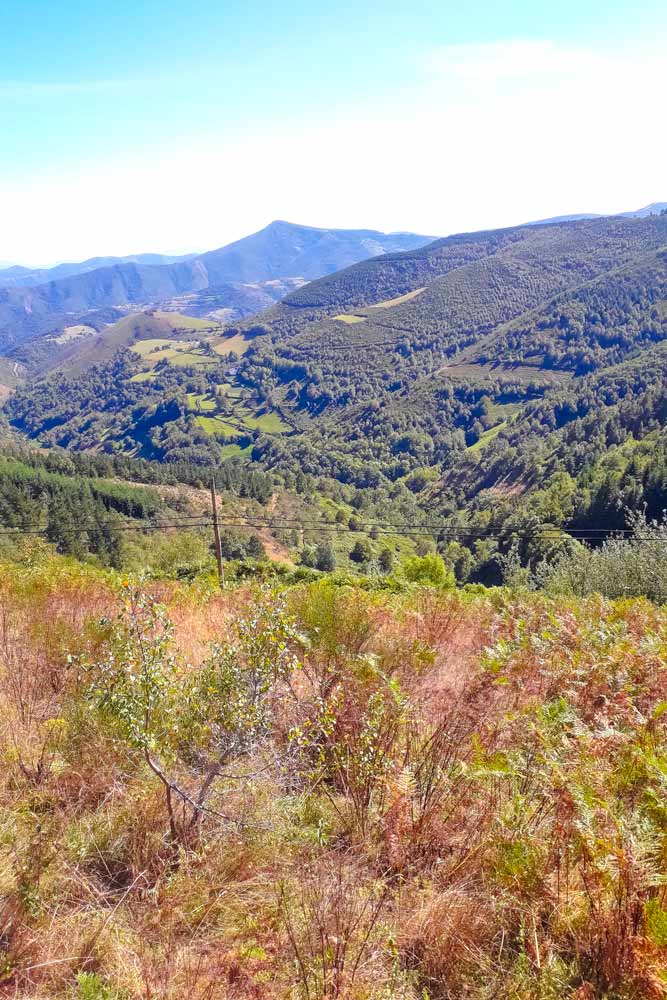
If you don’t like steep ascents and descents, that part of the French route might be not the best for you because it has a lot of hills.
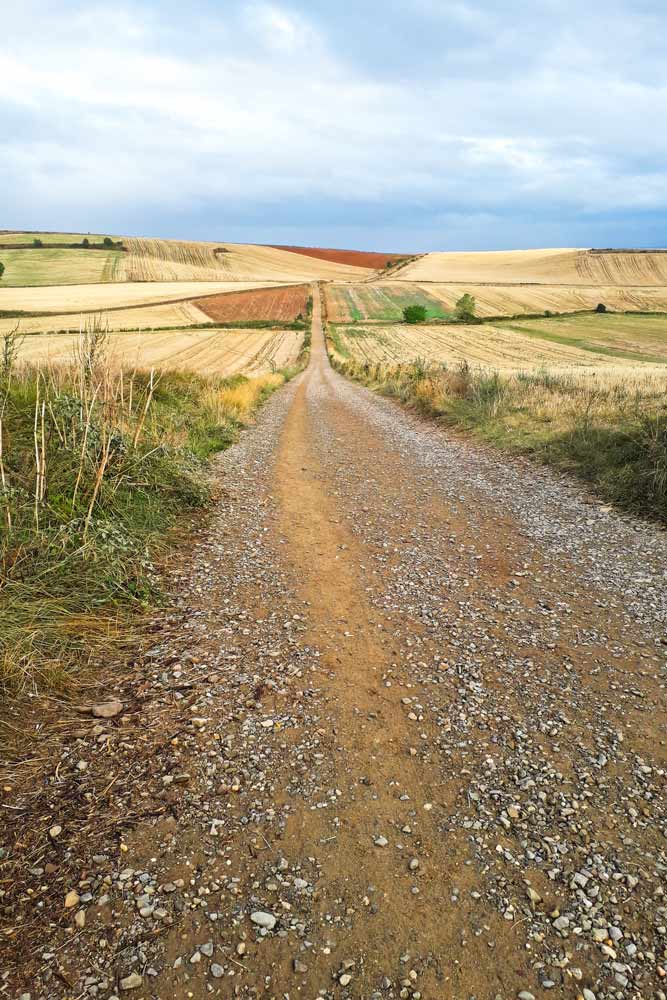
In that case I suggest walking the famous Meseta part of the Camino Frances. It’s probably the most famous section of the route. The Meseta is a very flat area with fields for hundreds of kilometers, towns far apart from each other. You can choose to walk any part of it between Burgos and Leon. The total distance of the Meseta is 180 km/111 mi. You can choose any 80+km/50+ mi (the remaining 20 km/12.4 mi you add walking the last stage from O Pedrouzo to Santiago) to walk. Logistically the easiest is to start in Burgos or end in Leon.
Portuguese Camino
Keep in mind that you will have to walk the last stage from Padron to Santiago (25 km/15.5 mi) no matter which route you choose.
It’s a little bit more complicated with the Portuguese route because according to the new requirements out of 100 km/62 mi at least 70 km/43 mi should be through Spain. It means that you get to walk only 30 km/18.6 mi in Portugal and the rest 70 km/43 mi in Spain.
The Portuguese Camino, unlike other Camino routes, has not one but three trails: Central, Coastal, and Litoral.
On the Coastal and Litoral routes the last 100 km/62 mi to Santiago traditionally start in Vigo but the entire route is inland. The stage from Baiona/A Ramallosa to Vigo is my least favorite because you walk through the industrial part of the city and along a busy road.
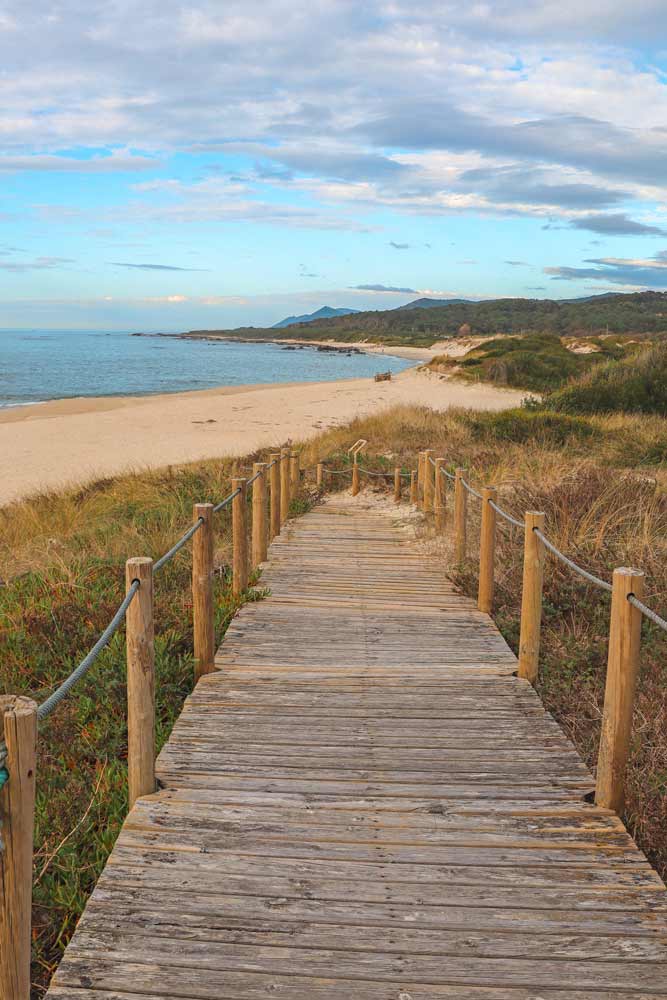
If you choose to walk one of the coastal routes (Litoral or Coastal) then I suggest the part between Viana do Castelo (Portugal) and Baiona/A Ramallosa (Spain). The total distance of that stretch is 92 km/57 mi (30 km/18.6 mi in Portugal and 62 km/38.5 mi in Spain) + the last stage from Padron to Santiago (25 km/15.5 mi). This way you get to walk in two countries and see some of the best scenery on the route.
For the Central route the easiest is to start in Tui and walk continuously to Santiago. Tui is the traditional start of the last 100 km on the Central Route of the Portuguese Camino. You can fly to Porto, take a bus/train from there to Valença (the last Portuguese town on the route), cross the bridge between two countries and start walking from Tui (Spain).
Camino del Norte
Keep in mind that you have to walk the last stage of the Camino Frances from O Pedrouzo to Santiago (20 km/12.4 mi) no matter which part of the route you choose.
The Camino del Norte is a long route along the Northern coast of Spain that offers some spectacular scenery. Several coastal parts of the Camino are stunning. The only drawback of the route is the lack of affordable accommodation in the first half of it (the Basque Country and Cantabria regions). There are very few municipal (public) albergues. During the summer months prices increase a lot due to the high demand.
For the Northern Camino I would say Bilbao to Santander is a great part to walk the 100 km/62 mi. First, because you get to see these beautiful cities. Second, most of the route is along the coast. Third, it’s easy to get to both places. The total distance of the stretch is 113 km/70.2 mi so you can walk it all + 20 km/12.4 mi (the last stage from O Pedrouzo to Santiago).
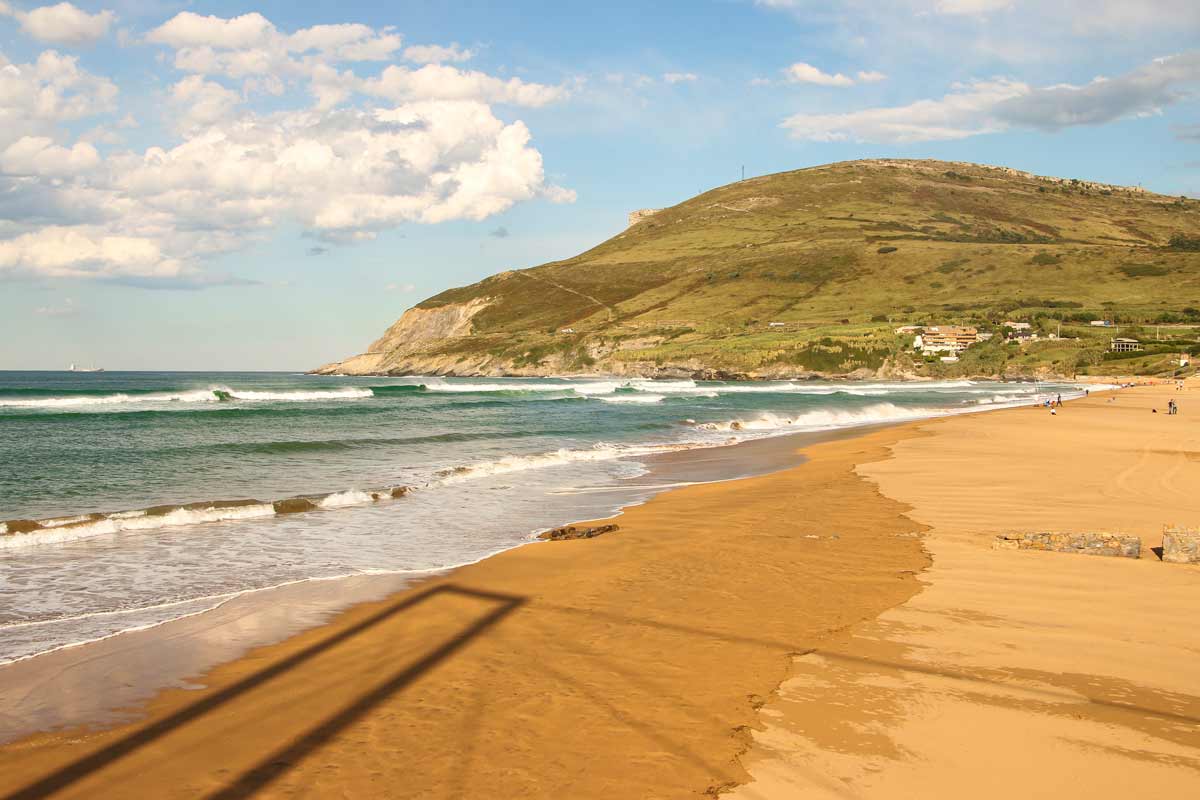
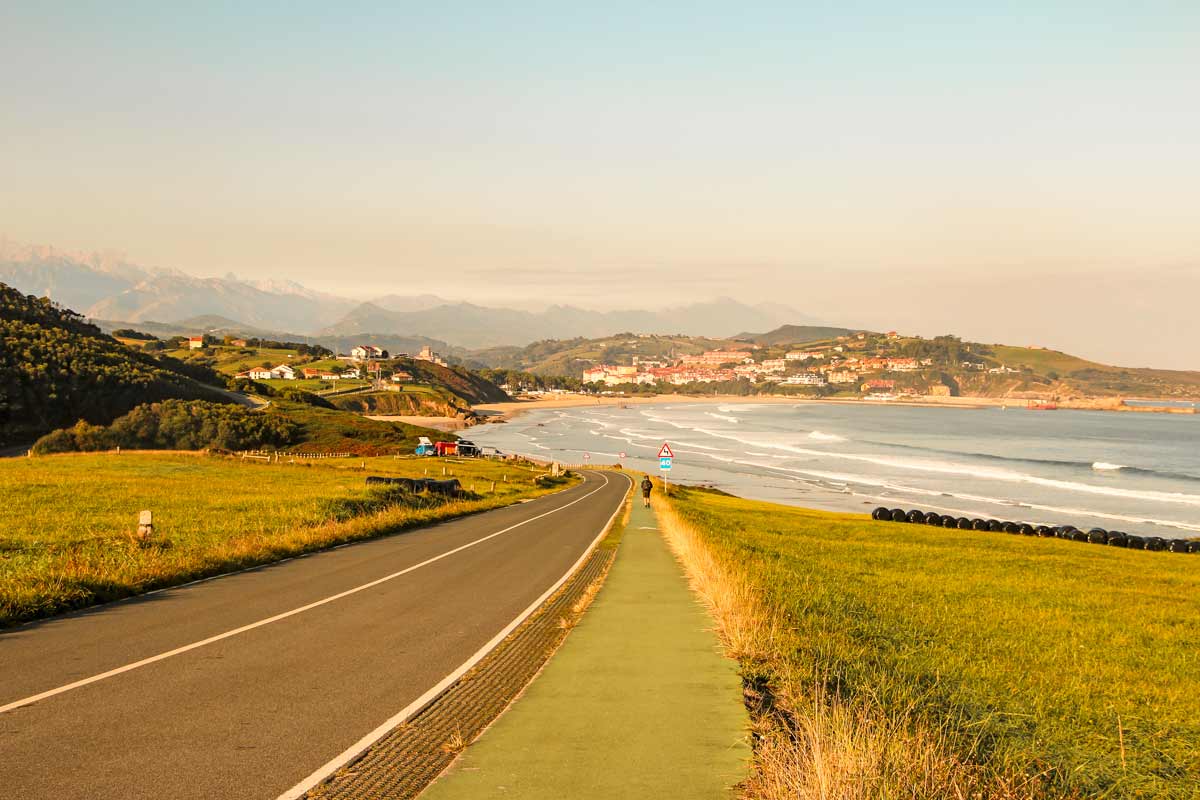
Another beautiful stretch is from Santander to Llanes. You get to see many small beautiful towns and the coastal scenery is breathtaking. The total distance of this part is 109 km/67.7 mi + 20 km/12.4 mi (the last stage).
If you are on a tight budget I suggest walking the Asturian/Galician part of the Camino del Norte where you can find more public and private albergues and overall prices are lower. The part of the route between Aviles and Ribadeo (mostly along the coast). The total distance of that part is 130 km/80.7 mi + 20 km/12.4 mi (the last stage).
Camino Primitivo
Keep in mind that you have to walk the last stage of the Camino Frances from O Pedrouzo to Santiago (20 km/12.4 mi) no matter which part of the route you choose.
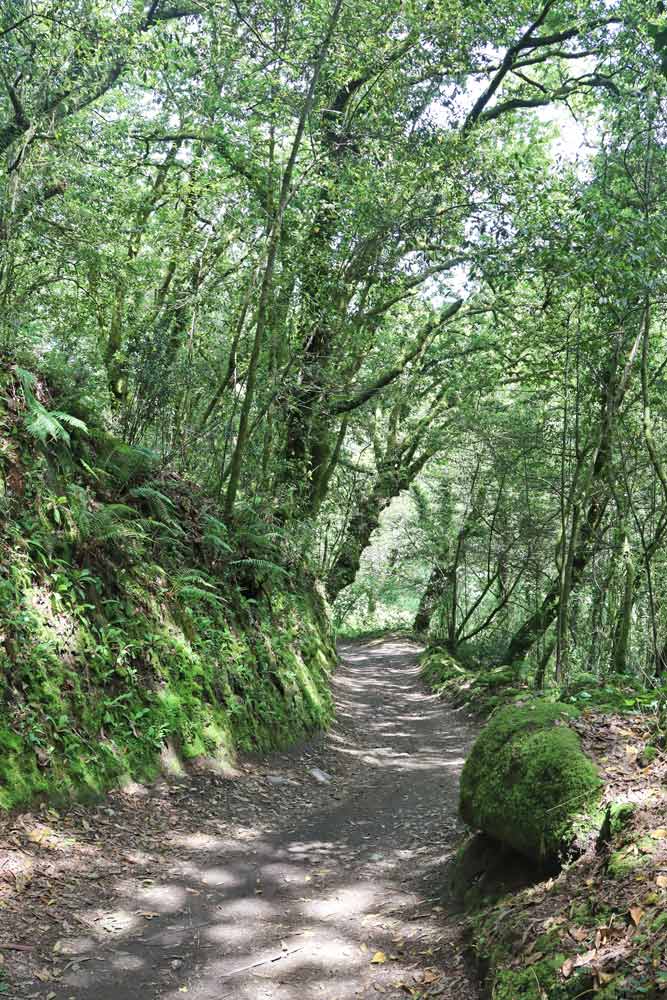
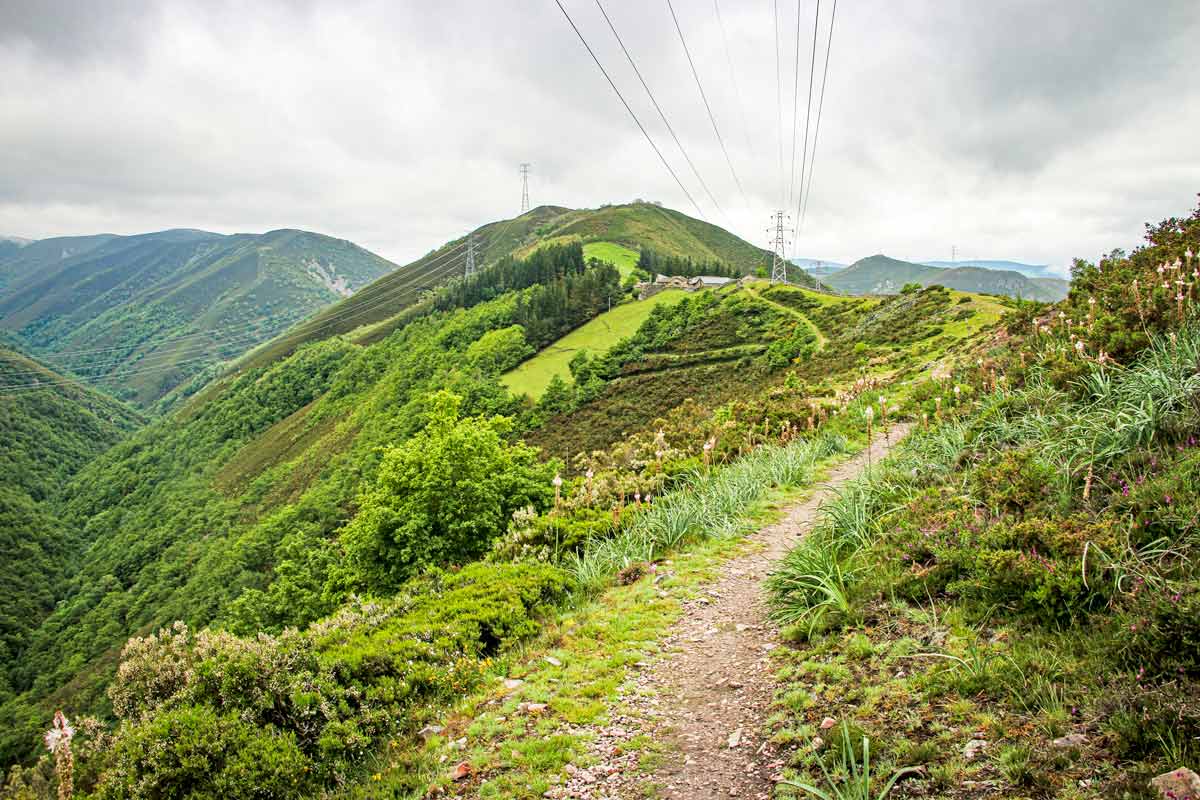
The Camino Primitivo is a great route for mountain lovers. If you enjoy hiking in nature, don’t mind steep ascents and descents and prefer villages and towns over cities this route is the perfect one for you. The part from Oviedo to Lugo is mostly over the mountains and through the forest, past small towns, and pasture fields. The total distance of that part is 220 km/136 mi. The only problem here is logistics. It’s not that easy to get by public transport to some of the small towns along the route.
Camino Ingles
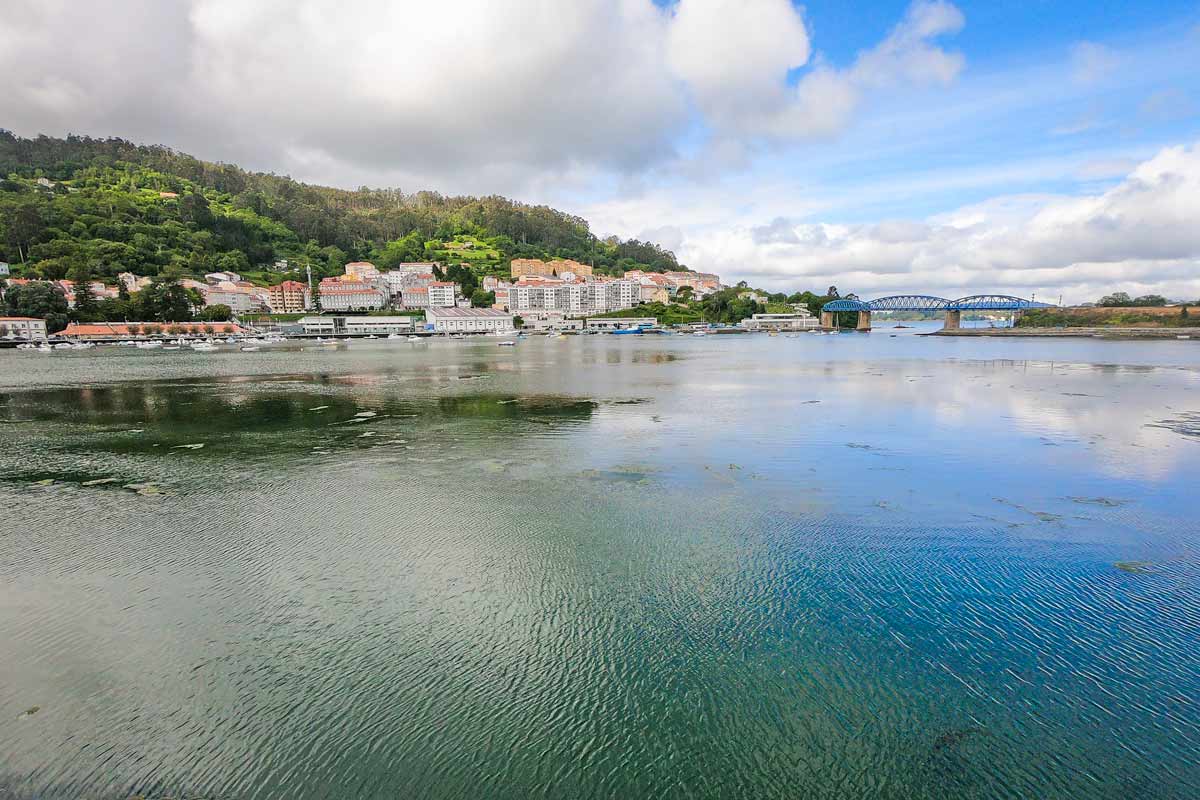
With the Camino Ingles you don’t really have any options as to walk the entire route from Ferrol to Santiago which is just over 100 km/62 mi. A good thing about walking the last 100 km/62 mi on this Camino is that it’s quieter and it doesn’t merge with any other routes till the end. Another advantage of walking the English Way is that you get to walk the full length of it, not just a part.
My favorite sections of the Camino de Santiago to walk the 100 km
I like walking along the coast or in the mountains. For that reason I my favorite parts of the Camino de Santiago are the part of the Litoral Way of the Portuguese Camino between Viana do Castelo and A Ramallosa and the part of the Camino Primitivo between Oviedo and Lugo.


The pretty half of Stingy Nomads, responsible for all our land adventures (hiking, climbing, walking the Camino) and following them write-ups. Alya loves walking since she was a child, she prefers to walk 1000 km with a backpack rather than to do a 10 000 km road trip (actually any road trip). Alya is a big fan of Latin America, the Spanish language, and dancing. Every time we go away she desperately misses our dog Chile.






Discussion about this post