







The conflict now spans multiple fronts: Israeli strikes inside Iran, Iranian missile attacks on Israel, attacks on US military infrastructure across the Gulf and an expanding conflict between Israel and Hezbollah in Lebanon.
The war triggered by United States and Israeli strikes on Iran has widened significantly over the past several days, expanding across multiple fronts from Iranian cities to the Gulf and Lebanon while raising new concerns about the stability of global energy markets and the humanitarian consequences of the conflict.
What began with coordinated US and Israeli air strikes on Iranian targets on 28 February has since evolved into a regional confrontation involving missile exchanges, attacks on military installations across the Gulf and intensified fighting along Israel’s northern frontier.
Israeli strikes inside Iran have continued over the weekend, targeting sites across several provinces including Tehran, Shiraz, Qom, Kermanshah and Ahvaz. Iranian officials say the attacks have struck military infrastructure but have also damaged residential areas and civilian facilities. Emergency services in several cities have reported destruction in residential neighbourhoods and damage to public infrastructure.
The humanitarian toll inside Iran has drawn growing international scrutiny as the bombing campaign continues. Humanitarian monitors estimate that more than 1 300 civilians have been killed since the strikes began, with hospitals reporting thousands of wounded across several regions.
Children account for a significant share of the victims. The United Nations Children’s Fund (UNICEF) says approximately 180 children have been killed since the escalation began.
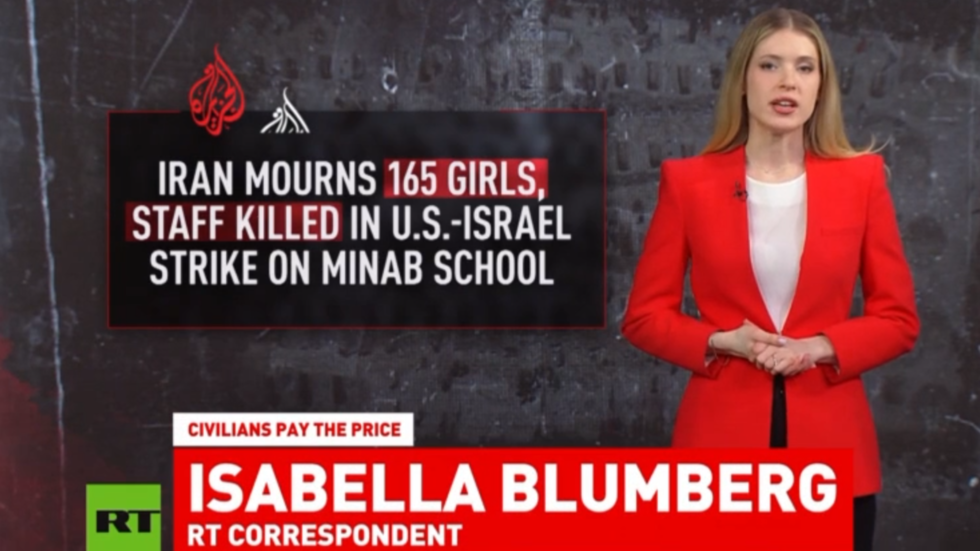
One of the deadliest incidents occurred in the southern city of Minab, where a missile strike destroyed the Shajareh Tayyebeh girls’ elementary school during class hours on 28 February. UNICEF reported that 168 girls aged between seven and twelve were killed when the school was struck while pupils were in class.
The attack has prompted international concern and calls for accountability. United Nations human rights experts have called for an independent investigation into the strike, warning that attacks on schools and other civilian infrastructure raise serious concerns under international humanitarian law.
UNICEF has also reported that at least 20 schools and 10 hospitals across Iran have been damaged during the bombardment. The agency warned that the conflict is exposing children to extreme danger while disrupting access to education and medical care.
At the same time, the battlefield has widened beyond Iran.
Iran has continued launching missiles and drones toward Israeli territory in retaliation for the initial strikes. Air-defence systems have been activated repeatedly over cities including Tel Aviv and Haifa as incoming projectiles were intercepted.
Iran has also targeted United States military installations across the Gulf, striking bases and radar systems in countries that host American forces. Explosions and interceptions have been reported near facilities in Bahrain, Saudi Arabia, Kuwait, Qatar and the United Arab Emirates.
Bahrain has become one of the most sensitive locations in the conflict because it hosts the headquarters of the US Navy’s Fifth Fleet. Iranian missiles and drones were directed toward facilities linked to the base, signalling Tehran’s strategy of expanding the battlefield to locations associated with American military operations.
Iranian officials say the strikes are aimed at US military infrastructure rather than neighbouring governments, arguing that the facilities have been used to support attacks on Iranian territory.
The conflict has also intensified along Israel’s northern border with Lebanon. Israeli air strikes against Hezbollah positions have escalated across several parts of the country, including Beirut’s southern suburbs, the Bekaa Valley and areas in southern Lebanon.
Lebanese authorities say the bombardment has killed hundreds of people and forced large numbers of civilians to flee their homes.
The scale of displacement has become one of the most visible humanitarian consequences of the widening conflict. Hundreds of thousands of people have been displaced since the escalation intensified, with entire towns in southern Lebanon largely emptied as civilians move north to escape the fighting.
Hezbollah fighters have launched rockets and drones toward northern Israel in response to the strikes, triggering air-raid sirens across parts of the Galilee and prompting further Israeli retaliatory attacks.
Alongside the expanding battlefield, a maritime dimension to the conflict has also emerged. Iran has warned vessels against entering the Strait of Hormuz and has signalled that ships attempting to pass through the narrow waterway could face attack.
The strait is one of the world’s most critical energy corridors, carrying roughly one fifth of global oil supplies from producers in the Gulf.
Even the possibility of disruption has already begun to affect global energy markets. Oil prices have risen amid concerns that the conflict could interfere with shipping through the strait or damage energy infrastructure in the region.
The targeting of oil facilities in Iran has heightened those fears. Israeli strikes over the weekend hit oil storage and refining facilities near Tehran, marking an escalation in which energy infrastructure has become part of the battlefield.
Analysts say the move suggests that both sides are increasingly attempting to impose economic costs on the other.
For energy-importing economies such as South Africa, the implications could be significant.
South Africa imports most of its fuel and therefore absorbs global price movements directly. Sustained increases in oil prices would feed into inflation, raise transport costs and place additional pressure on economic growth.
Finance minister Enoch Godongwana acknowledged earlier this week that the government is already assessing the potential economic consequences of rising energy prices.
“My team is building a scenario plan to assess the implications, depending on the extent of the problem,” he said.
“Insofar as fuel is concerned, we are a price taker because we are not a producer of gas or oil.”
South Africa’s exposure to global fuel markets means that prolonged instability in the Middle East could quickly translate into domestic economic pressure.
Economists say the conflict has already complicated expectations for interest rate policy.
Dr Elna Moolman, Standard Bank’s head of South Africa macroeconomic research, said the likelihood of an interest rate cut in March has declined significantly unless the war ends quickly.
“The likelihood of an interest rate cut in March has declined significantly and now seems plausible only if the war is decisively ended within the next week,” she said.
If the conflict proves short-lived, interest rate reductions could still occur later in the year. However, if oil prices remain elevated because of a prolonged war, monetary easing could be delayed further.
Professor Daniel Meyer, an economist at the University of Johannesburg, said sustained increases in global oil prices would quickly filter through the South African economy.
“If oil rises towards $100 per barrel it could add between R1 and R2 per litre to fuel prices locally,” Meyer said.
“Every rand increase in the fuel price translates into roughly a 0.4 percentage-point rise in inflation.”
Higher inflation would likely force the South African Reserve Bank to consider raising interest rates, further slowing economic growth.
Diplomatic efforts to contain the confrontation remain fragile. Several governments and international organisations have called for restraint, but with attacks continuing across Iran, Israel, Lebanon and the Gulf there is little indication that the fighting will end quickly.
The conflict now spans multiple fronts: Israeli strikes inside Iran, Iranian missile attacks on Israel, attacks on US military infrastructure across the Gulf and an expanding conflict between Israel and Hezbollah in Lebanon.
What was initially framed as a limited military operation has therefore evolved into a multi-theatre regional confrontation whose consequences are beginning to extend beyond the Middle East.
As attacks continue across Iran, Lebanon and the Gulf, the crisis is increasingly shaping into one of the most significant geopolitical escalations in the region in years, with implications for energy markets, global security and economies far beyond the battlefield







Discussion about this post