





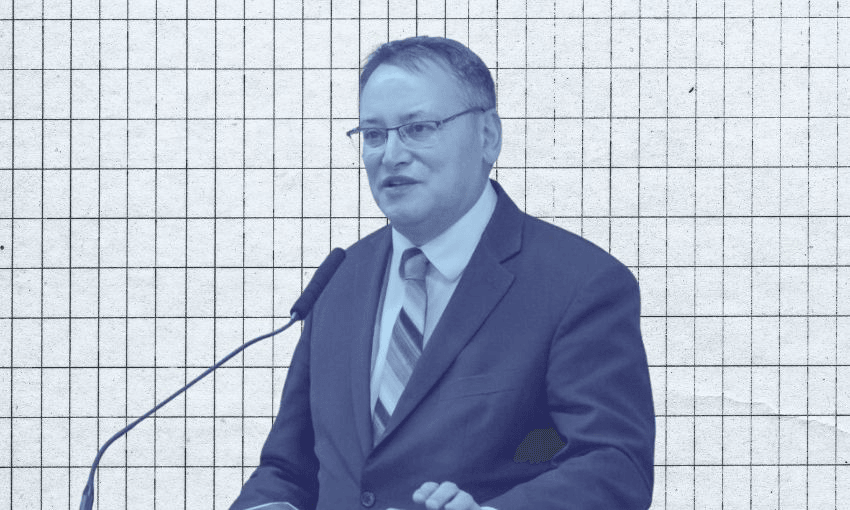
Analyis: Shane Reti was a rising star and familiar name during the intense Covid years, but Christopher Luxon’s coalition government seemed to have only one prescription for the former GP: swallow one dead rat and call me in the morning.
When National Party MP and science minister Dr Shane Reti entered parliament in 2014, it was in a cohort of soon-to-be political stars. Among the new Māori entrants were Marama Fox, who would become the co-leader of the Māori Party, and Labour MP Peeni Henare, who would go on to become defence minister. Fox left parliament in 2017, Henare is on his way out this week, and Reti has announced he will be gone after we head to the polls on November 7. He leaves a gap in National’s Māori leadership, and a whole lot of unfulfilled potential on the table.The Reti of 2014, still fresh faced at 50-years-old, was elected as MP for Whangārei. He had served 17 years as a local GP, then moved to Boston and worked at Harvard Medical School, before shifting back to Whangārei ahead of the election. Health was always going to be the name of the game for the new MP; his maiden speech laid out his vast background in medicine, interest in the sciences, and his hopes for Whangārei.
“In this moment, right now, I claim no honorifics, no title, just Shane, a Māori boy from Northland, and, Mr Speaker, when my time and season concludes, from the dust I come and to the dust I will return,” he said in his maiden speech. Though he did give himself something of a title later in the speech: “It is cool to be a geek.”
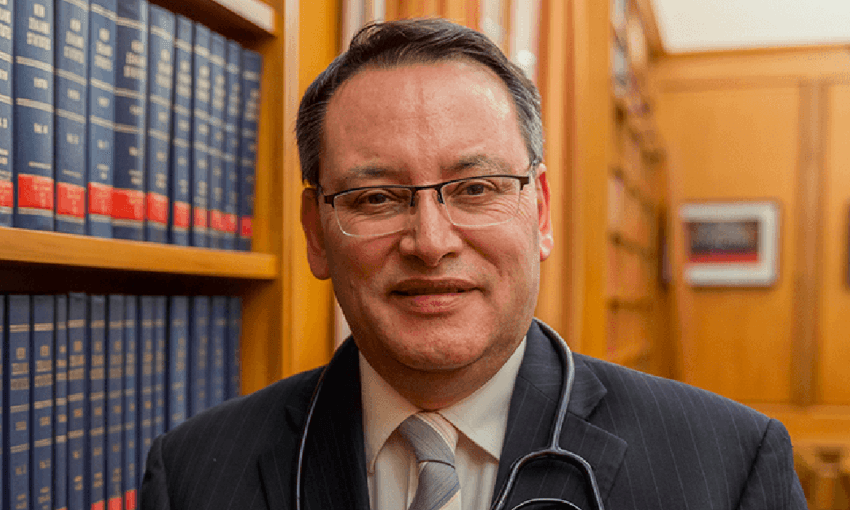
In that first term, Reti bided his time in the back benches and slowly built his policy profile as a member of the health select committee. He kept the practising certificate from his past life and was known to hold free consultations in his office, sending caucus colleagues on their way with prescriptions. Those acts of service summed up Reti pretty well: compassionate and likeable, with a good work ethic and a dedication to providing a good health service.
It wasn’t until his second term in 2017 that Reti was made the National Party’s health spokesperson and deputy chair of the select committee, and in his final year of that term he joined the epidemic response committee as the pandemic rolled in. That year – 2020 – saw Reti’s public profile grow significantly, and by November, after Gerry Brownlee stepped down, he became the deputy to Judith Collins, the National party’s then-leader.
He wasn’t simply Shane Reti anymore; Collins was known to coo “doctor” ahead of his name every chance she got. In Collins’ words he was a “hard-working, intelligent MP with all the skills needed to be an effective leader”, especially in the thick of a global pandemic.
When she was ousted after 16 months, he served as interim leader of the party for five days, making him the first GP and second Māori to lead the party, albeit very briefly. It was a “privilege to be the safe pair of hands the party could turn to in tumultuous times,” Reti would later say.
2020 was a rough year for the party and for Reti; it was the only time in his four terms in parliament that he had lost the Whangārei seat, but he was no match for that year’s red wave. But fate was waiting around the corner, with Reti finally landing his dream role as health minister when National made it back into power at the 2023 general election. But if it looked like he’d realised his dream, in actual fact he now had to swallow bitter pills.
First, he inherited a health system ravaged by Covid-19 and financial woes. Second, National’s coalition agreement with NZ First meant the government amended and repealed smokefree legislation, and third, the Te Aka Whai Ora (the Māori Health Authority) was scrapped. Then, there was his party’s coalition agreement commitment to progress Act’s Treaty Principles Bill and review Treaty clauses in various laws – including health. It was a lot of heat on a Māori health minister.
Reti was health minister for all of a month when the NZ First-driven smokefree changes saw him nicknamed “Ciga-Reti”. It would have felt like a kick in the guts – or gums – to someone who had dedicated his life to health services and, until that point in time, had rarely seen a bad word said about him.

There were more dead rats to come. Reti was tasked with reviewing a University of Auckland Māori and Pasifika student programme, which he had previously benefitted from. He also faced the announcement of a Pharmac funding boost which missed making cancer medicines accessible in the way National had promised it would on the campaign trail, and the sacking of the entire Health NZ board. In a departure from usual practice, former Health NZ chair Lester Levy was appointed as commissioner via the prime minister’s office and then Levy and Luxon maintained close ties, often meeting without Reti.
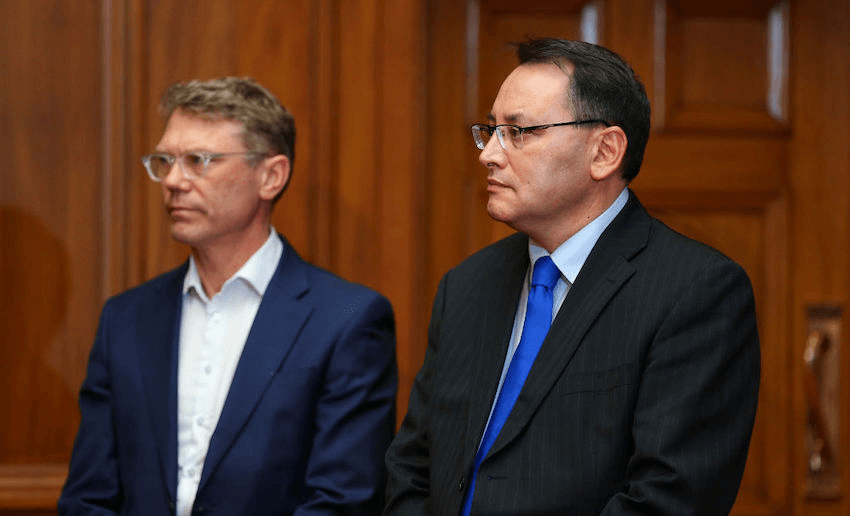
The final nail in the coffin came in September that year, when Reti stood beside infrastructure minister Chris Bishop and delivered bad news for Dunedin: the Dunedin Hospital rebuild had blown its budget and needed to be reduced. The announcement sparked a mass public backlash. Reti may have had the most intimate knowledge of the health system in all of government, but he just wasn’t the kind of guy who could front a camera and make the public believe he wholeheartedly supported cutting funding to a hospital.
In the end, reaching for the sky only gave Reti plenty of room to fall. Despite what the public might think, a good doctor doesn’t necessarily translate into an effective minister. Newsroom suggested that in closed circles, prime minister Christopher Luxon would remark “that the problem with health is that it is led by health”. So it should have come as a surprise to few that in January 2025, after just over a year in the job, Reti lost the health portfolio to hatchet man Simeon Brown.
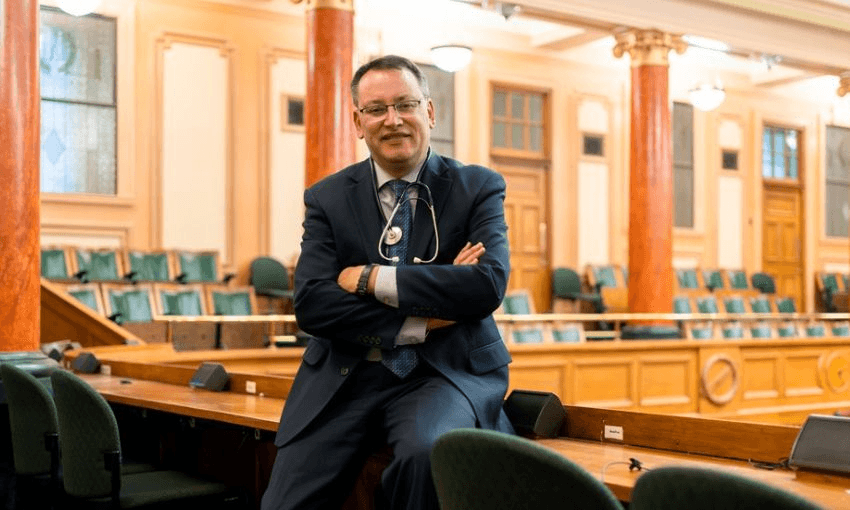
Now, Reti has announced that by the end of 2026, he’ll leave parliament, having briefly realised his dream, only to see it turn on him, swallow him whole and then and spit him out.
A Māori man with a background at Harvard leading one of the most important portfolios in parliament could have been groundbreaking for Aotearoa. But while he had the perfect CV, he lacked the perfect political nous needed to cope with being passed a poisoned chalice (or several).
Fronting media on Tuesday, Reti maintained that he was bowing out of politics because of his commitment to his whānau. “I need to spend more time with my family,” he said.
But why now? “It’s always the right time to spend more time with your family,” Reti quipped.
Do you just not want to be a part of the National Party anymore? “No… My family needs me,” he said.
Did you not see a way back to being health minister? “As I say, there are things that we’d all like to do, but I need to spend time with my family,” Reti replied.
As he walked away from reporters (Luxon offering him a pat on the back), so did years of built-up potential which was never quite realised.









Discussion about this post