
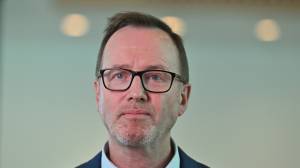
David Shoebridge was this week selected by his federal party colleagues as the new leader of the Greens following Larissa Waters stepping down due to health issues. In a wide-ranging conversation with Crikey, the NSW senator spoke about tackling One Nation, why the Greens and Labor don’t get along better, why his rival for the leadership position referred to the process as “brutal”, and more.
How do you plan on growing the party and the party’s vote?
I’m in a political party that engages in the electoral contest, and obviously a core part of our project is growing our vote, growing our numbers in both houses, and taking real political power.
But the ultimate test of our work as Greens politicians and as a movement is the extent to which we’ve made material changes in people’s lives, made [things] easier in people’s daily lives. You know: everyone can get a home, they’ve got jobs that they find rewarding and which give them enough economic security to live a rich and fulfilling life.
And [it’s also important] that we all feel that, collectively, we’re dealing with the threat of climate change, and that we’re pushing back against this incredibly dangerous push towards war. Yeah, it’s an electoral contest we’re in … but we also recognise that you don’t win all these campaigns just simply through parliament. Parliament is, at best, a conservative, sometimes a reactionary institution, and you need to build direct power around the community, work with other groups, work with other forces for change, and bring that pressure into parliament to get these outcomes.
Corporate Australia knows this. They’re constantly twisting the arm of parliament to direct it and get their outcomes; they’re pulling the strings. We’d like to change the system so it was the community pulling the strings, people across the country pulling the strings, rather than the 1%.
Is the language around the 1% a new bit of rhetoric you guys have decided on, or is this something you’ve been privately using for a while?
This is a campaign we’ve been working on over the course of this parliamentary term, and I do really want to give credit to the work of Larissa [Waters] and Mehreen [Faruqi], and all of our partyroom colleagues coming together to help build this platform.
The analysis of income inequality, recognising that it’s one of the key sources of anger with the political system and disaffection, has been an ongoing project inside the party. This moment, as you know, started with sadness watching Larissa have to step down, but it’s also a moment to really take some long-running planning that we’ve been doing about this political direction, and now make it, you know, a core, loud, public part of our campaign.
Do you think there’s any chance that you can turn the Greens into the natural party for people who are sick of the major ones? Perhaps the Greens used to be that way, but now we’re almost seeing One Nation take that spot. Do you think you can take it back?
This is a political moment being felt in different ways in different democracies across the world, and it’s all grounded in very common material circumstances. People are feeling they’re getting poorer, while this tiny 1% is getting not only wealthier but also getting this obscene mixture of economic and political power over their lives — literally buying the best politicians that they can afford and then weaponising politics against the very people who elected them.
This sense of disaffection and red-hot anger with politics we’re seeing across the world — what we’ve seen with One Nation — is funded by those same corporate interests, a political movement that is directing that quite legitimate anger at migrants. [They’re] saying this is all the fault of our friend down the road from the Philippines who’s working in the local emergency department, or our mate on the football team who came here fleeing conflict, trying to make it seem that that’s the reason why this economic insecurity is happening.
Our job in politics is to take that quite legitimate anger and direct it at who has caused and deliberately caused this problem — and it’s not our mate on the football team, it’s not our neighbour who’s working down in the hospital. It’s the 1% who are literally stealing out of our pockets, capturing our political system, and seeing their wealth skyrocket at the expense of all of us.
One Nation has risen totally on Labor’s watch, and they have risen because Labor has proven itself unwilling and incapable of making people’s lives better because they have been literally bought by their large corporate donors and the corporations who they want to go work for when they cease being a minister.
Related Article Block Placeholder
Article ID: 1267140
In many places in Europe, green parties and labour parties have been, if not natural allies, then at least likely to form coalition governments together. Why isn’t it like that in Australia? Is it unthinkable we could see a future Labor-Greens government here?
During the great bulk of my time in politics, both in state politics and federally, we have, as Greens, said to the Labor Party, “Why don’t you join us with this? Why don’t you join us with stopping privatisation?” And every single time we’ve said that, they’ve walked across the aisle and joined forces with the Coalition or One Nation or whoever’s sitting there on the right or the far right, and decided to reject that offer.
What has become so apparent to me is that the Labor Party’s natural affiliation, its natural leanings, all are going to the right. The most toxic place we’ve seen that, in the past 12 months with Labor, is them constantly reaching out to the Coalition and One Nation on immigration and punching down on migrants. The reason they’re doing that is they accept One Nation’s framing: that it’s not the 1% and the wealthy elite and their greed that’s causing the problem — it’s everyone’s neighbours.
Sarah Hanson-Young said after the meeting where the leadership ballot was held that “politics can be brutal”. Mehreen Faruqi said the vote wasn’t representative of the members’ opinions. Why are they saying these things? Was it a brutal meeting?
None of us thought we would be having a leadership ballot this week, and quite often when it comes to decisions in the Greens, we’ve got time to work things through, time to come to consensus, and that’s our natural preference to have the time and work things through on consensus. But you know, Larissa, after doing such brave and heartfelt work, was literally being told that she now, this moment, had to put her health first, and therefore we had to make a decision in days to refresh the leadership team.
I’ve seen calls from the membership from across politics to say, well, why didn’t we have a full engagement with the members in this process? The first answer is the rules make it very clear it’s up to the partyroom, and we need to stick by the party’s rules. And the second answer to that is it’s just not possible in a complex national democracy like the Greens, with state and territory parties, to suddenly magic up a membership ballot in 48 hours.
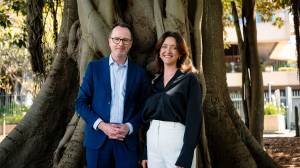
[New deputy leader Steph Hodgins-May] and I have made a rock-solid commitment — and we’ve made it publicly to the membership, we’ve made it to our national council, and we do it with the endorsement of our partyroom — to ensure every member has a direct say in the choice of the next federal leadership team. And we’re committed to working with the party to have that in place before the next federal election.
Related Article Block Placeholder
Article ID: 1267252
What about Hanson-Young’s comments?
You know, people are human. You don’t want a bunch of robots engaged in politics, and when you put yourself forward for a job that you know all of us passionately wanted, and the cards don’t fall the way you were hoping for, who wouldn’t have an emotional response to that?
What I think that really shows is just how much our federal party team wants to be part of this moment, how much they want to get directly involved in winning this political fight.
If you look at the public statements that were [myself and the rest of the Greens partyroom] in the immediate lead-up to the decision, one of the most telling things is how much we had in common about the nature of the challenge and how we would respond to the challenge, and the core economic and political fundamentals and environmental fundamentals that drive us in our campaigning. And that, in my experience, has been reflected in pretty much every one of our partyroom meetings and no less so this week.
Are your portfolio commitments going to suffer now that you’re in charge of your party? Will you continue to be the “grand inquisitor” of the Senate, as Guardian Australia called you the other day?
I believe a core part of our work as Greens is to shine a light where the government doesn’t want light shone, and to hold power to account. And I intend to do as much of that as I still can, given the additional responsibilities.
And when it comes to some of those campaigns that I am deeply passionate about — cancelling AUKUS, getting an independent defence and foreign policy for this country, and for pushing back against vampire foreign AI and all the threats that come with that — these are things I remain 100% committed to and am 100% passionate about.
Finally, there have been some critical words about you in recent days, including people who claim you don’t invest in relationships, that you’re not a natural negotiator, and that you have a huge ego. Is that true?
Well, I mean, I’d say these are the kinds of things that your political opponents say about you when they want to sort of tear down your work, and they can’t confront the actual substance of what you’re saying. They’re trying to do anything but address the core of the political challenge that’s been given to them. I wouldn’t give them much credence. I’d say: judge me on my performance, judge me on how Steph and I demonstrate collective leadership. But I would expect my political opponents to do absolutely everything they could, other than try and meet me on the issues.
Discussion about this post