









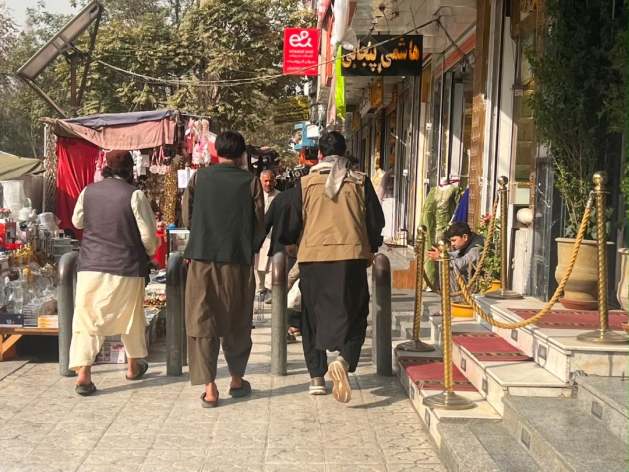
KABUL, November 27 (IPS) – In Afghanistan, the imposition of strict regulations by the Taliban has not only stripped women of their rights but has also placed young men under constant scrutiny. Minor infractions, such as keeping family photographs on mobile devices, wearing a T-shirt, or sporting accessories like necklaces, can lead to severe repercussions.
The Taliban’s enforcement of their moral codes extends to the minutiae of young Afghans’ daily lives. A simple piece of clothing or a personal expression can trigger interrogations and punitive actions, with mobile phone inspections becoming a routine aspect of life.
While women bear the brunt of these restrictions, men are also confined within an invisible barrier. The pervasive atmosphere of fear has replaced aspirations for the future, leading to increased anxiety and depression among the youth of Afghanistan.
Four young men have shared their experiences of life under these oppressive conditions in Kabul.
When Personal Style Becomes a Punishable Offense
Farid (name changed), a 27-year-old from the Khushhal Khan district, reflects on the Taliban’s treatment over the past five years after graduating with a degree in economics and starting a job in a private firm.
“I went to the grocery store wearing a T-shirt and trousers—ordinary attire for me. My body was covered, yet the short sleeves of my T-shirt drew the attention of the Taliban’s morality police,” he recounted.
Stopped on the street, Farid faced physical assault from the morality police, who condemned his clothing as un-Islamic. “They demanded I wear a perahan tunban, claiming I was a Muslim man dressed in childish clothes,” he said, recalling the humiliation in front of onlookers.
Fearing further violence or a forced alignment with the Taliban, Farid capitulated and promised to abandon his preferred style of clothing. “My right to choose my attire has been stripped away. I now only wear the traditional perahan tunban to avoid judgment about my faith,” he lamented.
Taliban Restrictions Extend to Digital Privacy
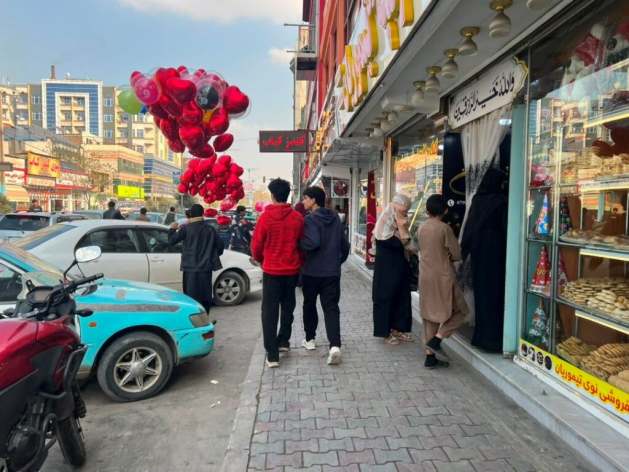
The pervasive fear of Taliban patrols extends to digital privacy, with many young people dreading the possibility of being stopped and having their phones searched. The Taliban scrutinize devices for any content deemed corrupt or Western.
Hamid (name changed), a 23-year-old engineering student at Kabul University, describes how his once-innocuous phone has become a source of anxiety. “While walking home, I was stopped by two Taliban members who demanded to see my phone,” he recalled.
The officers rummaged through his photos and messages, questioning the presence of a foreign app on his device. When they discovered pictures of his mother and sister, they reprimanded him harshly. “They shouted at me, demanding I delete their photos,” he said.
Hamid’s experience has drastically altered how he uses his phone. “It feels as though my privacy has vanished. Now, I instruct my siblings not to carry their phones when they leave the house,” he added, explaining that they have resorted to using basic models to avoid scrutiny.
Abdul (name changed), a 28-year-old merchant, had planned an elaborate wedding celebration, but the Taliban’s intrusion shattered his plans. “During the reception, morality police arrived, terrified guests, and destroyed our speakers,” he recounted. He was taken away for several hours, only to return to a wedding atmosphere transformed by fear.
“What should have been a joyful occasion has turned into a painful memory,” Abdul reflected. “I curse this country. No one experiences happiness here, regardless of age.”
Naser (name changed), a 22-year-old who enjoys fashion, has lost his desire to dress well due to the oppressive environment. The Taliban’s morality police forcibly removed a silver chain from his neck, leaving him injured. “They consider anything stylish a sign of corruption. We are young; if we can’t enjoy fashion now, when will we?” he lamented.
© Inter Press Service (20261127124957) — All Rights Reserved. Original source: Inter Press Service









Discussion about this post