




Study Abroad in Africa
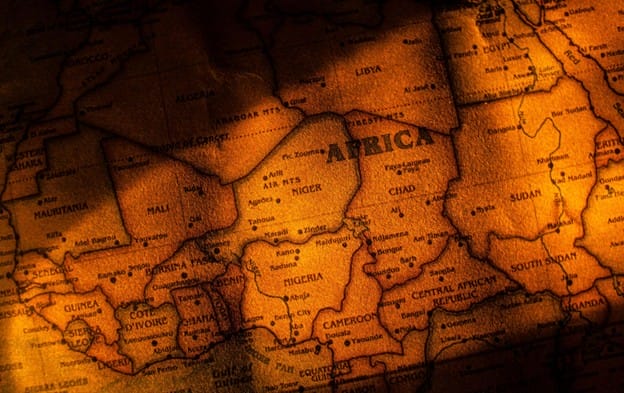
Most students arrive in Africa expecting one thing and leave with something entirely different. Not better or worse, but fundamentally altered in how they understand the world beyond textbooks and Instagram feeds. A continent so often reduced by Western education to a narrow narrative of poverty or wildlife reveals itself, through lived experience, as a mosaic of 54 countries, each with distinct histories, economies and cultural systems that challenge long-held assumptions.
This is not about gap-year romanticisation or poverty tourism. When students approach educational travel in Africa correctly, the experience becomes a systematic dismantling of preconceived ideas. A student from UC Berkeley spends three months in Kigali and discovers that Rwanda’s internet speeds rival those of many American college towns. Another, from the University of Toronto, studies urban planning in Lagos and confronts the reality of a city of more than 20 million people navigating infrastructure pressures that make her transport engineering coursework feel almost quaint in its theoretical neatness.
The Academic Framework Few Talk About
Programme coordinators know this but rarely say it outright: students who study abroad in Africa often struggle more with reintegration than with initial cultural adjustment. The learning curve isn’t steep because Africa is difficult; it’s steep because students must reconcile years of academic conditioning with what they observe on the ground. When someone completes their Write Any Papers statistics homework analysing development indices, they are working with datasets that frequently fail to capture the lived realities of cities such as Accra or Nairobi.
Student travel programmes in Africa have evolved significantly since the early 2000s. Organisations such as the Council on International Educational Exchange (CIEE) and the Institute for Study Abroad now offer semester programmes in Ghana, South Africa, Morocco and Senegal that move well beyond classroom-only models. These are not tourist experiences packaged as education. Students at the University of Ghana’s Legon campus take the same courses as local students, commute on the same tro-tro minibuses and sit exams during the same power outages.
What Actually Changes
The transformation happens in layers. At first, students adjust to differences in food, climate and social norms around time and personal space. By the third or fourth week, something deeper begins to shift. Patterns emerge that they were never taught to recognise.
Research consistently shows improved problem-solving abilities, increased cultural competency and a higher likelihood of pursuing internationally focused careers among students who participate in African immersion programmes. Language acquisition rates in francophone and lusophone countries far exceed those of traditional classroom learning. Yet statistics only tell part of the story.
They don’t capture the moment a student realises that the “development” models taught in Economics 101 overlook the informal economies that employ the majority of urban workers across the continent. Or when they come to understand that oral history traditions in countries such as Ethiopia or Mali preserve knowledge with a precision that rivals written archives.
Rethinking the Safety Question
Safety is the concern most parents raise, and understandably so. But the question is often framed incorrectly. Is Dakar more dangerous than Chicago? Is Kampala riskier than Miami? Available data does not support the level of anxiety often associated with African cities.
Established cultural immersion programmes maintain safety protocols that meet, and frequently exceed, those of domestic campuses. Long-running programmes in Tanzania and Madagascar, for example, have safety records comparable to those in North America. In reality, students are far more likely to experience a minor health issue from unfamiliar food than a serious security incident.
What proves more challenging is navigating systems that operate on different values. A bank transfer that takes minutes in Boston may take hours in Addis Ababa, not due to inefficiency but because greater emphasis is placed on personal interaction, verification and relationship-building over automation.
Career Implications That Matter
African study experience is increasingly valued by major consulting firms, multinational corporations and international NGOs. Employers recognise that students who have lived and studied on the continent understand market dynamics that cannot be learned from case studies alone. The benefit, however, extends well beyond Africa-specific roles.
Across industries, employers value adaptability, contextual thinking and cross-cultural communication. African study-abroad experience signals an ability to function in environments where ambiguity is normal and assumptions must constantly be questioned. These are no longer optional soft skills; they are baseline requirements in an interconnected global economy.
Learning Beyond the Classroom
Some of the most meaningful learning happens in ordinary moments. A student waiting hours for a matatu in rural Kenya ends up in conversation with a farmer who explains crop-rotation systems adapted to climate variability. Another in Senegal realises that the so-called digital divide ignores how mobile money platforms such as M-Pesa and Orange Money have bypassed traditional banking entirely.
Universities with long-standing African studies programmes have documented the development of what they call “contextual intelligence”: the ability to understand that Western frameworks for governance, economics and education represent one option among many, not a universal standard.
Studying abroad in Africa forces students to see their own cultures as specific choices rather than defaults. An American student recognises individualism as culturally constructed rather than universal. A Canadian student becomes aware of how indirect communication contrasts with the directness common in many African contexts. These insights are not about superiority or comparison, but about coexistence of multiple functional systems.
What Lingers After Return
Re-entry is often the hardest part. Students return home speaking differently about global issues and grow frustrated with oversimplified narratives. They notice how Western media defaults to crisis framing even when reporting on innovation hubs in Lagos or tech startups in Nairobi.
Many shift academic paths entirely. Conservation students become interested in urban planning. Business majors turn their attention to informal economies. Pre-med students develop a fascination with public health systems design. These changes reflect more than personal growth; they signal a deeper shift in how students understand knowledge itself and whose perspectives are considered authoritative.
The transformation is not about becoming an “Africa expert” in a single semester. It is about recognising that expertise exists in multiple forms, that complexity deserves engagement rather than reduction, and that learning requires ongoing discomfort before it becomes curiosity.
Students who travel to Africa for education do not simply learn about the continent. They learn how to learn differently. In a world where adaptability and contextual understanding matter more than memorised information, that may be the most valuable outcome of all.

Sara Essop is a travel blogger and writer based in South Africa. She writes about family travel and experiences around the world. Although she has been to 53 countries thus far, she especially loves showcasing her beautiful country and is a certified South Africa Specialist.








Discussion about this post