








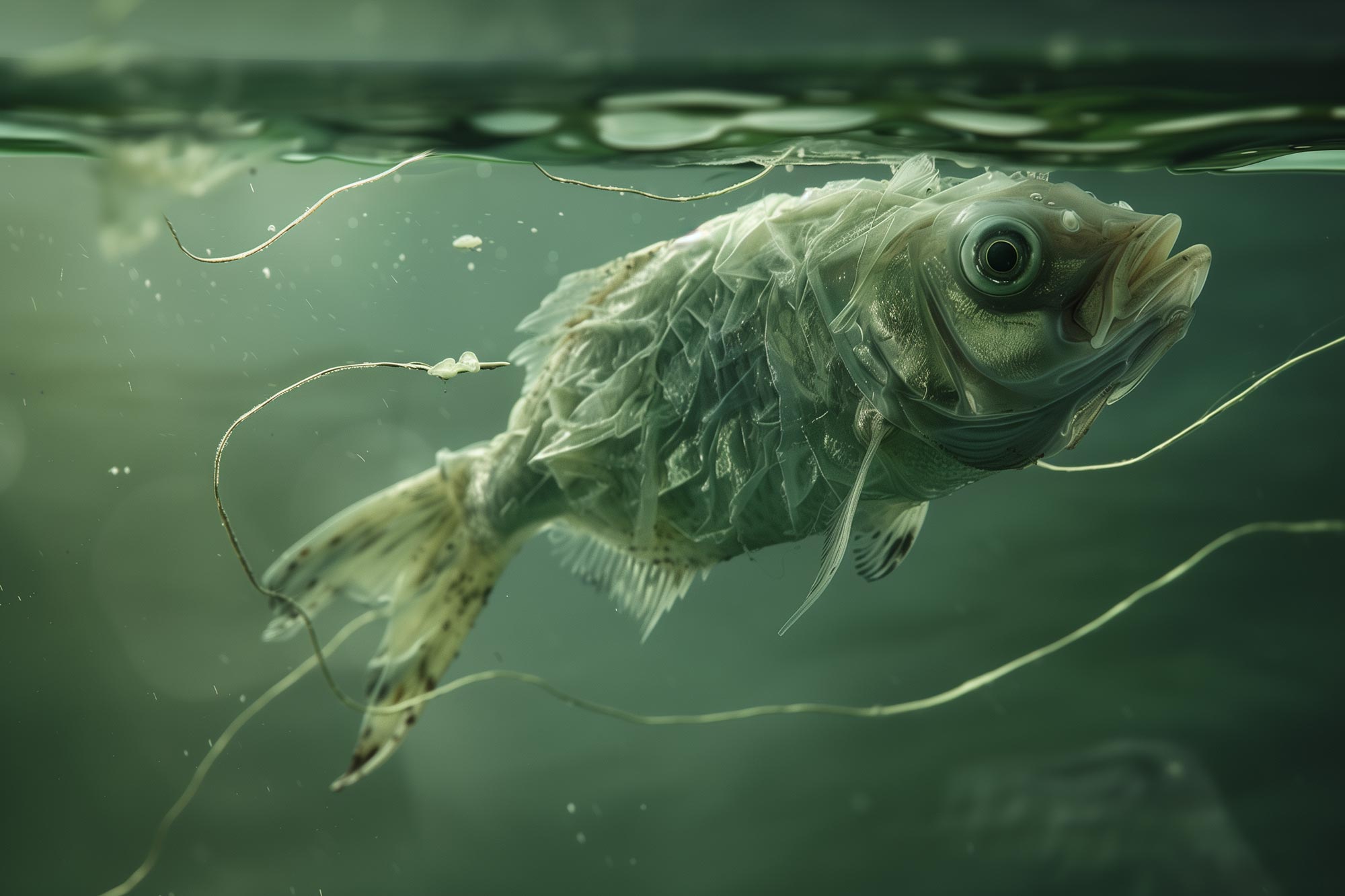
African turquoise killifish embryos survive dry seasons by entering diapause, using ancient genes to halt and resume embryonic development. Similar genetic expressions are found in other species, including mice. (Artist’s concept of a fish, rather than an embryo, in suspended animation.) Credit: SciTechDaily.com
How Killifish Embryos Use Suspended Animation To Survive Over 8 Months of Drought
The African turquoise killifish utilizes a unique survival strategy through diapause, leveraging ancient genes to endure dry seasons. This mechanism involves pausing embryonic development, which is later resumed. Research also indicates similar genetic patterns in other 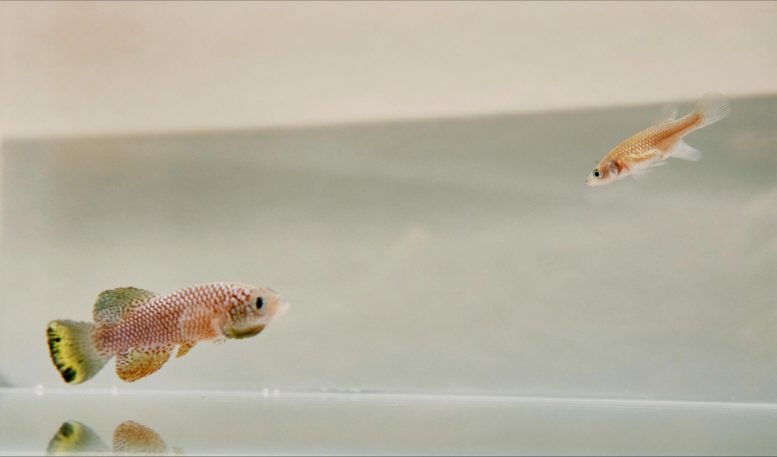
Pair of killifish. Credit: Rogelio Barajas and Xiaoai Zhao
Rapid Maturation and Reproduction of Killifish
African turquoise killifish mature faster than any other vertebrate species, and adults live for only around 6 months, even in captivity. The fish reproduce rapidly before their watery homes disappear, but their embryos remain behind in the dry mud, ready to hatch when the next year’s rains come. Embryonic diapause also occurs in other vertebrate species, including fish, reptiles, and some mammals, but killifish diapause is remarkably extreme because it lasts for such an extended period (8 months on average and up to 2 years in the lab) and because killifish embryos enter suspended animation much later in development than other animals.
“It’s roughly in the middle of development, and many organs are already formed by that stage— they have a developing brain and a heart which stops beating in diapause and then starts again,” says first author Param Priya Singh of the University of California, San Francisco. “Killifish are the only vertebrate species that we know of that can undergo diapause so late in development.”
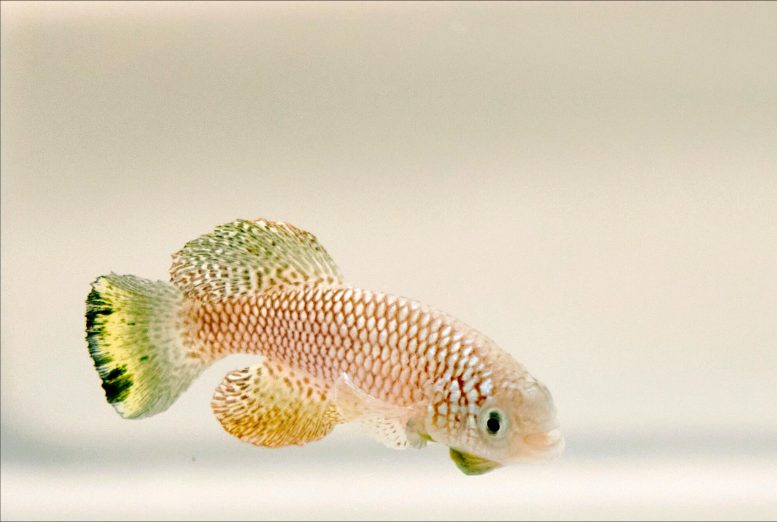
Male killifish. Credit: Rogelio Barajas and Xiaoai Zhao
Detailed Gene Analysis During Diapause
To understand diapause evolution, the research team first characterized the gene expression of the African turquoise killifish (Nothobranchius furzeri) during different developmental stages. They focused on duplicated copies of genes called “paralogs,” because gene duplication is one of the primary mechanisms by which new genes originate and specialize. Overall, the researchers identified 6,247 paralog pairs that exhibited specialized gene expression patterns during diapause. Surprisingly, they estimated that most of the diapause-specialized genes were “very ancient” paralogs, having originated more than 473 million years ago.
“Even though diapause evolved relatively recently, the genes that are specialized in diapause are really ancient,” said Brunet. “We found that most of the genes that specialize for diapause in killifish are very ancient paralogs, which means that they were duplicated in the common ancestor of all DOI: 10.1016/j.cell.2024.04.048
This research was supported by the Glenn Foundation for Medical Research, the NOMIS Distinguished Scientist and Scholar award, the Stanford Center for Computational, Evolutionary, and Human Genomics, the










Discussion about this post