








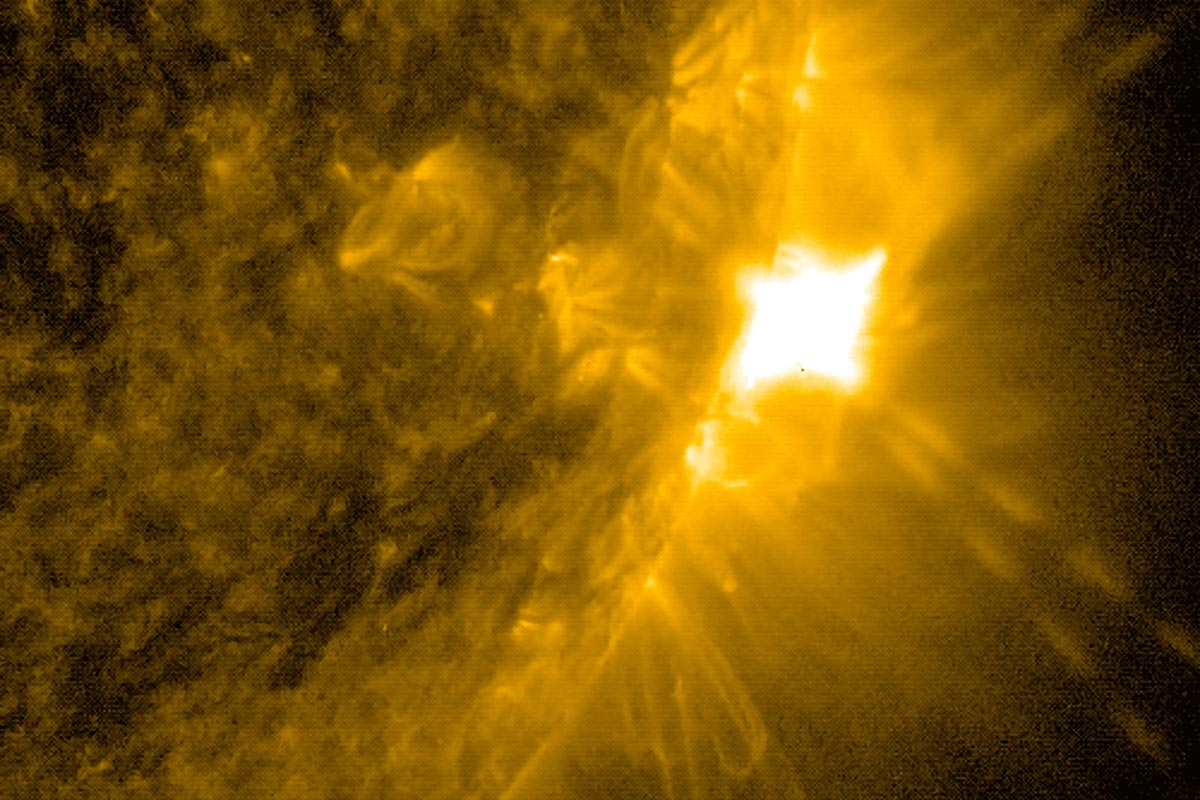
On June 10, NASA’s Solar Dynamics Observatory recorded a significant solar flare, classified as X1.5, indicating a high intensity. Credit: NASA/SDO
In a spectacular display of cosmic activity, the Sun unleashed a powerful solar flare, which peaked at 7:08 a.m. ET on Monday, June 10. Captured by 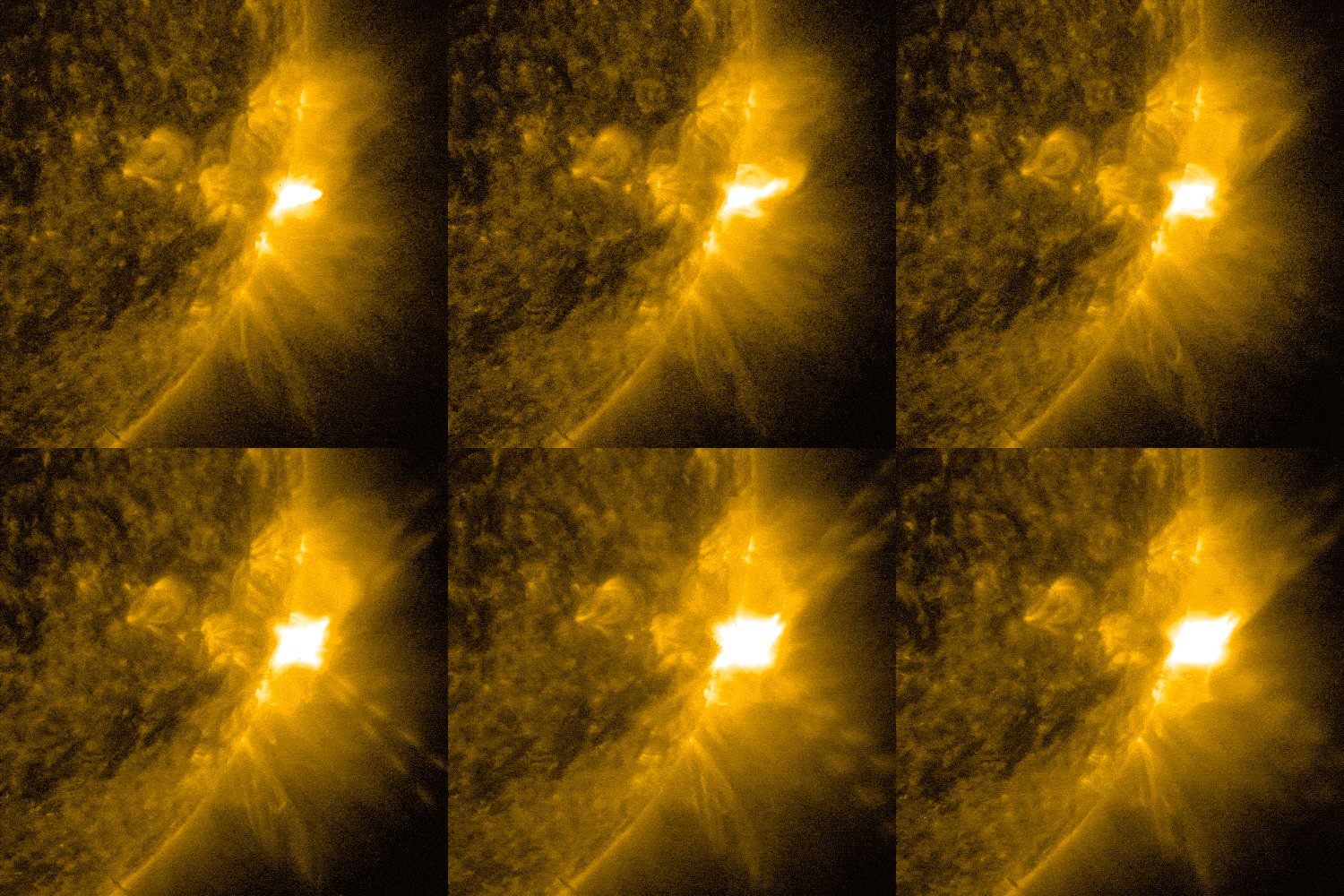
NASA’s Solar Dynamics Observatory captured this image of a solar flare – seen as the bright flash on the Sun’s right edge – on June 10. The image shows a subset of extreme ultraviolet light that highlights the extremely hot material in flares and which is colorized in gold. Credit: NASA/SDO
To help predict and mitigate these impacts, NASA plays a crucial role as part of the nation’s space weather efforts. Constant observation of the sun and our space environment is carried out by NASA’s fleet of spacecraft, including the Solar Dynamics Observatory. These spacecraft are instrumental in studying everything from the Sun’s magnetic activity to its atmospheric conditions and the broader space environment that affects Earth.
For those interested in understanding how such solar events might affect Earth and to stay informed about space weather conditions, visiting https://spaceweather.gov/ is recommended. The website serves as the U.S. government’s official resource for space weather forecasts, watches, warnings, and alerts, providing vital information to industries and individuals who are directly affected by space weather phenomena.
As our reliance on technology grows, understanding and preparing for these solar activities becomes more crucial. With continued observation and research, agencies like NASA and NOAA aim to provide early warnings and strategies to minimize the disruption caused by these powerful natural events.










Discussion about this post