



• Home
  • Insight
  • Blog
  • Business
  • Entertainment
  • Health
  • Politics
  • Shop
    • Gift Shop
    • Value Shop
    • Store
    • Bargain Shop
    • Discount
  • Sports
  • Tech
  • Travel
  • USA
  • Video
  • World
    • Asia
    • Africa
    • South America
    • North America
    • Europe
    • Oceania
Thursday, July 30, 2026
No Result
View All Result
Subscribe Now
  • Home
  • Insight
  • Blog
  • Business
  • Entertainment
  • Health
  • Politics
  • Shop
    • Gift Shop
    • Value Shop
    • Store
    • Bargain Shop
    • Discount
  • Sports
  • Tech
  • Travel
  • USA
    TX Rep. Brandon Gill Mocks James Talarico Over Fauci Action Figure Post

    TX Rep. Brandon Gill Mocks James Talarico Over Fauci Action Figure Post

    NBA players are ‘being taught’ to flop

    NBA players are ‘being taught’ to flop

    Industry was warned for years about chemical ‘runaway’ dangers. Then came near-catastrophe in O.C.

    Industry was warned for years about chemical ‘runaway’ dangers. Then came near-catastrophe in O.C.

    Trump administration seeks government-wide NDAs to stop leaks : NPR

    Trump administration seeks government-wide NDAs to stop leaks : NPR

    Dog discharges shotgun inside truck, striking woman at Nebraska traffic light

    Dog discharges shotgun inside truck, striking woman at Nebraska traffic light

    Toshifumi Suzuki, Japan’s ‘God’ of Convenience Stores, Dies at 93

    Toshifumi Suzuki, Japan’s ‘God’ of Convenience Stores, Dies at 93

     Judge Sanctioned CoreCivic for Destroying Video in ICE Death Suit

     Judge Sanctioned CoreCivic for Destroying Video in ICE Death Suit

    Suspect dead after opening fire near White House security checkpoint, Secret Service says

    Suspect dead after opening fire near White House security checkpoint, Secret Service says

    Trump trashes Colbert’s high-rated finale as “no ratings”

    Trump trashes Colbert’s high-rated finale as “no ratings”

  • Video
  • World
    • Asia
    • Africa
    • South America
    • North America
    • Europe
    • Oceania
The Insight Post
  • Home
  • Insight
  • Blog
  • Business
  • Entertainment
  • Health
  • Politics
  • Shop
    • Gift Shop
    • Value Shop
    • Store
    • Bargain Shop
    • Discount
  • Sports
  • Tech
  • Travel
  • USA
    TX Rep. Brandon Gill Mocks James Talarico Over Fauci Action Figure Post

    TX Rep. Brandon Gill Mocks James Talarico Over Fauci Action Figure Post

    NBA players are ‘being taught’ to flop

    NBA players are ‘being taught’ to flop

    Industry was warned for years about chemical ‘runaway’ dangers. Then came near-catastrophe in O.C.

    Industry was warned for years about chemical ‘runaway’ dangers. Then came near-catastrophe in O.C.

    Trump administration seeks government-wide NDAs to stop leaks : NPR

    Trump administration seeks government-wide NDAs to stop leaks : NPR

    Dog discharges shotgun inside truck, striking woman at Nebraska traffic light

    Dog discharges shotgun inside truck, striking woman at Nebraska traffic light

    Toshifumi Suzuki, Japan’s ‘God’ of Convenience Stores, Dies at 93

    Toshifumi Suzuki, Japan’s ‘God’ of Convenience Stores, Dies at 93

     Judge Sanctioned CoreCivic for Destroying Video in ICE Death Suit

     Judge Sanctioned CoreCivic for Destroying Video in ICE Death Suit

    Suspect dead after opening fire near White House security checkpoint, Secret Service says

    Suspect dead after opening fire near White House security checkpoint, Secret Service says

    Trump trashes Colbert’s high-rated finale as “no ratings”

    Trump trashes Colbert’s high-rated finale as “no ratings”

  • Video
  • World
    • Asia
    • Africa
    • South America
    • North America
    • Europe
    • Oceania
No Result
View All Result
No Result
View All Result
Home Science

Evolution: Facts about the processes that shape the diversity of life on Earth

by Theinsightpost
August 23, 2024
in Science
0 0
0
Evolution: Facts about the processes that shape the diversity of life on Earth

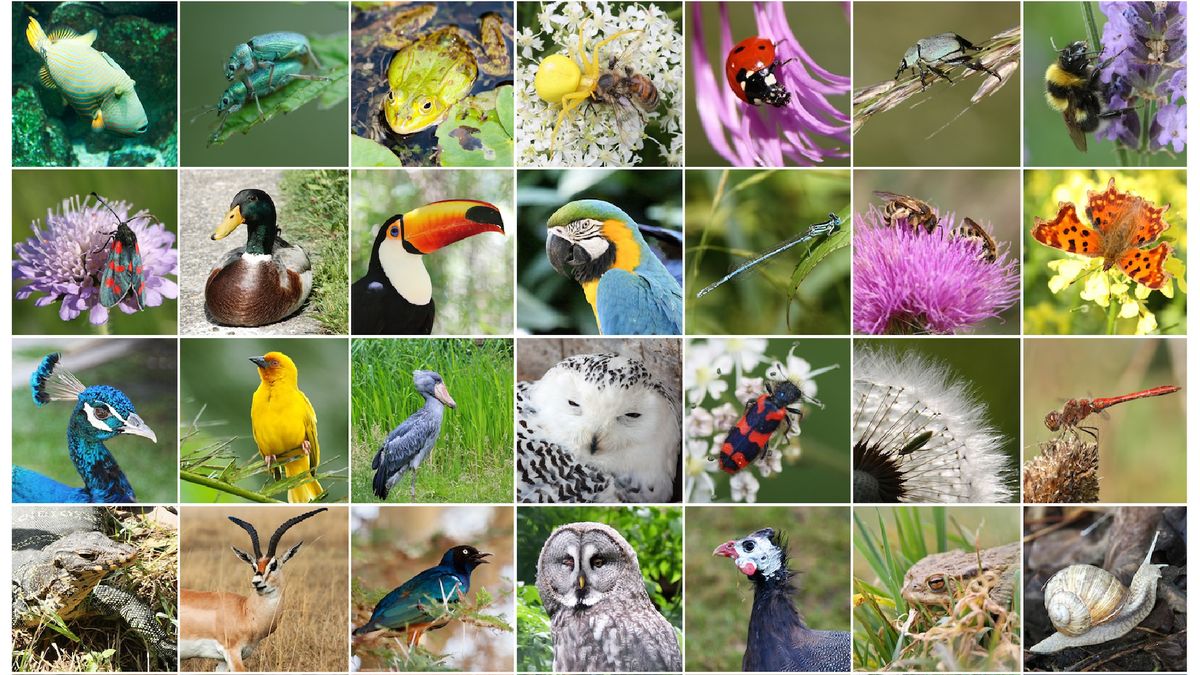
Evolution is the way groups of life-forms change over time to better fit the places they live.

It is why life takes “such endless forms most beautiful and wonderful,” as British biologist Charles Darwin wrote in his famous 1859 book “On the Origin of Species.”

Quick facts

Oldest ancestor of all life: Approximately 4.2 billion years

First human species: Homo habilis, which lived from about 2.0 to 1.6 million years ago

Number of species on Earth: Around 9 million

You can thank evolution for the diversity of life, from microscopic bacteria to the blue whale, the biggest animal to ever live.

Darwin and fellow naturalist Alfred Russel Wallace developed the theory of evolution in the mid-1800s.

Evolution works thanks to a process called natural selection. Life-forms that have traits that make them better suited to a certain environment — whether icy tundra or deep-sea volcano — have a better chance of surviving and passing that trait to their offspring.

Members of the group that don’t have that trait, meanwhile, will either die or make fewer offspring. Over time, more members of the population will inherit that beneficial trait.

Evolution helps explain how humans came to be, why bacteria can resist antibiotics and why new diseases, like COVID-19, are always emerging.

5 fun facts about evolution

  • The last common ancestor of all life on Earth is estimated to have existed around 4.2 billion years ago.
  • There are three ingredients necessary for natural selection to occur: variation, inheritance and competition.
  • The first complex life (animals, plants and fungi) appeared around 540 million years ago during the Cambrian explosion.
  • There are three main branches of life: Eukaryota, Bacteria and Archaea (microbes that are similar to bacteria and often live in extreme environments).
  • Homo sapiens (us) coexisted with other species of humans early in our history.

Everything you need to know about evolution

How does evolution work?

Evolution by natural selection is where a trait is weeded out or becomes more common in a population depending on how well the trait helps organisms (living things) survive and reproduce. Three key ingredients in natural selection are variation, inheritance and competition.

First, there is variation. For example, some lions are bigger or smaller, have longer manes or shorter ones, are more aggressive or cautious, and so on. Every population of organisms has variation in almost any trait you can imagine. Traits are encoded through genes in DNA, a molecule found in every living cell that gives instructions on how to develop, live and reproduce. Traits vary within a population partly because when DNA gets copied, sometimes some of the letters in the code get changed — a process called mutation.

Next there is inheritance. Many of these variable traits are inherited. Genes are passed on from one generation to the next through reproduction.

Finally, there is competition. Every creature in a population is competing with others in their group for food, shelter, resources and mates.

Here’s how all those ingredients work together.

To survive, an organism must be well suited to its environment. For example, a plant in the Mojave Desert needs to make do with very little water, while a tree in the Amazon rainforest needs to keep its leaves from getting waterlogged.

Those with a trait that is a better fit for their environment — say, a cactus that needs less water in the desert — are more successful in the competition for resources, shelter, food and mates.

They’re likelier to survive and reproduce than their counterparts without the trait. Their offspring inherit these traits that give them an advantage over their rivals, continuing the cycle of evolution.

Eventually, more of the members of the population carry the trait that gives them an edge in survival and reproduction. That’s evolution in a nutshell.

Evolution explains how species emerge and change over time. While scientists have described between 1 million and 2 million species, they know they’re missing a lot. There could be 9 million — or even up to a trillion — species on Earth.


Is evolution completely random?

Natural selection requires variation, and variation within a population largely comes from DNA mutations.

Most mutations are random, but some areas of DNA might mutate more easily than others.

In humans, children are usually born with about 60 new mutations, or DNA changes that their parents didn’t have.

Different life-forms have different rates of mutation, and there are always some mistakes. Most of these mutations don’t affect the organism in any noticeable way. (These are called neutral mutations.) But sometimes, mutations can make it easier or harder for an organism to survive or reproduce. This is where natural selection comes in.

If a mutation helps an organism compete better, it is more likely to survive and pass on the beneficial mutation to its offspring. On the other hand, if a mutation makes survival or reproduction harder, the mutation is less likely to be passed down.

So, while mutations mostly occur randomly, evolution is not random.

However, natural selection is not perfect, and mutations that have no or very small negative effects can stick around in a population.

For instance, a lot of people have wisdom teeth that once helped us grind up plants in our diet, but now mainly crowd other teeth and usually have to be pulled. But because having wisdom teeth doesn’t make it hard to survive or reproduce, it hasn’t been weeded out yet.

How long does evolution take?

Usually, evolution is thought of as a process that occurs over thousands or millions of years, but some organisms can evolve within days. The rate of evolution depends on several factors.

First, organisms that reproduce quickly evolve faster because evolution occurs through inherited changes, with each generation differing slightly from the last. Over time, these small changes add up to big differences.

Second, population size matters. Larger populations are likelier to have at least one individual with mutations that affect survival or reproduction. Natural selection then either weeds these out or makes the genes more common depending on whether they’re good or bad for a species.

The mutation rate also influences the speed of evolution. More mutations mean more chances to evolve, but because most mutations are neutral or harmful, organisms often evolve proteins to fix DNA copying mistakes, which keeps the mutation rate low. Sunlight, chemicals and factors tied to different species’ error-correction tricks can all affect how quickly genes mutate.

Lastly, the environment plays a critical role in the rate of evolution. In harsh conditions, natural selection quickly removes individuals that are not a good fit for their environment, leading to more rapid evolutionary changes.

These factors mean small organisms that make copies of themselves quickly — like bacteria — evolve much more quickly than large ones that take a long time to reproduce, like elephants. This rapid evolution in microscopic organisms can help scientists study adaptation through laboratory experiments.

What is Lamarck’s theory of evolution?

Charles Darwin comes to mind when we think of the theory of evolution.

But before Darwin published his groundbreaking work in 1859, other scientists were already trying to explain the diversity of life on Earth. One such scientist was Jean-Baptiste Lamarck, a French researcher who proposed a different theory of evolution 50 years before Darwin published his work.

Lamarck believed that traits or characteristics that were used more often would grow stronger and bigger, while those that weren’t used would gradually disappear. He also thought that any traits that were improved through use could be passed down to offspring.

A commonly used example is the giraffe. According to Lamarck’s theory of evolution, giraffes have long necks because their ancestors constantly stretched to reach leaves high up in trees, causing their necks to get longer. He believed that this stretching led to longer necks, which were passed on to the next generation.

We now know that this is not correct, and it is through genetic mutations that nature selects the most successful neck lengths in the population.

But Lamarck’s ideas were still an essential stepping stone that inspired Darwin’s ideas of natural selection.

What are the different types of evolution?

Evolution can produce different patterns over time. We can label the three main patterns as divergent, convergent and parallel evolution.

Divergent evolution occurs when related populations become increasingly different from each other as they adapt to different environments. This can sometimes lead to the formation of new species. The Galápagos finches that helped Darwin form his theories on evolution are a classic example: At first, these songbirds were just one species. But over time, birds from different islands evolved different beak shapes — from long to short, and curved to straight — to better eat the food on those islands. Biologists can even see this transformation happen in real time when island rainfall patterns change.

Convergent evolution occurs when unrelated organisms start looking or acting more like each other because they live in similar environments or must face the same types of challenges to survive and reproduce. For instance, dolphins and sharks both have streamlined bodies that help them swim well in water. However, dolphins evolved from a wolf-like mammal called Pakicetus around 50 million years ago, whereas sharks evolved from their fish ancestors approximately 450 million years ago. This pattern can create the illusion that animals share a more recent common ancestor than they actually do.

Parallel evolution is similar to convergent evolution, but it involves related species with recent common ancestry. In parallel evolution, closely related species that live apart independently evolve similar traits when confronted with similar environmental challenges. For example, the ancestors of living centipedes didn’t make venom. But many centipede species separately evolved venom, indicating it was helpful to them.

Evolution pictures

Image 1 of 9

(Image credit: Bettmann Getty Images)

The contrasting beaks of four Galápagos finches — three Geospizinae and one Certhidea (Warbler finch).
(Image credit: Print Collector via Getty Images)

The Galápagos finches were made famous by Charles Darwin’s observations of beak variation that he collected during his voyages on the HMS Beagle.

A young girl poses with a Pakicetus skeleton cast on display at the Natural History Museum.
(Image credit: Jack Taylor / Stringer via Getty Images)

Pakicetus, the ancestor of whales and dolphins, lived around 50 million years ago.

A series of three skulls, with a neanderthal skull on the left, human in the middle, and australopithecus afarensis on the right
(Image credit: WHPics, Paul Campbell, and Attie Gerber via Getty Images; collage by Marilyn Perkins)

Reproductions of skulls from a Neanderthal (left), Homo sapiens (middle) and Australopithecus afarensis (right).

Hidden hare camouflaged against the mud.
(Image credit: Helen Reid via Shutterstock)

Many animals have evolved camouflage to protect them from predators.

A small green fish swimming in the water
(Image credit: Paul Kay via Getty Images)

The evolution of stickleback fish from a marine to freshwater habitats gives a great example of parallel evolution.

A black-and-white photograph of Alfred Russell Wallace,
(Image credit: Hulton Deutsch / Contributor via Getty Images)

Alfred Russel Wallace (1823-1913) developed a theory of natural selection at the same time as Charles Darwin.

A photo of an agar plate where a microbiologist checks the antibiotic resistance of bacteria.
(Image credit: Saiful52 via Shutterstock)

Antibiotic resistance is a global problem that is caused by evolutionary processes.

Microbes such as bacteria have been useful to study evolution in real time in the lab thanks to how rapidly they evolve.

Discover more about evolution

—How long do new species take to evolve?

—What is Darwin’s theory of evolution?

—E. coli offers insight to evolution

Books about evolution

ShareTweetSend
Previous Post

The Long-term Impact of the Gaza-Inspired Boycotts

Next Post

Gaza’s Doctors Face a New Battle: The War on Polio

Related News

Daily multivitamin may help older adults stay independent
Science

Daily multivitamin may help older adults stay independent

July 30, 2026
1,200-year-old gold hoard discovered in Saudi Arabia may have been buried by a medieval pilgrim
Science

1,200-year-old gold hoard discovered in Saudi Arabia may have been buried by a medieval pilgrim

May 27, 2026
Making Changes to Major League Baseball ⚾ by Tumble Science Podcast for Kids
Science

Making Changes to Major League Baseball ⚾ by Tumble Science Podcast for Kids

May 27, 2026
The Paradox of AI and Climate – State of the Planet
Science

The Paradox of AI and Climate – State of the Planet

May 26, 2026
Next Post
Gaza’s Doctors Face a New Battle: The War on Polio

Gaza’s Doctors Face a New Battle: The War on Polio

Discussion about this post

Subscribe To Our Newsletters

    Customer Support


    1251 Wilcrest Drive
    Houston, Texas
    77042 USA
    Call-832.795.1420
    e-mail – news@theinsightpost.com

    Subscribe To Our Newsletters

      Categories

      • Africa
      • Africa-East
      • African Sports
      • American Sports
      • Arts
      • Asia
      • Australia
      • Business
      • Business Asia
      • Business- Africa
      • Canada
      • Defense
      • Education
      • Egypt
      • Energy
      • Entertainment
      • Europe
      • European Soccer
      • Finance
      • Germany
      • Ghana
      • Health
      • Insight
      • International
      • Investing
      • Japan
      • Latest Headlines
      • Life & Living
      • Markets
      • Mobile
      • Movies
      • New Zealand
      • Nigeria
      • Politics
      • Scholarships
      • Science
      • South Africa
      • South America
      • Sports
      • Tech
      • Travel
      • UK
      • USA
      • Weather
      • World
      No Result
      View All Result

      Recent News

      Free Cloud Computing Course | AWS Re/Start Program 

      Free Cloud Computing Course | AWS Re/Start Program 

      July 30, 2026
      Thirty Years Later

      Thirty Years Later

      July 30, 2026
      Announcing Codemagic Patch: an open-source CodePush rebuild for React Native

      Announcing Codemagic Patch: an open-source CodePush rebuild for React Native

      July 30, 2026
      Following Expansion in China, Regional Private Equity Faces New Scrutiny in Southeast Asia – The Diplomat

      Following Expansion in China, Regional Private Equity Faces New Scrutiny in Southeast Asia – The Diplomat

      July 30, 2026
      • Home
      • Advertise With Us
      • About Us
      • Corporate
      • Consumer Rewards
      • Forum
      • Privacy Policy
      • Social Trends

      Theinsightpost ©2026 | All Rights Reserved. Theinsightpost is an Elnegy LLC company, registered in Texas, USA

      Welcome Back!

      Login to your account below

      Forgotten Password?

      Retrieve your password

      Please enter your username or email address to reset your password.

      Log In

      Add New Playlist

      We are using cookies to give you the best experience on our website.

      You can find out more about which cookies we are using or switch them off in .

      No Result
      View All Result
      • Home
      • Insight
      • Blog
      • Business
      • Entertainment
      • Health
      • Politics
      • Shop
        • Gift Shop
        • Value Shop
        • Store
        • Bargain Shop
        • Discount
      • Sports
      • Tech
      • Travel
      • USA
      • Video
      • World
        • Asia
        • Africa
        • South America
        • North America
        • Europe
        • Oceania

      Theinsightpost ©2026 | All Rights Reserved. Theinsightpost is an Elnegy LLC company, registered in Texas, USA

      The Insight Post
      Powered by  GDPR Cookie Compliance
      Privacy Overview

      This website uses cookies so that we can provide you with the best user experience possible. Cookie information is stored in your browser and performs functions such as recognising you when you return to our website and helping our team to understand which sections of the website you find most interesting and useful.

      Strictly Necessary Cookies

      Strictly Necessary Cookie should be enabled at all times so that we can save your preferences for cookie settings.

      Cookie Policy

      More information about our Cookie Policy