










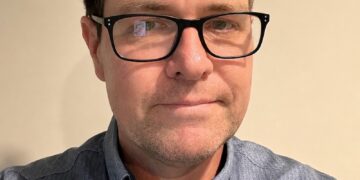
Writer and theatre maker Jo Randerson on getting a diagnosis in their 40s.
How do you distinguish which parts of your personality are a “condition”, and what is genetic inheritance? Which aspects of self come from who you grow up with, and what parts do you make up yourself?
My life has felt like I’m an archaeologist digging myself up, piece by piece, and slowly stacking my bones together into a skeleton that I recognise. Sometimes I learn how to place bones by seeing how someone else has done it – “Oh! That wrist connects to the elbow!” But sometimes I have pieces that I don’t know what to do with. “Should I put these two lumps on my head? Are they extra ears? Or toes?”
Here are some of the identity pieces that I could never quite place:
- I hate sitting down for more than 20 minutes, I don’t know how anyone would enjoy going out to dinner. Am I just really impatient?
- When left by myself I start about 12 tasks at the same time and, if left alone, can finish most of them, if someone brings me a meal and no one interrupts me, which NEVER HAPPENS because I parent two young people.
- I “go too fast”, people always tell me this. That includes how I talk, think, physically move through space, and how quickly I believe creative projects can happen. I’m also “too loud”, “too much” and “too intense”, apparently. Or is our society not great with strong-minded femmes?
- The activity in my brain is relentless. I’d like to say it’s me having great ideas but it’s often really boring things like, “if I stacked all of the furniture against that wall, could we fit a trampoline in the living room?” My best solve is to physically exhaust myself, then when my body crashes out my brain has to follow.
- I can find objects that no one else can. Is this mania? Narcissism? How come I can feel, as if by magnetism, where lost items are in the house, on a beach, in a forest?
- I got wildly angry between the ages of 9-14, in a way that took over my whole body and to be honest freaked me out. I remember feeling possessed, and shocked to see myself punching or kicking someone. This is when I learned how to suppress a lot of my feelings, as many teens do. Is this just adolescence?
When I started reading about ADHD traits, many of these extra pieces of identity found a home. I felt the same feeling as when I learnt words like manaakitanga, or ennui: words that gave life to a state of being which was already familiar. Learning about ADHD helped me feel seen, and to see myself.
My son was diagnosed with ADHD when he was 8, which then led to my diagnosis in my 40s. Growing up alongside him has helped me learn more about myself and my needs: only by watching him did I realise how stressful I find social situations, especially in crowded rooms without any natural light or airflow. Now I use noise-cancelling headphones.
Since I was 20 I thought that many of these feelings were just part and parcel of being an artist. I know that not all artists feel like this. But the arts and nga toi Māori are realms which welcome diversity of thinking, in fact your unique expression is a strength here.
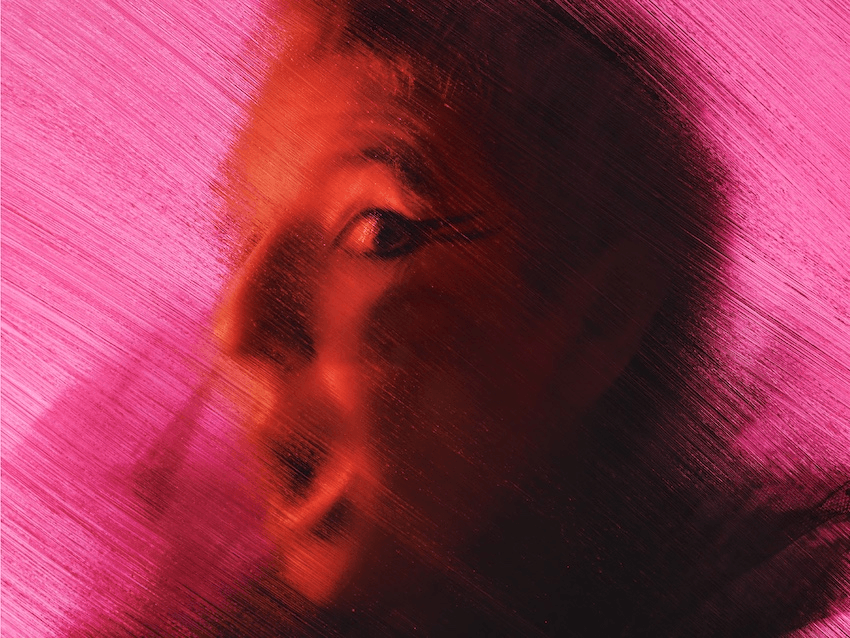
Many Western words place ADHD as a “problem” or a difficulty. One ADHD trait is “Ordination Failure”, which means the inability to progress in a linear fashion from beginning to middle to end. That’s quite a negative framing. I enjoy my unusual ordering of events, and my dislike of binary categories. I mean, cryptic non-linear sequencing is LITERALLY the definition of poetry. Is it a failure to do things differently? Or a necessary response to a world which is in essential tremor?
One of my favourite words in relation to neurodiversity is tākiwatanga which has been explained to me as being “in one’s own space and time”. This totally resonates for me. I see my neurodiversity as a gift, not to say that it’s easy: it takes time and energy to manage this identity, but I wouldn’t want it any other way. I feel lucky to be the way I am. Diagnoses are not for everybody, they can single people out or fail to account for other parts of our experience. But they can also help to give language to feelings and to access support.
Femmes may learn to mask more easily and slip through the cracks of our porous health system. I’m not worried about an “over-diagnosis” of ADHD: what’s important to me is that anyone who needs help can access it, which is sadly not the case right now.
I’m happy to use the label ADHD, but there are many other parts to me too. I want to keep exploring how to use this superpower/disability/whatever you want to call it, to keep making space for all folk to be in the fullness of our identities, and to be compassionate towards others (a challenge which humans have been struggling with for centuries).
Arts and ngā toi Māori can help us to communicate through and between our differences, and express the deep feelings buried inside us. If we aren’t able to do this, we will explode.
See Jo Randerson’s show Speed is Emotional with Silo Theatre at Q Theatre, from 16 April – 3 May as part of the NZ International Comedy Festival. Jo is also releasing their new book, Secret Art Powers, in July.



Discussion about this post