









Rachel
Graham, Reporter
Relatives
of distressed patients at Christchurch Hospital have been
asked to come in to help because of a shortage of healthcare
assistants.
Information provided by a Christchurch
Hosptial staff member, who asked not to be named, shows the
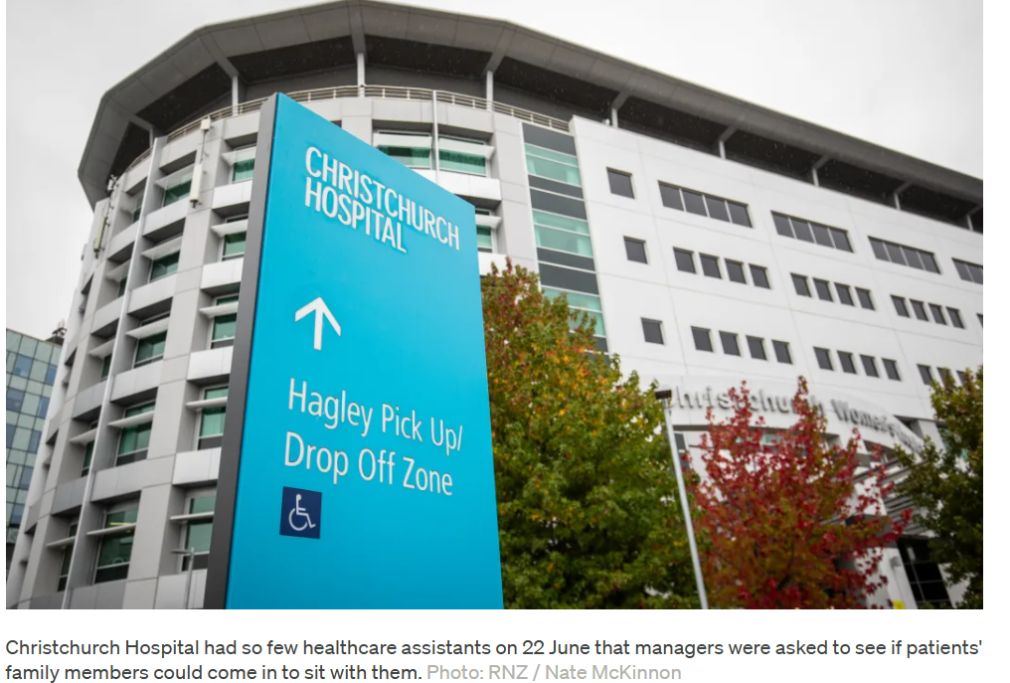
hospital had so few healthcare assistants on 22 June that
managers were asked to see if patients’ family members could
come in to sit with them.
New Zealand Nurses
Organisation delegate Al Dietschin said the request related
to patient watches, which were usually done by the
assistants to monitor people for confusion, delirium, or
dementia symptoms.
“Essentially being with the patient
to keep them safe, to try and de-escalate when they get
agitated, to prevent them from hurting themselves through a
fall, or interrupting therapy like pulling on IV lines or
catheters. It is a role that is very important for patient
safety,” he said.
Dietschin said relatives were
sometimes asked to come in if a patient was particularly
agitated and staff believed they would benefit from having a
family member with them, but the 22 June request for people
to come in or stay longer appeared to come from a need to
cover a staffing shortfall.
He said patient watch
training for healthcare assistant was often inadequate so it
was even harder for family members to know what to
do.
Advertisement – scroll to continue reading
“I’ve spoken to family members before who are
exhausted themselves and haven’t been coping with the
patient at home, expecting them to come in and deal with
them at the hospital setting is not any better,” he
said.
Dietschin said the shortage of healthcare
assistants at public hospitals had been an issue for some
time because of underfunding and employment
freezes.
Some casual staff were not getting shifts so
it appeared that roster gaps were being left unfilled rather
than people being unavailable, he said.
Dietchin said
healthcare assistants always appreciated help from families
but it was unacceptable for hospital managers to expect them
to take on the role of employed staff.
Staff
illness
Health New Zealand’s Cantebury director of
nursing Becky Hickmott said there was a large volume of
patients, coupled with a significant number of staff who
rang in sick at short notice.
“We worked hard to meet
the demand and ensure all patients were seen and cared for
appropriately. We also looked to cohort patients that
required closer observation,” she said.
“Where it was
known family members were coming in to be with their loved
one this allowed nursing resources to be allocated slightly
differently – knowing a family member was at the bedside of
the patient and hence could escalate any care concerns as
required. It was not suggested family would provide
care.”
© Scoop Media

New Zealand’s public broadcaster, providing comprehensive NZ news and current affairs, specialist audio features and documentaries.
Radio New Zealand is a Crown entity established under the Radio New Zealand Act 1995. Radio New Zealand News are vital elements in our programming, providing impartial news and information to New Zealanders every day. Radio New Zealand (RNZ) provides listeners with exciting and independent radio programmes in accordance with the Radio New Zealand Charter.










Discussion about this post