
The iPhone 18 Pro and 18 Pro Max went on sale this week in Germany, along with 64 other countries in the first wave. If you have your eyes set on an iPhone Duo, you will have to wait for over a month more to get it.
As for the new Pro models, here is a reminder of their prices – the small iPhone 18 Pro starts at €1,450, while the larger iPhone 18 Pro Max starts at €1,600. As is tradition, Apple stopped selling the old Pros when the new ones were unveiled – only non-Pro models last more than a year on Apple.com. But that doesn’t stop third-party retailers from selling older Pros as you’ll see below.

The iPhone 17 Pro launched at €1,300 for a 256GB unit last year, now you can have it for less. That said, there are reasons to pay the extra premium for the new 18 Pro models. For example, the new model brings Apple’s first 2nm chipset – the A20 Pro is a beast – and it has a smaller punch hole for the FaceTime camera and Face ID system. There’s also a variable aperture and faster charging (50% in 15 minutes instead of 20 minutes).

The iPhone 17 Pro Max was €1,450 last year (for a 256GB unit). Now it’s not cheap, but it is cheaper. What do you lose by going with the year-old model? We already mentioned the chipset and cameras and there’s more. The iPhone 18 Pro Max is the fastest-charging iPhone yet and it can reach 50% charge in just 15 minutes, compared to the 17 Pro Max, which needs 20 minutes.

The iPhone 17 and iPhone Air are still available on Apple.com. After the price hike, they cost €1,100 and €1,300, respectively, for the base 256GB models. This is €150 and €200 more than what they cost at launch! At least that’s what Apple is asking for them, their prices are much more reasonable on Amazon.


Meanwhile, the Samsung Galaxy S26 is €370 off. It’s thinner (7.2mm vs. 8.8mm) and lighter (167g vs. 211g) than the iPhone 18 Pro, while having a small battery advantage – 4,300mAh vs. 4,056mAh (for an eSIM iPhone version). Those 10MP 3x/67mm telephoto and 12MP ultra-wide cameras are quite outdated, however, especially when compared to the 48MP 4x/100mm and 48MP modules on the iPhone 18 Pro. And no, Samsung still doesn’t do magnetic charging.
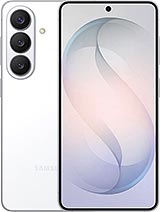
The Samsung Galaxy S26+ and S26 Ultra are both €450 off. We’re leaning towards the Ultra, even though the S26+ is pretty cheap for a 512GB unit. The Ultra is better-equipped to go head to head with the iPhone Pros in a camera shootout – it has a 200MP main (1/1.3”), a 50MP 5x/111mm periscope (and that same 10MP 3x/67mm tele), plus a 50MP ultra-wide. It also has a 6.9” Privacy Display with an S Pen. And it is the only Galaxy to support 60W wired and 25W wireless charging.
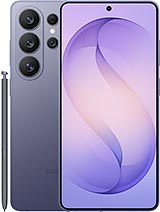
The Xiaomi 17T and 17T Pro are running modest discounts at the moment. The vanilla 17T is smaller with a 6.59” screen and a 6,500mAh battery (67W wired charging). It’s powered by the Dimensity 8500 Ultra. It has a 50MP main camera (1/1.55”), 50MP 5x/115mm periscope and a 12MP ultra-wide.
The Xiaomi 17T Pro is larger with a 6.83” screen and a 7,000mAh battery (100W wired, 50W wireless charging). It uses the flagship Dimensity 9500 chipset. Its 50MP main camera has a larger sensor (1/1.31”), while the 50MP 5x periscope and 12MP ultra-wide are the same.

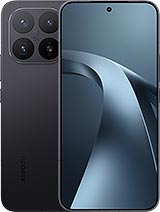
Our poll this week will be about the Redmi Note 17 Pro and 17 Pro Max. We have a sneaking suspicion people will not approve of their MSRPs. Luckily, you don’t have to pay anywhere close to that – the 17 Pro is €200 off and the 17 Pro Max is €150 off. Also, if you have an active Prime Student subscription, you can get a 15% discount.
Both models are pretty light on RAM, as you can see. They use Snapdragon 6s Gen 4 and Snapdragon 6 Gen 5 chipsets, respectively, which aren’t amazing either. And this generation dropped the 200MP cameras of the Note 15 Pro models. At least you get large batteries – 8,340mAh (67W) and 9,210mAh (100W).
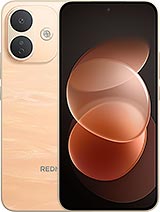
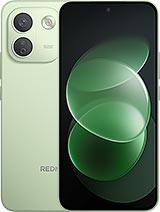
Then there are the Redmi 17 and Redmi Note 17. Both are huge with 6.9” and 6.99” displays, but the Redmi 17 has a 720p+ IPS LCD, while the Note 17 has a 1080p+ OLED. Battery capacity on both is essentially the same, 7,500mAh vs. 7,700mAh with 45W charging. Funnily enough, the Redmi 17 has the better chipset – well, “better” is relative as it is a Snapdragon 4 Gen 5 vs. Snapdragon 4 Gen 4. Still, since they are at the same price right now, we’d recommend the Redmi Note 17, unless you really, really prefer LCD over OLED. By the way, the Note 17 also has that 15% discount for Prime Student subscribers.


We may get a commission from qualifying sales.
Discussion about this post