









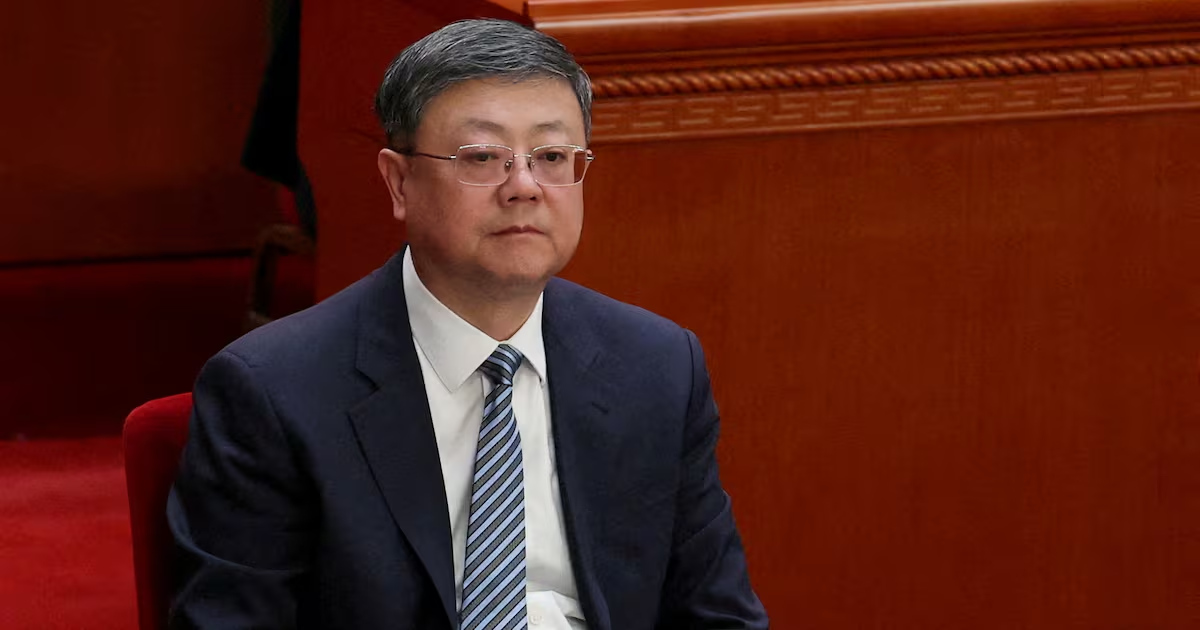
Investigation Launched into Shanghai Communist Party Chief Chen Jining
China has initiated an investigation into Chen Jining, the Communist Party chief of Shanghai, signaling a potential intensification of intra-party competition as the country approaches a major leadership reshuffle at next year’s party congress. Experts have indicated that this development may reflect deeper power struggles within the party.
Details of the Investigation
On November 24, authorities announced that Chen, a member of the ruling Communist Party’s Politburo, is under suspicion for “serious violations of discipline and law.” He is the fourth member of the current Politburo to face investigation, following notable figures such as He Weidong, Zhang Youxia, and Ma Xingrui.
While specific details regarding the allegations against Chen have yet to be made public, there has been no announcement regarding his removal from office or the appointment of a successor. Chen’s investigation occurs in a politically sensitive context ahead of the 21st National Congress of the Chinese Communist Party (CCP), reviving discussions about Xi Jinping’s intentions for shaping the next generation of leadership and potential successors.
Chen’s Profile and Historical Context
Chen Jining, 62, previously served as the president of Tsinghua University and held key positions such as the environmental protection minister and mayor of Beijing. He joined the Politburo in 2022 and succeeded Li Qiang as Shanghai’s party secretary that same year. The position has historically been viewed as a stepping stone to the highest echelons of Chinese leadership, a trajectory that both Xi and Li have followed, along with former leaders like Jiang Zemin and Zhu Rongji.
Notably, Chen is the first incumbent Shanghai party chief to be investigated since Chen Liangyu in 2006, who was sentenced to 18 years in prison for financial misconduct.
Political Implications and Reactions
Following the announcement of the investigation, Shanghai’s Communist Party Standing Committee held an expanded meeting to express its support for the Party Central Committee’s decision, emphasizing the necessity of political discipline and adherence to central government directives.
Tzeng Wei-feng, an associate research fellow at Taiwan’s National Chengchi University, pointed out that the rapid response from local officials indicates a growing alignment with Beijing’s policies. The ongoing investigations into multiple Politburo members must be viewed in the context of the party’s recent Fifth Plenary Session, which emphasized enhanced oversight and an ongoing anti-corruption campaign.
Succession and Future Leadership
Chen’s investigation has reignited discussions about the sensitive topic of Xi Jinping’s eventual succession. Veteran journalist Fang Fei noted that the lack of prior indications of scrutiny surrounding Chen raises questions about internal power dynamics within the CCP. While a clear succession plan could facilitate a stable power transfer, identifying a successor risks undermining Xi’s authority by potentially creating a rival power center.
Experts suggest that the concentration of power within a single leader complicates succession arrangements, as political retribution becomes a concern for leaders upon leaving office. U.S.-based economist Cheng Xiaonong highlighted that the more centralized power becomes, the greater the risk of political backlash against potential successors.
Conclusion
As the investigation into Chen Jining unfolds, it remains to be seen whether it will extend to other officials in Shanghai or reflect broader factional rivalries within the CCP. The ongoing political developments will likely influence the landscape of Chinese leadership in the near future.
Edited by Taejun Kang and Eugene Whong.









Discussion about this post