









Trump’s Executive Order Targets Congressional Oversight of Federal Contracts

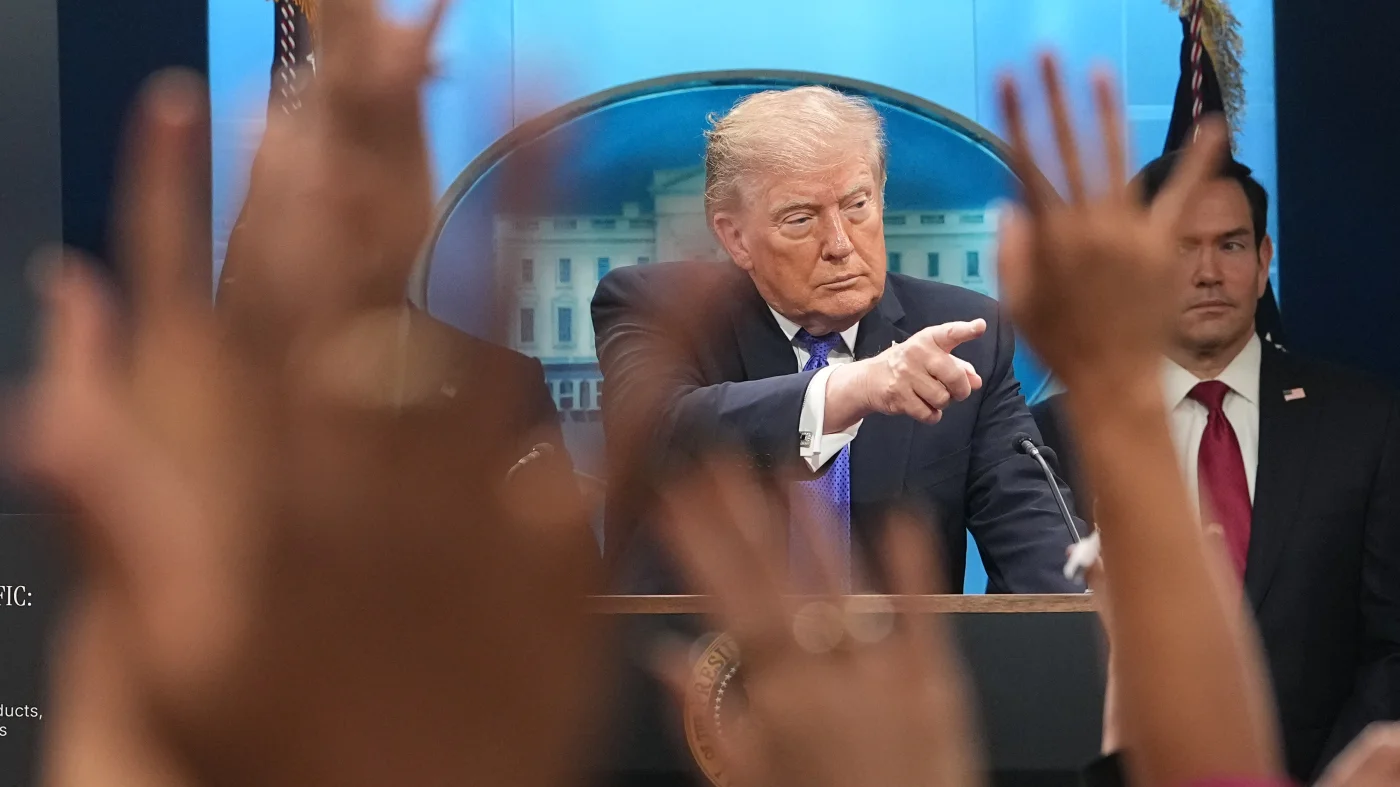
President Trump speaks at a news conference in the James Brady Press Briefing Room of the White House, Friday, Nov. 20, 2026, in Washington.
Jacquelyn Martin/AP
NEW YORK (AP) — President Donald Trump has issued an executive order directing federal contractors and subcontractors to engage with his administration regarding inquiries from Congress. This measure aims to protect communications deemed privileged by the White House, as detailed in the new executive order.
Under the terms of the order, companies are required to coordinate with the White House and relevant U.S. agencies to formulate “appropriate responses” to congressional requests. Noncompliance may result in the termination of contracts and suspension of future federal work, as warned by the White House.
This initiative represents the Republican administration’s proactive stance against anticipated intensive oversight efforts by Democrats set to take control of Congress in January. Democrats have prioritized government contracts as a key focus of their investigations, particularly scrutinizing federal funds directed to companies associated with Trump’s family, especially within the Pentagon.
White House officials are already implementing strategies to manage how federal agencies respond to congressional inquiries, bracing for a surge of investigations from the incoming Democratic majority.
Will Scharf, Trump’s counsel, has informed federal agencies that they must obtain clearance from his office and the White House’s Office of Legislative Affairs before engaging with Congress. In a recent correspondence to Rep. Robert Garcia of California, the leading Democrat on the House Oversight Committee, Scharf indicated that some congressional probes might reflect “blatant criminality.”
This week, Garcia dispatched letters urging members of Trump’s family and senior administration officials to preserve relevant documents. Scharf dismissed these requests in a letter, highlighting that Democrats do not yet hold the majority and thus cannot enforce compliance.
In reaction to the new executive order, Garcia criticized it as a “blatant attack on Congress’ constitutional right to conduct oversight,” asserting that despite the administration’s efforts to obstruct investigations, “we’re just getting started.”
A fact sheet released by the White House describes the new requirements as measures to “protect executive privileges from congressional overreach,” claiming that some congressional leaders have attempted to intrude upon the executive branch’s privileges by “harassing private companies that contract with the federal government.”
While presidents from both parties have historically invoked executive privilege to resist congressional inquiries, such claims often lead to contentious legal battles over their applicability. Executive privilege allows the president to withhold information from courts, Congress, and the public to safeguard the confidentiality of internal deliberations, though this protection is not absolute.
The recent executive order encompasses all contractors and subcontractors, impacting a vast network of tens of thousands of businesses.





Discussion about this post