









By Rhoda Green
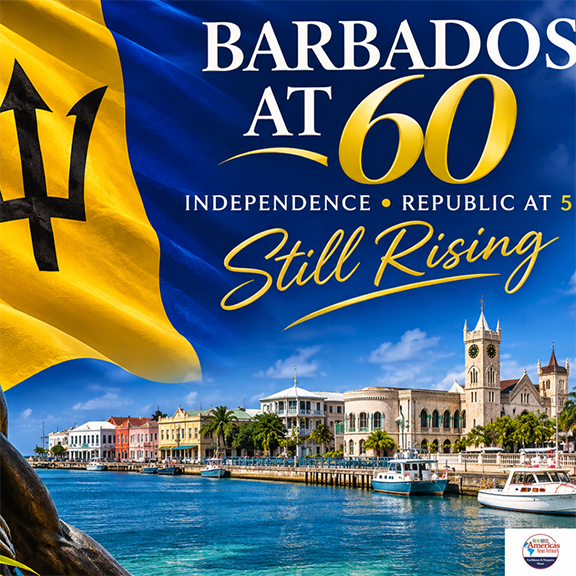
News Americas Now, CHARLESTON, S.C., Fri. Nov. 27, 2026: On November 30, 2026, Barbados will commemorate its 60th year of Independence and its fifth year as a Republic. Emerging from the depths of the Atlantic Ocean and the Caribbean tectonic plate, Barbados continues to rise—both physically and symbolically. The island’s unique geological formation may have influenced its distinct historical and cultural trajectory within the Atlantic region.
The 166-square-mile island, affectionately referred to as the Rock or Bim by its inhabitants, was first settled by the English in 1627. Although earlier inhabitants left behind traces of their presence, historical narratives often suggest the island was uninhabited prior to European colonization. In the highly competitive quest for new territories, the English focused on transforming Barbados into a lucrative colony.
From 1627 to 1966, Barbados remained under English rule. Known as ‘Little England,’ the island became a central hub for British expansion in the Americas. Its geographical features provided a degree of protection from external conflicts, allowing the English flag to be firmly established. Jewish immigrants fleeing persecution in Brazil arrived, introducing sugar cane cultivation that would lead to the island’s economic prosperity through the production of sugar—referred to as ‘white gold.’ The British established a model of governance that relied heavily on the exploitation of enslaved Africans, who were forcibly brought to work the plantations, becoming integral to the island’s economy.
Barbados served as a testing ground for British governance, with its principles later adopted in other colonies. The Charter of Barbados, established in the Treaty of Oistins in January 1652, introduced the concept of “no taxation without representation,” a principle echoed in the U.S. Declaration of Independence in 1776. However, during the same period, Barbados also enacted the first slave code in the English-speaking world, marking its complex legacy as both a pioneer of rights and an enforcer of oppression.
THE CAROLINA CONNECTION
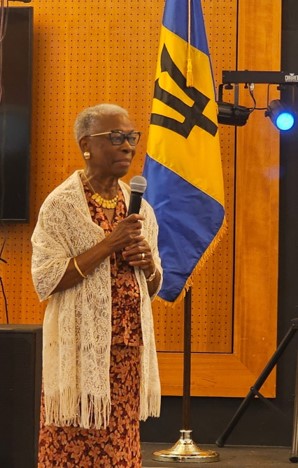
Interest in the Barbados-Carolina connection surged in the late 1970s, revealing a history often told from the victor’s perspective. Two significant publications, May Lumsden’s “The Barbados-American Connection” and “The Barbados-Carolina Connection,” edited by Warren Alleyne and Sir Henry Fraser, brought attention to the historical ties between the regions. These efforts were propelled by individuals like Markly Wilson from New York and Rhoda Green from South Carolina, who recognized Barbados’ crucial role in shaping the Caribbean and colonial American history.
Both regions reflect a shared colonial past, with architecture and culture echoing their intertwined histories. Historians suggest that South Carolina during the colonial period resembled a Caribbean colony more than a mainland settlement. The American Revolution created a divergence, with the Caribbean colonies remaining loyal to Britain while South Carolina allied with the revolutionaries. Historic Bridgetown and its Garrison, a UNESCO World Heritage Site, exemplify this colonial heritage, showcasing English medieval architecture and urban design.
Founded in 1670 by English settlers, Charles Towne (now Charleston) adopted many elements from Barbados, including street layouts and architectural styles. Trade between the two regions flourished, with Charleston serving as the ‘breadbasket’ for Barbados as sugar plantations prioritized cash crops over food production.
The Barbados And The Carolinas Legacy Foundation
The Barbados and the Carolinas Legacy Foundation (B&CLF), founded by Rhoda Green, aims to strengthen ties between the two regions. The foundation has established partnerships with various organizations, including Historic Charleston, and facilitated the twinning of the City of Charleston and Speightstown in 1997. Current collaborations include agreements with the South Carolina National Heritage Corridor, the Gullah Geechee Cultural Heritage Corridor, and several educational and cultural institutions.
INDEPENDENCE
As Barbados celebrates these significant milestones, it is essential to acknowledge the resilience of its people. Following emancipation, the island’s population elected leaders who prioritized education and development, navigating a challenging path toward self-governance. The experiences of hardship and migration influenced a culture that values education and community, enabling Barbadians to excel and represent their nation on the global stage.
The narrative of Barbados is one of perseverance and transformation, as the island continues to evolve while maintaining connections with its Caribbean neighbors and the United States. As the U.S. marks the 250th anniversary of its own independence this year, Barbados stands proud in its journey forward.
About the author: Rhoda Green is the Founder and Board Chair of the Barbados and the Carolinas Legacy Foundation and Honorary Consul of Barbados to South Carolina.







Discussion about this post