Pacers star Tyrese Haliburton weighed in on the ongoing discussion around flopping in the NBA, saying on “The Pat McAfee Show” that it’s “for sure” being taught.
Thunder star Shai Gilgeous-Alexander has received the most attention for perceived flopping in order to draw fouls, but Halburton believed it went well beyond just one player.
“Yeah for sure, it’s being taught. I don’t think it’s as much head coach teaching as much as it is like player development,” he said on the ESPN program “Even before you get to the NBA, it’s just something that you kind of work on by nature. I think the best scorers are usually the guys that get to the free-throw line the most. It’s definitely something they work on, even in pickup, they’re working on how they can draw fouls. I think that’s a part of the game.”
Tyrese Haliburton says players are being taught how to flop:
“It’s for sure being taught. I don’t think head coaches are, but it’s a part of player development before you get to the NBA. It’s something you naturally work on. It’s now a part of the game.” (via @PatMcafeeShow,… pic.twitter.com/2WZF7OCQQX
Concerns about flopping have continued to permeate around the NBA, with Yahoo Sports’ Tom Haberstroh going as far as to do an extensive breakdown of Gilgeous-Alexander’s attempts to sell foul calls.
His report found that Gilgeous-Alexander fell down 51.4 percent of the time when a foul was called.
“I think more times than not there’s embellishing going on, more so than falling over out of nowhere, but does it happen? Of course it happens and it’s talked about, no question,” Haliburton said.
The Pacers star wasn’t the only one to address the flopping issue on McAfee’s show.
Shai Gilgeous-Alexander of the Oklahoma City Thunder drives around Julian Champagnie of the San Antonio Spurs during the fourth quarter in Game Five of the NBA Western Conference Finals at Paycom Center on May 26, 2026 in Oklahoma City, Oklahoma. Getty Images
NBA commissioner Adam Silver, during his appearance on the Worldwide Leader, made the distinction between trying to embellish contact to draw a foul and trying to trick the officials.
“Even as I sit in the stands at games, players may be falling down, players may be reacting to a call,” Silver said. “But to me, if they’re not fooling the referees, it’s OK.
The chemical industry has been well aware of the risks of the type of thermal runaway reaction that forced 50,000 people from their homes in Orange County last weekend, reviving years of warnings from researchers about the potential dangers.
Nearly 15% of incidents in the U.S. involving uncontrolled chemical reactions between 1980 to 2001 were thermal runaway incidents that involved rapid polymerization of a chemical, according to a study published in the journal ACS Omega, citing information from the U.S. Chemical Safety and Hazard Investigation Board.
Such incidents have led to deaths globally, but some experts say the industry has struggled to improve safety.
In Orange County, the crisis was sparked by thousands of gallons of a highly toxic chemical in a failing pressurized chemical tank that was heating up at a Garden Grove aerospace firm. There was a potential of fire or flash fire over many city blocks, and there were businesses, dozens of homes and an elementary school in a potential damage blast zone.
The worst-case scenario was averted over the Memorial Day weekend. But serious questions remain over how such a near-disaster could have happened.
Authorities suspect that the cooling system responsible for maintaining the temperature of a tank filled with a hazardous chemical at GKN Aerospace failed, leading to the crisis at the facility that triggered evacuations, Orange County Fire Authority Interim Chief TJ McGovern said Tuesday.
This likely led to a buildup of heat in the pressurized tank filled with 7,000 gallons of a highly reactive liquid chemical called methyl methacrylate, or MMA, which can be used to make items such as Plexiglass as well as household goods.
“We don’t know why, but it stopped cooling,” McGovern said Tuesday. “So that’s what started this event, to where the product heated up and it off-gassed through the relief valve, and that’s how this whole response started. We’re just now being able to get to the tanks, so there’s definitely more to come of what caused it.”
Fire officials and experts were faced with a seemingly no-win situation: a “boiling liquid expanding vapor explosion,” or BLEVE, which would have caused widespread damage and released toxic material into the air, or a potential chemical spill that could have fouled up waterways and the ocean. Inhaling MMA can irritate the lungs and, at high levels of exposure, can cause severe respiratory distress and hospitalization; long-term exposure has been linked to serious organ damage.
Although fire officials referenced the off-gassing of “fumes” and said on Friday that the tank was “no longer purging any kind of product,” the county’s health officer, Dr. Regina Chinsio-Kwong, on Monday said no fumes or vapors were issued during the incident. The U.S. Environmental Protection Agency said its air monitors had not detected toxic airborne chemicals, but environmental experts were skeptical that no toxic substances had been released.
The suspected failure of a cooling system, and the introduction of heat to a pressurized tank with MMA, planted the seeds of a potential catastrophe.
When liquid MMA is exposed to heat or light, it will start a chain reaction, said Elaine Villanueva Bernal, a lecturer at Cal State Long Beach’s department of chemistry and biochemistry.
As MMA solidifies, “it produces heat, and then in producing that heat, it furthers the chain reaction, so it keeps going and going and going,” Bernal said.
If it gets out of control, this leads to a process called a thermal runaway.
MMA is a highly reactive chemical, a monomer that can be used to make polymers of hard, durable, lightweight and transparent plastics. But introducing heat to MMA in a pressurized tank caused the chemical to react, starting its transformation from a liquid to solid state, which produces even more heat.
Eventually, it can result in a BLEVE.
That refers to when a liquid is “rapidly depressurized, causing a nearly instantaneous transition from liquid to vapor with a corresponding energy release,” and is “often accompanied by a large aerosol fireball,” according to the American Institute of Chemical Engineers’ Center for Chemical Process Safety.
Chemical leak at GKN Aerospace
The Garden Grove facility neighbors an elementary school and residential neighborhood.
GKN Aerospace, based in Britain, makes landing gears, jet engines and other materials for commercial and military aircraft at its Garden Grove facility. The company did not respond to questions Tuesday, but earlier said that “we apologize for the ongoing disruption this incident is causing and our priority remains its safe resolution.”
Orange County ended up in a much better position than incidents elsewhere. In India, 12 people died and more than 580 were injured after a thermal runaway of styrene and release of styrene vapor occurred at the LG Polymers plant in the port city of Visakhapatnam in 2020. A committee appointed by India’s top environmental court blamed “gross human failure” and a lack of basic safety norms for the disaster, the Associated Press reported.
“Lessons have not been learned,” the ACS Omega study said, referring specifically to styrene-related runaway incidents.
And in 2012, one person died and 36 were injured in an explosion and chemical fire at a chemical plant in Himeji, Japan. The disaster occurred after the “runaway polymerization of acrylic acid” in an intermediate storage tank, a study published in the journal Process Safety and Environmental Protection said, citing information from the factory’s operator, Nippon Shokubai Co.
A study published in 2023 urged more attention to be paid to MMA.
“The correct choice of operating conditions often constitutes the first line of defense against thermal runaway events,” the study, published in the journal Thermochimica Acta, said. Without evaluating potential thermal hazards, implementing safe process designs and strengthening thermal safety, “the highly exothermic nature of the reaction may pose a severe threat to process safety as well as to industrial-scale equipment and to human lives.”
The report from the U.S. Chemical Safety and Hazard Investigation Board, issued in 2002, called on a need to “improve the management of reactive hazards” following two accidents in the 1990s in New Jersey, one of which killed five workers.
“Reactive incidents are a significant chemical safety problem,” the report concluded.
In the case of the Orange County chemical tank, officials watched as the temperature gauge in the crippled tank rose from 77 degrees Fahrenheit on Friday, to 90 degrees on Saturday, to at least 100 degrees on Sunday — the maximum reading on the gauge. At one point, the tank began to bulge.
The easiest solution — pumping in a neutralizing agent to stop the reaction — failed because, presumably, the MMA in the valve had reacted and transformed from a liquid to a solid and clogged up the valve, meaning the neutralizing agent could not be pumped in, nor could the toxic reactive fluid be drained out, according to Elias Picazo, an assistant professor of chemistry at USC.
Crews could not “get anything into the compromised tank because, the theory is, the product was starting to solidify and it gummed up the dump valves,” McGovern said.
All officials could do was spray cool water on the tank, hoping that by cooling it down, tragedy could be avoided. On Monday, Craig Covey, an Orange County Fire Authority division chief, said firefighters wanted the MMA chemical to stabilize and become more like gel — rather than the flammable liquid they were first dealing with. “You have to control that temperature to get that egg done right‚ and not crack the shell,” Covey said.
In the end, though, neither an explosion nor a giant spill of fluid that could foul up waterways and the ocean occurred. The cooling strategy appeared to have worked.
On Monday, “we really turned the corner,” McGovern said. Officials confirmed there was a crack in the tank and it was no longer pressurized, taking the concern of a BLEVE “off the table,” he said.
Officials then reduced the evacuation zone.
The crack “allowed us to get more of our crews into the tank,” he said. “They were able to start peeling back the external wall of the tank and move the insulation.”
Then they were able to focus their unstaffed hose lines more on the internal tank to start better cooling measures and reduce the internal temperature of the substance. As of Tuesday morning, the substance was hovering between 90 and 92 degrees Fahrenheit and water was still flowing on it.
Later Tuesday, crews started shutting down some of the water supply that’s cooling the tank. Crews were going to start with one of the two water systems and see how the temperature responds.
“We’re looking for any fluctuations. What we do not want is the internal temperature to increase because we’re shutting down the water. We would really like it to decrease, but as long as it doesn’t move, we’re looking at the stability of the internal temperature.”
If the temperature remains constant, they’re going to consider shutting down the secondary water supply. After that, if the temperature doesn’t fluctuate, it would “tell us that the fire problem, or the small explosion, has been mitigated,” McGovern said.
By Tuesday night, all remaining evacuation orders were lifted, with authorities declaring there was no remaining danger of an explosion, chemical leak or fire.
Times staff writersTony Briscoe, Clara Harter and Meg James contributed to this report.
Recent leaks about immigration enforcement actions and the secretive U.S. raid on Venezuela underscore the need for NDAs, the Office of Personnel Management (OPM) writes in a proposed rule scheduled to be published in the Federal Register on Wednesday.
OPM asserts those disclosures put the lives of federal agents and members of the armed forces at risk. The document does not mention the highest-profile disclosure of the second Trump administration: Defense Secretary Pete Hegseth’s revelation over a Signal group chat of plans for a military strike on Yemen.
The roughly 2 million people who work for the federal government are already required to safeguard confidential and proprietary information obtained on the job.
OPM says its proposal “does not create new substantive restrictions on employee speech or disclosure rights,” but instead provides a standardized way for federal workers to acknowledge and agree to their existing obligations.
But some people familiar with the inner workings of the federal government dispute that characterization.
“This seems to be a new add-on that seems to be very, very broad in nature,” says Ray Limon, who served as an attorney and human resources leader in the federal government for nearly three decades. “I’m just adding this to another tranche of measures that they’re taking to step on the throat of the employee.”
OPM did not immediately respond to NPR’s questions about the proposed rule.
NDAs used selectively throughout the federal government
NDAs are widespread in the private sector and already used selectively throughout the government, including in areas involving national security.
But the vast majority of civil servants — who handle the unclassified, routine work of the government — do not sign NDAs, Limon says, although they are bound by numerous restrictions on how they handle agency information.
According to the draft rule, agencies could decide for themselves whether to use the new agreements. Still, a government-wide push for NDAs would be unprecedented.
“It would be a big deal, absolutely,” says Limon. “It’s been very, very limited in how they’ve been used.”
According to the draft rule, the NDA would cover information “relating to internal agency operations, personnel matters, procurement processes, or any sensitive, pre-decisional or deliberative material that is not currently publicly available and should not be disclosed under applicable law.”
Limon fears such broad language would discourage federal employees from making lawful disclosures under the Whistleblower Protection Act. That law protects federal employees from retaliation if they report government wrongdoing, such as fraud, waste, or abuse.
In the draft rule, OPM says federal employees will still have the right to make whistleblower disclosures, but Limon remains wary.
“I just think it’s going to create a lot more confusion than necessary,” he says.
Public input sought on penalties
The administration has invited the public to weigh in on a number of questions related to the draft rule, including what actions the government should take against employees — new or existing — who refuse to sign an NDA.
In a separate draft rule proposed last year, OPM suggested failure to sign an NDA could result in termination or debarment from future employment with the federal government.
A dog reportedly triggered a shotgun inside a truck during a stop at a Nebraska gas station Saturday, sending a blast through the vehicle and injuring a woman in another vehicle several yards away, according to local reports, citing Nebraska authorities.
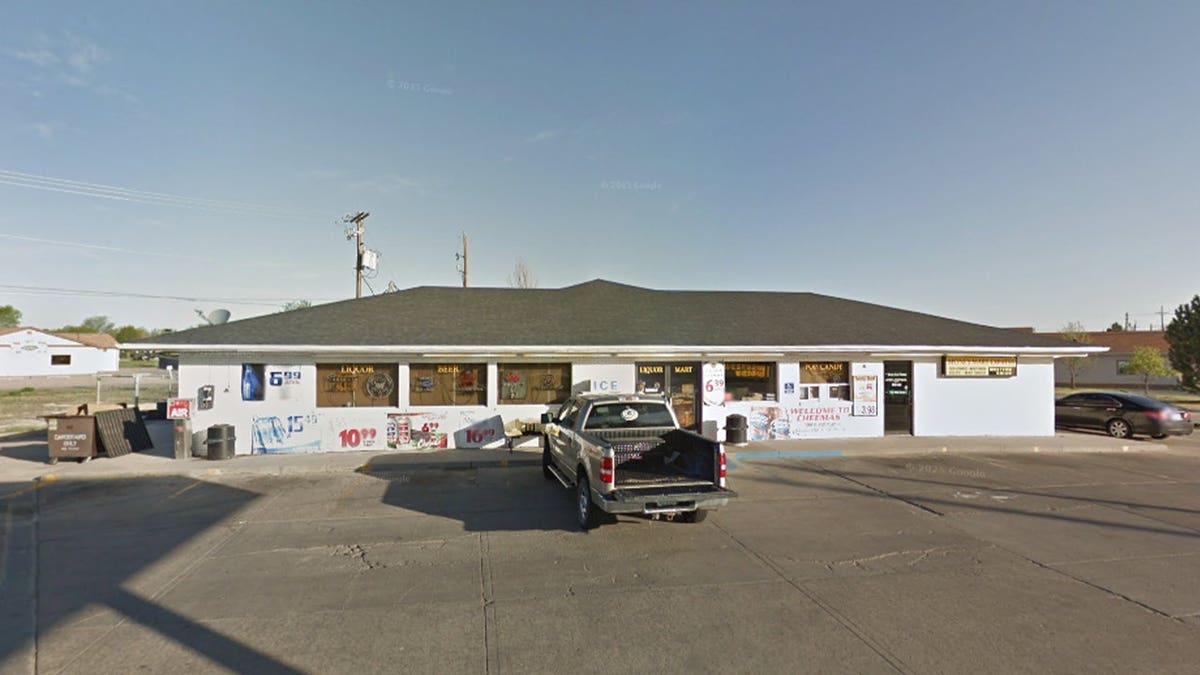
The incident unfolded shortly after noon when the vehicle pulled into Short Stop, a gas station and convenience store, located at 2002 Avenue I, KNOP reported.
According to the Scottsbluff Police Department, the dog remained inside the vehicle after the owner stepped into the store. Another passenger riding along also stepped outside but stayed near the front passenger-side door, the outlet said.
During that time, the dog reportedly moved around in the rear seat area and came into contact with a shotgun stored in the vehicle. The firearm appeared to have a live round in the chamber and was discharged after being triggered, the authorities indicated.
LOUISIANA FATHER WITH ‘HEART OF GOLD’ DIES AFTER RIFLE ACCIDENTALLY DISCHARGES DURING HUNTING TRIP
A general view of a Nebraska gas station where a dog accidentally triggered a loaded shotgun inside a vehicle.(Google Maps)
The blast reportedly passed through the vehicle’s front passenger-side door, traveled out of the parking lot, and struck a woman who was stopped at a nearby traffic light several yards away.
Police said a shotgun pellet struck the upper portion of her right arm, which was resting out the window at the time, according to KNOP.
Her injuries were not considered life-threatening, and a family member transported her to Regional West Medical Center for treatment, the outlet added.
7-YEAR-OLD INJURES HAND AFTER ACCIDENTALLY DISCHARGING FIREARM IN MARYLAND CLASSROOM
A dog sits inside a red vehicle on Jan. 23, 2021.(Sebnem Coskun/Anadolu Agency via Getty Images)
No other injuries were reported.
Police said the incident was initially reported as involving a BB gun, but responding officers were later informed that it involved a shotgun, according to the outlet.
CLICK HERE TO DOWNLOAD THE FOX NEWS APP
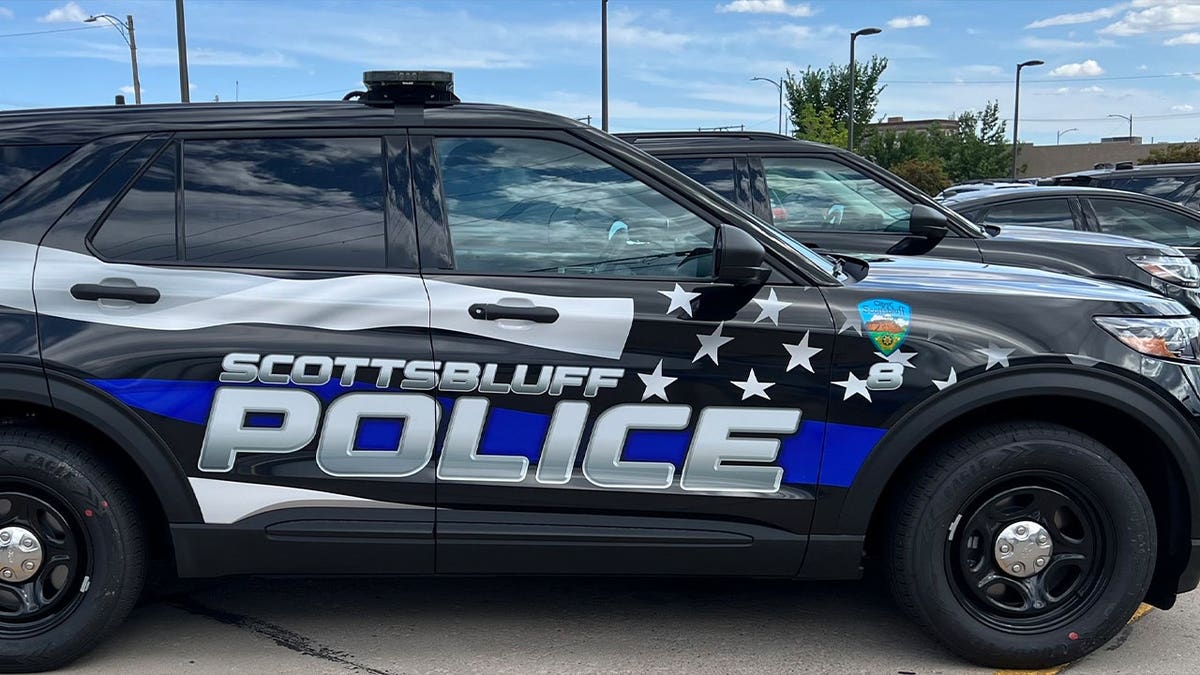
The Scottsbluff Police Department is investigating after a dog accidentally discharged a shotgun while inside a truck parked at a convenience store in Nebraska on May 23, 2026.(Scottsbluff Police Department)
Investigators also noted damage to the vehicle’s passenger-side door consistent with a shotgun blast, KNOP added.
The Scottsbluff Police Department will continue to investigate the incident.
Fox News Digital reached out to the Scottsbluff Police Department for more information.
Bonny Chu is a Breaking and Trending News Writer for Fox News Digital
Toshifumi Suzuki, the convenience store pioneer who built 7-Eleven into a fixture of daily life in Japan, died last week of heart failure. He was 93.
Seven & i, the Japanese operator of the 7-Eleven franchise, where Mr. Suzuki served as an honorary adviser, confirmed his death on Monday.
Over four decades leading 7-Eleven Japan, Mr. Suzuki transformed the business from a single store on Tokyo’s eastern bay into an empire of tens of thousands of locations. Known as a relentless innovator, he pioneered many hallmarks of the modern Japanese convenience store — from in-store banking to crisp seaweed-wrapped rice balls — that are beloved by many in Japan and abroad.
Since Mr. Suzuki’s resignation in 2016, 7-Eleven has struggled to maintain its footing. In recent years, the company has faced stagnant profitability, a tumultuous takeover bid from a Canadian rival and the challenge of bringing in a new chief executive to revive growth. Some in the company lament that its culture of innovation departed when Mr. Suzuki resigned.
Born in Nagano Prefecture, northwest of Tokyo, Mr. Suzuki worked in publishing sales before he was personally recruited by Masatoshi Ito, the founder of Ito-Yokado, a major retail chain in Japan. Mr. Suzuki joined the company and became a director in 1971.
Just a few years later, Mr. Suzuki spotted an American convenience store chain called 7-Eleven, operated by the Dallas-based Southland Corporation, and saw an opportunity to bring it to Japan.At the time, many were skeptical that American-style convenience stores could succeed in a market dominated by small mom-and-pop shops.
Mr. Suzuki was undeterred. His longtime motto was “adapt to change,” a credo he said had emerged from his experience during World War II, when his life as a junior high school student was suddenly upended and he realized that things could change in an instant.
In 1973, Mr. Suzuki teamed up with Southland to bring 7-Eleven to Japan. The next year, the first 7-Eleven opened in Tokyo’s eastern Toyosu neighborhood. Stocked with popular American items like hamburgers, it was an immediate hit. Within two years, the chain had expanded to 100 stores.
Mr. Suzuki pressed ahead, continually adapting and refining 7-Eleven’s operations. In 1975, 7-Eleven introduced 24-hour operations at a store in Fukushima Prefecture, a model that would become standard across Japan’s convenience store industry. He also rolled out the Japanese retail sector’s first large-scale point-of-sale system for item-by-item inventory management.
Over the next three decades, Mr. Suzuki oversaw the opening of thousands of additional stores across Japan. 7-Eleven’s Japanese operator steadily increased its stake in Southland until the chain became wholly Japanese-owned in 2005.
Under Mr. Suzuki’s leadership, convenience stores began reshaping everyday life in Japan. They began selling staples like rice balls and bento boxes — foods traditionally prepared at home that became some of the stores’ most popular items. 7-Eleven also expanded into services ranging from package shipping to bill payment and introduced machines that brewed fresh coffee at the counter.
By 2015, the 7-Eleven empire had grown to more than 55,000 stores globally, making it the largest convenience store chain in the world. Within the industry, Mr. Suzuki became known as the “God of Retail.”
The next year, Mr. Suzuki resigned after a failed attempt to oust Ryuichi Isaka, then the president of 7-Eleven Japan, on the grounds that Mr. Isaka had failed to meet performance expectations. After the board rejected the proposal, Mr. Suzuki said the vote showed he no longer had the confidence of the company’s leadership.
He remained at the company as an honorary adviser, a post he held until his death.
Mr. Suzuki is survived by his wife and two children, according to local media. A spokesman for Seven & i declined to comment. One of Mr. Suzuki’s sons, Yasuhiro Suzuki, served as an executive at Seven & i until 2016.
For much of the past decade, Seven & i has been in the midst of a major overhaul. The 7-Eleven operator had expanded beyond convenience stores and supermarkets, moving into retail outlets selling everything from stationery to baby goods, but many of those peripheral businesses struggled.
In 2024, the Canadian retailer Alimentation Couche-Tard approached Seven & i with a $47 billion takeover offer. Seven & i rejected the bid, but internally, the offer intensified a growing sense of crisis. The company’s stock price and growth prospects had stalled, and critics argued that 7-Eleven’s last major product innovation was the freshly brewed counter coffee introduced under Mr. Suzuki in 2013.
Last year, the company gained momentum with the appointment of a new chief executive, Stephen Dacus, who quickly laid out plans to spend billions of dollars on overseas expansion.
Mr. Dacus has said he hopes to revive Mr. Suzuki’s trailblazing spirit at 7-Eleven and use it as a driver of growth. The demanding nature of Japanese consumers “forces you to innovate,” Mr. Dacus said in an interview last year. “That’s a real big benefit.”
A judge Issued what appears to be the first-ever sanction against the private prison giant CoreCivic for destroying video evidence in a case alleging wrongful death of a man who died by suicide in U.S. Immigration and Customs Enforcement custody.
The sanction came shortly before a trial was slated to begin in January, but it never got underway. Instead, in March, the company reached an undisclosed settlement with the family of the detainee.
The judge ordered what is known as an adverse inference against the company in a December hearing. That means the jury could have presumed the missing evidence was unfavorable in an eventual trial and therefore effectively imposed a penalty against CoreCivic.
“CoreCivic is essentially used to getting away with it — to not getting called on it.”
The previously unreported sanction is the first known incident of a private prison corporation being held responsible in a wrongful death lawsuit for destroying video or other evidence related to immigration detainees dying in custody — despite there being cases of such behavior stretching back nearly a decade, experts said. (Neither CoreCivic nor ICE responded to requests for comment.)
Rebecca Sheff, senior staff attorney of ACLU New Mexico and part of plaintiffs’ legal team, told The Intercept that the judge’s sanction was an important response to prison companies’ propensity for overwriting video evidence. In court, destroying evidence is considered “spoliation,” the legal term for destroying, altering or failing to preserve evidence.
“It’s a practice we documented and unearthed: CoreCivic routinely lets video evidence be overwritten,” Sheff said, “even in this case, where they’ve been put on notice.”
“CoreCivic is essentially used to getting away with it — to not getting called on it,” Sheff added.
Immigration attorney Laboni Hoq, who was not involved in the CoreCivic case but has pursued similar sanctions in a wrongful death case involving the prison corporation GEO Group, said, “There has to be accountability when there are knowable consequences and prison corporations flout their responsibilities to preserve evidence.”
14 of 15 Cameras
The CoreCivic case revolved around the detention of Kesley Vial, a 23-year-old Brazilian asylum-seeker who died in a hospital on August 24, 2022, seven days after attempting suicide at the CoreCivic-owned Torrance County Detention Facility in Estancia, New Mexico.
Attorneys for Vial’s family sent CoreCivic a letter on the day he died, demanding preservation of all records relevant to his suicide attempt, including video footage taken in Vial’s cell, adjacent areas, rooms, and anywhere relevant to the incident. (Vial’s family declined to comment for this story.)
In the weeks that followed, a CoreCivic investigator produced a report featuring 49 stills taken from video footage, laying out a timeline supporting the company’s contention that it bore no responsibility for Vial’s death.
CoreCivic, however, never produced the actual video footage underlying 37 of the 49 photos, according to Sheff’s courtroom testimony. In fact, the company destroyed footage from 14 of 15 cameras in use that day, Sheff testified. The company claimed to have taped over the material.
“CoreCivic says that their staff had no way of knowing that Kesley Vial was on the verge of taking his own life on August 17th of 2022,” Sheff told Judge Francis J. Mathew during a December pre-trial hearing. “And when CoreCivic destroyed hours of video footage from that day, fully aware of the likelihood of litigation, they deprived the jury and all of us of the chance to see for ourselves.”
“More than three years later, we still have no convincing explanation for this destruction of evidence,” Sheff added.
The company pointed the judge to its 49-page timeline.
“More than three years later, we still have no convincing explanation for this destruction of evidence.”
“I know of no situation where opposing parties get to tell the opposed that what they have is the important information,” Mathew replied, according to an audio recording of the proceedings obtained by The Intercept.
The company’s attorney responded, “The jury will have all the evidence they need to determine whether or not CoreCivic fell below their duty.”
The judge said, “That’s a question I’m not sure we can answer without that video.”
In slightly less than an hour, Mathew made up his mind.
“I do believe that the spoliation of this evidence merits a sanction,” he said, “an adverse inference instruction to the jury.”
Within weeks of the judge’s decision, CoreCivic began settlement discussions with Vial’s family for an undisclosed amount. ACLU New Mexico announced the settlement March 19.
The judge’s order may have factored into the company’s decision to forgo a trial, which was set to start in January, said Eunice Cho, an immigration attorney with expertise in detention conditions.
“The fact defendants settled in the 11th hour made it clear they potentially didn’t want relevant facts to be tried – including the adverse inference,” Cho told The Intercept. “An adverse finding could lead the court to instruct the jury that the evidence contained unfavorable information and may damage the witness’s credibility.”
We’re independent of corporate interests — and powered by members. Join us.
Become a member
Join Our Newsletter
Thank You For Joining!
Original reporting. Fearless journalism. Delivered to you.
Will you take the next step to support our independent journalism by becoming a member of The Intercept?
Become a member
By signing up, I agree to receive emails from The Intercept and to the Privacy Policy and Terms of Use.
Hours Before the Suicide
In Vial’s case, the missing footage would have shown key events in the hours before he attempted to take his own life — “including him crying so hard that he was having trouble walking, punching the wall and collapsing to the floor,” according to a September plaintiff’s motion seeking sanctions against CoreCivic.
“There’s no substitute for seeing how he was behaving, how medical staff and officers were behaving, at Mental Health, in the hallway, in the cell – all these consequential, pivotal moments – and what could’ve been done to protect him,” Sheff told The Intercept.
Whereas Vial’s case came to a relatively quick end, lawsuits in which judges don’t intervene can become drawn out. Many families of loved ones who have died in immigration detention are stymied by the lack of video evidence and by the amount of time it can take to resolve a wrongful death lawsuit against an immigration detention corporation, said Jeremy Jong, immigration attorney for Al Otro Lado, a legal rights organization.
“They begin thinking, ‘We want justice,’” Jong said. “Years later, it’s more like, ‘We just want to give up.’”
Even when private prison firms are forced to pay out, the sums pale in comparison with the companies’ government contracts. Jong said the disparity creates “perverse incentives” to let poor detention conditions persist, with the settlements acting as “just part of their operating expenses.”
CoreCivic — which, alongside GEO Group, is one of the two largest prison corporations in the U.S. — received $2.2 billion in revenue last year, up from $2 billion the year before.
The issue will only become more important as the Trump administration pursues its mass deportation push, leading to more deaths in detention: 18 this year as of May 1, on track to reach a record high.
With the rising number of deaths, Hoq finds herself advising attorneys and families who contact her regarding wrongful death claims.
“The first piece of advice I give them is to send a letter to the corporation requesting them to immediately stop overwriting video,” she said. “The issue is more important than ever — to scrutinize whether ICE and prison corporations are following through on their obligation to preserve evidence.”
A person who opened fire Saturday on a White House security checkpoint is dead after being shot by officers who returned fire, the U.S. Secret Service said. It was the third incidence of gunfire in the vicinity of President Trump in the past month.
The law enforcement agency said in a preliminary statement posted on X that the person in the area of 17th Street and Pennsylvania Avenue “pulled a weapon from his bag” shortly after 6 p.m. ET and began firing. The officers returned fire, hitting the suspect, who was taken to a hospital where he later died, the Secret Service said.
The suspect was identified as 21-year-old Nasire Best, said a law enforcement official who spoke on the condition of anonymity because they were not authorized to discuss the investigation.
According to District of Columbia court records, Best was arrested in July 2025 after he attempted to enter a different White House checkpoint without authorization, didn’t heed officers’ commands to stop, “claimed he was Jesus Christ” and said he wanted to be arrested.
An initial hearing was held, and a “Pretrial Stay Away Order” was issued, typically a measure ordering a defendant not to go near a person or area ahead of trial. A bench warrant was issued in August after a notice of “noncompliance” against Best, who did not show up for a subsequent hearing.
It was the third time in the past month that gunfire had broken out near the president, following incidents at the White House Correspondents’ Association Dinner in April and near the Washington Monument earlier in May.
A bystander was also struck on Saturday, but a law enforcement official said it wasn’t clear whether that person was struck by the suspect’s initial bullets or those fired subsequently by officers.
Secret Service said none of its officers were injured, and that Trump — who was at the White House at the time — was not “impacted.”
Journalists working at the White House on Saturday evening reported hearing a series of gunshots and were told to seek shelter inside the press briefing room.
In a social media post, FBI Director Kash Patel said officers were responding to shots fired and said he would “update the public as we’re able.”
Evidence of the shooting was visible on a sidewalk just outside the White House complex, where yellow crime scene tape snaked across the pavement and officers with the U.S. Secret Service placed dozens of orange evidence markers on the ground. Medical material, including what appeared to be purple surgical gloves and kits typically used by emergency medical personnel, were also seen.
In a post shared on X, ABC News senior White House correspondent Selina Wang shared dramatic video of the moment she said she heard what “sounded like dozens of gunshots” and ducked for cover. Writing that she had been performing a routine task that White House reporters do daily — filming themselves on a cellphone for a social media post — Wang’s video shows her speaking for a few seconds about Trump’s statements earlier Saturday about a potential Iran deal.
As the sounds of gunfire are heard in the background, Wang’s eyes grow wider, and she ducks down in the media tent, which is among those situated in a line along the White House driveway where broadcasters film their reports. On X, Wang’s video had been shared thousands of times as of Saturday evening and viewed at least 3 million times.
The Metropolitan Police Department said on its X account that the Secret Service was working the scene and cautioned people to avoid the area. The scene is near where a gunman ambushed two members of the West Virginia National Guard last November.
U.S. Army Specialist Sarah Beckstrom, 20, died from her wounds. Andrew Wolfe, then 24, was critically wounded. Rahmanullah Lakanwal has been charged in that incident.
The gunfire Saturday comes nearly a month after what law enforcement authorities said was an attempted assassination of the president on April 25 as he attended the annual White House Correspondents’ Association Dinner at a Washington hotel. Cole Tomas Allen, of Torrance, California, recently pleaded not guilty to charges that he attempted to kill Trump and remains in federal custody.
Following that scare, Secret Service officers shot a suspect they said had fired at officers near the Washington Monument, also near the White House. Michael Marx, 45, of Midland, Texas, was charged in a complaint filed in U.S. District Court in connection with the May 4 shooting. A teenage bystander was wounded in that incident.
___
Kinnard reported from Columbia, South Carolina. Associated Press photojournalists Jose Luis Magana and Alex Brandon and AP writers Gary Fields and Matthew Daly contributed to this report.
“Colbert is finally finished at CBS,” Trump wrote on Truth Social after the late-night host’s final episode of *The Late Show*. “No talent, no ratings, no life. He was like a dead person.”
But Nielsen data reported shows Colbert’s farewell broadcast drew roughly 6.74 million viewers — the largest audience of his tenure and a sharp spike compared with his typical viewership, which had hovered closer to the mid–2 million range in recent months. The finale also outperformed standard weeknight late-night competition by a wide margin, turning the sendoff into a notable ratings moment rather than a collapse.
It’s worth noting that another late night foe of Trump — Jimmy Kimmel — also saw over 6 million viewers in his own ratings for his return after a brief hiatus last year. This then normalized in weeks following.
Trump, however, continued to frame the departure as proof of cultural rejection. He called Colbert’s exit “the beginning of the end” for other late-night hosts and repeated claims that the comedian’s work had been unpopular and declining.
The feud escalated further over the weekend when Trump shared an AI-generated video on Truth Social depicting Colbert being thrown into a garbage can by Trump while a cheering crowd looks on. In the clip, Trump dances victoriously after the moment, turning the confrontation into a stylized spectacle of humiliation. The video quickly circulated online, where critics called it disturbing and supporters described it as trolling aimed at a long-time political critic.
Taken together, the posts marked a familiar but increasingly striking pattern in Trump’s online communication style. His Truth Social feed has become saturated with AI-generated imagery, altered photos and symbolic victory narratives depicting him towering over opponents, being celebrated by crowds or restoring order in dramatic visual form.
The Colbert video fits squarely within that ecosystem. It does not attempt to rebut ratings data or engage in traditional media criticism. Instead, it transforms the dispute into a visual narrative of dominance and disposal, an opponent not debated, but discarded.
Start your day with essential news from Salon. Sign up for our free morning newsletter, Crash Course.
That contrast between narrative and data sits at the center of the story. While Trump insisted Colbert had “no ratings,” the finale delivered one of the strongest audiences of the show’s recent history. And while the broadcast ended a long-running late-night institution, the political argument around it has only intensified in the digital aftermath, increasingly shaped not by television numbers, but by AI-generated images designed for emotional impact and online circulation.
The only way Colbert and “The Late Show” responded to this criticism is a simple photo, with a simple caption: “thank you!”
In what is being called an “unprecedented” situation, tens of thousands of people in Southern California were told to leave their homes Friday, with officials issuing a dire warning that a chemical tank at an aerospace facility is in “crisis” and will either fail or explode.
Firefighters initially responded to a leak at the GKN Aerospace manufacturing company in Garden Grove on Thursday, for vapor releasing from a 34,000-gallon tank containing methyl methacrylate, which is used in plastic manufacturing, according to the Orange County Fire Authority.
On Friday, the situation in the city, about 30 miles south of Los Angeles, had grown more dire, with officials warning that, though there was no active gas leak or plume, the tank was “actively in crisis” and unable to be secured.
A drone picture shows water being sprayed on a tank as a chemical incident involving a failing tank of flammable liquid called methyl methacrylate, used in the aerospace industry, has forced an evacuation in the surrounding area in Garden Grove, California, U.S. May, 22, 2026.
Caroline Brehman/Reuters
40,000 under evacuation orders
“There are literally two options left remaining: one, the tank fails and spills a total of about 6- to 7,000 gallons of very bad chemicals into the parking lot in that area. Or two, the tank goes into a thermal runaway and blows up, affecting the tanks that are around them that have fuel or the chemicals in them as well,” Orange County Fire Authority Division Chief Craig Covey said in a video update Friday.
He added, “We are setting up these evacuations in preparation for these two options — it fails or it blows up,” he said.
A drone photo shows a blocked-off road as a chemical incident involving a failing tank of flammable liquid called methyl methacrylate, used in the aerospace industry, has forced an evacuation in the surrounding area in Garden Grove, California, U.S. May, 22, 2026.
Caroline Brehman/Reuters
Authorities issued evacuation orders for the surrounding area impacting around 40,000 people. Over a dozen schools have temporarily closed, and those adjacent to the evacuation area canceled outdoor activities “out of an abundance of caution,” the Garden Grove Unified School District said.
Authorities initially issued an evacuation order on Thursday that was lifted when vapor conditions improved. However, the evacuation orders were reissued and expanded on Friday due to what police called an “unprecedented” event.
Official: Efforts so far are buying time
An emergency hazmat incident at an aerospace facility in Garden Grove, California, has prompted evacuations in the area, May 22, 2026.
KABC
As of Friday evening, Covey said crews had been able to maintain the temperature in the damaged tank — one of three tanks at the facility — with a curtain of water being directed at it. That is “buying us time to continue to sort out: How do we fix this?” Covey said in a video update.
Officials have said it is unclear when residents will be able to return to their homes.
“This is highly volatile, it’s highly toxic, it’s highly flammable,” Covey said during an earlier press briefing, while urging people to evacuate. “This is not precautionary. This is gonna happen unless some brilliant guy behind me here figures out how we can mitigate this incident. This thing is gonna fail — we don’t know when.”
What is methyl methacrylate?
Methyl methacrylate is an industrial chemical used in plastics and manufacturing and is primarily a respiratory irritant, authorities said. Around 7,000 gallons are estimated to be left in the tank that’s in crisis, Covey said.
Short-term exposure to the chemical can cause skin and eye irritation, as well as breathing problems, according to the EPA.
Orange County Health Officer Regina Chinsio-Kwong said in a video update Friday evening that an explosion could cause the chemical to be released as a vapor, which, if inhaled, could cause “severe respiratory issues.” Other symptoms include a sore throat, runny nose, itchy and burning eyes, and potentially nausea and headache, she said.
GKN Aerospace builds engines and landing gear for both commercial and military aircraft. ABC News has reached out for comment.
California Gov. Gavin Newsom has been briefed on the incident, his office said.
The California Governor’s Office of Emergency Services said it is “closely monitoring the incident in Garden Grove and has deployed personnel to work alongside local partners.”
“Please heed all orders from local authorities — evacuation orders have expanded,” it said Friday.
ABC News’ Sasha Pezenik, Bonnie McLean, Josh Margolin, Jenna Harrison and Jack Moore contributed to this report.
Thursday on MS NOW’s “The Briefing,” Sen. Richard Blumenthal (D-CT) said if Democrats win control of “one or both Houses of Congress” in the midterm elections, they could bring a lawsuit to stop the Department of Justice’s so-called anti-weaponization fund.
Blumenthal said, “I think that Trump may have taken the Republicans in the Senate a ballroom too far. The ballroom itself was absolutely abhorrent to them because it’s so deeply unpopular, and they didn’t want to vote on it. And behind the scenes, I will tell you, a number of my Republican colleagues told me they were absolutely delighted that the parliamentarian declared that it couldn’t be part of the reconciliation package. And now Trump was forcing them to vote on something that would actually potentially doom them this November. And again, I talked to Republican colleagues who said that there was just no way they were going to vote for it, even before Blanche came to talk to them.”
He added, “I think there’s a real possibility for conscience to be demonstrated. And I know we’ve said it again and again and again, but now is the time. And there are other remedies to the possibility of legislation like these amendments that we’re offering, the possibility even of clawing back some of this money if there is a Democratic administration. The possibility that one or both Houses of Congress, in the event that we take control over them, could bring a lawsuit to stop it. These kinds of possible avenues of remedy and redress are there, apart from what Republican colleagues do. But there is also the opening for a real conscience driven action.”