
Gill
Bonnett Senior Journalist
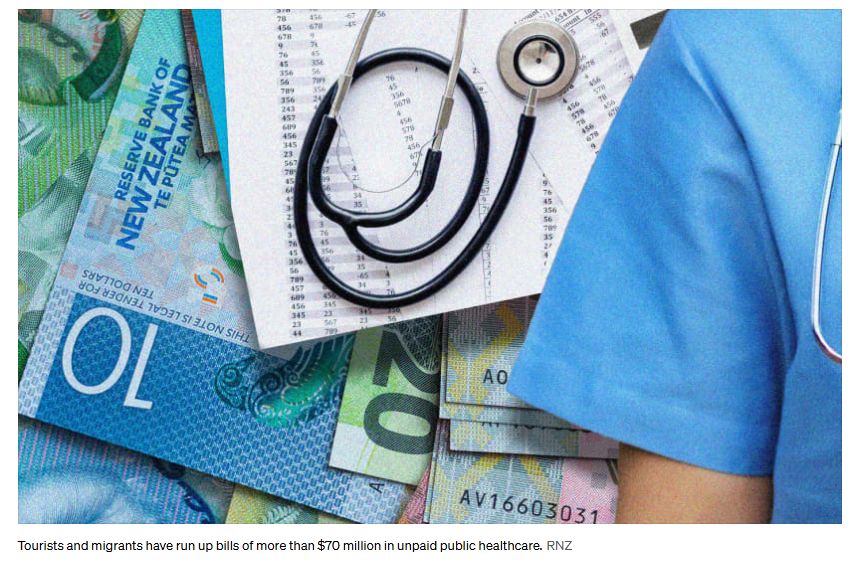
Tourists
and migrants have run up bills of more than $70 million in
unpaid public healthcare.
Health New Zealand says it’s
likely at least a quarter of that debt will not be
recoverable, as it writes a similar amount off each
year.
In one case a man had a $174,000 debt to Health
NZ which he incurred after not disclosing his pre-existing
renal diagnosis to Immigration New Zealand (INZ), nor two
criminal convictions in his visa application.
Most
visitors with visas lasting less than 12 months are not
eligible for public healthcare. While all applicants must
have an acceptable standard of health to be issued a visa,
medical checks are usually
only carried out on prospective migrants staying longer than
that.
All others are urged to get travel
insurance, but it is only a prerequisite for certain visas,
including international students, some working holidaymakers
and parent visas.
Health NZ chief financial officer
Bevan McKenzie said the latest unpaid debt figure was higher
than 2022/23’s costs of $45.6m, possibly because of travel
growth since the pandemic. It’s also a large increase on the
$18m of bad
debt incurred by ineligible patients at the country’s 20
then-DHBs in the year 2019 to 2020. Counties Manukau topped
that list of affected areas, followed by Auckland, Southern
and Waitematā DHBs.
Advertisement – scroll to continue reading
“The amount written off varies
from year to year; however, our experience is that between
25 and 30 percent of outstanding debts will typically be
written off as unrecoverable,” said McKenzie. “Health NZ
uses a range of recovery actions, including invoices and
reminders, payment arrangements, engagement with sponsors or
insurers, and referral to debt collection
agencies.
“Where sponsorship arrangements exist,
Health NZ may seek assistance from the sponsor in meeting
the debt. However, sponsors are not always financially able
to meet these obligations. Clinical decisions are not based
on financial circumstances and care is provided irrespective
of a patient’s eligibility or immediate ability to
pay.”
Health NZ used an external debt collection
agency with international reach to support recovery efforts,
he said.
“[Cost] recovery can be affected by overseas
residency, patients leaving New Zealand, incomplete contact
information, personal financial difficulty, limited
insurance cover, and cross-border enforcement constraints.”
·
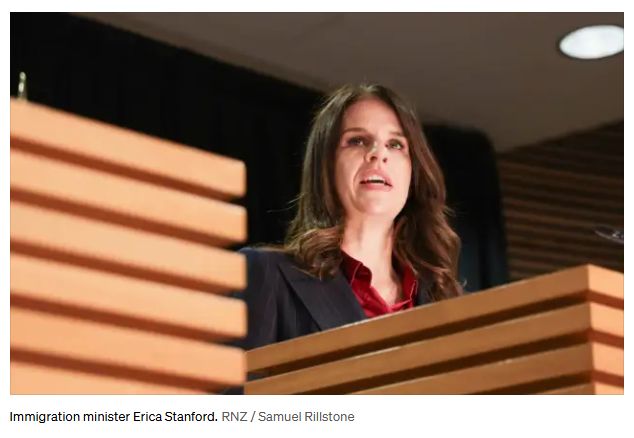
Immigration minister Erica Stanford stays informed
about some of the more expensive cases, which include the $85,000
costs of medically evacuating a Korean overstayer who
had a stroke. The cost of her healthcare was not disclosed,
but her treatment included two surgeries and lengthy
rehabilitation.
Criminal cases
In a case
brought to Stanford’s attention, a man did not disclose his
diabetes or end-stage renal disease to INZ.
When it
found out, INZ granted him a 12-month visa as an exception
to instructions. It had found out he had two undeclared
criminal convictions, although the details were withheld in
information supplied to RNZ.
Payment arrangements with
the hospital were made by family members in late 2023 but by
March 2025 the total amount due was $174,746. His GP
confirmed he had ongoing treatment for terminal renal
failure and had also since received palliative surgery after
being diagnosed with advanced gastric cancer.
“INZ is
still not satisfied that the applicants meet the instruction
for the grant of a visitor visa under medical treatment
category. However, INZ intends to grant the applicants the
visitor visa under medical treatment category for 12 months
as an exception to instructions to allow the principal
applicant to remain in New Zealand for life preserving
treatment,” said officials at the time.
A Tongan man
with four previous undisclosed convictions was also granted
a 12-month visa to continue dialysis for end-stage renal
failure.
The 57-year-old national could not receive
the required dialysis treatment in Tonga, and was on
haemodialysis treatments three times a week at Manukau Super
Clinic.
“This treatment is a permanent and
life-sustaining treatment. The applicant’s medical treatment
is not funded by his home government and treatment costs are
not covered under New Zealand’s Official Development
Assistance programme. The applicant has provided evidence of
a payment agreement for the debt outstanding between the
applicant and Health New Zealand.”
Another man needed
kidney dialysis for the rest of his life, treatment was not
available in his home country.
The 53-year-old arrived
in New Zealand in June 2024 on a visitor visa, subsequently
becoming unwell and being admitted to hospital. INZ approved
his visa and that of family, who were supporting him during
his treatment.
Dialysis
costs
Clinical decisions are not based on someone’s
ability to pay.
Officials identified seven cases of
people seeking urgent care for dialysis and/or renal failure
soon after arriving on visitor visas in the year to December
2024.
“These individuals did not declare any adverse
health information in their visitor visa applications and
INZ does not require medical certificates to be provided for
stays of less than 12 months.
“Looking closer at these
cases, it has been noted that at least two of the
individuals were confirmed to have been aware of their
health issues prior to arriving and had provided false
information to INZ in their application. Others were
formally diagnosed after arrival in New Zealand. All
individuals were receiving treatment for end stage renal
failure within a month of arriving in New
Zealand.”
They all applied for medical treatment visas
to remain in New Zealand to continue receiving renal
care.
New Zealand has reciprocal agreements with the
UK and Australia to provide limited, free healthcare to each
other’s citizens, and some treatment is also provided to
certain Pacific citizens depending on their
circumstances.
To be granted a medical treatment visa,
for example for renal dialysis, they must be funded by
either their home government or through New Zealand’s
Official Development Assistance Programme under the Medical
Treatment Scheme, administered by the Ministry of Foreign
Affairs and Trade.
“There are no renal care services
available in [redacted country/region] and none of the seven
individuals identified were receiving funding via these
mechanisms for their treatment in New Zealand,” said
officials’ notes to Stanford.
“Summary of this review
will be shared with Ministry of Health and Ministry of
Foreign Affairs and Trade, along with internal INZ Pacific
teams.”
Ministers have been warned specifically about
renal care costs for several years. INZ told its appeal
tribunal in 2018 that demand pressure from patients
ineligible for New Zealand healthcare was leading to rationing
of New Zealanders’ dialysis treatment. At the time
National Renal Advisory Board said patients were not
at risk of reduced care.
More recently, kidney
patients in Christchurch were also being warned dialysis
treatment may have to be rationed because of staffing
shortages and a lack of hospital space.
Health
NZ’s figures do not include the costs of treatment for
migrants or visitors who have an accident, as that is paid
for by ACC regardless of visa
status.
© Scoop Media

New Zealand’s public broadcaster, providing comprehensive NZ news and current affairs, specialist audio features and documentaries.
Radio New Zealand is a Crown entity established under the Radio New Zealand Act 1995. Radio New Zealand News are vital elements in our programming, providing impartial news and information to New Zealanders every day. Radio New Zealand (RNZ) provides listeners with exciting and independent radio programmes in accordance with the Radio New Zealand Charter.
Discussion about this post