









Key Highlights
- The World Humanoid Robot Games showcase both athletic capabilities and practical performance of humanoid robots.
- Judges evaluate the effectiveness of robots in solving real-world user challenges post-purchase.
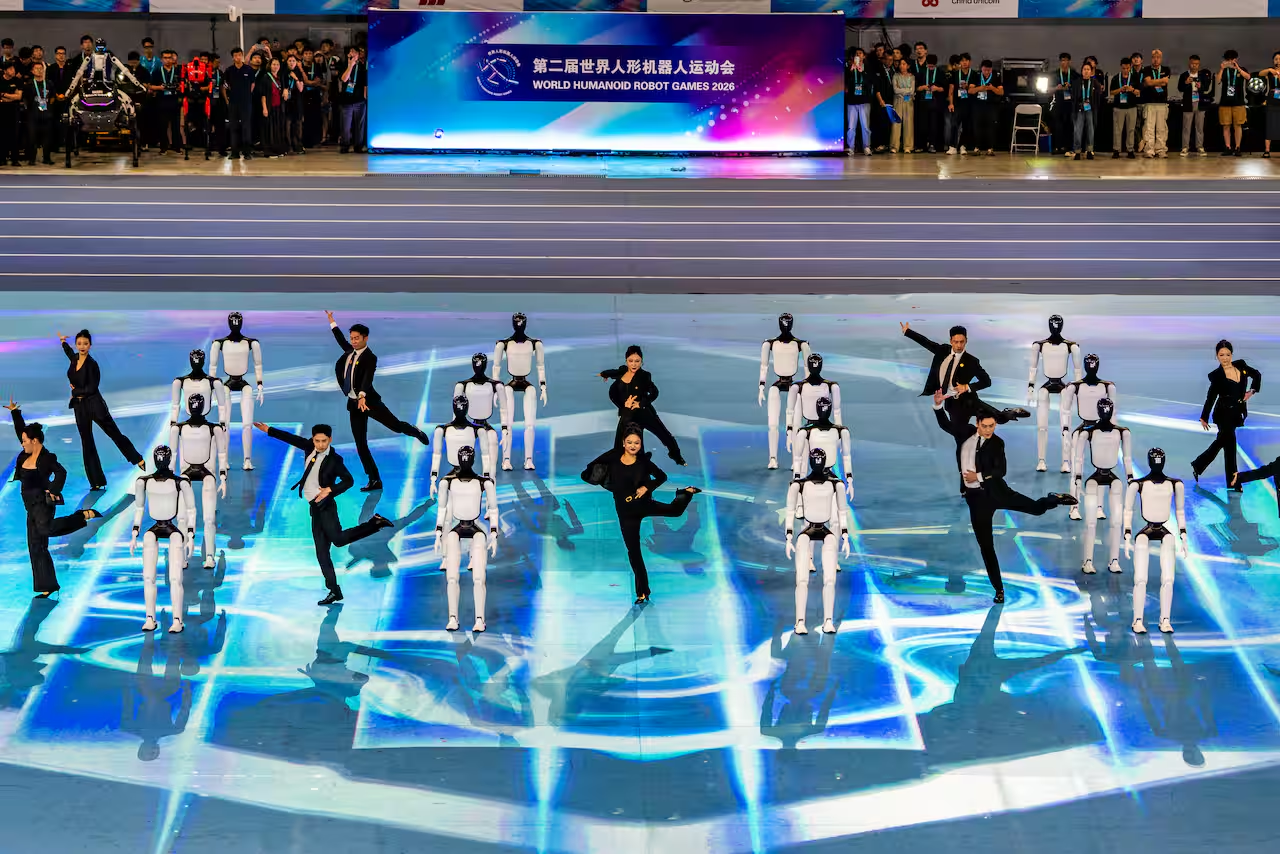
Humanoid robots are showcasing their skills in various activities in Beijing this week, highlighting China’s rapidly evolving robotics sector.
This five-day event, known as the World Humanoid Robot Games, features over 50 competitions that span from traditional sports like the 100-meter sprint and tug-of-war to challenges simulating workplace environments, restaurants, and emergency situations.
While the event draws attention for its spectacle and record-breaking performances, the core competition focuses on how well robots handle unforeseen circumstances.
Event organizers aim to assess whether these machines can perceive, reason, and respond adeptly to the unpredictability of real-world tasks, ultimately determining their potential for autonomous functionality in practical applications.
Heavily publicized in state media, the games comprise 51 different events, including 30 sports and 21 scenario-based challenges.
According to Huawei, a key technological partner for the games, more than 40% of the competitions require robots to operate without human assistance.
Increased Competition Intensity
The event is now in its second year, and many robots are already surpassing last year’s performances.
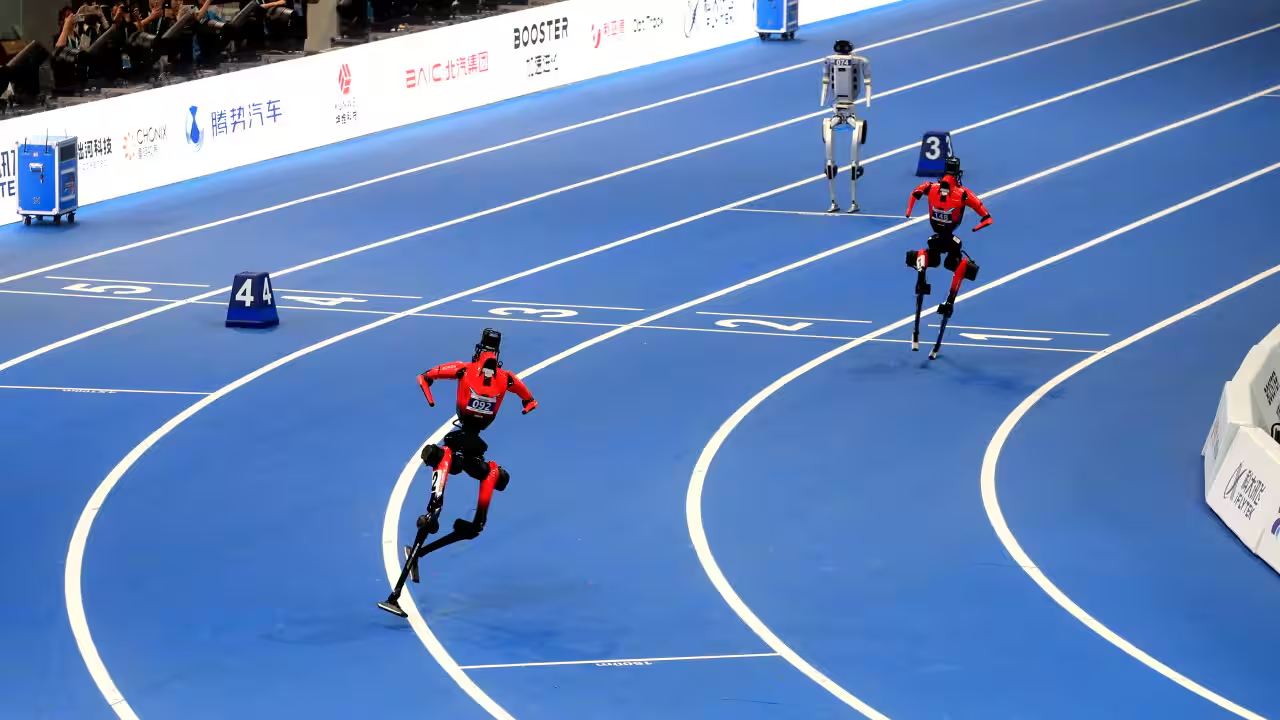
Remarkably, two robots achieved times faster than Usain Bolt’s world record of 9.58 seconds during the 100-meter sprint. This marks a significant improvement compared to last year, where the fastest robot took over 20 seconds to complete the race.
Challenges in braking have been noted, as some machines collided with a thick mat positioned several meters past the finish line.
Another robot from the same manufacturing line as the 100-meter champion completed the 400-meter run in an impressive 39.7 seconds, breaking South African sprinter Wayde van Niekerk’s world record of 43.03 seconds.
“The intensity this year surpasses that of previous years, placing higher demands on the robots’ battery management and thermal regulation,” observed Xu Qiaosheng, a robotics investor and event spectator.
“This development holds immense importance for the future of China’s industrial sector,” he added.
Robots will also engage in tug-of-war and weightlifting contests, while traditional Chinese activities like Tai Chi and pitch-pot will be reimagined with a technological twist.
The Challenge of Problem Solving
Beyond the dazzling exhibitions, some of the most telling tests will arise when robots face minor imperfections in their environment, such as misaligned cables, unreachable objects, or shifting packages.
These scenarios evaluate robots’ abilities to recognize objects, accurately position their limbs, manage force application, and recover from mistakes autonomously.
Yu Chao, CEO of Lumos Robotics, remarked that while the games could enhance hardware development and provide a platform for industrial showcasing, the true value will hinge on real-world problem-solving capabilities.
“Only when they demonstrate proficiency in practical applications do they have meaningful value. Simple movements like running and jumping do not necessarily enhance efficiency,” he explained.
In addition to traditional sports, competing robots will also be tested in areas such as electric vehicle charging, restaurant service, emergency response, and intricate hand-eye coordination challenges.
Industrial tasks, including assembly and material handling, will also be part of the competition. One challenge will test robots’ abilities to manage cables effectively, requiring precise visual perception, mechanical alignment, and force control.
Beijing-based startup Galbot plans to host an autonomous humanoid tennis match, featuring robots that will demonstrate skills like ball tracking, serving, and returning shots.
Hua Rong, marketing chief at robotics firm Zeroth, emphasized that the ultimate challenge lies in the robots’ ability to address users’ needs post-sale.
“The real competition will be whether they can effectively solve users’ problems after the product is purchased,” she stated.
For the latest updates from SBS News, download our app and subscribe to our newsletter.







Discussion about this post