
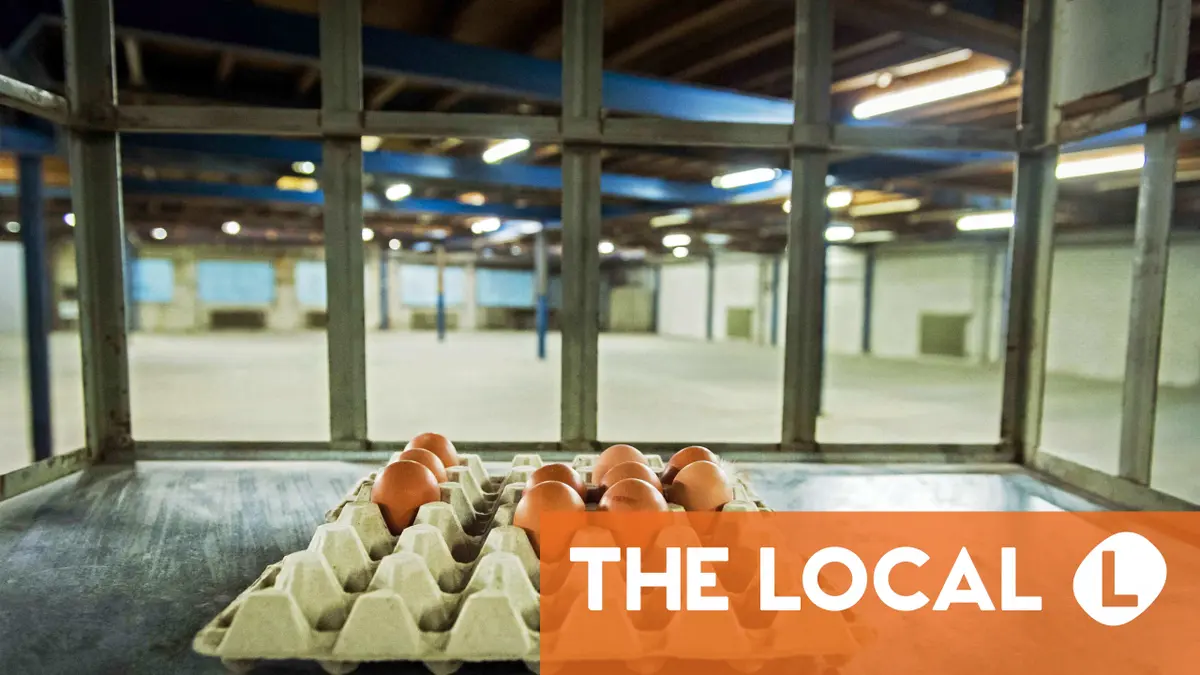
While demand for eggs is soaring and bird flu has left the market ‘tense,’ industry experts say there’s no need for residents to panic buy just yet.
If you were planning on dyeing a dozen eggs for the kids or baking a traditional Osterkranz this month, you might have noticed the egg section looking a little thinner than usual.
With Easter Sunday just around the corner, a combination of avian flu and a rising appetite for the protein-rich food has put a strain on the country’s poultry farmers.
Here is what you need to know about the state of Germany’s egg supply.
Supply chain pressures
On the Bengerhof farm in North Rhine-Westphalia, 15,000 chickens are finally back outdoors after a long winter. However, for farmer Philipp Benger, the atmosphere is less carefree.
“At the moment, we could sell almost twice as much as last year,” Benger told Westdeutscher Rundfunk Köln. “But it’s hard to get the chickens to cooperate.”
He has already had to turn down new customers to ensure his 70 regular supermarket and farm shop clients remain supplied.
The primary culprit is bird flu. A wave of infection last autumn forced many birds into a four-month mandatory stabling period (Stallpflicht) – essentially a quarantine for poultry.
Over half a million hens, ducks, geese and turkeys were culled during the season to stop the infection spreading. While the remaining birds have been allowed back outside since March 1st, the impact on production is still being felt.
Around Europe farmers have been grappling with bird flu outbreaks over the past three years.
Similar egg shortages have occurred across the continent, with Poland, Hungary and France being among the worst affected.
Germany’s reliance on imported eggs has also complicated the situation. A large share of eggs sold in the country comes from the Netherlands, which is also affected by production shortages.
Germany’s growing appetite for eggs
On top of the supply issues, demand for eggs in Germany is hitting record highs. In 2025, egg consumption in Germany reached 252 eggs per capita, up from 234 just four years ago.
The Federal Egg Association (Bundesverband Ei) attributes this to a major image shift: the humble egg is no longer seen as a “cholesterol bomb” but as a “sympathetic protein carrier” and a bona fide superfood.
This trend is mirrored in the wider German protein market—currently valued at $0.88 billion and set to reach $1.11 billion by 2031—where protein-enriched products are increasingly popular with health-conscious consumers.
Will the shelves be empty for the holidays?
Despite the “tense” market situation, industry leaders are offering a reassuring message to shoppers.
“We assume that food retailers will continue to be supplied reliably,” says Hans-Peter Goldnick, President of the Federal Egg Association. However, he warns that you might not find exactly what you’re looking for on the first try.
Organic (bio) eggs and pre-dyed Easter eggs are more likely to be temporarily unavailable in some stores.
While you might see a few gaps in the aisles or a lack of organic options, Goldnick reassures consumers: “Everyone will be able to find their eggs this Easter.”


Discussion about this post