







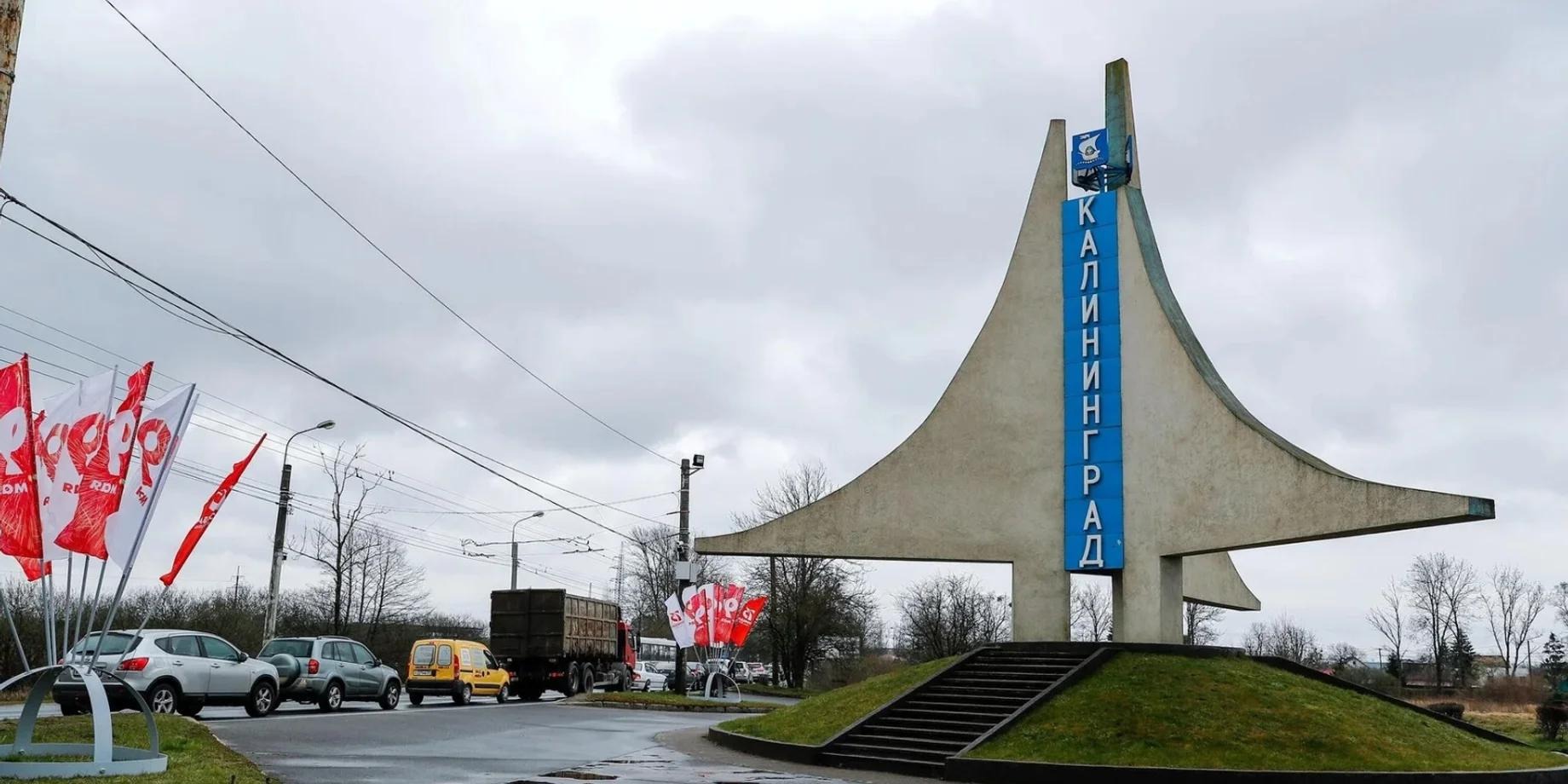
Moscow Issues Warnings Regarding Kaliningrad Defense in Face of NATO Threats
Executive Summary:
- Russia’s top political and diplomatic leaders have issued stark warnings about the nation’s willingness to defend Kaliningrad using “all available means,” alluding to the potential inclusion of nuclear capabilities.
- The Kremlin frames these remarks as necessary defenses against perceived threats from NATO, raising significant concerns about Moscow’s strategic outlook for this critical territory.
- Despite its strategic importance to Russian sovereignty and military power, Kaliningrad’s geographic isolation presents substantial defense challenges.
This fall has brought a series of pointed warnings from senior Russian political figures about the country’s readiness to safeguard Kaliningrad using “all available means,” with an implicit reference to nuclear options. Early September remarks by Deputy Foreign Minister Alexander Grushko emphasized Moscow’s capability to secure the exclave against potential Western blockades (Interfax, September 1). President Vladimir Putin echoed these sentiments during the Valdai Discussion Club on October 1, indicating that an attack on Kaliningrad would invoke considerations of deploying Russia’s full military arsenal, without explicitly committing to a nuclear response but maintaining the prerogative to decide on weapon usage (Interfax, October 1). Furthermore, Foreign Ministry Spokesperson Maria Zakharova warned of a “devastating response” to any NATO aggression directed at Kaliningrad, citing Poland’s plans for precision strikes against critical Russian military infrastructure (Interfax, October 16). Collectively, these statements reveal a strategy of nuclear ambiguity, allowing Moscow to avoid specific commitments while emphasizing the risks of escalation in the region.
The Kremlin positions these communications as defensive measures in response to perceived NATO threats, prompting questions about Moscow’s strategic priorities concerning the exclave. The pressing issue revolves around whether Russia is bluffing or strategically recalibrating Kaliningrad’s significance in its nuclear posture.
Russia’s heightened sensitivity regarding Kaliningrad predates its confrontation with the West that escalated after 2014. Historically, the region, formerly East Prussia, was integrated into Soviet territory post-World War II, although the Potsdam Agreement did not stipulate its unconditional transfer (Harry S. Truman Library & Museum, August 2, 1945). This was followed by concerted efforts by Soviet authorities to consolidate control through military buildup and altered demographics, further complicated by the uncertain status of the territory after the Soviet Union’s collapse in 1991. Geographic separation from mainland Russia, along with a revival of its German heritage, has introduced complexities regarding its identity and future governance, provoking anxiety in Russian political circles about potential regional shifts (regermanizatsiya, регерманизация) (MGIMO, accessed November 1). Although a significant separatist movement has not emerged, proposals to strengthen ties with the European Union have sparked political debates within Russia (Kommersant, March 18, 2002). As such, Kaliningrad represents an intricate blend of Soviet-era triumph, military significance, and historical tensions in Russian foreign policy.
Analyzing Russia’s nuclear rhetoric also requires acknowledgment of Kaliningrad’s inherent military vulnerabilities. Despite an array of missile systems, air defenses, and naval capabilities stationed within the exclave, it is inherently limited by a lack of strategic depth, dependent on supply routes that could be compromised in conflict scenarios. Recent military engagements, notably in Ukraine, have further revealed vulnerabilities in advanced defenses against precision strikes and unmanned aerial systems.
The accession of Finland to NATO in 2023 and Sweden’s inclusion in 2024 has notably shifted the security dynamics in the Baltic region, enhancing NATO’s operational capabilities in air, maritime, and surveillance domains. Poland’s ongoing military enhancements are also boosting NATO’s conventional strength (Defence24.pl, October 1; Milmag.pl, October 30). Polish military strategies increasingly focus on unmanned warfare and counter-drone technologies (Defence24.pl, January 23). Despite these developments, Russian military assessments have acknowledged the potential difficulties in sustaining Kaliningrad amidst a prolonged conflict (Argumenty y fakty, January 28; Kommersant, June 16).
This pattern of nuclear signaling has been a consistent facet of Russia’s strategic communication since the 2014 annexation of Crimea. Moscow has routinely invoked its nuclear capabilities to dissuade Western intervention and highlight the dire consequences of potential conflicts. Former Russian President Dmitry Medvedev noted in January 2023 that a nuclear power’s defeat in conventional warfare could precipitate a nuclear response, citing historical precedents wherein nuclear-armed states had not suffered losses in decisive conflicts (Interfax, January 19, 2023).
Furthermore, the revised Russian nuclear doctrine, ratified in November 2024, expands the conditions under which nuclear weapons might be considered for use, including scenarios characterized by conventional aggression threatening Russian sovereignty or territorial integrity (Garant, November 19, 2024). This doctrine specifically addresses threats from attempts to isolate Russian territories or impede key transportation routes. However, not every confrontation would result in a nuclear response. As such, the situation in Kaliningrad presents a complex dilemma for Moscow, balancing the difficulties of conventional defense against the political risks of losing the territory.
Russia’s anxiety about Kaliningrad seemingly stems from NATO’s expansion, Poland’s military upgrades, and the logistical challenges inherent in protecting an isolated region during major conflicts. However, there’s an apparent contradiction here, as Russian officials often downplay the impacts of Finland’s and Sweden’s NATO memberships (Interfax, May 17, 2022; Baltic Region, 2023).
The territorial significance of Kaliningrad, regarded as a Soviet stronghold, coupled with history-driven fears regarding its isolation, may heighten Moscow’s responsiveness to perceived threats. Nevertheless, Western engagement with Kaliningrad has typically been cautious, focusing on enhancing cross-border cooperation while respecting Russian sovereignty, as evidenced by initiatives like the Euroregions and the Polish–Russian Local Border Traffic Agreement, which underscored the viability of economic integration with Europe alongside Kaliningrad’s status as part of Russia.
Moscow’s warnings may serve a dual purpose: deterring Western intervention while also constraining NATO’s future responses to Russian hybrid operations within the Baltic region. By classifying a broad spectrum of Western counteractions as potential threats to its territorial integrity, the Kremlin aims to enhance its operational freedom while portraying NATO’s reactions as dangerously escalatory. This assertion is particularly relevant in light of the increase in documented hybrid incidents linked to Russia and warnings from Baltic intelligence regarding forthcoming provocations, coupled with numerous incidents involving undersea infrastructure investigations for potential sabotage (Novayagazeta.eu, February 7, 2025; Current Time, February 25; Rus.err.ee, June 23). While not definitively signaling preparations for a specific operation against NATO, these incidents suggest that Russia’s nuclear posturing might have coercive implications extending beyond the immediate defense of Kaliningrad.
Kaliningrad presents a crucial strategic conundrum for Moscow. While the Kremlin emphasizes the exclave as a vital representation of Russian strength and sovereignty, its geographic seclusion and defense complexities create significant challenges. Russia’s nuclear signaling aims to mitigate these shortcomings by introducing ambiguity into potential triggers for nuclear engagement. By referencing its “entire arsenal” without defining the specific conditions that might lead to nuclear action, Moscow forces NATO to contemplate the implications of nuclear escalation in various situations. More importantly, this ambiguity may be employed not only to deter potential aggressions against Kaliningrad but also to dissuade NATO from responding decisively to Russian provocations in the Baltic. Ultimately, Kaliningrad’s significance may lie less in its defensibility than in its capacity to manipulate NATO’s behavior across the region.







Discussion about this post