









Changes in Color Signal Microplastic Presence in the Pacific Ocean

An intriguing phenomenon is unfolding within the Pacific Ocean, specifically near the Great Pacific Garbage Patch, where a noticeable increase in blue and green light reflection has been observed over the last twenty years. Researchers now hypothesize that microscopic plastic pollutants could be the driving factor behind this change.
A recent investigation indicates that these tiny plastic particles accumulating in ocean waters might be scattering sunlight in a manner that creates a detectable signature visible from space. If validated, this could offer scientists a revolutionary method for tracking this nearly invisible form of pollution.
An Ocean-Sized Optical Puzzle
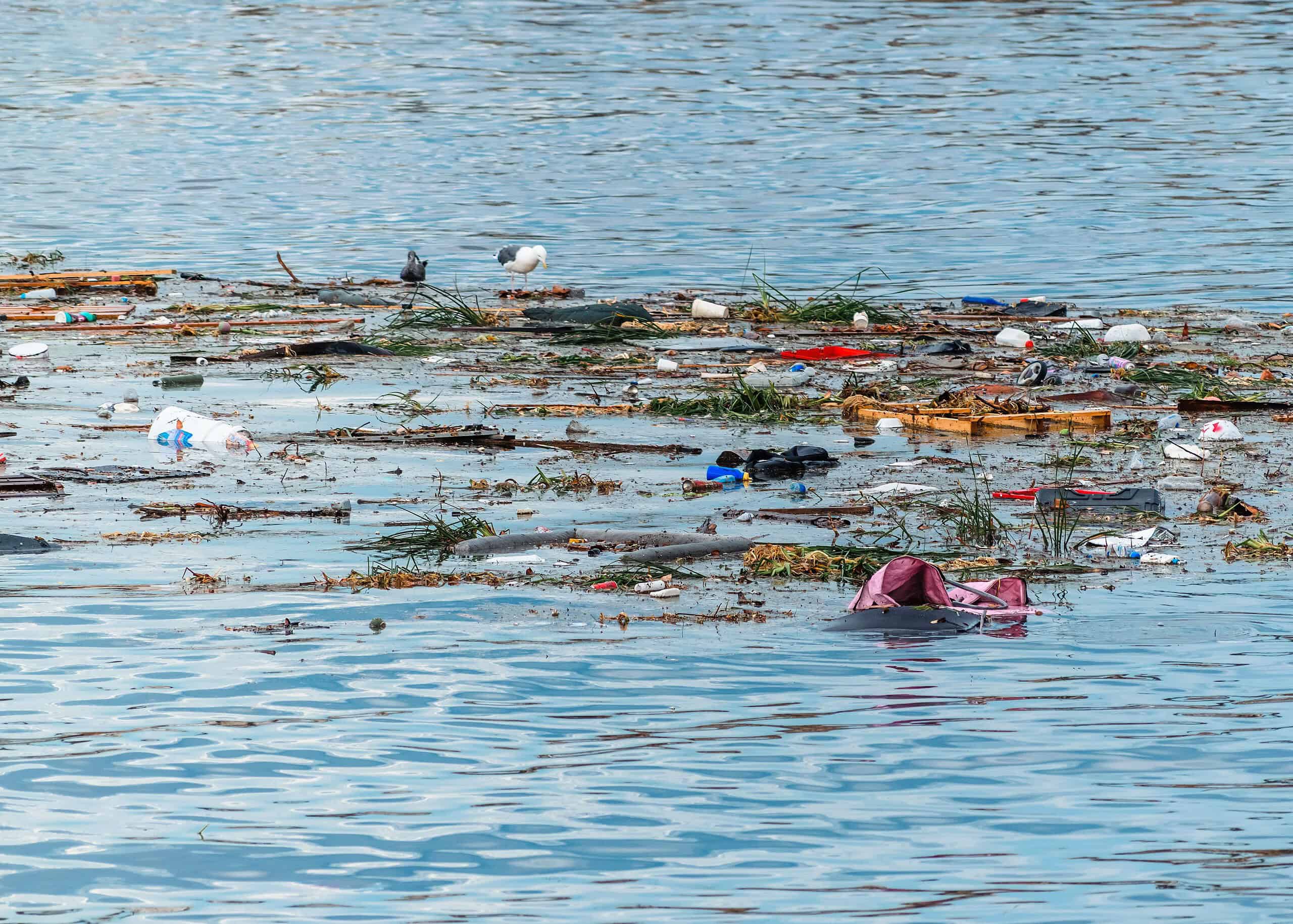
The Great Pacific Garbage Patch is not a prominent island of waste but rather a vast accumulation zone situated between Hawaii and California. Here, circulating ocean currents gather discarded fishing gear, bottles, and countless minute plastic particles.
A pivotal study conducted in 2018 estimated that this area contained around 1.8 trillion pieces of plastic spread across roughly 1.6 million square kilometers (around 1 million square miles), with microplastics constituting approximately 94% of the total count—albeit larger debris accounted for most of the overall mass.
Much of this pollution is nearly impossible to directly observe due to the small size of the particles involved.

The tiny particles drift throughout the water column, carried by currents and mixed beneath the surface, with some being smaller than plankton. Collection and measurement across extensive oceanic stretches become exceptionally challenging.
However, even the smallest particles interact with sunlight. This interaction may be revealing their presence.
Satellite Detection of Microplastics
A research team from the University of Bergen in Norway, consisting of Shea Cheatham, Daniel Koestner, and Børge Hamre, explored whether the accumulating microplastics could create a detectable optical signature.
The researchers analyzed three satellite-derived ocean color datasets spanning from August 2002 to September 2022. These datasets included data from NASA’s MODIS instrument aboard the Aqua satellite, as well as two multi-satellite products: ESA’s Ocean Colour Climate Change Initiative and Copernicus GlobColour.
All three datasets indicated an increase in reflected blue and green light in specific areas near the Great Pacific Garbage Patch, resulting in an unusual cyan-colored signal in the visualizations.
Despite this observable change, the researchers sought to understand if the presence of plastic could elucidate the alterations in the light reflecting from the water.
Plastic’s Impact on Ocean Color
While utilizing satellites to locate ocean plastic is not a groundbreaking concept, the current study adopts a fresh approach. Instead of measuring surface roughness as a means of estimating microplastic concentrations, the focus is on the light reflected by the water itself.
This new strategy builds on laboratory experiments that demonstrated how tiny plastic particles scatter blue-green light in unique ways and identifies corresponding patterns within decades of satellite observations around the Great Pacific Garbage Patch.
The ocean’s blue hue largely arises from water’s absorption of longer wavelengths of visible light more effectively than shorter blue wavelengths. However, the color also depends on the various elements suspended or dissolved within it.
For instance, phytoplankton absorb light for photosynthesis, affecting the ocean’s green and blue shades. Additional factors, such as dissolved organic matter and other particulates, also influence the wavelengths reflected back toward the sky.
In contrast, microplastics exhibit a distinctive behavior.

Many of these tiny plastic particles absorb little visible light but scatter it effectively, directing some incoming sunlight back towards the surface. Laboratory studies have shown that this scattering can be particularly pronounced around 490 nanometers, the boundary between blue and green light.
This observation prompted the researchers to hypothesize: if the concentrations of microplastics in the water were increasing, the ocean might exhibit brightening at specific wavelengths, manifesting a unique pattern detectable by satellite instruments.
The researchers found that the blue-green brightening near the garbage patch correlated with this hypothesis. However, correlation alone does not equate to proof. Natural fluctuations within the ocean may also alter its color, necessitating further exploration of alternative explanations.
Eliminating False Positives
To investigate this further, the researchers conducted computer simulations to model how the ocean’s optical signature could change with varying concentrations of different materials.
They explored shifts in phytoplankton populations, natural suspended materials, dissolved organic matter, and microplastics, generating over 50,000 scenarios that resulted in some level of brightening.
The contrast was stark.
When the simulations exclusively accounted for natural fluctuations, only about 3% of brightening scenarios yielded the cyan signature. In contrast, when microplastic concentrations were factored in, this figure escalated to approximately 13%—over four times more frequent.
This indicates that the observed blue-green brightening aligns considerably more with scenarios incorporating changes in microplastic concentrations. While this does not definitively attribute the color change to plastic pollution, it reinforces the notion of a connection.
The Challenge of Microplastics
The significance of this discovery lies in the fact that the smallest plastics are among the most challenging pollutants to monitor and nearly impossible to clean up on an ocean-wide scale.
While larger debris, including fishing nets and containers, can occasionally be collected, smaller plastics become more pervasive, escaping conventional cleanup efforts. A 2025 study in *Nature* identified microplastics distributed throughout the water column, often found deeper than larger fragments.
This new research emphasizes particles smaller than 300 micrometers, which can remain suspended in seawater, complicating efforts for conventional floating-debris cleanup methods.
While scientists can collect and analyze water samples in labs, these methods only cover minuscule portions of the ocean, whereas satellites have the capability to consistently observe vast areas.
The promise of this new approach is the potential to identify regions with significant microplastic accumulation without the need for exhaustive sampling. However, for this method to be effective, scientists must establish a reliable correlation between the satellite signals and on-the-ground measurements of plastic concentrations.
With further fieldwork, researchers hope to discern whether these signatures can distinctly differentiate microplastics from natural particles and biotic alterations. Successfully doing so could enable tracking the buildup of microplastic pollution across entire ocean basins.
Thus far, the shifting colors of the Pacific Ocean remain somewhat enigmatic. Yet, scientists have unearthed a possible clue, lying hidden within two decades of satellite observations.
The findings of this study were published in *Communications Earth & Environment*.







Discussion about this post