









Surge in Military Drone Technology Amid Ongoing Russo-Ukrainian Conflict
The ongoing Russo-Ukrainian war, now entering its fifth year, has spurred both nations to rapidly innovate and develop new military technologies. This has led to the emergence of entire industries dedicated to supplying advanced equipment needed to gain a strategic advantage on the battlefield. A key area experiencing dynamic growth is the military drone sector. Videos and articles showcasing first-person view (FPV) drones used by both Ukrainian and Russian forces for Intelligence, Surveillance, and Reconnaissance (ISR) purposes or one-way attack missions are increasingly common. Initially modified civilian drones, these systems have evolved into specialized unmanned aerial and ground vehicles designed for combat operations, tailored to the nuanced dangers posed in the last tactical mile—the most perilous stretch of terrain before reaching the frontline.
Ukrainian Unmanned Systems Take Center Stage
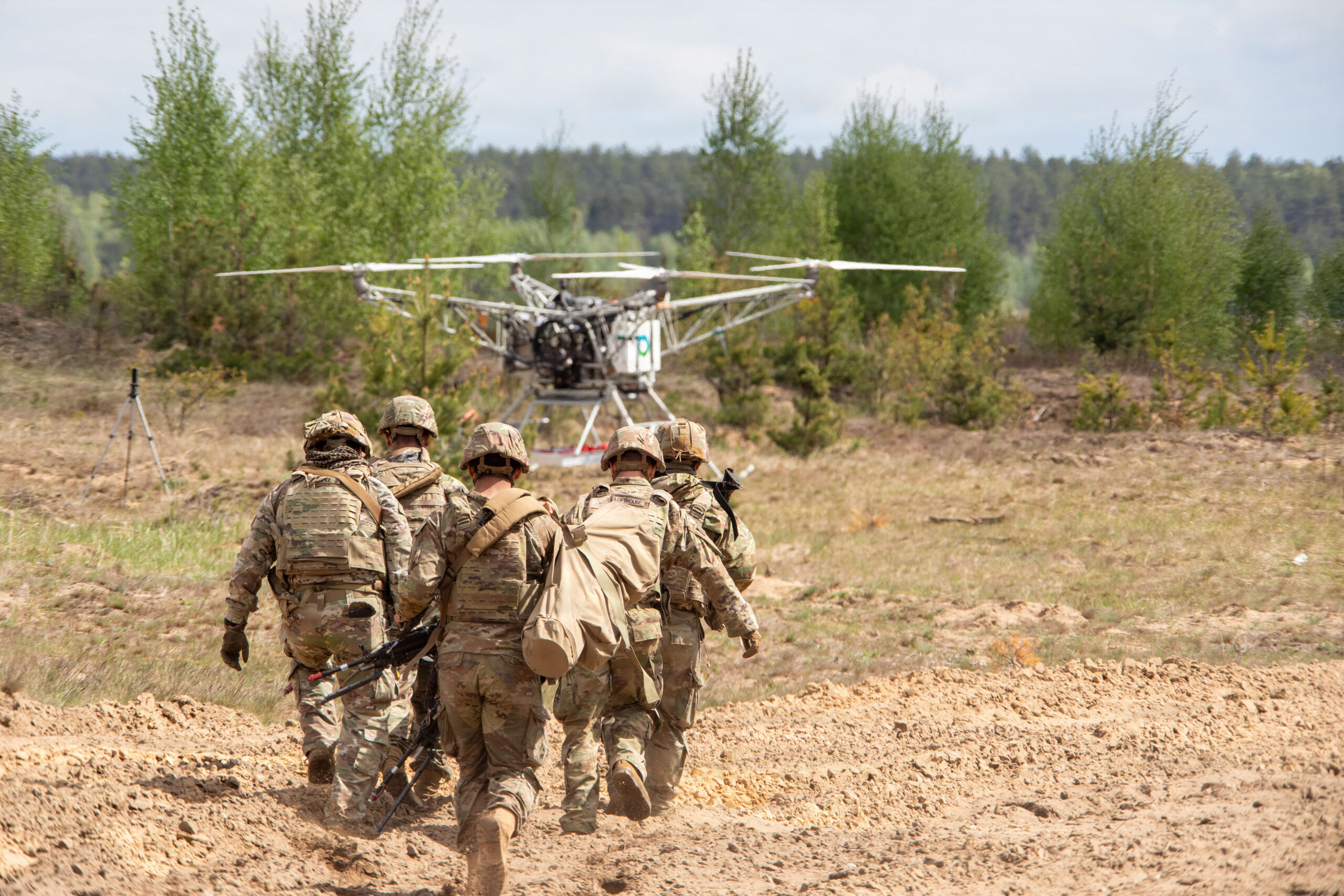
Innovation on the Ukrainian front has been driven by immediate necessity, as evidenced by the 475th Separate Assault Regiment’s claims of successfully evacuating two seriously wounded soldiers via the StarGate UAV. This specialized CASEVAC drone is manufactured by SkyFall, a local defense technology firm. This achievement follows earlier reports from the UAF’s 30th Mechanized Brigade, which stated that it conducted the world’s first frontline CASEVAC of a wounded soldier using a heavy hexacopter provided by Gurzuf Defense.
The use of unmanned systems has expanded beyond medical evacuations. Smaller drones, such as the Frodo multipurpose unmanned ground vehicle (UGV), have been employed for logistics and medical missions, while the Droid TW 12.7 UGV successfully defended a crucial position against Russian assaults for 45 consecutive days in 2025. These instances highlight the vital role unmanned systems now play in military operations. The Ukrainian Armed Forces have integrated numerous unmanned technologies operationally, nurturing an environment ripe for defense innovation. In 2026, Ukraine’s Deputy Defense Minister Mstislav Banik remarked that the country’s defense industry could potentially produce up to 20 million military drones annually, contingent on adequate resource allocation from allies.
The European Union has also made significant investments in bolstering Ukraine’s defense capabilities. In 2026, the European Commission allocated €1 billion towards drone procurement, marking the second installment of a €6 billion initiative under the Ukraine Support Loan. Additionally, a €10 billion long-term funding plan has been approved to enhance Ukraine’s defense industrial base and its burgeoning drone sector. Furthermore, the newly established EU-Ukraine Drone Alliance aims to strengthen cooperation and foster joint ventures between Ukrainian and European defense firms, enhancing drone and counter-drone capabilities across the continent.
U.S. Military’s Response: Catching Up with Innovation
In contrast to Ukraine’s cost-effective and rapidly deployable unmanned systems, the U.S. has adopted a distinct approach. The Department of Defense (DoD) is investing strategically across various branches of the military, focusing on advanced autonomous solutions. In fiscal year 2026 alone, over $115 million has been dedicated to UGV innovations, with a concerted push for testing and evaluation before full deployment.
The U.S. Army’s Infantry Last Tactical Mile (ILTM) initiative, launched in August 2026, aims to enhance troop capabilities within the critical last tactical mile. Six vendors, including Maren-Go and American Rheinmetall, have been selected to develop prototype systems for autonomous operations beyond the line of sight. This initiative focuses on logistics and CASEVAC to support frontline troops, with operational assessments slated for early fiscal year 2027.
Funding the Future of U.S. Military Innovations
As of 2026, the Pentagon is prioritizing the development of lower-cost alternatives to expensive munitions, largely as a response to ongoing geopolitical tensions, particularly with Iran. While a single surface-to-surface missile may cost millions, the DoD could procure a low-cost uncrewed combat attack system (LUCAS) drone for a fraction of that price—dependencies which underscore the need for a radical overhaul in drone doctrine.
In late September 2026, the Pentagon unveiled Project Agincourt, an initiative aimed at accelerating the creation, procurement, and deployment of unmanned military systems. This initiative is laying the groundwork for the proposed Autonomous Warfare Command (AUTOWARCOM), set to launch on October 1, 2027. Additionally, the Drone Dominance Program aims to establish a stable domestic industrial base for low-cost drones, with over $1 billion allocated for development over two years and a goal of fielding 200,000 drones by 2027.
Challenges Ahead for U.S. Military Drone Development
The landscape is poised for significant changes, particularly with the Democrats gaining control of Congress in January following a contentious midterm election. There are indications that defense spending may be restructured as Democrats pledge to keep the Pentagon’s proposed budget within limits, creating uncertainty around funding for unmanned systems as the military grapples with munitions supply issues. Additionally, fragile critical mineral supply chains could further complicate the availability of essential components for drone production. The U.S. is beginning to reshore these supply chains, yet establishing a stable domestic industrial base will take years, if not decades, to achieve.
Lessons learned from the Russo-Ukrainian conflict have prompted the DoD to address gaps in its drone capabilities. As the U.S. prepares for potential large-scale conflicts in the Pacific or an escalation in the Middle East, it must prioritize the development of essential autonomous systems for modern battlefield scenarios. The pressing challenge will be to strengthen the domestic production capabilities needed to meet the mass-scale demand for advanced drones in future theaters of conflict.








Discussion about this post