









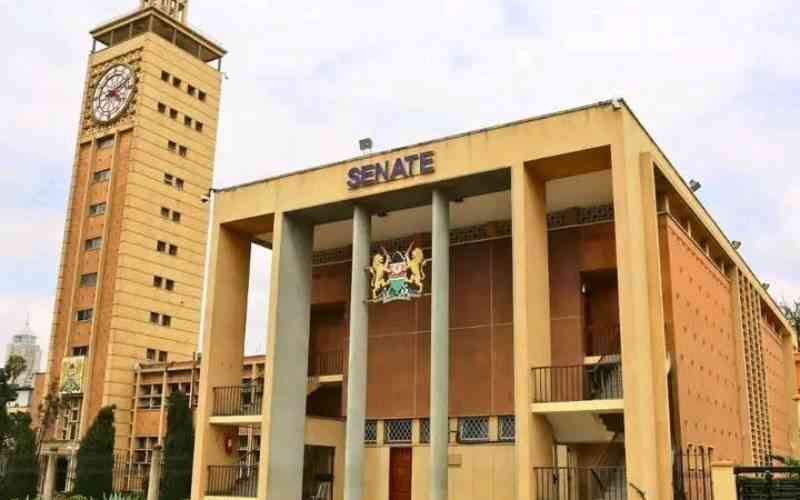
Senate Scrutinizes Proposed County Allocations for 2027/2028 Financial Year
The National Treasury is under scrutiny as senators demand a reassessment of the proposed Sh449.5 billion equitable share allocation to counties for the 2027/2028 fiscal year. Lawmakers argue that the anticipated increase will provide minimal additional resources for devolved governments after accounting for essential expenditures.
During a consultative session focused on the 2027 Budget Policy Statement (BPS) and the Medium-Term Debt Management Strategy, members of the Senate Standing Committee on Finance and Budget expressed their concerns regarding the sufficiency of the proposed allocation. They contended that counties would face a significant shortfall given the rising operational costs, salary commitments, and expanded responsibilities.
The Treasury’s suggestion to raise the equitable share from Sh428 billion to Sh449.47 billion marks an increase of approximately Sh21.47 billion. However, senators highlighted that this increase would be significantly offset by mandatory expenses, which include Sh8.6 billion allocated for Universal Health Coverage (UHC) personnel and Sh11.18 billion for enhanced recurrent expenditure ceilings for County Assemblies.
Committee members questioned the rationale behind incorporating these costs within the equitable share, suggesting that it undermines the financial resources available for essential services at the county level.
Senator Mohamed Faki, the session’s chairperson, emphasized that the proposed increase fails to reflect the financial pressures endured by devolved units, including legally mandated salary increments. He pressed the Treasury to justify how all 47 counties would manage with such a modest increase while national government entities receive considerably higher allocations.
Senator Mariam Sheikh also raised concerns regarding the delayed disbursement of additional funds, insisting on a clear timeline for the release of Sh66.13 billion owed to counties. Furthermore, she questioned the protracted implementation of the County Assemblies Autonomy law, arguing that the Sh11.18 billion intended for county assemblies should be allocated through a separate fund rather than remaining part of the equitable share.
The committee also examined the national government’s borrowing strategy and its potential impact on economic stability. Senator Essy Okenyuri sought clarity from Treasury officials on the proportion of domestic borrowing sourced from pension funds and insurance companies, while also requesting assurances that inflation, currently at 7.3 percent, would not surpass the 7.5 percent threshold.
Accompanying the discussions, Council of Governors (CoG) Chairperson Muthomi Njuki, along with CoG Finance Committee Chairperson and Kakamega Governor Fernandes Barasa, presented an alternative proposal requesting Sh557.24 billion for counties. They argued that a higher allocation is critical for financing devolved functions, fulfilling collective bargaining agreements, and covering transition costs in preparation for the upcoming 2027 General Election.
Njuki cautioned that the inconsistent and partial disbursement of conditional grants over the past three fiscal years has hampered county operations and contributed to an accumulation of pending bills. He also highlighted that counties have had to redirect funds meant for service delivery to cover six months of salaries for UHC workers without reimbursement from the Treasury.
“Initiating the transition process begins well before election day, starting as early as January next year, necessitating that funding be secured in advance,” Njuki stated.
In defense of the proposed allocation, Treasury Cabinet Secretary John Mbadi pointed to limited fiscal space, revenue shortfalls, and competing statutory obligations, asserting that further increases in county allocations would necessitate widening the fiscal deficit.
Mbadi explained that of the projected ordinary revenue of Sh3.2 trillion, mandatory expenditures, including Sh1.738 trillion for public debt servicing, would consume approximately Sh2.9 trillion. He recognized the need for increased county resources but noted that such an expansion would not be sustainable in the long term.
On the topic of domestic borrowing, Mbadi revealed that non-bank entities, including individuals, pension funds, and insurance firms, hold 62 percent of domestic debt, with commercial banks accounting for the remaining 38 percent. He attributed the October inflation rate of 7.3 percent to fluctuations in global petroleum prices and increased local food consumption, expressing hope that declining fuel prices and favorable weather conditions would alleviate inflationary pressures.
Furthermore, Mbadi assured that the Treasury would clear all outstanding conditional grants and Equalisation Fund arrears before the end of the current financial year to prevent lapsing funds. He maintained that equitable share transfers had consistently been disbursed before the 15th of each month over the past four months.
As for public debt, which is projected to reach 64.2 percent of GDP by 2028—exceeding the statutory limit of 55 percent—Mbadi stated that the government is prioritizing concessional external borrowing and debt swaps to reduce financing costs and free up commercial bank credit for private sector investment.







Discussion about this post