









Understanding Private Student Loan Settlements
Insight: When approached with a settlement offer for a private student loan, it is crucial not to respond with a hasty agreement. Request written documentation of the offer and assess various important factors beforehand. Verify loan ownership, analyze written terms, determine the implications for any cosigner, assess statute limitations, evaluate potential tax consequences, and consult about bankruptcy options. Comprehending these elements is vital, as certain private loans may qualify for discharge in bankruptcy, contrary to common perception.
Background on Private Student Loans
This discussion focuses exclusively on private student loans, which are provided by private lenders and are not backed by the federal government. A loan from a bank does not automatically classify it as private if it has federal guarantees or insurance. Individuals uncertain about their loan type should refer to a comprehensive guide on federal student loans.
The Six Essential Evaluations
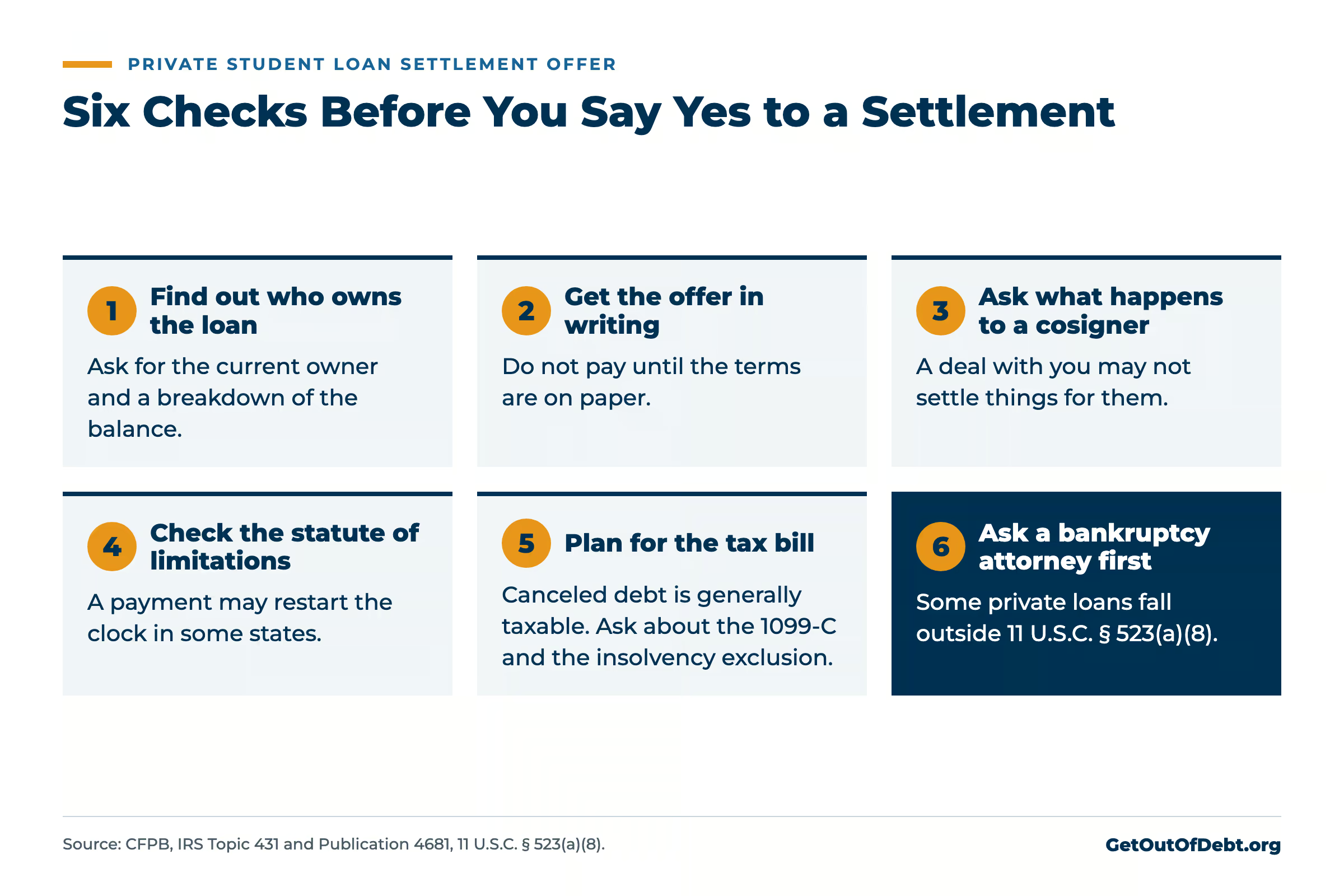
1. Loan Ownership Verification
Private student loans often change ownership, leading to confusion about who currently holds the debt. It is essential to establish the loan’s current owner and the specifics of the debt balance before considering any settlement terms. The Consumer Financial Protection Bureau (CFPB) stipulates that debt collectors must provide clear information regarding the debt, either in initial communication or within five days. This includes the owner’s name, account number, balance breakdown, and last payment date.
2. Obtain Written Documentation
The CFPB strongly advises obtaining all settlement or repayment terms in writing prior to any payment. Essential points to include are:
- Exact payment amount, due date, and recipient details.
- Confirmation that payment satisfies the entire balance — principal, interest, and fees.
- Assurance that collection actions will cease and the account will reflect a zero balance after payment.
- Details on the lender’s reporting to credit bureaus.
- Clarification on any potential tax forms (e.g., Form 1099-C) related to the settlement.
3. Impact on Cosigners
If a cosigner exists on the loan, it is crucial to clarify how the settlement will affect them. Depending on the settlement’s language, the cosigner may still be liable for the debt. Therefore, ensure any assurances regarding the cosigner’s liability are documented.
4. Statute of Limitations Consideration
Unlike federal student loans, private loans can be subject to a statute of limitations, which limits the period during which a creditor can legally pursue collection. This timeframe varies by state, generally ranging from three to six years. A potential payment might inadvertently reset this period, so legal advice is recommended prior to making any payments.
5. Tax Implications of Settled Debt
Debt cancellation can have significant tax implications. The IRS treats canceled debt as taxable income unless specific exclusions apply, like insolvency. Understanding these potential tax burdens is important before proceeding with any settlement.
6. Bankruptcy Consideration
Contrary to common belief, private student loans may be discharged in bankruptcy under certain circumstances. Consulting with a bankruptcy attorney may reveal if such action is applicable, potentially offering a more advantageous resolution than a settlement.
Exceptions to Paying with Retirement Funds
Utilizing retirement funds to settle debts is ill-advised due to potential tax penalties and implications on future financial security. Legal counsel can clarify the treatment of these funds within bankruptcy contexts.
Being Strategic with Settlements
While settlements can be a practical solution, they require careful consideration. It is advisable to proceed if the following conditions are met:
- A lump sum is available that does not involve retirement funds.
- The settlement terms are clearly documented and resolve the total debt.
- The loan is assessed to be unlikely dischargeable, or the hardship requirement is too challenging.
- Implications for the cosigner and tax responsibilities are manageable.
Next Steps
- Document the source of the settlement offer and request ownership verification.
- Acquire a written settlement agreement before any payments are made.
- Identify the date of your last payment and check relevant state laws.
- Gather any loan documents and disbursement records.
- Consult a bankruptcy attorney regarding the potential for discharge.
- Review your overall financial condition with a tax professional.
Frequently Asked Questions
Should I accept my private student loan settlement offer?
Evaluate the offer critically rather than making an immediate decision. Require written confirmation and verify all relevant details, including the implications of the offer.
Is a private student loan settlement subject to taxes?
Settlements can be taxable as canceled debt unless exceptions apply. Consult a tax professional for tailored advice.
Can I discharge a private student loan through bankruptcy instead of settling?
This may be possible under specific conditions. Review your loan documents with a bankruptcy specialist to understand your options.
Will settling relieve my cosigner of debt obligations?
Not necessarily. The terms regarding the cosigner’s liability should be confirmed in writing.
Can a payment affect the statute of limitations?
Yes, in certain jurisdictions a payment or acknowledgment of debt may reset the statute of limitations. Detailed legal advice is recommended.
The Bottom Line
Assessing a settlement offer on a private student loan requires diligent evaluation of several factors. Loan ownership, written documentation, statutory limits, potential tax consequences, and bankruptcy options are vital in determining the best course of action. Always consider professional legal counsel to navigate this complex issue effectively.
Key Takeaway: Evaluate your private student loan settlement offer carefully. Do not rush into agreement; instead, gather necessary information and consult with professionals before making any decisions.






Discussion about this post