

Supreme Court Hears Case on Religious Rights and Public Funding
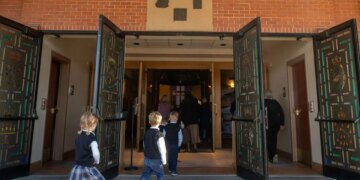
The Supreme Court’s conservative majority expressed strong backing on Tuesday for Catholic preschools challenging Colorado’s taxpayer-funded educational program, which they argue unconstitutionally excludes them based on religious beliefs.
Legal Controversy Surrounding LGBTQ+ Rights
The case investigates whether private educational institutions that refuse admission to children of LGBTQ+ parents are in violation of state anti-discrimination laws, thereby justifying their exclusion from public benefits.
Oral Arguments Highlight Competing Interests
During a vigorous two-hour oral argument, justices explored the balance between religious freedoms and the state’s responsibility to provide equal opportunities for all families, including those of gay and lesbian parents. This case is one of several recent high-profile religious rights challenges stemming from Colorado.
Debates Intensify Between Justices
Justice Sonia Sotomayor questioned the premise of the plaintiffs’ stance, suggesting that homosexual families would unlikely choose these schools, stressing that the decision should rest with families, not the state. “You want an official statement by the State that I will subsidize you with public money even though – because I have a right to reject children,” she stated.
Conversely, Justice Brett Kavanaugh argued that the state’s intentions might inadvertently enforce conformity that is not constitutionally acceptable. He suggested that a solution allowing both religious rights and opportunities for LGBTQ+ families could exist without causing conflict.
Colorado’s Universal Preschool Program Under Scrutiny
Colorado’s Universal Preschool Program (UPK), established through a 2020 ballot measure, allocates public funds to participating preschools under the stipulation that they must offer acceptance to all eligible children, irrespective of various characteristics including religious affiliation and sexual orientation.
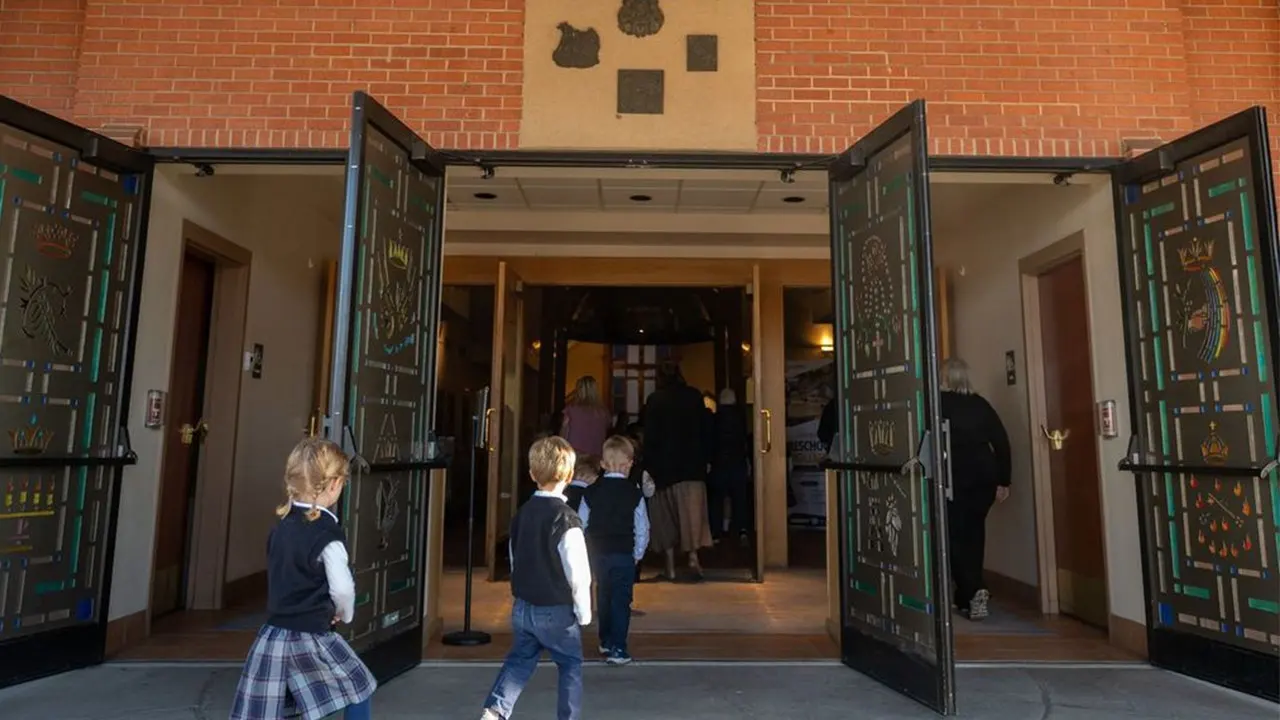
Two Catholic parishes have initiated legal action, claiming the policy contradicts their deeply held beliefs regarding same-sex marriage. The Archdiocese of Denver operates 34 preschools, which maintain a policy accepting only children from families that align with Catholic teachings.
Religious Discrimination Claims
The archdiocese seeks exemptions from Colorado’s law, arguing that the exclusion from public funding constitutes discrimination based on their religious convictions, in violation of the First Amendment.
State’s Position on Equity in Education
The state counters that the public benefit requirements are impartial and apply universally to all preschools. State representatives noted that they provide an annual benefit of $6,300 per child for up to 15 hours per week of preschool, funded through tobacco taxes.
Implications for Religious Institutions
The Supreme Court’s deliberation will potentially reassess a 36-year-old precedent that religious expressions do not exempt anyone from adhering to generally applicable laws.
The ongoing case also reflects a broader trend by the current conservative majority in favoring religious institutions’ claims on freedom of exercise, as seen in recent rulings favoring various religious plaintiffs challenging anti-discrimination policies in Colorado.
Justices Split on Key Issues
The justices appeared divided along ideological lines during the arguments. Conservative justices focused predominantly on the religious discrimination claims made by the Catholic parishes, while Justices like Elena Kagan referred to prior rulings that ensure equal treatment rather than preferential status for religious institutions.
Community Reactions and Future Considerations
Parents like Erika Nagle, whose children attend a Catholic preschool, voiced concerns over their exclusion from the funding program, stating that it imposes additional financial burdens on families adhering to Catholic beliefs. She emphasized that they feel discriminated against in a state that promotes inclusion.
The Becket Fund for Religious Liberty represents the plaintiffs, highlighting a 20% drop in enrollment within the archdiocese’s preschools and closures of two institutions as a direct consequence of the state’s policies.
Conclusion and Anticipated Ruling
As the state maintains that it encourages participation from religious preschools, it insists that compliance with the same standards is necessary for all institutions, both religious and secular. The case—St. Mary Catholic Parish v. Roy (25-581)—is set to be decided by the Supreme Court by next spring, and its outcome could have significant implications for religious rights and educational funding nationwide.



Discussion about this post