
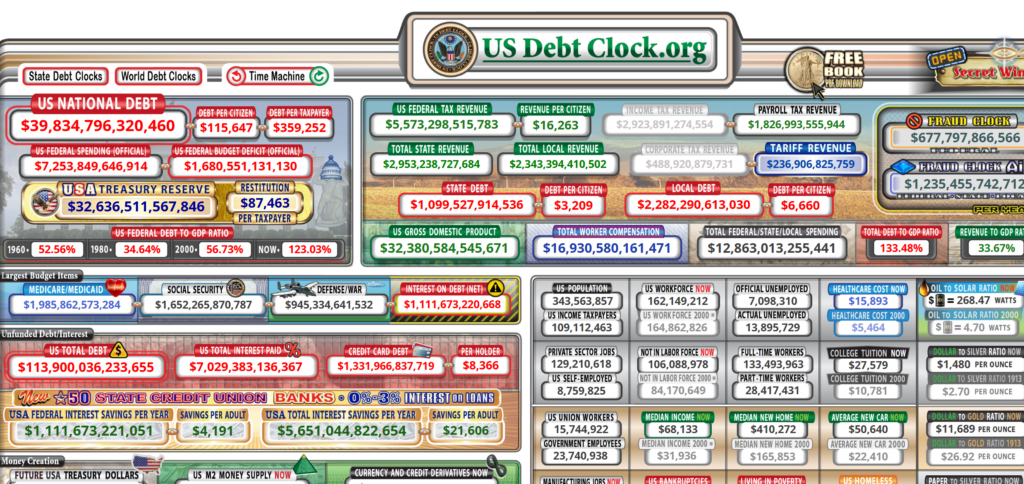
https://www.usdebtclock.org/
National debt is the outstanding financial obligations of a country. The national debt of the United States is what the federal government owes to its creditors.
The U.S. has always carried national debt, and the majority of presidents have added to it. However, total national debt has been expanding rapidly since 2008 due to a combination of increased government spending and failure to raise taxes.1
Understanding the National Debt
The federal government borrows money to cover outstanding expenses that accumulate over time. Funds for federal spending are mainly generated by collecting taxes on personal and corporate income, payroll earnings, and borrowing.
The government then spends this money on programs such as Social Security, healthcare, education, infrastructure, and national defense. When the government spends less than the revenue collected through taxes, there is a budget surplus. When government spending exceeds its revenue, the result is a budget deficit.
To pay for this deficit, the U.S. Treasury borrows money by issuing Treasury bills, notes, and bonds. These can be purchased by investors, financial institutions such as banks and insurers, the Federal Reserve, and other foreign central banks.
The national debt, which is also referred to as government, federal, or public debt, is made up of this borrowing along with the interest owed to investors who purchased these Treasury securities.
https://www.investopedia.com/us-national-debt-by-year-7499291


Discussion about this post