










Key events
Filters BETA
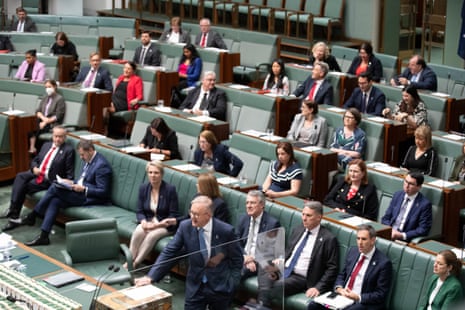
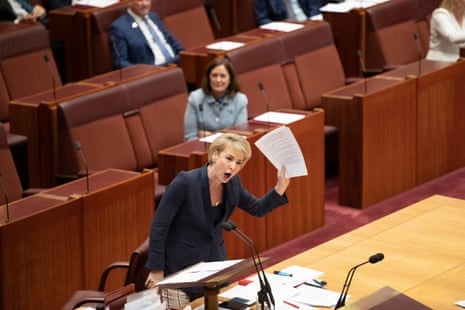
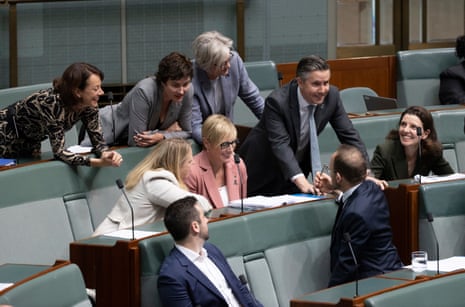
Mike Bowers has been very busy – here is how he has seen some of today:

Daniel Hurst
Palau president suggests diplomatic switch from Taipei to Beijing unlikely
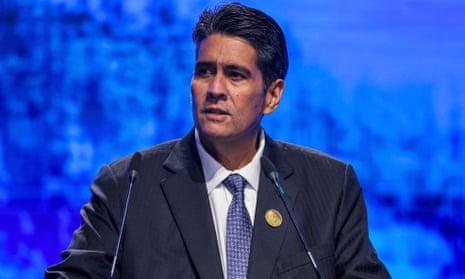
The president of Palau has signalled that his country is not likely to switch its diplomatic relations from Taiwan to China, despite several Pacific leaders making the switch in recent years.
During a press conference alongside visiting Australian politicians, Surangel Whipps said Palau had been “very consistent that we are friends to all and enemies to none”. He said China had put pressure on Palau to end its diplomatic relationship with Taiwan by restricting tourist numbers.
What we’ve told China is that, as friends, you shouldn’t tell your friends who their friends can be. And so we’ve made a very clear statement that we have diplomatic relations with the Republic of China [Taiwan]. And if you want to be our friend, they’re our friend also. But you’re not going to tell us we can’t be their friend, which is what they want to tell us to do. And that’s why they say, you know, we can give you all the tourists you want, just switch, and we say, that’s OK.
That’s what they’ve done – they’ve turned off the faucet [to] play games with us. But I don’t think that’s the way you treat true friendship and true partnership … nobody else should tell us that we should dissolve that relationship.
Whipps also backed calls for Taiwan to be allowed to participate in international events, such as UN climate talks and World Health Organisation talks. He said the 23 million people who lived in Taiwan “need a voice”.
At the same press conference, the Australian foreign affairs minister, Penny Wong, cautiously backed the calls for Taiwan to have input into problems that require global solutions (while also restating Australia’s bipartisan position that it has diplomatic relations with the People’s Republic of China but unofficial engagement with Taiwan).
She said:
Every country makes its own sovereign decisions about recognition and so forth. I think President Whipps answered the previous question very clearly on that front.
In relation to Taiwan, obviously, the bipartisan position we have is a ‘one-China’ policy. But what that means is we will continue our unofficial people to people, economic, relationships and engagement with Taiwan.
And I make this observation – and obviously these matters have to be worked through in the WHO, or through the Conference of the Parties or whatever fora: you’re talking about problems here which require the whole world to resolve them. So whether it’s Covid or climate, we need everybody to be part of the solution. So we want to work through how that can occur in those forums. But I think the reality is they are issues that require the whole of the world to tackle them.
PM ‘hopeful’ Indigenous voice will be voted in
Does Anthony Albanese think the voice referendum will be able to pass given it doesn’t have bipartisan support (the Nationals have said they will not be supporting it)?
Well, I’m very hopeful that Australians, who are optimistic Australians, who are generous, will accept this gracious offer of Aboriginal and Torres Strait Islander people.
There were five years spent in the lead-up to the Uluru statement coming out in 2017. Five years of extensive consultation since then, which been another five years in which we know, for example, that Ken Wyatt, the former minister in the Morrison government, took on two occasions a more than 200-page document about the structure and operation of the voice to the Morrison cabinet.
So there’s been a lot of discussion, a lot of detail to make sure that this has got it right, but essentially it will do just two things. One it will recognise Aboriginal and Torres Strait Islander people in our constitution, which is important.
And secondly, it will say that when issues affect directly Aboriginal and Torres Strait Islander people, they should be consulted.
And we know that that will have a practical impact because when you consult people about issues that affect them about their education, their health, their housing, their life expectancy, justice issues, then you’ll get better outcomes; if you’re consulting, rather than just seeking to impose things on any section of society.
Asked if he would consider going to Beijing next year, Anthony Albanese says he would of course examine any invitations which may come it.
But he says there have been meetings at the leaders’ level, as well as foreign minister level and a meeting of defence ministers, pointing out that the lines of communication are once again open.
Back to the prime minister, Anthony Albanese is asked about the Queensland shooting.
Albanese says the nation will continue to mourn the two police officers and neighbour who were killed and the government will examine any recommendations which may come from the investigation into the shooting and siege.
Sydney driver charged over allegedly using phone while child on lap
Dipping out of politics again for a moment for this report from NSW police media:
A woman has been charged after she was allegedly detected driving while holding a mobile phone, and with a small child seated on her lap in Sydney’s west.
Earlier this month (Wednesday 7 December), Georges River traffic and highway patrol received a referral from Transport for NSW regarding an image taken on a mobile phone detection camera situated in Bankstown.
The image allegedly depicted a female driver in a Queensland-registered motor vehicle holding a mobile phone with a small child seated on her lap, unrestrained, on Tuesday 1 November.
Following inquiries, police attended Padstow about 7.30pm yesterday (Wednesday 14 December) and spoke with a 28-year-old woman, who holds a Queensland ‘learner’ licence.
She was issued a field court attendance notice, where she was charged with five offences, including:
-
Drive recklessly/furiously or speed/manner dangerous
-
Driver use mobile phone when not permitted
-
Drive with 6 months-4 years old not restrained as prescribed
-
Learner not accompanied by driver/police officer/tester
-
Driver not wear seatbelt properly adjusted/fastened
The woman is due to appear before the Bankstown local court on Wednesday 25 January 2023.
PM says balance right on energy package
Sky News has just wrapped up an interview with Anthony Albanese.
Albanese was talking about the energy legislation, which he says has got the balance right.
He also says (to paraphrase the Mark Twain misquote) reports of the gas industry from this legislation is premature.
Well, if you go there and you say ‘oh, this will inhibit investment, this will will create issues for for us going forward’, then you’re essentially talking down your industry and I see no reason there’s nothing in this legislation that should require that sort of compensation.
We saw it before the Industrial Relations legislation, where some were out there saying it would immediately result in all this chaos and dysfunction. The legislation passed, the world’s gone on, it’s dealt with things, just like the world dealt with the Carpenter (WA) government’s reforms that were put in place and frankly they’ll deal with these reforms as well in in a constructive way,
The Department of Veterans’ Affairs has a new secretary. Alison Frame, the current deputy secretary for social policy in prime minister and cabinet, has been appointed to the role and will start her five year tenure in January.
Burke brushes aside opposition’s IR law complaints
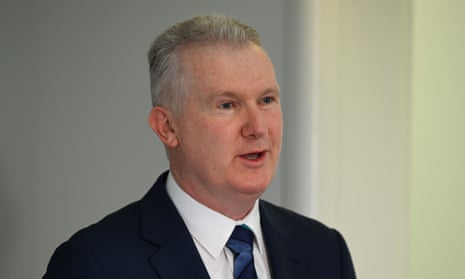
In his press release on the unemployment figures, Tony Burke doesn’t directly address Angus Taylor and Michaelia Cash, but he does sort of sub-tweet them. Or sub-press release. It’s hard to say. Taylor and Cash say the IR legislation passed by the government will lead to job losses.
Burke says:
The number of Australians in jobs remains at record highs and more of them are in secure full-time work – but there’s still more to do.
New labour force figures released by the Australian Bureau of Statistics (ABS) today show that total employment increased by 64,000 in November 2022.
The unemployment rate remained steady at 3.4%, while the participation rate rose to an equal record high of 66.8%.
The government welcomes the increase in both full-time employment and part-time employment, as well as the youth participation rate hitting its highest rate since 1990.
While the historically low unemployment rate and high rates of participation are welcome news, we’re only just starting to see green shoots when it comes to wages growth.
Due to a decade of deliberate wage stagnation under our predecessors and the rising cost of living, workers’ real wages are still going backwards, which is why our plan to fight inflation and get wages moving again is so important.
This government believes in getting wages moving again – that’s why one of the first things we did after the election was help secure a pay rise for Australia’s lowest-paid workers.
We backed up this commitment by supporting and securing a wage rise for aged care workers.
The government Secure Jobs, Better Pay legislation will also help get wages moving. By modernising the bargaining system, we will see more workplace agreements, delivering better productivity and flexibility for employers and better pay and conditions for workers.
The condolence motion has been suspended until the next sitting.
The house is now suspended until it hears back from the Senate about the energy bill.
Labor minister says extremism’s ‘warning signs’ must be better recognised
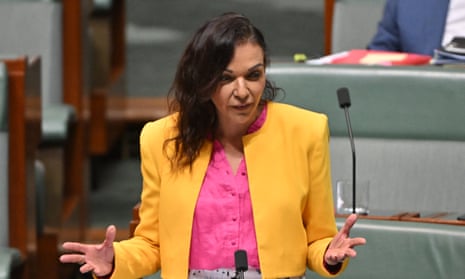
Anne Aly, who has spoken about her stepdaughter, who recently graduated from the WA police college, also speaks about violent extremism.
Before becoming a parliamentarian, this is what Dr Aly did – she was a counter-terrorism expert, who worked to pull people away from violent extremism.
I think it’s worthy to also comment that this is a sad, very timely reminder about how vigilant we have to be about violent extremism and the rise of violent extremism in Australia, and how important it is that we are able to identify individuals who are down that path towards violent extremism who are becoming operative, and to intervene.
Like many Australians, I’ve been reading the reports coming out and some of the coverage on the back stories of the perpetrators whose name shall not be spoken.
And it’s very clear to me as somebody who was a professor in this field, and I studied this field, that their trajectories were very people have a trajectory to violent extremism.
Human behaviour is actually quite predictable. There are warning signs. From the reports that I’ve read, there were warning signs, signs with these perpetrators.
There are warning signs.
We have to get better at recognising those warning signs. We have to get better at intervening early, we have to get better at early identification.
We, all of us, have to take more seriously the warnings that our security agencies have been giving us about the rise of violent extremism in this country.
\
MP calls out ‘purveyors of hate and misinformation’
Moreton MP Graham Perrett is one of the MPs who is speaking on the condolence motion.
He finished his speech with this:
The last part of my speech I want to particularly call out this rise that we’re seeing in terms of conspiracy theorists and anti-vaxxers and sovereign citizens and the purveyors of hate and misinformation who cultivate some of these things.
I’m not jumping to a conclusion, saying this is what happened here. But I am seeing it on the rise and I know people in the police service, people … who work as magistrates tell me that there is a rise of this sort of misinformation.
And I particularly, while in here in Canberra and this building, call out for politicians who harvest mistrust as part of their business model and go on Sky After Dark and dog whistle or Donald Trump these conspiracy theories and the shadowy conspiracy theory groups who are actually praising these killers of police officers and encouraging others to take up arms. We need to shine a light on that behaviour.
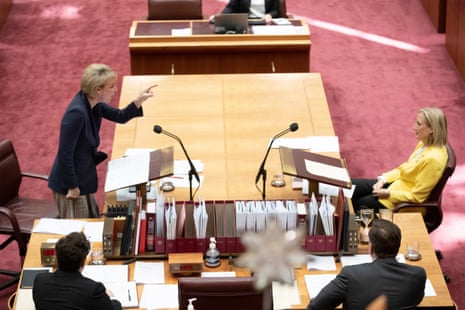
Over in the Senate, and the debate over the energy legislation has Michaelia Cash very agitated.
The government does not need the Coalition’s votes here. And Cash’s last big fight was over the IR bill, so this has given her a new fight.
Shadow treasurer condemns Labor’s energy package
Angus Taylor has taken advantage of today being unemployment figure day to bring together a few grievances against the government. From his statement (with Michaelia Cash):
The clear test for the Albanese government is to maintain the high number of Australians in work, as revealed in the latest Labour force figures.
The figures saw the unemployment rate remain steady at 3.4%, a result of policies put in the place by the former Coalition government, which grew the economy and helped jobs to be created.
Shadow treasurer Angus Taylor said today’s figures come on a day that Labor has rammed yet another appalling piece of legislation through the parliament that will cost jobs and provide uncertainty for businesses.
Mr Taylor said: “Just as Labor’s toxic IR bill is bound to kill jobs, so too will its diabolical energy deal.
“This is yet another piece of shambolic legislation dumped on the Coalition at five minutes to midnight that will destroy future gas supply and the jobs and businesses that depend on it.
“Labor has struck a sweetheart deal with the Greens and has provided absolutely no detail on how much it will add to the budget bottom line.
“Now is not the time for reckless spending. A responsible government should be tightening its budget belt to put a lid on inflation so that the Reserve Bank can take a break on raising interest rates.
“It’s becoming clearer by the day that this is a party which had a plan to get elected but no plan to govern.”
Chamber of commerce concerned over Labor’s energy plan
The Australian Chamber of Commerce and Industry has released its submission to the government on the energy package.
You can find that here.
ACCI chief of policy and advocacy David Alexander said the ACCI supported the targeted relief but wasn’t too crash hot on the market intervention.
Business welcomes targeted price relief that government can provide in the face of soaring energy bills. However, we are greatly concerned about the market interventions set to pass parliament, as they risk reducing investment and exacerbating supply problems.
While targeted relief will take the sting out of forecasted energy price increases, there is little detail over who will benefit from temporary assistance, and this won’t be settled with state and territory governments until March next year.
We are concerned about the establishment of price caps because they reduce incentives for supply and investment and create larger problems over time.
We are also concerned that the mandatory code of conduct in which the government determines ‘reasonable prices’ would be a significant impairment to the efficient operation of the market and would further deter future investment.
For many years short-term ‘fixes’ by governments have created larger second-round problems – investment is deterred, supply is reduced and prices are higher than they would otherwise be. Price-capping is another policy that fits into this pattern.
The government needs to prioritise getting the fundamental settings for energy policy right, as this is the only way to ensure affordable prices and secure supply while meeting emissions targets.









Discussion about this post