









Shift in U.S. Global Health Strategy Sparks Debate
In recent years, the United States’ role in global health promotion has come under scrutiny, particularly following significant policy shifts initiated by the Trump administration. Upon taking office, President Trump announced the withdrawal from the World Health Organization (WHO) and implemented a halt on foreign aid, leading to substantial changes in how the U.S. engages with global health initiatives.
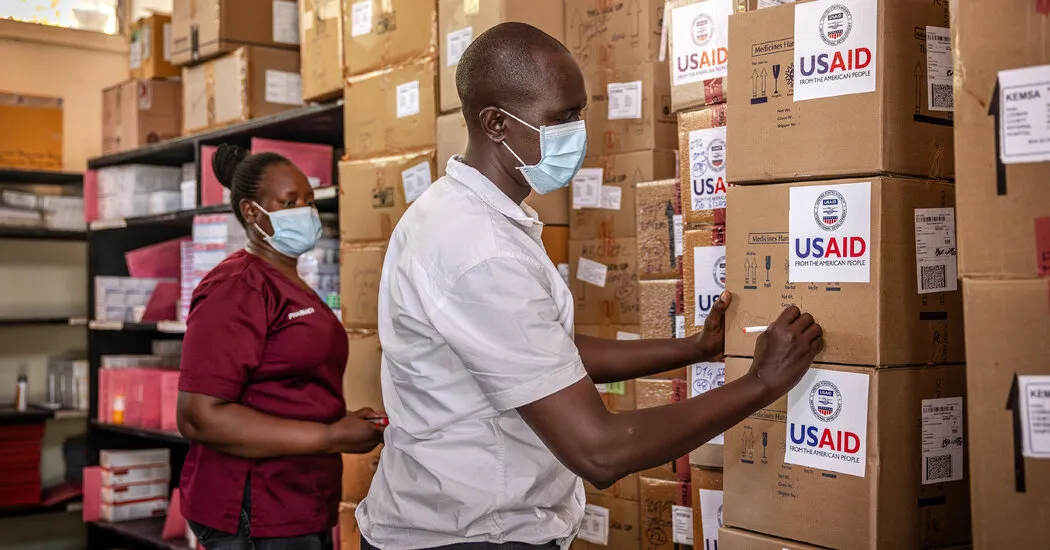
Reports emerged highlighting the detrimental effects of these decisions, including shortages of essential medications for tuberculosis, malaria, and HIV, widespread clinic closures, and the discontinuation of medical trials. Experts estimated that these changes could lead to hundreds of thousands of preventable deaths within the first year, a claim complicated by the cessation of tracking programs that monitored health outcomes.
Funding and New Strategies
Initially, Congress allocated around $10 billion to support the U.S.’s primary global health programs, which equates to roughly $30 per American citizen. Despite a wave of staff layoffs and the cancellation of grants, Congress expressed a desire for these funds to be utilized effectively. In response, the U.S. State Department unveiled the “America First Global Health Strategy” in September, which aimed to guide the spending of these funds.
This strategy included several objectives that have garnered support from public health experts, such as encouraging recipient nations to take greater ownership of their health programs. However, unique to this administration was the imposition of conditions on aid, with countries required to negotiate “America First” agreements that align with U.S. national interests, as articulated in a communication from Secretary of State Marco Rubio.
Conditions of Aid
The practical implications of these agreements are significant. Nations seeking U.S. aid are now expected to share pathogen samples and grant access to their health data systems. Reports suggest that in several instances, negotiations for health aid coincided with discussions about access to a country’s strategic minerals or acceptance of U.S. deportees. While State Department representatives insist these negotiations are separate, officials in recipient countries have expressed feeling pressured to accept uncomfortable terms.
Historically, recipients of aid have been aware of the underlying motives of donor countries. The duality of global health assistance—framed as altruism while also serving national interests—has persisted across both Democratic and Republican administrations. The Trump administration’s overt emphasis on a return for American taxpayers raises questions about the future of U.S. foreign aid.
Historical Context of U.S. Aid
Reflecting on past experiences, an aid worker recalled their time in Pakistan following a devastating earthquake in 2005, where U.S. aid was allocated not only based on need but also geopolitical significance. This duality of purpose has long been evident in U.S. foreign aid, which historically has been tied to broader strategic goals, particularly during the Cold War.
In the early 21st century, bipartisan consensus emerged around the necessity of global health aid, particularly in response to the AIDS epidemic, which claimed millions of lives worldwide. Initiatives like the President’s Emergency Plan for AIDS Relief (PEPFAR), announced by President George W. Bush in 2003, emphasized humanitarian assistance as a core American value, even as national security considerations also played a role.
Concerns Over Transactional Aid Approaches
The Trump administration’s more transactional approach to global health aid risks undermining both health improvements and the goodwill traditionally cultivated through American aid. The administration’s strategy has been criticized for lacking transparency, with limited details on implementation and progress. To date, agreements have been signed with only a fraction of the targeted recipient countries, with some explicitly rejecting the terms.
Critics, including former U.S.A.I.D. officials, argue that the current approach is not merely transactional but is extractive and predatory, contrasting sharply with previous models that focused on mutual benefits. As the U.S. navigates this evolving landscape, the emphasis on recipient nations increasing their financial contributions to health systems remains a pivotal aspect of the agreements.
Despite the challenges, there is potential for a new approach that prioritizes collaboration and mutual interests in global health. The evolving nature of U.S. foreign aid, particularly in the context of changing political landscapes, suggests that while American global health initiatives may be under transformation, they are not yet a thing of the past.








Discussion about this post