


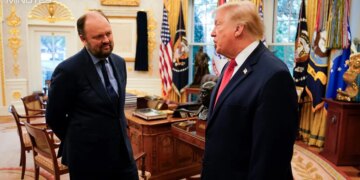







Too late to improve pay offers, says Sunak, as nurses strike again
Good morning. Nurses in England, Wales and Northern Ireland are on strike again today. And health chiefs are even more worried about the impact of another dispute tomorrow, when ambulance staff in England and Wales take industrial action.
Rishi Sunak is chairing cabinet this morning, and at 3pm he will take questions from the Commons liaison committee, probably for around 90 minutes. It will probably be the most extensive Q&A he has undergone since he became prime minister.
But if anyone expects him to open the door to an early resolution of the health service strikes, they are likely to be disappointed. Sunak gave an interview to the Daily Mail’s Jason Groves yesterday in which he warned the public to be ready for the long haul. Here are the key lines.
Yeah. Look, I’m going to keep making the same arguments I’ve been making.
The government is acting fairly and reasonably and will always continue to do so. I’m going to do what I think is right for the long-term interests of the country: combating inflation.
The government is doing everything it can to be responsible and put in place contingency measures to support people, but ultimately I will continue to urge the unions to call off the strike because that’s what is causing disruption to people’s lives, that is what is having an impact on their health.
[Sunak] flatly rejected reports that he was preparing a climbdown in his trial of strength with union leaders. The PM said it was too late to improve on pay offers in a financial year that was ‘basically finished’.
-
But Sunak implied that unions might get a more generous pay offer for 2023-24 if they called off strikes now. “Offering an olive branch to workers, [Sunak] hinted that next year’s pay round could be more generous if union members behaved responsibly now,” Groves reports. He goes on:
Mr Sunak said it was too late in the financial year to unpick the settlement – and suggested the unions should focus on making the case for an improved pay deal next year. ‘We do need to think about what’s the right approach for next year,’ he said. ‘Of course that’s a conversation we will have with the unions, with the pay review bodies, as we think about the right pay settlements.’
Here is the agenda for the day.
9.30am: Rishi Sunak chairs cabinet.
10am: NHS England, the Association of Ambulance Chief Executives, the GMB and the College of Paramedics give evidence to the Commons health committee about the ambulance strikes.
11.30am: Downing Street holds its lobby briefing.
11.30am: Jeremy Hunt, the chancellor, takes questions in the Commons.
After 12.30pm: MPs hold a debate on the forthcoming adjournment, which allows them to raise any topic they want.
3pm: Sunak takes questions from the Commons liaison committee.
I’ll try to monitor the comments below the line (BTL) but it is impossible to read them all. If you have a direct question, do include “Andrew” in it somewhere and I’m more likely to find it. I do try to answer questions, and if they are of general interest I will post the question and reply above the line (ATL), although I can’t promise to do this for everyone.
If you want to attract my attention quickly, it is probably better to use Twitter. I’m on @AndrewSparrow.
Alternatively, you can email me at andrew.sparrow@theguardian.com.
Key events
Filters BETA
Cabinet discusses plans for king’s coronation as health strikes continue
You might have thought that today’s nurses’ strike, and tomorrow’s walk-out by ambulance staff, would have been discussed at cabinet this morning. But you would have been wrong. At the Downing Street lobby briefing this morning the PM’s spokesperson said that, after Rishi Sunak updated colleagues on his attendance at the Joint Expeditionary Force summit in Lithuania yesterday, the main topic of discussion was plans for the king’s coronation next year.
Oliver Dowden, the chancellor of the duchy of Lancaster (and an arch-royalist – it is said that he adores this aspect of the job) helped to lead the discussion. He said the coronation would be “a moment of constitutional significance which will allow us to showcase the very best of the United Kingdom”.
Asked why the health strikes were not discussed, the spokesperson said that cabinet ministers discussed them at a meeting of the Cobra emergency committee yesterday, and that further Cobra meetings might take place.
Tory MP Andrew Bridgen loses appeal against 5-day Commons suspension, as panel says he was lucky to get off so lightly
The Conservative MP Andrew Bridgen has failed in his appeal against a report saying he should be suspended from the Commons for five days for breaking the rules on declaring interests and banning paid advocacy.
Last month the Commons standards committee said that Bridgen broke the MPs’ code of conduct after he approached ministers and officials on behalf of a forestry company that had given him a donation, a visit to Ghana and the offer of an advisory contract.
It said that Bridgen should be suspended for two days for breaking the rules on advocacy and interests, and a further three days for putting undue pressure on the parliamentary commissioner for standards during the course of the inquiry.
Bridgen appealed to the independent expert panel against the finding that he broke the rule, and the severity of the proposed punishment. The panel rejected his arguments on both grounds, and told him, in effect, he was lucky to be getting off so lightly. It said in its report:
[Bridgen] essentially does no more than assert that the sanctions recommended by the committee were excessive. We disagree. Indeed, in our view the sanctions for breach of the rule against paid advocacy and for the email letter could properly and fairly have been more severe.
Here is a Guardian video of nurses in Birmingham explaining why they are on strike today.
The Liberal Democrats say Steve Barclay, the health secretary, should resign if tomorrow’s ambulance strike goes ahead. Daisy Cooper, the Lib Dem deputy leader and health spokesperson, said:
Steve Barclay must get round the table and resolve these strikes now.
A health secretary that can’t keep ambulances running during a winter crisis is not fit for office and must resign.
James Morris, a Conservative, asked Rachel Harrison to clarify what GMB members were asking for in their NHS pay dispute.
Harrison said they wanted a pay rise above inflation, plus a plan to restore a decade’s-worth of lost earnings.
But she also said that if the government made a new offer, the GMB would take that to its members.
“We’re not making a demand,” she said. “We’re saying, make us an offer.”
Rachel Harrison from the GMB tells the health committee that “life and limb” cover will be provided during the ambulance strike. “The last thing that our members want to do is put patients in harm’s way,” she says.
Prof Julian Redhead, national clinical director for urgent and emergency care at NHS England, tells the committee that emergency cover will continue while the ambulance strike is on. There will be ambulances available for the “sickest and most vulnerable patients”, which in general means category one and category two calls, he says. He says people should not be discouraged from calling 999.
Pay review body process needs to be reformed, GMB official tells MPs
At the Commons health committee they are now talking about the pay dispute with the government.
Rachel Harrison, national secretary of the GMB union, says her union has a meeting with Steve Barclary, the health secretary, today. But it is about emergency cover, not pay. If the government does not reopen talks on pay, tomorrow’s strike will go ahead, she says.
She says some people working in the NHS are now being paid less than the national living wage.
She also calls for “true reform” of the pay review body process. She says the recommendations should not be conditioned by departmental budgets that have already been set.
And she says the panel should be genuinely independent, and free to make recommendations taking into account factors like the cost of living and the impact on the workforce.
She also says in some years in the past the Department of Health has engaged in direct pay talks with unions, instead of just leaving it to the pay review body.
At the committee Daren Mochrie, chairman at Association of Ambulance Chief Executives, said that he did not think the situation would improve in the coming months. In response to a question from Lucy Allan (Con), Mochrie said: “I cannot see how in the next few weeks and months ahead the situation will improve.”
Back at the Commons health committee the Conservative MP Lucy Allan said that 44,000 hours had been lost in a single month at West Midlands Ambulance Service while ambulances waiting outside hospitals.
And Dr John Martin, president of the College of Paramedics, said NHS England figures published in December showed that 4,232 hours were lost in one day because of ambulances waiting outside hospitals. He went on:
That equates to 176 ambulances. That is our members who are really struggling because they can spend the whole of their shift of a hospital waiting to hand over a patient Everybody is frustrated, including ED [emergency department] doctors.
The frustration is they are worn out, they are tired, they want to get back to being good paramedics.
Aslef announces strike by train drivers on Thursday 5 January
Aslef, the train drivers’ union, has announced that it will hold another strike on Thursday 5 January.
The strike will affect 15 rail companies: Avanti West Coast; Chiltern Railways; CrossCountry; East Midlands Railway; Great Western Railway; Greater Anglia; GTR Great Northern Thameslink; London North Eastern Railway; Northern Trains; Southeastern; Southern/Gatwick Express; South Western Railway (depot drivers only); SWR Island Line; TransPennine Express; and West Midlands Trains.
Mick Whelan, the Aslef general secretary, said:
We don’t want to go on strike but the companies have pushed us into this place. They have not offered our members at these companies a penny – and these are people who have not had an increase since April 2019.
That means they expect train drivers at these companies to take a real-terms pay cut – to work just as hard for considerably less – when inflation is running at north of 14%.
The train companies say their hands have been tied by the government. While the government – which does not employ us – says it’s up to the companies to negotiate with us. We are always happy to negotiate – we never refuse to sit down at the table and talk – but these companies have offered us nothing. And that is unacceptable.
Rachel Harrison, national secretary of the GMB union, told the Commons health committee that ambulance staff have the highest level of sickness in the NHS becauze of the “terrible conditions” they are working in. She said:
There’s the highest sickness levels amongst all categories of workers in the NHS in the ambulance service and that is because of the terrible conditions they’re being expected to work in.
And this isn’t just the frontline paramedics, technicians, emergency care assistants. This is the call centre – people who are having to deal with this influx of calls and screaming families and friends who are frustrated.
And the massive increase in mental health calls that they’re having to deal with because there are no, or there have been significantly reduce access to community and mental health services.
So the whole impact across the workforce is massive and our members are pleading on the government to do something about this now.
In his interview on the Today programme this morning Will Quince, the health minister, admitted that even on non-strike days people with chest pains, or a suspect stroke, were having to wait around 47-48 minutes for an ambulance.
Asked if lives were at risk, not from the strikes but from the general state of the NHS, he replied:
It’s actually not the ambulance services themselves, it’s issues with emergency departments, largely bed occupancy rates …. That’s exactly why we’re putting in the extra half a billion pounds.
Ambulance delays having ‘devastating impact’ on staff because they cannot look after patients properly, MPs told
Rachel Harrison, national secretary of the GMB union, told the Commons health committee that ambulances delays are having a “devastating impact” on staff.
The delays are primarily caused by the shortage of beds in hospitals, and they mean that ambulance staff often have to wait for long periods before they can unload a patient into hospital and head out for the next calls. And the shortage of hospital beds is often attributed to the difficulty they have in finding care support for the patients they are ready to discharge.
Harrison said that her union had been warning about this problem for years, and that it was a major factor behind the decision by her members to go on strike. Asked about the delays, she said:
It’s absolutely having a devastating impact on our members – frustration, stress, burnout, exhaustion, low morale, mental health.
Our members are tired of going to work every day and in some cases spending the whole of their shift sat on an ambulance outside an A&E department with the same patient. We’ve had examples where our members have clocked off at the end of one shift to return the following day to the same patient being on that ambulance with the crew they’d left them the night before.
Our members went into this profession to become healthcare professionals, to help the public and provide patient safety. They feel they are being physically prevented from being able to carry out their jobs today. And that is because of this knock on impact over delays and waiting times, and the fact that patients can’t be safely discharged into hospitals.
And when they eventually get to a job that they can see on the monitor that somebody’s been waiting hours and hours for this call, they don’t know what situation they’re walking into. They don’t know if that individual will still be alive. They have friends and families that are screaming at them as if it is their fault. And these are the very individuals that are not to blame for this situation.
So our members have taken the steps that they’ve taken, the vote for action, and this is one of the central parts as to why. They are doing this because we have been raising these issues for years and we have been ignored.







Discussion about this post