
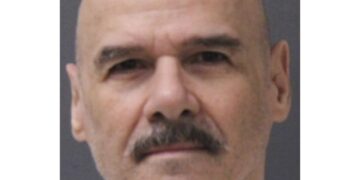









Ursula von der Leyen to meet king when she visits Windsor to unveil protocol deal with Sunak
Ursula von der Leyen, the European Commission president, will meet the king when she is in Windsor today, PA Media is reporting.
European Commission president, Ursula von der Leyen, will meet with the king at Windsor Castle on Monday afternoon, the PA news agency understands.
Von der Leyen will be in Windsor for a press conference with Rishi Sunak at around 3.30pm when the protocol deal will be unveiled. We do not know yet whether she will see the king before that, or afterwards.
The meeting is likely to be hugely controversial because it suggests that No 10 is trying to create the impression that the protocol deal has royal endorsement. At the weekend there were even suggestions that Downing Street wants the deal to be known as the Windsor agreement. Unionists tend to be arch-monarchists, and there have been suggestions that this is some crude ploy to use the king to win over the Democratic Unionist party. But the unionists are also inherently suspicious of the intentions of the UK government, and hyper-alert to signs that they are being manipulated, and so, if this is the No 10 plan, it is likely to backfire.
At the weekend, when it was first reported that the king might be involved in some way, Jacob Rees-Mogg, the Tory Brexiter, said:
If there were a plan to bring the king in before there is domestic political agreement, it would border on constitutional impropriety.
Rees-Mogg, of course, is something of an expert on constitutional impropriety. As leader of the Commons in 2019, he went to Balmoral to get the Queen to agree to prorogue parliament – a move subsequently ruled unlawful by the supreme court because it was done with the intention of limiting the time MPs would have to debate Brexit.
Key events
Betty Boothroyd, first female Speaker of House of Commons, has died
Betty Boothroyd, the former Labour MP and first woman to be Speaker of the House of Commons, has died. She was the first person elected Speaker after the Commons debates started being permanently televised and her ebullient performance in the chair helped to make PMQs the niche TV highlight that it remains today.
In a tribute, Sir Lindsay Hoyle, the current Speaker, said:
Not only was Betty Boothroyd an inspiring woman, but she was also an inspirational politician, and someone I was proud to call my friend.
To be the first woman Speaker was truly ground-breaking and Betty certainly broke that glass ceiling with panache.
She was from Yorkshire, and I am from Lancashire – so there was always that friendly rivalry between us. But from my point of view, it was heartening to hear a Northern voice speaking from the chair.
She stuck by the rules, had a no-nonsense style, but any reprimands she did issue were done with good humour and charm.
Betty was one of a kind. A sharp, witty and formidable woman – and I will miss her.
Nigel Farage says it is ‘disgraceful’ Sunak has asked king to meet Von der Leyen, and implies Charles should have refused
That did not take long. Nigel Farage, the former leader of Ukip and then the Brexit party, has said it is “absolutely digraceful” that Rishi Sunak is getting the king involved in the optics around the unveiling of the Northern Ireland protocol deal.
Interestingly, in a video message on the topic, Farage does not just criticise Sunak. He seems to criticise the king too, implying that he should have refused to meet Ursula von der Leyen. Farage says:
So it is Northern Ireland protocol day and the unelected Ursula von der Leyen is making her way to Windsor. Yes, Windsor has been chosen, it’s going to be called the Windsor agreement, and guess what? The king is going to meet her this afternoon.
I think this is absolutely disgraceful of Rishi Sunak to even ask the king to get involved in something that is overtly political in every way.
But I wonder whether the king had to accept. I wonder whether the king is taking a very big chance with that section of the electorate, that section of this country, that actually are his biggest supporters.
The unionists like the monarchy, they want to like Prince Charles. This is going to put the most enormous strain on it.
According to Cameron Walker, the royal correspondent at GB News, Buckingham Palace has stressed that the king is meeting Ursula von der Leyen this afternoon on the advice of the government.
BP Spokesperson: “The King is pleased to meet any world leader if they are visiting Britain and it is the Government’s advice that he should do so.”
— Cameron Walker (@CameronDLWalker) February 27, 2023
Ursula von der Leyen to meet king when she visits Windsor to unveil protocol deal with Sunak
Ursula von der Leyen, the European Commission president, will meet the king when she is in Windsor today, PA Media is reporting.
European Commission president, Ursula von der Leyen, will meet with the king at Windsor Castle on Monday afternoon, the PA news agency understands.
Von der Leyen will be in Windsor for a press conference with Rishi Sunak at around 3.30pm when the protocol deal will be unveiled. We do not know yet whether she will see the king before that, or afterwards.
The meeting is likely to be hugely controversial because it suggests that No 10 is trying to create the impression that the protocol deal has royal endorsement. At the weekend there were even suggestions that Downing Street wants the deal to be known as the Windsor agreement. Unionists tend to be arch-monarchists, and there have been suggestions that this is some crude ploy to use the king to win over the Democratic Unionist party. But the unionists are also inherently suspicious of the intentions of the UK government, and hyper-alert to signs that they are being manipulated, and so, if this is the No 10 plan, it is likely to backfire.
At the weekend, when it was first reported that the king might be involved in some way, Jacob Rees-Mogg, the Tory Brexiter, said:
If there were a plan to bring the king in before there is domestic political agreement, it would border on constitutional impropriety.
Rees-Mogg, of course, is something of an expert on constitutional impropriety. As leader of the Commons in 2019, he went to Balmoral to get the Queen to agree to prorogue parliament – a move subsequently ruled unlawful by the supreme court because it was done with the intention of limiting the time MPs would have to debate Brexit.
Labour sets out how it wants to be judged on whether it is meeting its growth ‘mission’
Here is the Labour party document giving details of its “mission” to secure the highest sustained growth in the G7. This is one of the five missions announced by Keir Starmer last week. Labour calls this an “ambition”, not a target, and Starmer said he wanted to achieve it by the end of the first term of a Labour government.
Today’s document gives more details of how Labour wants to be judged on whether it is fulfilling this mission. It says (bold text from original document):
We will hold ourselves to account for achieving this mission by measuring progress against clear outcomes.
On growth, we will measure the annual rate of GDP per capita growth compared to other countries using data published by the ONS (Office for National Statistics), as well as data and forecasts from the IMF (International Monetary Fund) and the OECD. Our ambition is to have the highest growth in the G7 over consecutive years by the end of the parliament.
We will measure living standards using official measures of disposable income for the median household. Our ambition is to eliminate the gap between the median British family and those in France and Germany, making progress in closing the gap by the end of the parliament. We will also measure regional and sub-regional living standards using measures published by the ONS, including gross disposable household income per head.
We will measure productivity in regions of England and nations of the UK using ONS data on output per hour worked. Our ambition is productivity growth in every region and nation by the end of the parliament.
We will measure the availability of good jobs in every part of the country using a range of metrics that cover different aspects of working life in different industries.
The document also sets out the policies by which Labour hopes to achieve this. They are all policies that have been announced before, but in this document they are pulled together and presented as the “first policy steps” towards achieving the mission.
Q: Do you want to allow young workers from the EU to come to the UK to address labour shortages?
Starmer says Labour is more likely to favour using the visa scheme to address this. Labour will not be anti-business, and it does not want labour shortages to gum up business.
But he says he wants to fix the fundamentals too. This is what mission-led government is about. He concedes this offer is “not very retail” (ie, it is hard to sell to voters as a reason for voting Labour), but it is important for the government to be focused on the long term. He says he does not want to be focused just on sticking-plaster politics, he says.
And that’s it. The Q&A is over. I will post a summary soon.
Q: Why do you say you will back the PM’s deal when you have not seen the detail? And would you like to see Northern Ireland within the scope of the European court of justice, or outside it?
Starmer says he knows Northern Ireland well and knows the detail. Any deal will be an improvement on the status quo. That is why he is saying he would back it. He says the deal will not come as a surprise.
He says the ECJ would have to play a part.
Q: How would you change Brexit to promote growth?
Starmer says “we are fooling ourselves” if we say Brexit is the only thing holding back growth. Growth was poor before Brexit, he says.
He says when he talks to businesses, they say stability is their priority.
But he does think there are improvements that can be made on Brexit, he says. They go beyond changes to the protocol.
Q: Would you increase personal taxes after the election?
Starmer says he wants to see an economy where growth comes before tax and spend.
His first answer on tax is always growth, he says.
He says he wants to ensure the tax burden on working people is as low as it can be.
He says, if the current government had increased growth as much as the last Labour government, the government would have £40bn more for public spending.
Q: Do you want people to get a real living wage, not just the minimum wage?
Starmer says he does want to see people get higher wages. But he says this could be determined by a process.
But people will not get higher wages unless there is genuine growth, he says.
So a growth policy is a policy for higher wages, he says.
He says the model for growth that Labour wants would increase living standards everywhere. He does not want a model that just promotes growth in the south.
Keir Starmer has finished his speech now. I will post more from it when I have seen the full text.
He is now taking questions.
On the subject of the Northern Ireland protocol, he says there are practical steps that could make it work more effectively that could have been introduced some time ago.
The question today is whether Rishi Sunak has “the strength” to sell his deal to his backbenchers, he says.
He says Labour does not have that problem, because the party is not divided.
Starmer says Britons could be poorer than Polish people by end of this decade on current growth trends
In his speech on Labour’s growth plan, Keir Starmer said that on current growth trends Britons could end up poorer than Polish people by the end of this decade. According to the extract from the speech released in advance, he said:
We need to be frank about the path of decline the Tories have set our country on. The British people are falling behind while our European neighbours get richer. In the east as well as in countries like France and Germany. I’m not comfortable with that. Not comfortable with a trajectory that will soon see Britain overtaken by Poland. Nor am I prepared to accept what the consequences of this failure would mean.
And here is the explanatory note from Labour defending this claim.
World Bank data shows that the UK had a GDP per capita of $44,979 in 2021 (latest available data) compared with $34,915 in Poland, and $33,593 in Hungary, and $30,777 in Romania.
UK GDP (Gross Domestic Product) per capita grew at an average annual rate of 0.5% in real terms from 2010-21, compared to 3.6% for Poland, 3% for Hungary and 3.8% for Romania.
Assuming these trends continue, by 2030, the UK will be around US$600 (PPP adjusted) poorer per person than Poland.
By 2040, the UK will be around US$12,000 and US$8,000 poorer per person than Romania and Hungary respectively.
Rees-Mogg says ‘significant number’ of Tory MPs will not be happy with protocol deal if it does not have DUP backing
Jacob Rees-Mogg, the former Brexit secretary, has been doing a media round this morning. As reported earlier, he gave Rishi Sunak some credit for what the PM seems to have negotiated, but said that he did not think it would be enough to satisfy the DUP. (See 9.31am.) He said:
From what I’ve heard, he [Sunak] has done very well, but I’m not sure he has achieved the objective of getting the DUP back into powersharing, which is the fundamental point of it.
Here are some of the other points he made.
It will all depend on the DUP. If the DUP are against it, I think there will be quite a significant number of Conservatives who are unhappy.
The position of Boris Johnson is always important. He remains the biggest figure in UK politics and therefore his view will be of fundamental relevance to how this debate is carried out.
I’m afraid with all the EU deals the devil is in the detail, so when people say ‘we need to see the legal text’, they are not larking about, they really want to see it to understand what the effect is.
My concern over all of this is what sounds to be quite an achievement has been weakened by not consulting the DUP in the first place to ensure their support was on board before it was announced, rather than taking a punt that they may like it afterwards.
I think that’s unfortunate, I think it hasn’t necessarily been handled successfully in terms of communications.
Boris was a great leader, it was a mistake to get rid of him but, no, I do not want to see a change in the Tory leadership now. I think we would look ridiculous to change leader again …
I’m not saying that I never want to see Boris come back, for the whole of eternity. But I want to see Conservative MPs and Conservative party members supporting Rishi Sunak.
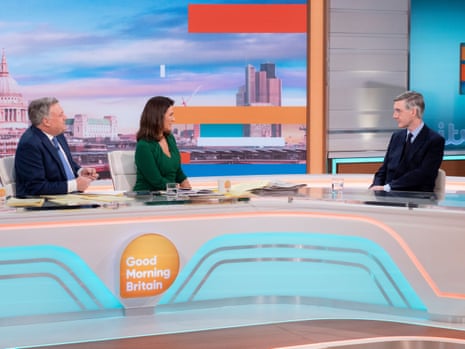
Keir Starmer is about to deliver a speech on Labour’s growth policy. You can watch a live feed here.
I will post more on the speech shortly.
Theresa Villiers says MPs must get vote on protocol deal
As my colleague Lisa O’Carroll reports, the former Northern Ireland secretary Theresa Villiers, a leading Brexiter, said this morning it is “crucial parliament has a vote” on the much-anticipated deal.
Sunak and von der Leyen to unveil protocol deal as leading Tory Brexiter suggests PM has done ‘very well’ but not enough
Good morning. Rishi Sunak is today unveiling his own Brexit deal – an agreement with the EU on changes to the Northern Ireland protocol. Theresa May lost office because she could not get her own Brexit deal accepted by her party, or parliament. Sunak is in a much stronger position than she was (the issue is more marginal, the Tory Brexiters are less potent, most MPs just want to move on, and Sunak has Labour on his side) but it is still, as Peter Walker reports in his overnight summary, a perilous moment for him.
The Daily Mail splash headline sums up the key question for the day.
But sell the deal to whom? There are at least five groups that matter.
The DUP: The main unionist party has set seven tests for the deal, and it has said it will not lift its boycott of the power-sharing in Northern Ireland, which has led to the executive being suspended for the last year, if it is not happy. DUP MPs have been complaining about not being shown the text of the deal in advance, and the most hardline have recently been setting what seem like increasingly unrealistic demands for what it must say.
Tory Brexiters in the European Research Group (ERG): Broadly they claim to have the same concerns as the DUP and some of them say they will be guided by the DUP’s response, and that they will reject the deal if the DUP does. But their politics are not 100% aligned. Some of them are Boris Johnson supporters who are motivated in part by animus towards Sunak. But they are also Tories, who might be swayed by the argument that a split won’t help the party at the next election.
People in Northern Ireland: The deal is supposed to remove some of the obstacles affecting trade going from Britain to Northern Ireland. The fact that Sinn Féin MPs do not take their seats in the Commons means that the DUP gets a disproprotionate voice in Northern Ireland. But they don’t represent all unionists, and they only got 28% of the vote in last year’s assembly elections. The public as a whole in Northern Ireland is much less critical of the protocol than the DUP, and more likely to back Sunak’s deal.
Conservative party members: Sunak was not chosen as leader by party members, and a ConservativeHome survey published yesterday suggests 41% of members do not support his policy on the protocol, and only 36% do. If members are unhappy, that won’t really show this week. But it will create a problem for Sunak in the future.
The UK electorate: Outside Northern Ireland, and particularly in England, Britons take little interest in what happens on the other side of the Irish Sea and “solving” a Northern Ireland problems confer little or no electoral benefit. But the protocol is also about “getting Brexit done”, and if Sunak does conclude a successful protocol deal, he might get some credit for competence.
Although much of what is in the deal has been reported, we have not seen the full details, and we do not know yet how the key groups will react. We will know a lot more tonight, but it might take some days before the DUP or the ERG deliver a definitive yes or no. From No 10’s point of view, at least it has not been firmly rejected already.
This morning Jacob Rees-Mogg, the former business secretary and an arch-Brexiter loyal to Boris Johnson, gave Sunak a mixed assessment. He said he thought Sunak had done “very well”, but possibly not enough to satisify the DUP.
Here is the agenda for the day.
10am: Keir Starmer gives a speech on Labour’s plans to increase growth.
11am: Kate Forbes, the SNP leadership candidate, holds a campaign event.
11.30am: Downing Street holds a lobby briefing.
Lunchtime: Rishi Sunak is due to hold a meeting with Ursula von der Leyen, the European Commission president, to sign off the deal on the Northern Ireland protocol. After that Sunak will chair a cabinet meeting where the cabinet will be briefed on the deal.
Around 3.30pm: Sunak is due to hold a press conference with von der Leyen in Windsor.
Late afternoon/early evening: Sunak is expected to make a statement on the deal to MPs.
I’ll try to monitor the comments below the line (BTL) but it is impossible to read them all. If you have a direct question, do include “Andrew” in it somewhere and I’m more likely to find it. I do try to answer questions, and if they are of general interest I will post the question and reply above the line (ATL), although I can’t promise to do this for everyone.
If you want to attract my attention quickly, it is probably better to use Twitter. I’m on @AndrewSparrow.
Alternatively, you can email me at andrew.sparrow@theguardian.com.










Discussion about this post