[ad_1]
Solidarity has called on small power producers to apply in their hundreds for generation permits.
According to Solidarity, the large-scale entry of small power producers into power generation is needed to resolve the country’s power crisis.
Solidarity has also announced plans to become involved in power generation through the development company Kanton, of which it is the main shareholder.
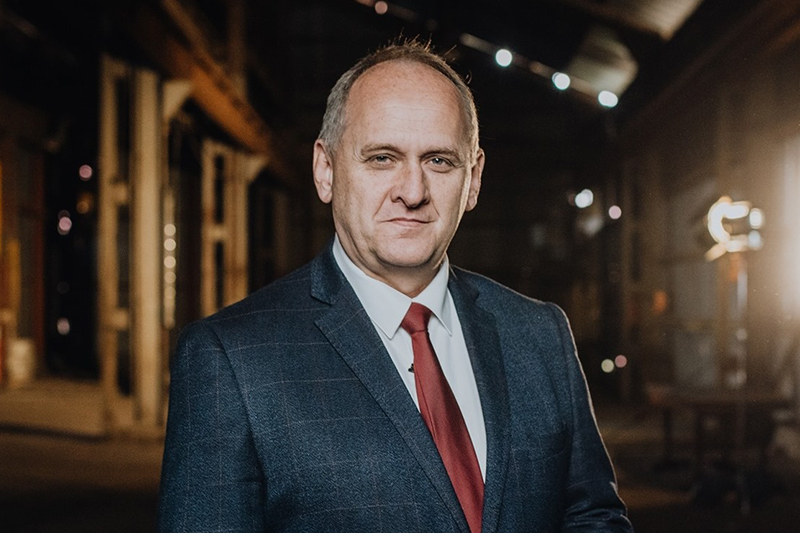
“Our members’ jobs and incomes are being destroyed on a large scale as a result of the power crisis. The biggest act of job protection we can undertake right now is to do everything possible to feed power into the system,” Solidarity chief executive Dr Dirk Hermann said.
Solidarity said that a functioning Eskom remains an essential component of its plan.
Any solution would have to be complementary to Eskom’s efforts and could not replace the state institution.
“Leaving Eskom out of the conversation regarding the future of electricity in South Africa would be dismissive of the extent of the coming power crisis — it would not be the one or the other,” Hermann said.
“We need everything. Eskom is currently facing huge challenges in terms of corruption, capacity and finances. Eskom must be stabilised by locking up the crooks, firing the bad guys, and paying off the debt.”
Solidarity noted that the regulations for large-scale private power generation had been amended. This gives effect to President Ramaphosa’s announcement that up to 100 MW can be generated with a permit and without needing a licence.
There are no further statutory restrictions.
Solidarity announced it would establish a help desk for permit applicants.
It also said it would submit a parliamentary petition to get any possible obstacles out of the way.
Solidarity also said it would investigate developing components to stimulate growth in power generation and offer training in the field.
“We are convinced that the barriers for private generation of power will break,” Hermann said.
“We want to prepare for it by becoming involved with power generation on small scale and by creating skills. The private sector must now remove all possible bottlenecks.”
Hermann said that only if there are many different types of applications would all the obstacles to private power generation be removed.
“We believe this crisis has created a will for private generation of power with the government. NERSA must do everything possible to remove all the obstacles. The processes must be without any obstacles. If there exist any administrative bottlenecks, we will also be prepared to remove those through litigation,” said Hermann.
However, it said that due to a lack of political will, there is still uncertainty among entrepreneurs and power producers.
“If the private sector can seize the opportunity, it could bring about a power revolution. If we continue to place our hope in Eskom and the state, it will result in a power depression,” Hermann stated.
“We call on developers, shopping malls, big companies, residents’ associations, entrepreneurs, major farmers and others to submit applications for the generation, distribution and sale of power. It is the right thing for the country, and it offers commercial opportunities. The new electricity sector can create thousands of new jobs directly and millions indirectly,” Hermann said.
The call follows a Solidarity Research Institute (SRI) report that shows between now and 2035, South Africa will have to generate almost as much power coming from the private sector as the whole of Eskom is producing at the moment.
The crisis is exacerbated as South Africa will lose generation capacity of 22,000 because coal-fired power stations will reach the end of their life between now and 2035.
Solidarity Research Institute head Connie Mulder said Stage 6 load-shedding would become the norm, and if the current trend continues, South Africa would see more severe power cuts in future.
South Africa’s generation capacity is currently 9.7% lower than in 2012, while the population has grown by more than 8 million people.
According to the SRI’s report, the government’s Integrated Resource Plan (IRP) is flawed and incomplete.
Even if the plan is 100% successfully implemented, it would be inadequate to solve the power crisis.
In addition, the government does not have a history of successful implementation.
The report recommends that all barriers to deregulation should be removed, that skills to meet the new demand in the private sector be provided and that a tariff system favourable to small-scale power producers developed.
The report also shows how the lack of electricity impoverishes South Africans and makes the whole country unfavourable for investment.
The lack of electricity is the biggest obstacle to economic growth and employment.
End load-shedding within a year
The SRI report also describes how Vietnam, with a similar energy landscape to South Africa, shifted from energy shortages to huge energy surpluses.
Their strategy was a break with the monopoly of state-controlled generation and a flood of private and especially small-scale power producers.
“We do not have to reinvent the wheel,” said Hermann.
“Countries such as Vietnam have shown that the solution to undersupplied power generation will be found on the roofs of ordinary citizens rather than in the corridors of major government projects,” he said.
“Technology in electricity generation has changed radically, and with the right steps, we will be able to resolve load-shedding within a year.”
A version of this article was first published on Biznews and is republished with permission. It has been edited for clarity and ease of reading.
Now read: How much it costs to get solar power and say goodbye to Eskom
[ad_2]
Source link