Categories
South Africa

UN rights chief hails Pope’s ‘timely’ AI appeal

Volker Türk welcomed Pope Leo XIV’s (pictured) warning on the risks of artificial intelligence, calling it a timely appeal to protect human dignity and justice in the AI era.

Volker Türk welcomed Pope Leo XIV’s (pictured) warning on the risks of artificial intelligence, calling it a timely appeal to protect human dignity and justice in the AI era.

Christopher Furlong/Getty Images

The United Nations rights chief on Wednesday welcomed as “timely” Pope Leo XIV’s manifesto warning of the risks of artificial intelligence, urging the world to remain focused on “shared humanity”.

In an encyclical called “Magnifica Humanitas” (Magnificent Humanity), the first US pope on Monday set out a list of warnings about how the technology could impact humanity.

He warned among other things against “a race for ever more powerful algorithms and larger datasets, driven by the desire to secure geopolitical or commercial dominance”.

UN High Commissioner for Human Rights Volker Türk hailed the pope’s manifesto, describing it on X as a “timely appeal for dignity and justice in the age of AI”.

“Our compass must remain our shared humanity,” he insisted.

AI could be worth up to $4.8 trillion by 2033, a 25-fold increase in a decade, while concentrating its profits in the hands of a limited few, according to the UN.

READ | Pope Leo XIV rejects ‘just war’ theory, opposes AI weapons in new manifesto

In his encyclical, Leo sounded the alarm over AI-directed weaponry, saying it was “not permissible to entrust lethal” decisions to tech.

He called for “disarming AI”, which he stressed “means freeing it from the mentality of ‘armed’ competition”.

“To disarm does not mean rejecting technology, but preventing it from dominating humanity,” Leo wrote.

Türk agreed. “Technology should serve people – not replace or control them,” he wrote.

Categories
South Africa

How to choose the right business travel agency – The Mail & Guardian

Bugs

How to choose the right business travel agency. (Image: The Travel Group SA)

Business travel today includes employee well-being and having the flexibility to respond when plans inevitably change. The right travel agency doesn’t simply process bookings but becomes an extension of your business that affects how your team performs at a distance. 

So how do you choose one that actually delivers?

Start with your business needs

Before you compare agencies, take a step back and look inward. What does your company really need from travel? A small team travelling occasionally will need something very different from a business managing frequent international trips.

Think about destinations and complexity while also considering duty of care, which refers to your responsibility to keep employees safe while travelling. If your team is often on the move, you’ll need an agency that not only organises logistics but also tracks travellers, protects sensitive travel information and provides support when disruptions happen.

Clarity here prevents you from being sold features you’ll never use.

Look beyond price and focus on value

Cost is always a factor, but choosing a business travel agency based purely on the lowest fees can actually cost your business more over time.

A strong agency will help you secure competitive rates while also reducing wasted spend through smarter routing and policy compliance, especially during periods of rising flight costs. In other words, they don’t just cut costs, they manage them.

Ask how they report on savings, how they enforce travel policies and how they help identify patterns in your spend. Value is found in the details beyond headline price.

Assess their technology and tools

You want a business travel agency that offers intuitive booking platforms with real-time updates and seamless integration with your internal processes.

A good platform allows employees to book within policy while giving managers visibility over spend and approvals. Mobile access also means that travellers can adjust plans on the go without unnecessary friction.

Technology should simplify, not complicate. If the system feels clunky in a demo, it will feel worse in practice.

Prioritise support and responsiveness

Travel doesn’t operate on a nine-to-five schedule. Flights get delayed at midnight and plans change without warning, and this is where a great agency proves its worth during periods of unexpected flight disruptions.

Look for 24/7 support, dedicated account management and clear escalation processes. You want a team that responds quickly while also understanding your business context, not a generic call centre reading from a script.

Responsiveness is the difference between a minor inconvenience and a full-blown disruption.

Consider industry experience and partnerships

Experience matters, especially if your business operates in a niche sector. Agencies with relevant industry knowledge can anticipate challenges, suggest better routes and negotiate more effectively with suppliers. The Travel Group SA is one example of a business travel agency focused on helping companies manage travel more efficiently while supporting travellers throughout their journeys.

At the same time, strong partnerships with airlines, hotels and car hire companies often unlock better availability and pricing.

Do not overlook the personal factor

Finally, remember that business travel is ultimately about people. Your employees are the ones waiting in airports and adjusting to time zones while representing your company on the ground.

The right agency supports them while making their journeys safer and less stressful. That translates into stronger morale and a more professional presence wherever they go.

Choosing a business travel agency is a strategic decision. Get it right, and you don’t just move people from A to B but unlock a better way of doing business. 

Categories
South Africa

BP fires chair over ‘serious’ concerns

Albert Manifold became chairman in October last year as BP focused on pivoting back to its more profitable oil and gas business, slashing clean energy investments.

Albert Manifold became chairman in October last year as BP focused on pivoting back to its more profitable oil and gas business, slashing clean energy investments.

Chris Ratcliffe/Bloomberg via Getty Images


British oil giant BP said Tuesday that it had removed Albert Manifold as chairman after less than one year in the role, citing “serious concerns” about governance standards, oversight and conduct at the company.

“The board has been surprised and disappointed to learn of governance oversight and conduct issues it deems unacceptable and has taken decisive action,” Amanda Blanc, a senior independent director at BP, said in a statement.

It did not give specific details of the alleged conduct.

Shares in the company plunged more than six percent after the surprise announcement.

The company said board member Ian Tyler has been appointed interim chairman with immediate effect.

Manifold became chairman in October last year as BP focused on pivoting back to its more profitable oil and gas business, slashing clean energy investments.

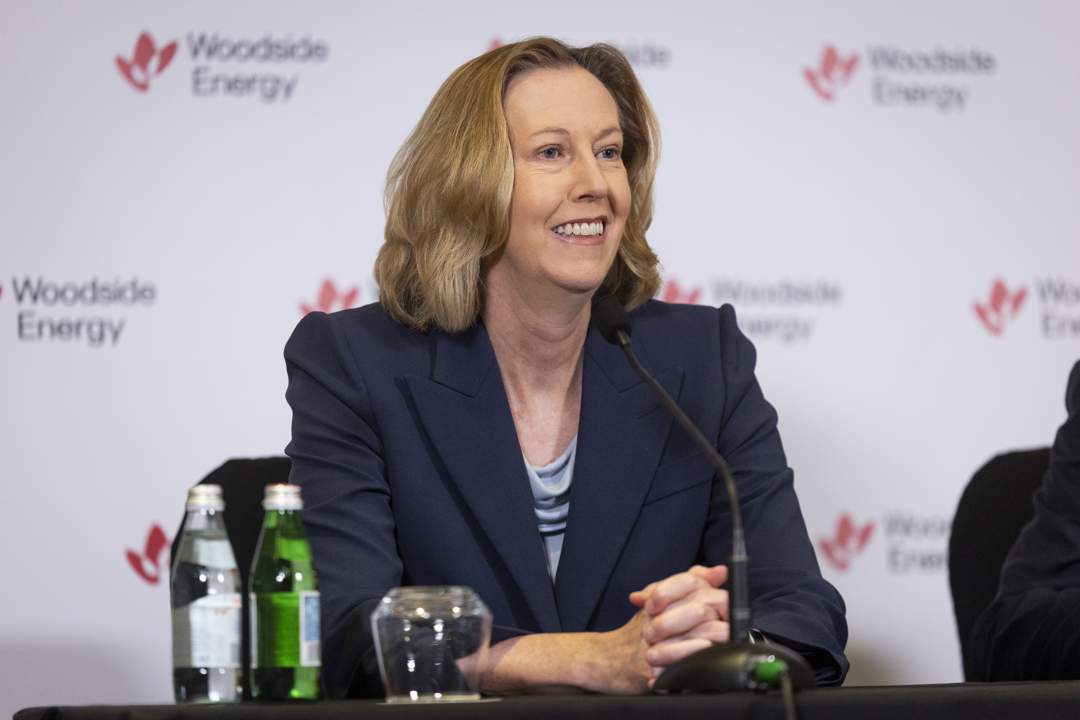
His departure represents the latest leadership shakeup after company outsider Meg O’Neill became chief executive in April with a mission of implementing a recovery plan for the group.

BP CEO Meg O’Neill. Photo: Matt Jelonek/Bloomberg via Getty Images

The new management faced a shareholder backlash at its annual meeting last month as investors rejected a resolution that would have reduced its climate reporting requirements.

Some of the investor discontent was directed at Manifold, when 82 percent of shareholders voted in favour of his election — below the near-unanimous support typically received by directors.

BP reported a sharp increase in profits in the first quarter as crude oil prices soared amid the Middle East war.

Discover the Truth

Step into a world where the truth shines bright, and every headline is worth your time. With News24, you’re not just reading the news; you are part of a community that values knowledge and insight. Immerse yourself in compelling stories, sharp analyses, and content that keeps you ahead of the curve.

Categories
South Africa

Jelly Express Is New, but Its Millionaire Wins Are Already Loud – The Mail & Guardian

Jelly Express

Some new slots arrive with a quiet launch and a slow build. Jelly Express took the opposite route. Since its release last March, it has already produced a string of millionaire-level payouts that feel almost unreal. That kind of early form matters, because big wins are not just about luck. They also reflect a game design that gives strong moments room to grow into something huge.

A Candy-Coloured Slot With Serious Upside

Jelly Express looks sweet and playful, but the engine underneath is built for punchy outcomes. Big wins are counted by matching symbols anywhere on the screen, and the Tumble Feature keeps the action moving by clearing winning symbols and dropping new ones in. That matters because one win can roll into the next without resetting the mood, which is exactly how totals can climb quickly. The overall takeaway is simple: the visuals are light, but the payout potential is not.

The Feature Set That Turns Good Spins Into Big Stories

The game’s biggest jumps come from how it treats Wilds and Free Spins. A Wild can apply a random multiplier to winning combinations, and those multiplier values can range from modest to very spicy. Free Spins trigger when three Scatter symbols land, then you choose from several options, like more spins with smaller multipliers, or fewer spins with bigger multiplier ranges. The key detail is that in Free Spins, the total multiplier builds and stays for later wins, which is how a decent sequence can become a headline.

Five Millionaire Wins That Prove the Point

The results speak with real weight. Jelly Express has already produced two separate R2,000,000 wins, which is a rare kind of repeat at that level. It also delivered R1,965,800, R1,577,000, and R1,131,300, rounding out an elite set of payouts that would make any game’s highlight reel. The meta lesson is that this is not one lucky slip carrying the story. It is a cluster of massive outcomes, spread across multiple sessions.

Sixty-Plus Six-Figure Wins in a Week Is Not “Normal”

Millionaire wins grab attention, but consistency is what builds confidence. Jelly Express delivering 60+ six-digit wins in just one week suggests the game is not only capable of huge peaks, it is also regularly producing strong mid-to-high results. That does not mean every session will land a big number, because volatility still cuts both ways. It does mean the game has a lively rhythm where meaningful payouts are showing up often enough to be tracked, not just hoped for.

Where Easybet Fits Into This Hot Run

A fast-moving slot feels better when the platform around it stays tidy. Easybet makes it easy to jump into a game like Jelly Express, track your session, and keep your play organised without extra friction. It also helps that Easybet is a premier go-to app for online sports betting and casino play, so players who like variety can switch from fixtures to slots in the same familiar space. The final takeaway is straightforward: Jelly Express is running hot, but the smartest players still bring calm limits, then let the tumble and multipliers do the talking.

Categories
South Africa

Trump safe as US Secret Service kills gunman who opened fire near White House

Members of the US Secret Service tend to a wounded man on the scene of a shooting near the White House in Washington, DC.

Members of the US Secret Service tend to a wounded man on the scene of a shooting near the White House in Washington, DC.

Roberto Schmidt/Getty Images

  • A gunman opened fire near the White House.
  • US Secret Service agents killed him.
  • One bystander was injured in the shooting.

A gunman opened fire near the White House on Saturday evening, with US Secret Service agents killing the assailant in a shootout during which a bystander was also struck, authorities said.

US President Donald Trump was in the White House at the time – on a day when he was working to negotiate a deal with Iran – but was not impacted by the incident, Secret Service communications chief Anthony Guglielmi said in a statement.

The confrontation took place just after 18:00 (22:00 GMT) when a man near the White House security perimeter “pulled a weapon from his bag and began firing”.

“Secret Service Police returned fire, striking the suspect, who was transported to an area hospital, where he was pronounced deceased. During the shooting, one bystander was also struck by gunfire,” Guglielmi said, without giving details on the bystander’s condition.

Multiple US media outlets identified the suspect as Nasire Best, 21, of Maryland, reporting that Best had a history of mental health concerns and had multiple prior interactions with Secret Service members.

READ | Trump shares photo of ‘lone wolf’ gunman at glitzy media gala

No Secret Service officers were hurt.

Police and security forces swarmed the scene, cordoning off access as National Guard troops blocked an AFP reporter from entering the area in downtown Washington.

Canadian tourist Reid Adrian told AFP:

We heard probably 20 to 25 what sounded like fireworks, but they’re gunshots, and then everyone started running.

Journalists who were on the White House North Lawn at the time said they were ordered to run and shelter in the press briefing room.

ABC News correspondent Selina Wang had been recording a video for social media when the gunfire broke out, capturing the sounds of the shots as she dove to the ground.

“It sounded like dozens of gunshots,” she said on X.

Trump, 79, has been the target of three alleged assassination attempts, the most recent of which took place on 25 April when an armed man stormed a security checkpoint in a hotel where Trump was attending a media gala.

The man never got close to Trump or the other guests attending the event.

In July 2024, Trump was targeted during a campaign rally in Butler, Pennsylvania.

A gunman killed an audience member and lightly wounded the then-candidate in the ear.

A few months later, another armed man was arrested on a West Palm Beach golf course where Trump was playing a round.

“Thank God President Trump is safe,” House Republicans said on X after the Saturday evening shooting.

“Endless gratitude to the Secret Service for their immediate, heroic response. Political violence has to stop.”

Trump has cited security concerns as one of his reasons for building a ballroom at the White House, tearing down the East Wing after taking office again in 2025.

The $400 million project currently under construction will feature, according to the New York real estate magnate, six floors below the highly secure “drone-proof” ballroom, including an underground military hospital.

Categories
South Africa

Why we need to re-evaluate STEM education – The Mail & Guardian

Bugs

Dr Paul Iwuanyanwu is calling for a new approach to STEM education.

Science, technology, engineering and mathematics. Together they are called STEM fields, and they drive the systems that power modern civilisation, from healthcare and infrastructure to energy, food security and communication. Even our growing dependence on artificial intelligence and other emerging technologies. These fields equip societies to solve complex problems and to innovate. Because of their importance, STEM education must continually evolve; otherwise, it risks producing graduates technically skilled for yesterday’s world rather than intellectually prepared for tomorrow’s.

Dr Paul Iwuanyanwu, from the School of Mathematics, Science and Technology Education in the North-West University (NWU) Faculty of Education, believes that STEM education should extend beyond technical training by cultivating engagement with the epistemic and ethical practices of reasoned argument, especially as professionals must justify decisions that carry profound technical, social and moral implications. He warns that innovation driven solely by technical efficiency may neglect broader human and societal consequences.

Dr Iwuanyanwu is the author of the book, ‘Empowering STEM Thinkers Through Argumentation: A Framework for Critical Practice’. In it, he argues that STEM education must move beyond technical knowledge and memorisation to develop critical thinking, ethical reasoning and argumentation skills. The book presents a human-centred framework for understanding and advancing responsible STEM education and practice in an age increasingly shaped by artificial intelligence, automation and rapid innovation.

According to Dr Iwuanyanwu, his motivation for writing the book came from years of frustration with the narrow ways in which STEM education is often understood. Too often, he says, educational systems equate STEM competence with content mastery, procedural accuracy and examination performance, while neglecting the deeper human capacities that give knowledge meaning and ethical direction.

“For me, this represented a profound philosophical problem. Knowledge without reflection can become dangerous, and innovation without ethical reasoning can become destructive,” he says.

This concern lies at the heart of the book. Dr Iwuanyanwu argues that argumentation should not be treated as an optional classroom method, but as the intellectual and ethical foundation of STEM thinking itself. Through argumentation, students learn to justify claims with evidence, evaluate competing ideas, respond to counterarguments and revise their thinking when stronger evidence emerges.

He believes this is essential because real-world STEM problems are rarely simple. Scientists must defend interpretations, technologists must evaluate competing models and their social consequences, engineers must negotiate trade-offs, and mathematicians must justify generalisations. In each case, responsible innovation depends on disciplined reasoning rather than passive agreement.

Traditional STEM education, he argues, is increasingly inadequate because it was largely designed for industrial societies where success depended on procedural mastery and technical accuracy. That model is no longer enough in a world shaped by artificial intelligence, automation, biotechnology and complex socio-technical systems.

“In such a context, technical knowledge alone is insufficient because intelligent machines can already outperform humans in processing information,” he says. “The deeper challenge is whether human beings can still think critically enough to question assumptions, interpret evidence and ethically govern the systems they create.”

The risks of failing to do so are significant. Dr Iwuanyanwu warns that society may produce professionals capable of building powerful systems without adequately asking whether those systems should exist, who they benefit and who they may harm. This is already visible globally in algorithmic bias, unethical uses of artificial intelligence, environmental degradation, misinformation systems and technologies that deepen inequality.

For him, one of the greatest risks of the contemporary technological age is not artificial intelligence itself, but uncritical human dependence on systems that are no longer deeply questioned. When graduates lose the capacity to interrogate assumptions or evaluate consequences, they risk surrendering human judgment to automated systems.

That is why he believes universities must move beyond preparing students merely to use technology. They must prepare students to interrogate, justify, govern and humanise technical knowledge responsibly. Technologies, he says, are never neutral. Every algorithm or automated system carries assumptions, cultural values and consequences.

A human-centred approach to STEM education is therefore becoming increasingly important. Dr Iwuanyanwu argues that societies often celebrate efficiency, speed and optimisation while paying too little attention to meaning, justice and ethical responsibility. The ultimate purpose of innovation should be the advancement of humanity, not the replacement or dehumanisation of human beings.

“The central question is no longer, ‘Can we do this?’ but also, ‘Should we do this, for whom and at what cost?’” he says.

At the NWU, the School of Mathematics, Science and Technology Education contributes to this vision through its teaching, research and post-graduate supervision. Dr Iwuanyanwu says the school seeks to prepare graduates who can critically examine the role of STEM in society, engage responsibly with emerging technologies and respond thoughtfully to contemporary global challenges.

His message is clear: the future of STEM education cannot be built on technical skill alone. It must also cultivate conscience, judgment and the courage to question. In a world increasingly shaped by machines, the most important task of STEM education may be to preserve and strengthen the best of human thinking.

• Follow the link to the published article here: https://news.nwu.ac.za/why-we-need-re-evaluate-stem-education

Categories
South Africa

‘Inconsistent with reality’: Iran media disputes Trump claim that war is ‘largely negotiated’

An Iranian flag flutters in the wind as ships remain anchored in the Strait of Hormuz near Larak Island, Iran.

An Iranian flag flutters in the wind as ships remain anchored in the Strait of Hormuz near Larak Island, Iran.

Majid Saeedi/Getty Images

  • US President Donald Trump claimed a deal to end the Iranian war is “largely negotiated”.
  • But Iranian media disputed that claim.
  • Iran said it was working toward a memorandum of understanding on ending the war.

A “largely negotiated” memorandum of understanding on an Iran peace deal would reopen the Strait of Hormuz, US President Donald Trump said on Saturday, although the Iranian Fars news agency disputed that claim.

Trump posted on social media that the emerging agreement would reopen the strait, the vital shipping passage ‌whose closure has upended global energy markets since the US and Israel launched the war on Iran in February.

He did not say what else would be included in an agreement.

“Final aspects and details of the Deal are currently being discussed, and will be announced shortly,” Trump wrote on Truth Social.

But Fars reported early on Sunday that the agreement would allow Iran to manage the strait and that Trump’s assertion on the strait was “inconsistent with reality”.

READ | Iran Supreme Leader Ayatollah Khamenei defies Trump on highly enriched uranium stockpile

US news website Axios reported late on Saturday that the US and Iran were close to a deal that would reopen the Strait of Hormuz with no tolls during a 60-day ceasefire extension, while Iran would be able to freely sell oil and negotiations would be held on curbing Iran’s nuclear programme.

In exchange, the US would lift its ⁠blockade on Iranian ports and issue some sanctions waivers on Iranian oil, Axios said, citing a US official.

The draft agreement also includes commitments from Iran never to pursue nuclear weapons and to negotiate over a suspension of its uranium enrichment programme and the removal of its stockpile of highly enriched uranium, the Axios report said.

The New York Times reported that the proposed deal includes an “apparent commitment” by Iran to give up its highly enriched uranium.

Details of how Iran would cede that stockpile would be left for a subsequent round of talks, the newspaper said, citing two unidentified US officials.

Trump, while offering various war aims during the three-month-old conflict, has repeatedly said the US struck Iran to prevent it from obtaining nuclear weapons.

Iran has denied it is pursuing nuclear weapons and says it has a right to enrich uranium for civilian purposes.

Iran said on Saturday that it was working toward a memorandum of understanding on ending the war after its top officials met with Asim Munir, the army chief of Pakistan, which has sought to be a mediator.

The Pakistani army said the negotiations had resulted in “encouraging” progress.

Two Pakistani sources involved in the talks said the deal being negotiated is “fairly comprehensive to terminate the war”.

Sources have told Reuters the proposed framework would unfold in three stages: formally ending the war, resolving ‌the crisis ⁠in the Strait of Hormuz and launching a 30-day window for negotiations on a broader agreement, which can be extended.

One of the Pakistani sources said that if the US accepts the memorandum, further talks could take place after the Eid holiday ends on Friday.

US forces patrol the Arabian Sea near M/V Touska, after firing upon the Iranian-flagged vessel that the US accused of attempting to violate the US naval blockade of Iranian ports near the Strait of Hormuz.

Handout Photo by the US Navy via Getty Images

Trump, whose approval ratings have been hit by the war’s impact on US energy prices, said on Friday he would not attend his son’s wedding this weekend, citing Iran among the reasons he planned to stay in Washington.

Trump spoke on Saturday with leaders from Saudi Arabia, Qatar, the United Arab Emirates, Jordan, Egypt, Turkey and Pakistan.

The leaders encouraged Trump to agree to the emerging framework, Axios reported.

A call with Israeli Prime Minister Benjamin ⁠Netanyahu also went “very well”, Trump wrote on Truth Social.

Pakistan has aimed to narrow differences between Iran and the US after weeks of war have left the vital Hormuz waterway closed to most shipping despite a nervous ceasefire.

“The trend this week has been toward a reduction in disputes, but there are still issues that need to be discussed through mediators. We will have to wait and see where the situation ends in the next three or four days,” said Iranian Foreign Ministry spokesperson ⁠Esmail Baghaei.

Iran has demanded supervision of the strait, an end to the US blockade on its ports and the lifting of sanctions on Iranian oil sales.

Baghaei said the issue of the US blockade on Iran’s shipping was important, but that its priority was ending the threat of new US attacks and the ongoing conflict in Lebanon, where Iran-allied Hezbollah militants are fighting Israeli troops who have moved into the south.

Pakistan’s army chief Munir left ⁠Tehran on Saturday after talks with Iran’s top negotiator Mohammad Baqer Qalibaf and Foreign Minister Abbas Araqchi.

Qalibaf said Iran’s armed forces had rebuilt their capabilities during the ceasefire and that, if the US “foolishly restarts the war”, the consequences would be “more forceful and bitter” than at the start of the conflict.

Despite weeks of conflict, Iran has preserved its stockpile of near-weapons-grade enriched uranium as well as missile, drone and proxy capabilities.

Categories
South Africa

How to know whether to buy or rent – The Mail & Guardian

Show Some Love To Kindel Media

Leverage: A property that has been sitting unsold for 12 months is a negotiation opportunity. Picture: Pexels

Tag Askash Muller2 Page 0001

A thread on X went viral this week. A guy named Thendo Muloiwa shared that he had spent two years renting a flat in Victory Park, Johannesburg, for R12 000 a month.  His landlord had listed the unit for sale at R1.4 million. 

Thendo did the math (out loud, for all of X to see). What he found was uncomfortable reading for anyone who has been told that buying property is the golden path to wealth.

His numbers were blunt when he typed that bond repayments at prime would run at R14 479 a month. Add levies of R2 500 and rates of R1 200 and the total cost of owning the flat comes to R18 200 a month. 

Compare that to the R12 000 he was paying to rent the space and suddenly the “Why rent when you can own?” crowd goes silent. 

To make matters worse, the previous owner paid R1.375m for the unit in 2018. Seven years later, it’s listed at R1.4m — an appreciation of R25 000. That’s not a typo: R25 000 in seven years on an asset you were paying bond interest on.

Then Thendo hit the real eina button: some of the units had been sitting on the market since 2024, with no buyers. You obviously can’t eat paper profits or an illiquid asset nobody wants to buy.

Is renting smarter than buying? Not exactly. 

Here’s the most honest way I can answer: it depends on where you buy, what you pay and what the city around your asset looks like. Let me put it to you another way. The same property in different cities in South Africa will give you different outcomes. 

Cape Town’s property market has appreciated aggressively over the past decade. 

According to FNB’s Property Barometer, the city’s average house price growth has consistently outpaced inflation and the national average. In some suburbs, property values have doubled over the past 10 years. People who bought in Woodstock or Observatory in 2014 are sitting on real wealth today.

Johannesburg? That’s a different story. Particularly in sectional title flats, like the type Thendo was renting. Prices in many areas have gone sideways or backwards in real terms. 

After inflation, a lot of Joburg flat owners haven’t gained anything. 

The same could be said in the upper end of the luxury market as many with mansions in good areas of Johannesburg can’t sell their homes for the prices they paid for them 10 years ago. Some have lost money on paper, even before you count the interest they paid on the bond. 

Why? 

Because property prices follow people. And people follow functioning cities.

Cape Town, whatever its flaws, has a relatively functional municipality. The City of Cape Town consistently tops national rankings for service delivery and has received clean audits (one of the few municipalities to achieve consecutive clean audits each year). Water comes out of taps, roads get fixed and city planning, while imperfect, has some coherence.

When a city works, businesses want to be there. When businesses want to be there, skilled workers follow. When skilled workers follow, demand for housing goes up. When demand for housing goes up, prices go up. It is not complicated; it is cause and effect.

The City of Johannesburg, by contrast, has been plagued for years by mismanagement, ageing infrastructure and service delivery failures. 

Hillbrow, once one of the most sought-after addresses in Africa, is now a cautionary tale about what happens when a municipality stops caring about its built environment. 

Even in suburbs like Victory Park, a decent, middle-class area, you see the knock-on effect of a struggling metro. 

Investors are cautious and so are the buyers. The money is instead flowing to where things work or other areas that offer better security for the investment. This is why I always say: when you are purchasing a real estate asset, you are not just buying a property. You are buying into a municipality and how they deliver services and maintain infrastructure that affects your asset. 

Your property’s value is influenced by everything surrounding it. You could own the most beautifully renovated house on the street but if the house next door has been hijacked, the building across the road is derelict and the park on the corner is a crime hotspot, you are going to struggle to sell and achieve a good price. 

This is why a mansion in a well-maintained estate in Stellenbosch and a mansion in a neglected Johannesburg suburb are two different investments, even if the buildings are identical. 

The surrounding environment is almost as important as the asset. Infrastructure, green spaces, road quality, street lighting, cleanliness and neighbourhood safety all feed into what a buyer is willing to pay when you eventually want to exit.

Before you buy anywhere, walk the streets. Not just the block your property is on — the surrounding area within a kilometre. Look at the state of the roads and the buildings. Look at what businesses are operating there. Are there new restaurants opening or are shuttered shopfronts piling up? These are your indicators.

Even in a great city and a great suburb, you can destroy your investment by overpaying. This is probably the most underrated truth in property. The price you pay is the single biggest determinant of your return. 

If you paid R1.375m for a flat in 2018 and it’s worth R1.4m in 2025, you have not made money. You have lost money. Inflation over that period has been roughly 30%. 

Your money sitting in a decent money market account would have grown significantly. The bond interest you paid has compounded year after year against you.

Smart buyers look for motivated sellers, distressed sales and properties that have been on the market for too long. A property that has been sitting unsold for 12 months is a negotiation opportunity. A buyer with a clean pre-approved bond in a slow market has enormous leverage. 

In Johannesburg’s flat market, I’ve seen buyers negotiate 15% to 20% off the asking price. The discount is day-one equity, real money you didn’t have to earn. 

There’s also a concept called buying below replacement value — paying less for a property than it would cost to build it from scratch. 

When you find those deals, the fundamentals are in your favour from the moment you sign.

Should you buy or rent? 

If you’re looking at a well-located property in a functioning city, the body corporate is healthy, the surrounding infrastructure is intact and you can negotiate a genuinely good price, buying can build wealth over time. 

Property is one of the most accessible asset classes for South Africans. It gives you a leveraged position, meaning you can control a R1.5m asset with a much smaller initial outlay and if you hold it long enough in the right location, real capital appreciation follows.

But if you’re buying a sectional title flat in a Johannesburg metro that has been struggling for years, paying full asking price, taking on a bond whose monthly repayment is substantially higher than the rental on the same property, in a building whose levies are stretched, you are not building wealth. You are carrying an expensive liability and calling it an investment.

Renting in that scenario is not a failure; it is patience with a purpose. The money you save on the difference between renting and owning can be invested in equities, ETFs or a deposit fund for when you find the right property at the right price in the right place. 

Run the numbers and run them all. Not just the bond calculator on the bank’s website. Because the real estate industry has an obvious interest in getting you to buy. 

The banks, the estate agents and the attorneys all make money when you sign. You’re the only one at that table whose interests are entirely your own. Do the maths and buy smart — or not at all.

040a Ask Ash Ad Print Landscape 2026 01 09 (1)

Categories
South Africa

‘Ubuntu is suspended’: About 100 March and March supporters protest in Bellville

About 100 March and March supporters walked from Du Toit Park in Bellville to the Parow police station on Saturday.

About 100 March and March supporters walked from Du Toit Park in Bellville to the Parow police station on Saturday.

Ashraf Hendricks/GroundUp

  • About 100 March and March supporters marched from Du Toit Park to Parow police station in Bellville on Saturday.
  • Their leader, Jacinta Ngobese-Zuma, denied that the marches are xenophobic, saying: “Ubuntu is suspended until further notice”.
  • Police Minister Cachalia warned that while protests are legal, vigilantism is not permitted.

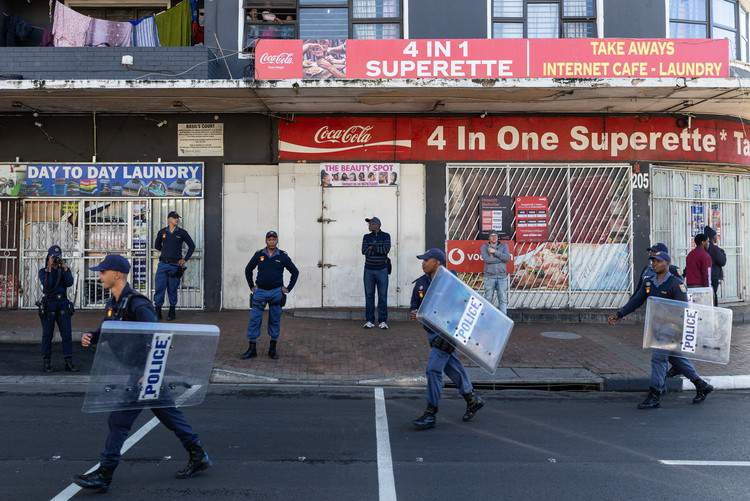
Bellville’s busy Voortrekker Road came to a standstill on Saturday morning as about 100 people marched from Du Toit Park to the Parow police station to demand the arrest of undocumented immigrants, GroundUp reports.

The march comes amid mounting tensions between anti-immigrant group March and March and migrants in parts of the country. This week, GroundUp reported how a group of mostly Congolese immigrants in Durban have been camping outside government buildings, fearing for their safety.

On Saturday, protesters held placards that read, “Enough is Enough” and “Go fix your countries! We are fixing ours!”

When we tried to speak to protesters, we were told they were instructed not to speak to the media. Only March and March leader Jacinta Ngobese-Zuma is authorised to speak to the media, they said.

Along the route, many businesses were closed, apparently in anticipation of the march. Public order police kept the marchers separate from curious onlookers.

READ | Over 500 foreign nationals march in Durban, demanding safety

Ngobese-Zuma has rejected allegations that these marches against undocumented foreigners are xenophobic.

Speaking to marchers, she said: “We are the rainbow nation… and then everyone saw this harmony as an invitation. They took advantage of our Ubuntu. Ubuntu is suspended until further notice.”

She said:

We don’t want a situation where foreign nationals are always painted as the victims, and we are the villains. It’s our country, and we’re tired of explaining that there is no xenophobia in the country.

Heavy police presence during the march on Voortrekker Road.

The group dispersed from the police station after 14:00.

Speaking to GroundUp on Friday, commissioner of the South African Human Rights Commission (SAHRC) Aseza Gungubele said that while people had a right to march, they should do so peacefully.

“We don’t condone any form of violence or harassment of anyone. We have seen the scenes of 2008; we lost so many lives.”

He confirmed that they had written to the police to express concern about the anti-immigrant marches.

“There are legitimate concerns… and general issues of service delivery. We raise it with the relevant authorities. But that does not mean you must scapegoat it,” he added.

Gungubele stressed that one of the biggest problems was misinformation being spread on social media.

Heavy police presence during the march on Voortrekker Road in Belville, Cape Town.

While releasing the quarterly crime statistics, Police Minister Firoz Cachalia addressed the anti-immigrant marches.

“Our laws include the right to protest, but do not permit vigilantism, criminality and chaos in public. The police have a responsibility to maintain public space and will enforce the law to ensure that public order is maintained.”

WATCH | March and March protests as foreign nationals plead for protection from locals

He said he would respond to concerns raised by the SAHRC.

Dozens of civic organisations, including Kopanang Africa Against Xenophobia, Chronicles of Refugees and Immigrants and Africa Unite, condemned the recent anti-immigrant protests in a joint statement ahead of the march.

“March and March pretends to oppose only undocumented migration, but in practice, it fuels hostility and violence towards migrants as a whole, especially poor African migrants. We stand with migrants, refugees, undocumented people, and all those targeted by xenophobic politics.”

The activists called on the police, politicians, and the media to “act responsibly” and “prevent intimidation and xenophobic violence”.

Categories
South Africa

Whale strike risk rises as shipping surges off SA coast – The Mail & Guardian

Whalesrw3

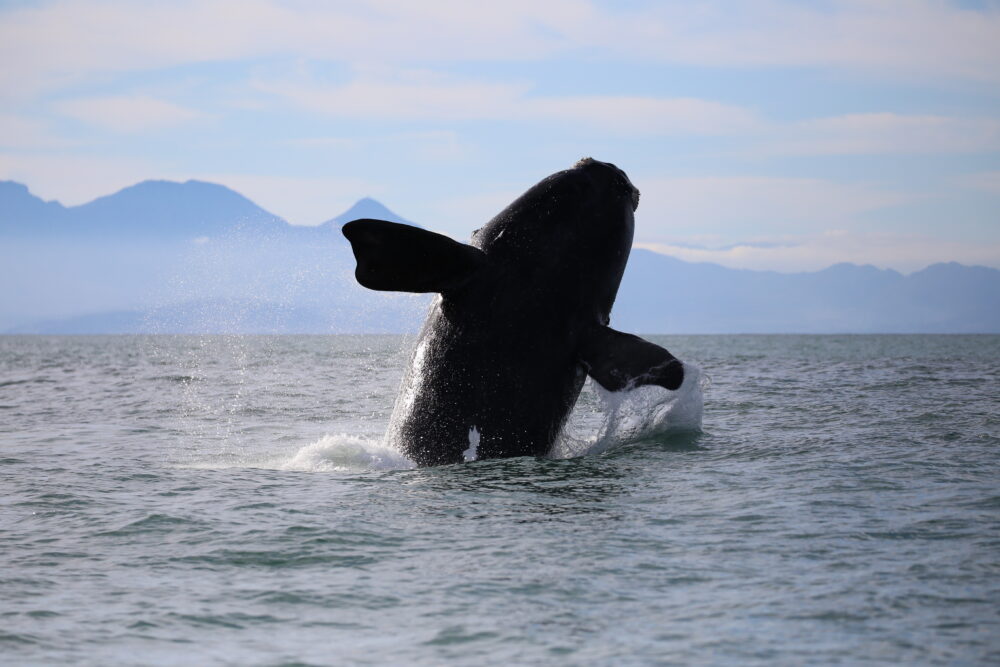
Ship ahoy: The analysis found that the number of large, fast-moving vessels travelling faster than 15 knots — considered the greatest ship-strike
threat to whales — has quadrupled since late 2023. Photo: University of Pretoria’s Whale Unit at the Mammal Research Institute

As conflict in the Middle East redraws global shipping routes, scientists are warning that South Africa’s west coast is becoming an emerging danger zone for whales.

Thousands of commercial vessels avoiding instability in the Red Sea and Strait of Hormuz are rerouting around the Cape of Good Hope, dramatically increasing maritime traffic through some of the world’s richest whale habitats.

New preliminary research presented to the International Whaling Commission by researchers from the University of Pretoria’s Whale Unit at the Mammal Research Institute, Afriseas Solutions and the International Fund for Animal Welfare, found extensive overlap between whale habitats  and major shipping corridors around Cape Town, Saldanha Bay and Cape Agulhas.

The analysis found that the number of large, fast-moving vessels travelling faster than 15 knots — considered the greatest ship-strike threat to whales — has quadrupled since late 2023.

The assessment combines species distribution models for six whale species — Bryde’s whale, Southern right whale, Humpback whale, Fin whale, Sei whale, Sperm whale — with vessel traffic data to map areas of heightened exposure risk along South Africa’s southwest coast.

“The risk has increased very simply because there’s more ships,” said professor Els Vermeulen the chief scientist of the whale unit.

“And so we did a risk assessment to kind of pinpoint the areas where that risk is highest but it doesn’t mean we see an increased mortality, it doesn’t mean we see an increase in injuries. If anything, a lot of mortality related to ship strikes in general globally is cryptic.”

Vermeulen explained that whale deaths from ship strikes are often invisible. “It happens offshore, if whales get hit, they will sink – they don’t necessarily strand for us to see so we can’t go around waiting for data to see an increase in mortality. 

“When we have an increase in shipping, we know there’s an increased risk and what we did is try to map where that high risk is and how that overlaps with the distribution of different whales.”

South Africa’s recorded data reflects this invisibility. “The numbers we have just shows it’s super low; we have just, in the last 50 years of stranding data and we can see that less than 1% of that relates to ship strike and confirms a lot of what might be happening is cryptic, we don’t see it per se,” she said.

According to the preliminary assessment, the southwestern Cape coast is one of southern Africa’s busiest maritime corridors, anchored by major ports including Cape Town and Saldanha Bay, as well as a key mineral export terminal at Saldanha. It is also an established global shipping route.

In recent years, pressure on this already congested sea space has increased further. Geopolitical instability in the Red Sea has led to about 18 international shipping companies rerouting vessels around the Cape of Good Hope. This diversion has significantly increased vessel traffic along South Africa’s west coast. 

Cruise ship activity has also risen, with Cape Town recording 83 cruise ship calls in the 2024/25 season.

At the same time, the region supports productive fisheries, including deep-sea trawl, longline, purse seine and small-scale artisanal fisheries across Cape Town, Saldanha Bay, St Helena Bay and Lamberts Bay.

The authors warned that this convergence of intensive shipping, fishing activity and high densities of recovering whale populations has created an elevated risk of whale ship strikes along the southwest coast.

The International Whaling Commission has identified ship strikes as one of the most serious global threats to large whale populations and has recommended a detailed risk assessment for the approaches to the Port of Cape Town. 

The International Maritime Organisation has also been working on measures to reduce strike risk globally. A recent global review further highlights southern Africa as a major gap in ship-strike management and flags the region as requiring urgent attention.

South Africa’s southwestern coast and the Benguela upwelling system support globally significant populations of humpback, southern right, Bryde’s, blue, fin and sei whales, as well as sperm whales.

In recent years, scientists have also documented humpback whale “supergroups” — large feeding aggregations of dozens, sometimes hundreds, of whales in confined areas linked to favourable conditions in the Benguela ecosystem.

According to the preliminary assessment, this convergence has created a zone of elevated strike exposure where whale habitats and shipping corridors overlap most intensely around Cape Town, Saldanha Bay, Cape Point and Cape Agulhas.

The researchers found that ship-strike risk is now a present and pressing issue for both inshore and offshore species. The study also highlights suspected underreporting of whale ship strikes, citing research indicating that only 0.6% of more than 7 000 recorded cetacean mortality and morbidity cases in South Africa over 50 years were attributed to vessel collisions.

“This figure seems implausibly low given the demonstrated overlap between whales and shipping,” the preliminary assessment said. “Limited carcass recovery and observations (reflecting the high current speeds and high energy coastlines of the region), difficulty in assigning cause of death and the near absence of offshore detection all likely contribute to this underestimation.”

As a result, the researchers argue, strike data alone cannot be relied upon to assess risk.

“Consequently, strike incidence records alone cannot serve as a reliable measure of risk and model-based approaches and the drawing on international experiences are essential to identify areas of concern.”

The modelling shows that vessel traffic has increased substantially since December 2023, with the fastest ships — those most likely to cause lethal collisions — rising by a factor of four.

The analysis suggests that relatively modest changes to shipping routes could significantly reduce risk.

Shifting lanes slightly further offshore — by less than 20 nautical miles — could reduce strike exposure by 20% to 50% depending on species, while having minimal impact on voyage distances that often exceed 12000 nautical miles.

The greatest reductions were estimated for Bryde’s whales (50%), humpback whales (40%) and southern right whales (31%). Even offshore species such as fin and sperm whales showed measurable reductions in risk.

However, the researchers caution these results are preliminary. “The risk estimates are based on relative occurrence probabilities from SDMs [species distribution models] rather than absolute density data.”

Offshore whale distributions remain poorly understood and require further research, including dedicated surveys and tracking.

For Vermeulen, the challenge is to balance precaution with data limitations. “We can’t quantify what this means for populations and it’s not something we can even try to attempt to quantify because again if we don’t know what the mortality rate is, we can’t see how that impacts a population, right, so I don’t think we need to wait for that either.

“We have an issue, it’s very simple. There’s more ships and we have a lot of whales in our waters so that means there is an increased risk; it means we need to mitigate and minimise risks.”

Researchers are focusing on what is feasible with current data. “There’s a lot of shipping lanes that come together around the Cape of Good Hope,” she said. “That’s quite a big hotspot because all the different lanes come together, they congregate in that area.

“And then you have something called port approaches. It’s where the ships divert from the lane and they go into port. And so you can’t reroute a port approach because they obviously have to go to port so that’s usually where you look at speed restrictions in certain areas.”

Vermeulen said international discussions are already underway with shipping bodies and regulators. “We’re not pointing fingers at anyone, this is a global issue that has led ships to reroute for human safety.

“A lot of these stakeholders who are shipping companies and the World Shipping Council and the International Maritime Organisation, they’re all sitting with us, they’re all keen to talk about this … A lot of them are very happy to adhere to guidelines, even voluntarily, so once in SA waters it’s going to be up to us and the government now to say, okay these are the guidelines you want you to follow.”

Researchers are particularly concerned about the humpback whale supergroups that form off the west coast during summer months.

“We have these very large aggregations of hundreds of humpback whales and those kinds of concentrations or densities of whales really worry us the most especially with port approaches because these ships then come very close to shore,” Vermeulen said.

“And whales that are feeding might not be very much aware of their surroundings or they’re very much engaged in other types of behaviour.”

Large whales are especially vulnerable because of their size and the limits of ship manoeuvrability. “To divert a ship of that size last minute because now you just saw a whale in front of you is fairly impossible,” she said.

Whales, she warned, may struggle to detect large vessels acoustically. “The whale may not necessarily know where the front of that ship is because they depend so much on acoustic signals,” she said. “That is something that might limit them to avoid large vessels when they’re close by.”