

• Home
  • Insight
  • Blog
  • Business
  • Entertainment
  • Health
  • Politics
  • Shop
    • Gift Shop
    • Value Shop
    • Store
    • Bargain Shop
    • Discount
  • Sports
  • Tech
  • Travel
  • USA
  • Video
  • World
    • Asia
    • Africa
    • South America
    • North America
    • Europe
    • Oceania
Thursday, July 30, 2026
No Result
View All Result
Subscribe Now
  • Home
  • Insight
  • Blog
  • Business
  • Entertainment
  • Health
  • Politics
  • Shop
    • Gift Shop
    • Value Shop
    • Store
    • Bargain Shop
    • Discount
  • Sports
  • Tech
  • Travel
  • USA
    TX Rep. Brandon Gill Mocks James Talarico Over Fauci Action Figure Post

    TX Rep. Brandon Gill Mocks James Talarico Over Fauci Action Figure Post

    NBA players are ‘being taught’ to flop

    NBA players are ‘being taught’ to flop

    Industry was warned for years about chemical ‘runaway’ dangers. Then came near-catastrophe in O.C.

    Industry was warned for years about chemical ‘runaway’ dangers. Then came near-catastrophe in O.C.

    Trump administration seeks government-wide NDAs to stop leaks : NPR

    Trump administration seeks government-wide NDAs to stop leaks : NPR

    Dog discharges shotgun inside truck, striking woman at Nebraska traffic light

    Dog discharges shotgun inside truck, striking woman at Nebraska traffic light

    Toshifumi Suzuki, Japan’s ‘God’ of Convenience Stores, Dies at 93

    Toshifumi Suzuki, Japan’s ‘God’ of Convenience Stores, Dies at 93

     Judge Sanctioned CoreCivic for Destroying Video in ICE Death Suit

     Judge Sanctioned CoreCivic for Destroying Video in ICE Death Suit

    Suspect dead after opening fire near White House security checkpoint, Secret Service says

    Suspect dead after opening fire near White House security checkpoint, Secret Service says

    Trump trashes Colbert’s high-rated finale as “no ratings”

    Trump trashes Colbert’s high-rated finale as “no ratings”

  • Video
  • World
    • Asia
    • Africa
    • South America
    • North America
    • Europe
    • Oceania
The Insight Post
  • Home
  • Insight
  • Blog
  • Business
  • Entertainment
  • Health
  • Politics
  • Shop
    • Gift Shop
    • Value Shop
    • Store
    • Bargain Shop
    • Discount
  • Sports
  • Tech
  • Travel
  • USA
    TX Rep. Brandon Gill Mocks James Talarico Over Fauci Action Figure Post

    TX Rep. Brandon Gill Mocks James Talarico Over Fauci Action Figure Post

    NBA players are ‘being taught’ to flop

    NBA players are ‘being taught’ to flop

    Industry was warned for years about chemical ‘runaway’ dangers. Then came near-catastrophe in O.C.

    Industry was warned for years about chemical ‘runaway’ dangers. Then came near-catastrophe in O.C.

    Trump administration seeks government-wide NDAs to stop leaks : NPR

    Trump administration seeks government-wide NDAs to stop leaks : NPR

    Dog discharges shotgun inside truck, striking woman at Nebraska traffic light

    Dog discharges shotgun inside truck, striking woman at Nebraska traffic light

    Toshifumi Suzuki, Japan’s ‘God’ of Convenience Stores, Dies at 93

    Toshifumi Suzuki, Japan’s ‘God’ of Convenience Stores, Dies at 93

     Judge Sanctioned CoreCivic for Destroying Video in ICE Death Suit

     Judge Sanctioned CoreCivic for Destroying Video in ICE Death Suit

    Suspect dead after opening fire near White House security checkpoint, Secret Service says

    Suspect dead after opening fire near White House security checkpoint, Secret Service says

    Trump trashes Colbert’s high-rated finale as “no ratings”

    Trump trashes Colbert’s high-rated finale as “no ratings”

  • Video
  • World
    • Asia
    • Africa
    • South America
    • North America
    • Europe
    • Oceania
No Result
View All Result
No Result
View All Result
Home Science

How The Perverse Incentives of Academic Publishing Are Hurting Science

by Theinsightpost
July 10, 2024
in Science
0 0
0
How The Perverse Incentives of Academic Publishing Are Hurting Science

Credit: Khaled Al-Ansari.

Lamentations over the current models of academic publishing come from all corners of the scientific community. How does the system work? The scientist writes up the results of their study in the form of a paper. That paper is reviewed by “peers” (typically other scientists), for a journal. With few exceptions, this is the route necessary to publish work in the professional science ecosystem.

The arguments against it are many but tend to focus on dubious features of peer review, and the business model of journals that publish peer-reviewed reports of new research. The journals charge institutions for subscriptions, and often individual researchers pay up to thousands of dollars per article for publication. All while the journals use free or low-cost labor from editors and peer reviewers. The related hypocrisy is that these journals are profiting from research paid by taxpayers, funded through federal bodies such as the National Science Foundation and National Institutes of Health.

Despite the fact that the public funds much of this work, much of it remain behind a paywall, freely accessible only to those with affiliations at institutions that can afford subscriptions (and the rare individual who can pay themselves), thus eliminating most of the citizen-science public. Many of the journals that do offer free-to-read, “open access” papers do so by charging researchers an exorbitant fee to publish.

But as damning as these charges are, they only capture one aspect of the hypocrisy and irrationality in the academic publishing model. Some of this only became apparent to me after I began to see the process from the other side — that is, as an editor at several journals. And this has forced me to conclude that many of the largest, under-appreciated sins of publishing do not arise from the journals themselves, but from the professional ecosystem that defines modern academia. The incentive structure encourages behavior that reinforces the current broken publication model.

The current system rewards individual productivity far more than contributions to the system that fosters productivity. That is, academic science has created a mismatch between the wants and needs of individual scientists and the effort necessary to run a sustainable scientific enterprise, where the comments from our peers are necessary.

As a junior scientist, I have been advised by mentors to forgo reviewing manuscripts or serving as an editor for a journal and instead focus on my own output. This is excellent advice for a perverted process: Quality peer review is what gives us confidence that the research that we read in journals is of high quality. But the centrality of peer review relies on an assumption that people will carefully evaluate the work of others out of good will, or that authors will acknowledge the hours of work that publications require from peer reviewers by returning the favor.

Surely, scientists’ participation in the process can help their own productivity: Scholars build relationships with editors of journals in which they might publish their own manuscripts, and reading and reviewing manuscripts exposes them to new work. But at best, these benefits are indirect. Plainly speaking, virtually no one in the history of professional science has been promoted or meaningfully rewarded because they provide stellar reviews of others’ work. Those who spend hours improving the work of their peers are often doing so as a favor (or rather, as a “donation”).

The current system rewards individual productivity far more than contributions to the system that fosters productivity.

One need not be versed in evolutionary game theory to recognize how this system selects for selfish behavior — that is, my career prospects are far better if I decide to only produce manuscripts, rather than participate in evaluating them. The problem here can be described in thermodynamic terms: For the system to function responsibly, the energy put in should roughly equal the energy that comes out. Many impactful published manuscripts were the product of work from two or three (or more) peer reviewers. The only way to add energetic balance would be for every researcher to review two or three manuscripts for every one that they publish as a lead or corresponding author (one of the people who led the research effort). Unfortunately, our own interests take priority.

Impressively, the selfishness incentive works for both junior and senior scientists. Junior scientists should focus on themselves because productivity is the key to professional ascendence. For senior scientists, there is no reason to participate because their (often well-earned) job security removes practically any consequences of non-participation. Because of the lack of incentives, even high-impact journals can struggle to find capable reviewers for submitted manuscripts.

Postdoctoral associates and graduate students can and should formally participate in peer review because many are qualified to do so, and because evaluating manuscripts is an excellent training exercise for the developing scientist. But the motivation to include trainees in peer review is not a newfound desire to train junior scientists on all aspects of science. Rather, we need to include them because we are running out of more experienced volunteers, and we must find the labor wherever we can find it.

The reviewer crisis has other pernicious effects. If everyone who is the lead author of a manuscript that gets reviewed does not return the effort, then the resultant math doesn’t math so well: Fewer people review manuscripts than write them. The problem here? The minds that review new work should ideally be as diverse in perspective as the authors who generate the work. This is not a problem of balancing, but one related to innovation: Different perspectives are better equipped to appreciate the vast array of science being conducted around the world.

Without a large and diverse pool of reviewers, a relatively small number of individuals shape the work that ends up in journals. Even if this small fraction of super-reviewers are earnest and trustworthy people, their biases — methodological or otherwise — surely skew the sorts of research that ends up in the pages of our favorite journals.

In the end, pointing out these flaws might be little more than another contribution to the popular academic complain-o-verse. We can pinpoint things about the system that we don’t like, that undermine quality, originality, and inclusiveness. And some of these elements are legitimately difficult to change.

The minds that review new work should ideally be as diverse in perspective as the authors who generate the work.

However, academic publishing is different than many other flawed corners of professional science. And some of the solutions can be achieved with relatively low-effort activities. Payment for reviewing is a popular proposed solution. But some others can be achieved without financial considerations. For example, science deans at elite institutions could gather tomorrow (via Zoom) and decide on a formal way to strongly incentivize participation in all aspects of the publication process. They could acknowledge an unrecognized truth: The scientist who evaluates manuscripts regularly, re-analyzes data, and provides thoughtful and extensive feedback is as much a protector and promoter of original science as the one who exclusively publishes manuscripts on their own. These are actionable areas where leadership can change the conversation in relatively short order. Of course, there are large barriers to anything of this sort being put into practice.

In the end, attempts to rationalize the existing system with arguments such as, “This is what everyone else is doing and what has been done in the past,” cannot be defended by any sort of mature thought. The roads to many sorts of hell are paved with “I just work here.”

I am empathetic. Changing things requires time and energy. The systems that underlie academic publishing are byproducts of decisions and nondecisions from ostensibly smart people who are skilled at revealing the wonders of the natural world. It’s time for us to turn our ingenuity inward, towards the creation of a new system that actively rewards everyone who keeps science alive.

This article was originally published on Undark. Read the original article.

Thanks for your feedback!


ShareTweetSend
Previous Post

8 smart home devices on sale for Amazon Prime Day

Next Post

Biden speaks at NATO; Minors and zero-proof drinks : NPR

Related News

Daily multivitamin may help older adults stay independent
Science

Daily multivitamin may help older adults stay independent

July 30, 2026
1,200-year-old gold hoard discovered in Saudi Arabia may have been buried by a medieval pilgrim
Science

1,200-year-old gold hoard discovered in Saudi Arabia may have been buried by a medieval pilgrim

May 27, 2026
Making Changes to Major League Baseball ⚾ by Tumble Science Podcast for Kids
Science

Making Changes to Major League Baseball ⚾ by Tumble Science Podcast for Kids

May 27, 2026
The Paradox of AI and Climate – State of the Planet
Science

The Paradox of AI and Climate – State of the Planet

May 26, 2026
Next Post
Biden speaks at NATO; Minors and zero-proof drinks : NPR

Biden speaks at NATO; Minors and zero-proof drinks : NPR

Discussion about this post

Subscribe To Our Newsletters

    Customer Support


    1251 Wilcrest Drive
    Houston, Texas
    77042 USA
    Call-832.795.1420
    e-mail – news@theinsightpost.com

    Subscribe To Our Newsletters

      Categories

      • Africa
      • Africa-East
      • African Sports
      • American Sports
      • Arts
      • Asia
      • Australia
      • Business
      • Business Asia
      • Business- Africa
      • Canada
      • Defense
      • Education
      • Egypt
      • Energy
      • Entertainment
      • Europe
      • European Soccer
      • Finance
      • Germany
      • Ghana
      • Health
      • Insight
      • International
      • Investing
      • Japan
      • Latest Headlines
      • Life & Living
      • Markets
      • Mobile
      • Movies
      • New Zealand
      • Nigeria
      • Politics
      • Scholarships
      • Science
      • South Africa
      • South America
      • Sports
      • Tech
      • Travel
      • UK
      • USA
      • Weather
      • World
      No Result
      View All Result

      Recent News

      US Navy to overhaul torpedo stockpile under new two-war strategy

      US Navy to overhaul torpedo stockpile under new two-war strategy

      July 30, 2026
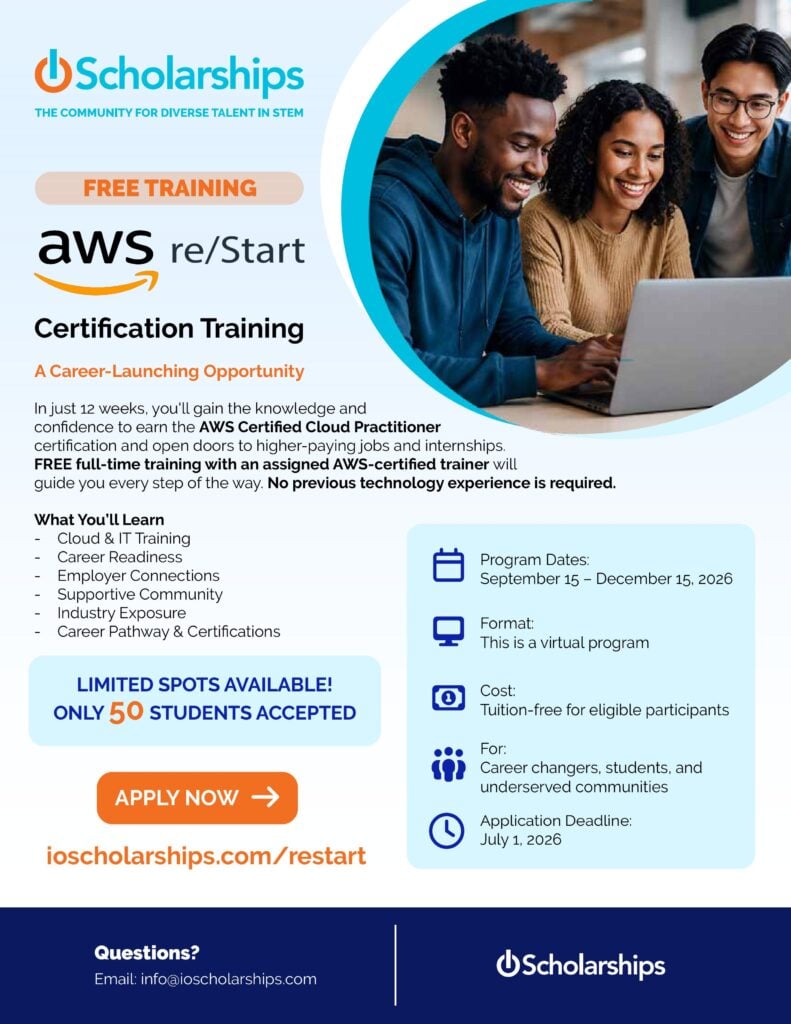
      Free Cloud Computing Course | AWS Re/Start Program 

      Free Cloud Computing Course | AWS Re/Start Program 

      July 30, 2026
      Thirty Years Later

      Thirty Years Later

      July 30, 2026
      Announcing Codemagic Patch: an open-source CodePush rebuild for React Native

      Announcing Codemagic Patch: an open-source CodePush rebuild for React Native

      July 30, 2026
      • Home
      • Advertise With Us
      • About Us
      • Corporate
      • Consumer Rewards
      • Forum
      • Privacy Policy
      • Social Trends

      Theinsightpost ©2026 | All Rights Reserved. Theinsightpost is an Elnegy LLC company, registered in Texas, USA

      Welcome Back!

      Login to your account below

      Forgotten Password?

      Retrieve your password

      Please enter your username or email address to reset your password.

      Log In

      Add New Playlist

      We are using cookies to give you the best experience on our website.

      You can find out more about which cookies we are using or switch them off in .

      No Result
      View All Result
      • Home
      • Insight
      • Blog
      • Business
      • Entertainment
      • Health
      • Politics
      • Shop
        • Gift Shop
        • Value Shop
        • Store
        • Bargain Shop
        • Discount
      • Sports
      • Tech
      • Travel
      • USA
      • Video
      • World
        • Asia
        • Africa
        • South America
        • North America
        • Europe
        • Oceania

      Theinsightpost ©2026 | All Rights Reserved. Theinsightpost is an Elnegy LLC company, registered in Texas, USA

      The Insight Post
      Powered by  GDPR Cookie Compliance
      Privacy Overview

      This website uses cookies so that we can provide you with the best user experience possible. Cookie information is stored in your browser and performs functions such as recognising you when you return to our website and helping our team to understand which sections of the website you find most interesting and useful.

      Strictly Necessary Cookies

      Strictly Necessary Cookie should be enabled at all times so that we can save your preferences for cookie settings.

      Cookie Policy

      More information about our Cookie Policy