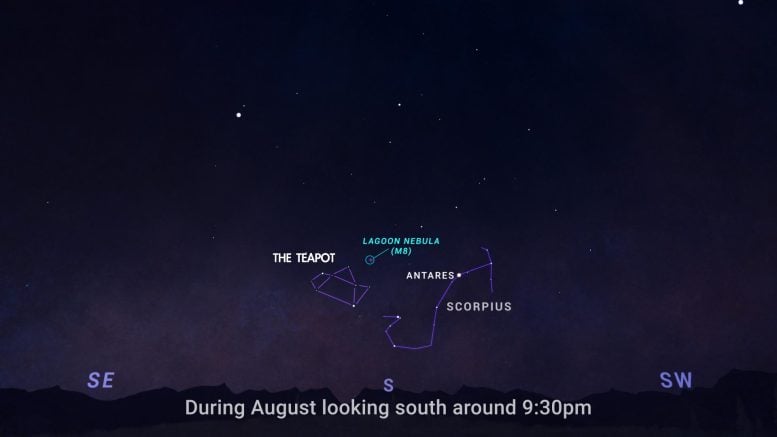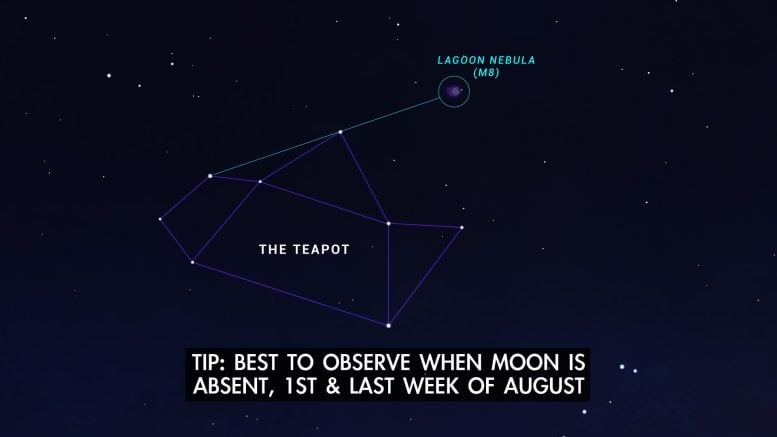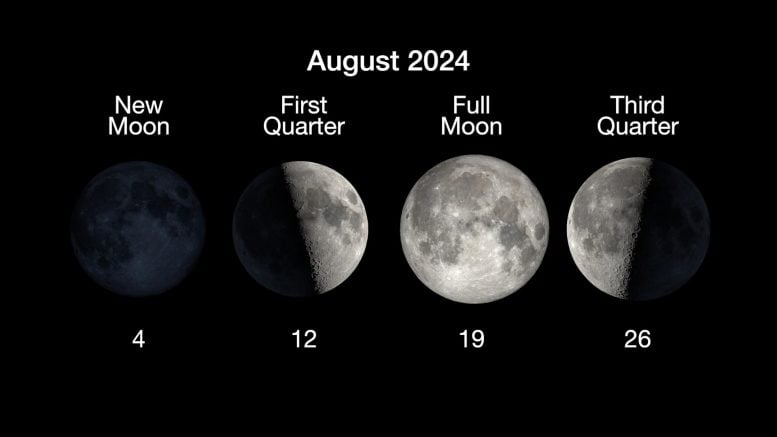
August 2024 offers an exciting month for skywatchers, with a variety of celestial events to observe. A notable highlight is the conjunction of Mars and Jupiter, which will appear extremely close in the sky on August 14th. The Perseid meteor shower, peaking on the night of August 11th, is expected to provide a stunning display with up to 75 meteors per hour under favorable viewing conditions. Additionally, the Lagoon Nebula, a stellar nursery in the constellation Sagittarius, is visible throughout the month and offers an opportunity to witness star formation. The crescent moon’s interaction with planets and other celestial bodies adds to the visual delight. Credit: SciTechDaily.com
What are some skywatching highlights in August 2024?
What to look for:
A planetary rendezvous, meteors, and a “star forge”!
Two planets meet for a super close conjunction, the Perseid meteor shower peaks, and look for the Lagoon Nebula – a stellar nursery in Sagittarius.
Highlights
- August 4 – New moon
- August 11 – The Perseid meteor shower peaks overnight tonight! Provided you have clear skies, viewing conditions will be favorable this year, as the Moon sets by around 11:30 pm local time. Meteor activity picks up from then until dawn.
- August 14 – Jupiter and Mars have an extremely close pair-up called a conjunction this morning. They’ll appear just a third of a degree apart, which is less than the width of the full Moon. Find them in the eastern sky in the couple of hours before sunrise.
- August 19 – Full moon
- August 20 – The Moon chases
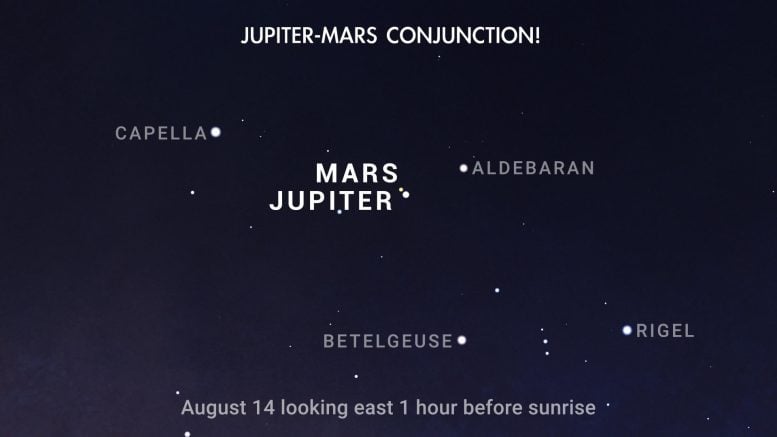
Sky chart showing the conjunction of Mars and Jupiter in the morning of August 14. Credit: NASA/JPL-Caltech
Video Transcript
What’s Up for August? A super close meetup of Jupiter and Mars, the outlook for the Perseid meteors, and see a stellar nursery in the Lagoon Nebula.
During the month of August, the Red Planet, Mars, speeds past our solar system’s largest planet, Jupiter, in the a.m. sky. They have an extremely close pair-up, called a conjunction, on August 14th, when they’ll appear just a third of a degree apart, which is less than the width of the full Moon.
The view from 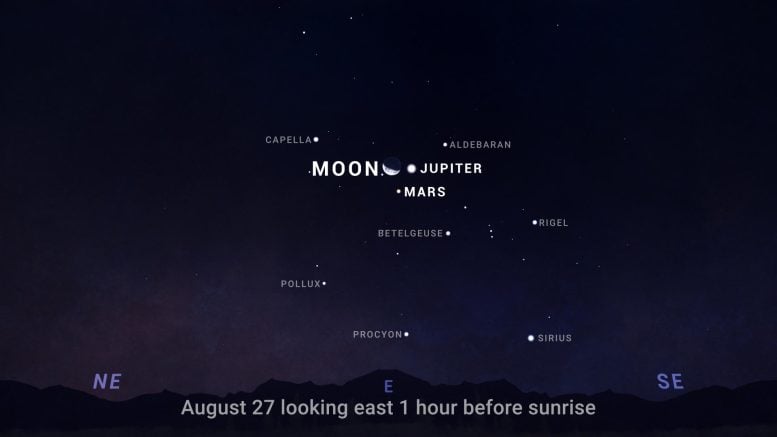
Sky chart showing a planetary trio of the crescent moon, Jupiter, and Mars on the morning of August 27. Credit: NASA/JPL-Caltech