









In a dramatic realignment of tone and strategy, the United States has sanctioned six Indian companies for trading with Iran , imposed steep new tariffs on Indian imports, and simultaneously announced a new oil development deal with Pakistan. The convergence of actions suggests a growing shift in Washington’s South Asia posture–with India now facing mounting pressure over its ties with Iran and Russia, and Pakistan emerging as a new energy partner.
Tariff Offensive
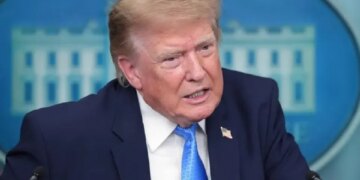
The sequence began with U.S. President Donald Trump unleashing a blistering attack on India’s trade practices and global alliances. Citing what he called India’s “most strenuous and obnoxious” trade barriers, Trump announced a 25% tariff on all Indian goods, to take effect August 1, along with an additional penalty for India’s continued purchases of Russian oil and military hardware.
“All things not good! India will therefore be paying a tariff of 25 per cent, plus a penalty for the above,” Trump posted on Truth Social.
He also denounced India’s involvement in the BRICS alliance–comprising of 10 countries including Russia, China and Iran–branding it “anti-US.”
Sanctions Over Iran Trade
Just hours after Trump slapped new tariff on India, the U.S. Department of State sanctioned six Indian companies under Executive Order 13846 for allegedly engaging in petrochemical trade with Iran–activity the U.S. claims funds terrorism and fuels instability in the Middle East.
The sanctions freeze any U.S.-linked assets and prohibit American entities from engaging with these firms. The action also extends to foreign businesses with significant U.S. exposure, raising compliance risks for Indian banks and logistics operators.
Pakistan Oil Deal
In a surprising parallel development, Trump also announced a new U.S.-Pakistan oil partnership, describing the South Asian country’s energy reserves as “massive” and hinting at a long-term development agreement.
“We have just concluded a deal with the country of Pakistan, whereby Pakistan and the United States will work together on developing their massive oil reserves,” Trump wrote.
“We are in the process of choosing the oil company that will lead this partnership. Who knows, maybe they’ll be selling oil to India some day!”
The comment was seen as both a strategic tease and a geopolitical message–underscoring Trump’s growing frustration with India’s independent foreign policy, particularly its continued engagement with Russia and Iran.
Implications for India
The combined blow of sanctions, tariffs, and diplomatic pressure puts New Delhi in a difficult spot. On one hand, India is working to deepen its defence, tech, and energy ties with the United States. On the other, it has repeatedly defended its right to pursue strategic autonomy, especially in its dealings with Russia and Iran–both crucial for defence supplies and energy imports.
“India is increasingly caught in the middle of a geopolitical squeeze,” said a senior Indian foreign policy analyst.”Washington is signaling that dual alignments with Russia and Iran will come at a cost.”
‘Economic Imperialism’
Iran, meanwhile, responded sharply to the U.S. crackdown, calling the sanctions against Indian firms a form of “economic imperialism.” The Iranian Embassy in India accused Washington of using sanctions to control sovereign nations and suppress economic autonomy.
“The United States continues to weaponize the economy and use #sanctions as tools to dictate its will on independent nations such as Iran and India… These coercive discriminatory actions violate international law,” the embassy posted on X.
The embassy urged emerging powers to resist such policies in favour of a more equitable global order and a stronger Global South.
The Bigger Picture
The developments reflect an increasingly fragmented global order, where sanctions, tariffs, and coercive diplomacy are becoming tools of everyday statecraft.
Slapping new tariff on Indian goods followed by sanctions mark a sharp shift in tone toward India and raise questions about future economic and strategic alignment. While the current U.S. administration frames sanctions as a tool to induce behaviour change, India is now caught in the crossfire of U.S. economic enforcement and great-power rivalry.
A Shift in South Asia Strategy?
With Washington now warming up to Pakistan, a country long considered an all-weather ally of China, makes the development even more geopolitically significant.By suggesting that Pakistan could one day export oil to India, Trump hinted at a new energy-centric engagement strategy, one that could challenge India’s traditional energy calculus.
For now, India finds itself navigating a treacherous path, balancing global alliances, domestic interests, and increasing U.S. pressure. As August 1 looms–and tariffs come into force–diplomatic damage control will likely dominate New Delhi’s agenda.








Discussion about this post