









Marsabit County Faces Escalating Humanitarian Crisis
Marsabit County is currently contending with a severe security and humanitarian emergency as ongoing clashes between Ethiopian armed forces and local insurgent factions escalate across the border, causing casualties, injuries, and mass displacement among residents.
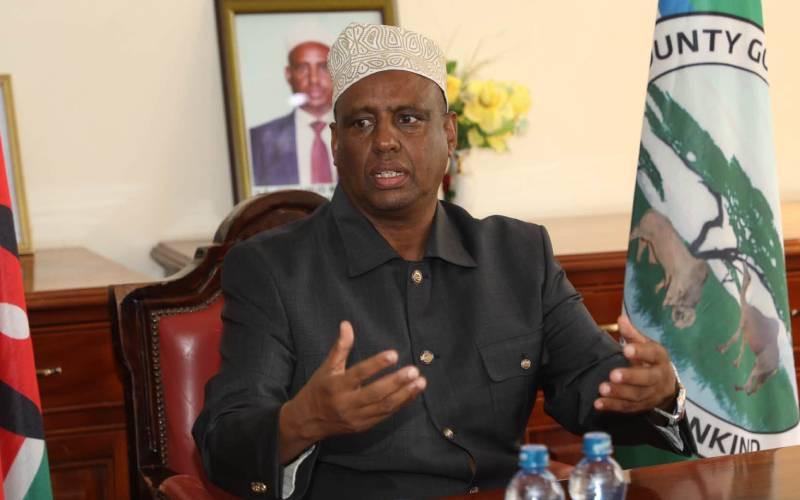
Governor Mohamud Ali has expressed grave concerns regarding the intensifying crisis, highlighting that communities situated along the Kenya-Ethiopia border are increasingly at risk from artillery bombardments and stray gunfire stemming from the conflict.
During a discussion with World Food Programme (WFP) Country Director Betty Ka at his office, Governor Ali depicted a dire scenario in which inhabitants are afflicted by the constant dread of artillery shells landing in their communities.
“The situation is alarming. We are directly affected as heavy artillery frequently lands on Kenyan territory. Our residents are unable to find peace, as the noise from the bombardments is deafening,” he noted.
The Governor reported that two fatalities have occurred on the Kenyan side, alongside over twenty injuries as the conflict intensifies.
The regions most severely impacted include Township, Heilu/Manyatta, and Golbo wards, with incidents of shelling reported in various villages, including Sessi, Somare, and Manyatta.
The bombardments pose not only a threat to life but have also resulted in property damage and disruption of essential services. Numerous artillery shells have landed in populated areas without detonating, prompting fears of civilian casualties should these unexploded devices detonate.
In response, Governor Ali has called upon the Kenya Defence Forces to assist in safely detonating the unexploded ordnance.
In one alarming incident, a shell impacted Moyale Hospital, damaging the building and striking a transformer. Though it did not explode, the strike caused a power outage, complicating medical services in an area already facing significant healthcare challenges.
The unstable security environment has also led to school closures in Moyale town, as families grapple with the persistent threat of violence. The disruption of education raises significant concerns over the welfare of children exposed to instability, particularly those already grappling with displacement and trauma.
In addition to the security challenges, the county is facing a complex humanitarian situation with a rising number of refugees fleeing violence in Ethiopia and local families abandoning their homes situated near the border.
Governor Ali reported an estimated 60,000 refugees as of Thursday morning, with the number on the rise.
“We are facing significant challenges due to the situation across the border. The refugee count has escalated to approximately 60,000 and continues to grow. Our local population is also fleeing, despite not being a party to the conflict,” he emphasized.
The crisis has led to two distinct categories of vulnerable groups: Ethiopian refugees seeking safety in Kenya and internally displaced Kenyans fleeing their communities. Governor Ali noted the mounting pressure on local resources and humanitarian response frameworks.
The humanitarian situation has grown increasingly urgent, with serious shortages of essential items such as blankets and mosquito nets, alongside dwindling medical supplies. Concerns over a potential measles outbreak have exacerbated fears of a public health crisis among the displaced population.
Governor Ali indicated that the county government, in collaboration with the Kenya Red Cross, had mobilized medical assistance during the initial week of the crisis. However, the surging demand for aid has strained available resources.
The Governor has called for immediate assistance from WFP and other humanitarian partners, highlighting that the scale of the crisis has surpassed the capacity of the county government to address independently.









Discussion about this post