









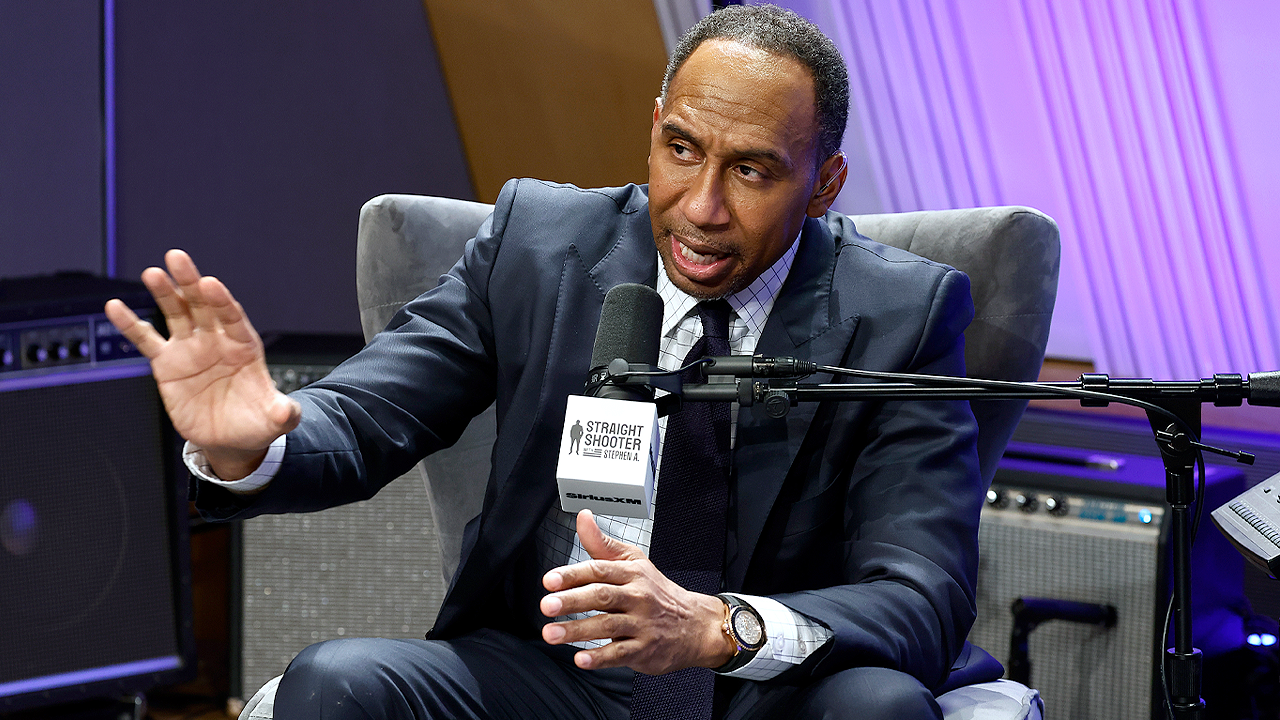
Special Analytical Feature & Media Study
Stephen A. Smith, the Convergence of Entertainment and Politics, and the Disintermediation of Traditional Journalism
Publishing Desk: The Insight Post Editorial Analysis
Cycle Window: 2026–2028 Electoral Horizon
1. Introduction: The Great Convergence of Sports and Statecraft
For decades, American media operated under a strict unwritten zoning ordinance: sports commentary belonged on television networks like ESPN, Sunday morning political roundtables belonged on Meet the Press, and entertainment commentary belonged in tabloid columns. Audiences could tune into athletic debates for tribal catharsis and escape, while turning to cable news or elite broadsheets for governance, elections, and civic discourse.
Entering the 2026–2028 political cycle, those protective category walls have completely collapsed. The modern American media consumer no longer respects institutional boundaries. Instead, public attention has centralized around charismatic, multi-platform media personalities who command unprecedented cultural authority—none more prominently than Stephen A. Smith. When a premier sports broadcaster interviews major presidential candidates, defends high-stakes political exchanges against aggressive fact-checking criticism, and opines on tax policy with the same rhetorical thunder he brings to NBA trade rumors, a profound structural shift occurs.
Core Analytical Thesis: Sports media personalities are not merely dabbling in politics; they are actively superseding traditional political journalism. Unburdened by institutional party orthodoxy or dry journalistic neutrality, sports commentators speak the fluent vernacular of modern engagement—the language of competition, authenticity, stakes, and unfiltered passion—capturing the independent and disaffected voters that traditional news networks fail to reach.
2. Stephen A. Smith and the Evolution of the Athletic Orator
To understand why Stephen A. Smith has become a formidable force in the 2026–2028 political landscape, one must trace his trajectory from newspaper beat writer to the undisputed titan of modern sports commentary. Smith did not invent sports debate; he weaponized cadence, theatrical pause, unvarnished emotional conviction, and moral certainty.
From Philadelphia Inquirer to Multi-Platform Empire
Rising through the rigorous ranks of print journalism—covering the Philadelphia 76ers and NBA beat reporting—Smith mastered the foundational mechanics of sourcing, narrative framing, and deadline pressure. When he transitioned to television, first on ESPN and eventually anchoring First Take, he recognized that television was not a medium of academic policy papers; it was a medium of charismatic performance. His signature catchphrases—“Let me be very clear,” “Blasphemous!” and “Stay off the weed!”—transcended sports fandom to become meme-literate cultural touchstones.
By 2026, Smith’s influence extended far beyond sports programming. Through his independent digital podcast footprint, bestselling memoirs, and strategic media appearances across late-night talk shows and hard-news broadcasts, he established an independent media brand that rivals traditional broadcast networks in reach and trust.
The Authenticity Advantage
Traditional political journalism is frequently viewed by the American public through a lens of suspicion—perceived as partisan, overly polished, and disconnected from working-class realities. In contrast, sports commentators operate in public view five days a week, making instantaneous predictions that are publicly validated or humiliated on live television. This constant exposure to public accountability creates an illusion of radical authenticity. When Smith critiques a politician, audiences do not hear a Washington insider reciting talking points; they hear an unfiltered sports analyst evaluating player performance.
3. The Anatomy of Crossover Influence: Why Sports Media Trumps Cable News
The migration of political figures—ranging from presidential contenders to congressional leaders—onto sports-adjacent podcasts and talk shows is not accidental. It is a deliberate, highly calculated electoral strategy designed to bypass hostile or hyper-partisan media gatekeepers.
Table 3.1: Comparative Dynamics: Traditional Political Media vs. Sports Crossover Media
Reaching the Disengaged Middle
The decisive votes in U.S. presidential and congressional elections reside among politically disengaged or independent voters who actively avoid cable news networks. These individuals do not watch Sunday morning political shows, but they watch ESPN, listen to sports podcasts, and consume digital highlights on YouTube and TikTok. By entering the sports ecosystem, political figures reach millions of unaligned citizens who evaluate leaders not on party affiliation, but on relatability, composure under fire, and rhetorical swagger.
4. The Trump Interview and the Fact-Check Paradox
A watershed moment in the 2026 media landscape occurred when Stephen A. Smith hosted high-profile political interviews—most notably engaging with Donald Trump—sparking fierce debate across institutional journalism and social media (The Insight Post Editorial Desk, 2026). Traditional journalists rushed to fact-check assertions made during the interview, accusing sports commentators of providing uncritical platforms to polarizing figures without rigorous journalistic cross-examination.
Smith’s public defense of the interview laid bare the changing rules of engagement:
The Commentator’s Defense: “My job is not to act as a prosecutor or a gatekeeper for the establishment; my job is to ask the questions the American people are thinking, let the individual speak, and let the audience judge their performance. When did interviewing a major political figure become a moral violation?”
The Fact-Check Paradox in Modern Media
The controversy surrounding the interview highlights the Fact-Check Paradox of the digital age:
- Institutional Over-Correction: Traditional newsrooms issue rapid-fire, hyper-partisan fact-checks that fail to persuade opposition voters, reinforcing an echo chamber of mutual distrust.
- The Conversational Alternative: Crossover interviewers prioritize tone, character evaluation, and direct engagement over real-time fact-checking, allowing viewers to observe a candidate’s composure, reflexes, and authenticity in unscripted environments.
5. The Economics of Crossover Media: Monetizing Cultural Authority
Media evolution is ultimately driven by economic incentives. The traditional cable news business model—built on subscriber fees and declining linear ad revenue—is being eclipsed by creator-led ecosystems that monetize personal brand equity directly.
Diversified Revenue Streams of the Modern Titans
Super-commentators like Stephen A. Smith operate as standalone media conglomerates rather than traditional employees:
- Direct-to-Consumer Podcast & YouTube Networks: Generating millions in programmatic ad revenue and lucrative corporate sponsorships without the overhead of legacy television production.
- Book Deals & Speaking Tours: Bestselling autobiographies and sold-out live arena tour events that merge sports analysis with social commentary and live debates.
- Enterprise Endorsements & Brand Partnerships: Multi-million-dollar commercial partnerships with major financial, technology, and consumer brands seeking access to highly engaged, cross-demographic audiences.
This financial independence frees crossover titans from corporate censorship. If a network executive attempts to restrict a commentator from discussing political topics out of fear of advertiser boycotts, the commentator can simply take their audience to independent digital platforms where engagement is king.
6. The Redistribution of Electoral Influence in 2026–2028
As the United States navigates the 2026 midterm aftermath and prepares for the 2028 presidential primaries, political campaign managers have fundamentally rewritten their media buying strategies. Traditional television ad spends are being supplemented—and in some cases replaced—by earned media appearances on non-traditional sports, lifestyle, and cultural podcasts.
Why Campaigns Court Sports Commentators
Campaign strategists recognize three distinct advantages in securing an appearance on platforms like Smith’s:
- Bypassing Partisan Filters: Listeners who tune in for sports or cultural commentary lower their defensive political shields, making them more receptive to candidate messaging.
- Viral Micro-Moments: A 60-second clip of a heated exchange or witty retort on a sports show routinely generates 10 million organic views across TikTok, Instagram Reels, and YouTube Shorts within 24 hours.
- Demonstrating Relatability: Candidates who can banter about sports, handle tough unscripted questions with humor, and survive a high-intensity debate format project personal resilience and confidence.
7. Criticisms, Risks, and the “Dubious Expert” Problem
Despite their massive cultural reach, the rise of sports commentators as political authorities is not without severe critics within academic and journalistic circles. The structural risks of crossover commentary warrant serious examination.
The Dangers of Simplistic Analogy
The primary hazard of applying sports analysis frameworks to complex geopolitical and economic policy is reductive analogy. Complex legislative negotiations, monetary policy, and international diplomacy cannot be neatly resolved through the lens of “making adjustments at halftime” or “trading a struggling player.” When intricate systemic issues are compressed into fiery 90-second talking points, nuance is sacrificed for entertainment.
The Accountability Vacuum
Unlike traditional journalists who operate under professional codes of ethics, corrections policies, and editorial boards, entertainment personalities are incentivized primarily by engagement metrics, emotional resonance, and viral reach. If a sports commentator makes an inaccurate or misleading statement regarding economic inflation or foreign policy, the penalty is rarely a professional retraction; rather, it is measured in clicks and impressions.
8. The Future of Media Convergence: 2028 and Beyond
Looking ahead to the 2028 U.S. presidential election cycle, the convergence between sports, entertainment, and politics will only accelerate. Legacy media organizations are aggressively transforming their talent rosters, hiring commentators who possess the versatility to span sports, pop culture, and civic affairs.
Predictions for the Evolving Media Landscape
- The Hybrid Anchor: The traditional, stern evening news anchor reading teleprompters from a desk is giving way to dynamic hosts who can interview an NBA superstar in the first segment and a foreign policy expert in the second.
- AI and Synthetic Personalities: As generative AI creates synthetic avatars, human authenticity becomes even scarcer. Personalities like Stephen A. Smith—whose distinct voice, mannerisms, and unpredictable live reactions cannot be easily replicated by algorithms—will command even higher premiums.
- Direct Voter Direct-Access: Political campaigns will increasingly bypass formal press conferences entirely, choosing instead to launch major policy initiatives directly through high-reach cultural podcasts.
9. Strategic Lessons for Brands and Media Executives
The rise of Stephen A. Smith and crossover titans offers critical strategic lessons for corporate leaders, media executives, and content creators navigating the 2026–2028 commercial environment.
Table 9.1: Strategic Takeaways for Modern Media Operators
10. Conclusion: The New Architects of Public Opinion
Stephen A. Smith did not set out to become a political kingmaker, but his journey from sports arena press rows to national political discourse reflects the definitive media reality of our time. In the 2026–2028 cycle, public opinion is no longer shaped solely by Washington insiders or traditional editorial boards. It is forged in the crucible of high-energy, personality-driven, cross-disciplinary conversation where passion, authenticity, and cultural reach triumph over institutional polish.
References & Scholarly Sources
- The Insight Post Editorial Desk (2026). The Cross-Over Titans: Media Convergence and the 2026–2028 Political Cycle. Special Analytical Feature.
- Pew Research Center (2026). News Consumption Across Non-Traditional Platforms and Podcast Ecosystems. Washington, D.C.
- Harvard Kennedy School Shorenstein Center (2026). The Disintermediation of Political Journalism in the Digital Age. Research Paper Series.
- Smith, Stephen A. (2026). Media Power, Accountability, and the Modern Interview. Keynote Address at the National Broadcast Media Summit.






Discussion about this post