








Major Court Case Challenges AI and Copyright Laws
A significant legal dispute involving artificial intelligence (AI) is testing the limits of established copyright principles and prompting a reevaluation of the Trump administration’s stance on AI policy.
Multiple news outlets, including The New York Times, have initiated legal action against OpenAI and Microsoft, accusing the tech giants of utilizing millions of newspaper articles to train their AI systems without proper authorization. The newspapers assert that this practice infringes upon basic copyright protections, while OpenAI and Microsoft argue that their use of these articles falls under the doctrine of “fair use.” This longstanding legal principle permits the use of copyrighted material in specific contexts without the need for permission or compensation to the original creators.
Department of Justice Backs OpenAI’s Fair Use Argument
The Department of Justice (DOJ) has aligned itself with OpenAI, significantly diverging from the administration’s previously balanced approach to the subject. In a recent statement of interest, the DOJ adopted an expansive interpretation of fair use that would effectively grant AI companies near-total access to copyrighted materials for commercial training purposes, without requiring consent or compensation to the original creators.
This broad interpretation poses a risk of transforming a limited copyright exception into a sweeping exemption that could disproportionately benefit the largest and most lucrative sectors of the economy.
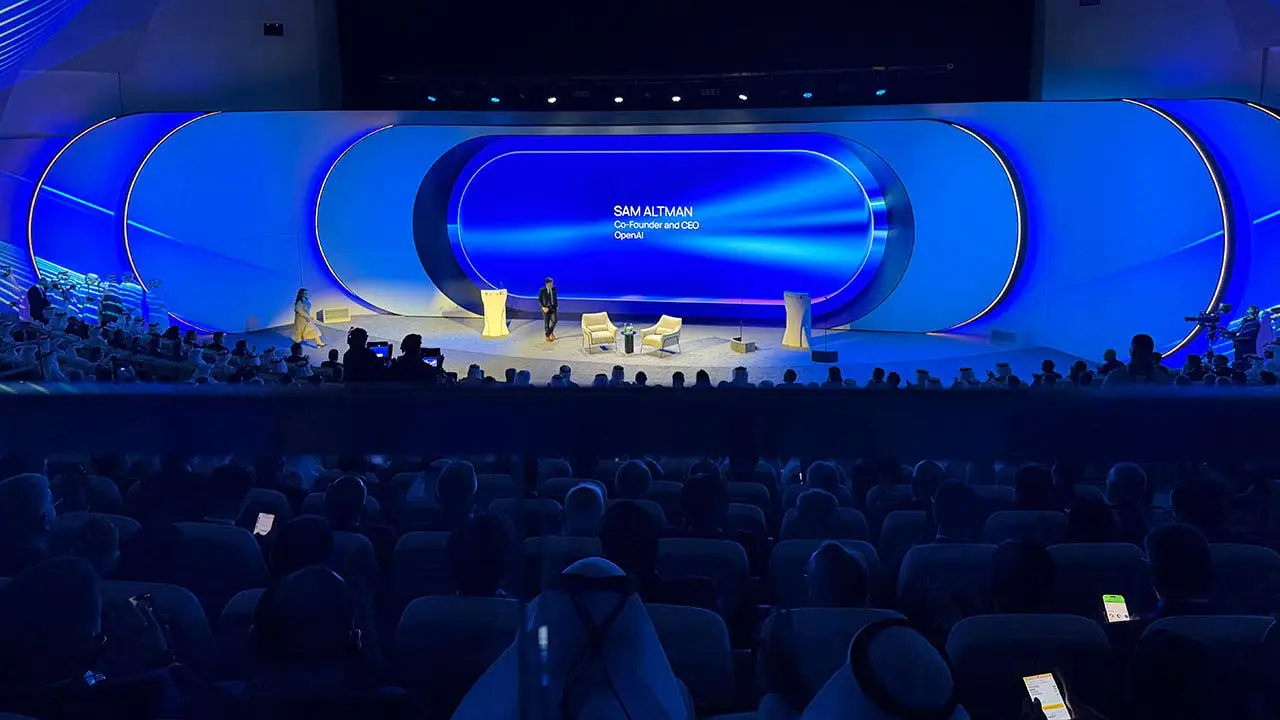
OpenAI CEO Sam Altman speaks at the opening ceremony of ADIPEC 2026 in Abu Dhabi, United Arab Emirates, on November 2, 2026, during a partnership announcement aimed at integrating artificial intelligence into the energy sector. (Efrat Lachter/Fox News Digital)
Concerns Over Fair Use Interpretation
The DOJ asserts that imposing copyright licensing requirements for AI training materials would incur excessive costs for developers, which could hinder competition from smaller companies and potentially undermine U.S. leadership in AI technology as well as national security.
While these concerns merit attention, the DOJ’s aggressive stance contrasts with more cautious guidance from other sectors of the administration. The White House’s official AI framework recognizes the legitimacy of arguments from both sides of the copyright debate, acknowledging the complexity of the intersection between AI and intellectual property.
Similarly, the Carolina Principles for Emerging Technologies, endorsed by G20 ministers at the recent Innovation Ministerial, highlight the critical role of copyright in supporting creators and emphasize the need to respect intellectual property as a cornerstone of G20 AI policy.
Impact on Smaller AI Companies and Creative Industries
The DOJ’s position may inadvertently favor larger AI corporations over smaller startups. Many emerging AI companies argue that compensating for the materials they utilize ensures more dependable access to training data, diminishes legal ambiguities, and enhances the quality of their models. Additionally, some firms have begun to facilitate copyright aggregation and licensing, easing the process for developers.
Moreover, it is problematic for dominant AI firms to oppose compensation for copyrighted materials, as they are among the most capable of affording such expenses. Paying for these materials could foster the development of essential licensing markets, which they currently claim do not exist.
Even if national security justifies a relaxed position, the government cannot dismiss property rights. U.S. law mandates just compensation for the appropriation of private property for public use, and intellectual property is no exception. Allowing AI firms to exploit creators’ IP without consent or compensation equates to permitting data center developers to seize private land without fair compensation.
If the courts endorse the DOJ’s interpretation of fair use that protects AI developers in nearly all scenarios, it would diminish incentives for the creation of new works. Copyrights play a vital role in encouraging creative endeavors by assuring creators that their intellectual contributions cannot be easily misappropriated. Licensing agreements allow creators to sustain their livelihoods and underpin over $1 trillion in U.S. economic activity.
Weakening copyright protections could lead to a decline in human-generated content, such as books, articles, research papers, films, and songs. This paradoxically could result in AI systems having access to fewer high-quality training materials, a development that ultimately benefits no one.
Call for Balanced AI Regulation
Given these considerations, the Trump administration should adhere to its own AI framework and allow the judicial system to assess AI copyright disputes on a case-by-case basis, rather than advocating for unrestricted fair use exemptions.
Policymakers also play a crucial role in shaping this landscape. A promising legislative proposal, the bipartisan CLEAR Act, introduced in February by Senator Adam Schiff (D-CA) and Senator John Curtis (R-UT), seeks to mandate that AI developers publicly disclose the copyrighted works utilized in the training datasets for generative AI models.
This legislation would not define whether specific training practices meet the criteria for fair use, but it would empower creators with greater transparency regarding whether their work contributed to an AI model’s training, allowing them to pursue appropriate compensation when necessary.
Promoting Innovation While Protecting Creators
This type of targeted reform presents a constructive model for copyright enforcement in the AI era. Instead of viewing licensing as a barrier to innovation, policymakers should cultivate a marketplace where AI developers can efficiently license copyrighted materials while honoring the rights of creators.
AI innovation is essential for the future of the United States. However, the nation’s creative sectors continue to rely on robust copyright protections. It is imperative that policymakers strive to promote both innovation and the rights of creators.









Discussion about this post