









U.S. Military Cooperation Directive Raises Concerns in Canada
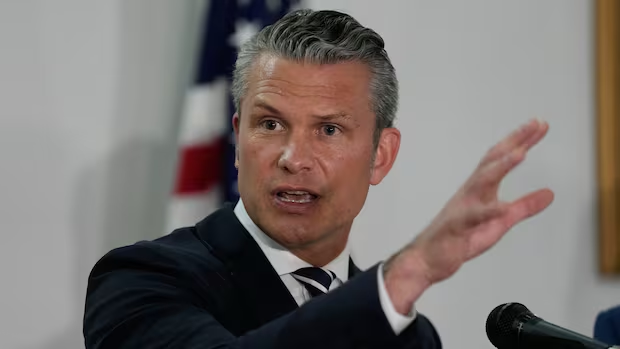
U.S. Secretary of War Pete Hegseth has reportedly issued a classified memorandum that imposes restrictions on military cooperation between the United States and Canada. This development has taken Canadian government and military officials by surprise, as they claim to have seen no evidence of its implementation.
According to a report from the Washington Post, the directive was circulated in a secret memorandum last week, as cited by U.S. officials familiar with the matter.
Three Canadian defense officials, who spoke on the condition of anonymity, acknowledged awareness of the reports and are currently seeking to verify the claims. They emphasized that there have been no operational changes in military collaboration between the two nations.
Canada-U.S. Military Collaboration Remains Strong
Defense Minister David McGuinty, addressing reporters at the Halifax International Security Forum—an event attended by a substantial U.S. congressional delegation—affirmed that both countries continue to collaborate closely on various missions. These include efforts to combat the illegal drug trade in the Caribbean and initiatives centered around integrated air and missile defense.
“I still see no daylight between what we’re doing, military to military, and otherwise,” McGuinty stated in an interview with Reuters.
Minister of National Defence David McGuinty during question period in the House of Commons on Parliament Hill in Ottawa. (Justin Tang/The Canadian Press)
McGuinty is anticipated to meet with a bipartisan delegation of U.S. lawmakers later today in Halifax, where this directive is likely to be a key topic of discussion.
Sources have indicated that the directive was not addressed during the security forum dinner on Friday night, raising questions about whether the attending congressional members were even aware of it.
As the situation develops, the existence of such a directive could further exacerbate existing tensions between the two nations, particularly concerning trade and defense spending.
Trade Negotiations and Military Ties
This directive emerges as the Trump administration and Prime Minister Mark Carney’s government are reportedly nearing a trade agreement that may alleviate challenges in critical sectors such as automotive and metals.
The military and defense relationship between Canada and the U.S. is historically deep-rooted, and any operational restrictions could have significant implications for North American security. The two nations work collaboratively through NORAD for defense and are key partners in NATO, participating in joint military exercises in the Indo-Pacific region.
One source noted that limiting access to U.S.-made military equipment would be counterproductive, especially as the U.S. has been actively encouraging Canada to procure more defense resources from its southern neighbor.
The precise scope of Hegseth’s restrictions remains unclear, as the classified nature of the memorandum means that specific military programs or activities affected have not been disclosed. Pentagon spokesperson Sean Parnell has stated that there will be no impact on operational matters but did not clarify the specific consequences of the memo.
“The Department of War is taking steps to ensure its engagements with Canada advance tangible U.S. defense objectives and ultimately support a reinvigorated defense relationship,” Parnell asserted in a statement.
While the guidance reportedly does not affect defense intelligence cooperation or the binational NORAD command, uncertainty remains regarding military exercises, training exchanges, and other collaborative efforts.
Despite the classified memo’s circulation for a week, Canadian officials maintain that they have witnessed no evidence of restrictions thus far.
In recent months, the Trump administration had previously suspended U.S. participation in the Permanent Joint Board on Defence (PJBD), a historical bilateral advisory group, citing insufficient progress from Canada on its commitments. This pause was largely seen as symbolic due to the infrequency of board meetings.
Amid increasing criticism regarding defense spending, Canada has recently met NATO’s target of allocating two percent of its GDP to defense under Prime Minister Carney’s administration. However, Carney has expressed a desire to diversify both trade relations and the sources of military procurement, emphasizing the need for Canada to reduce its dependency on the U.S. market for defense equipment.








Discussion about this post