









Quick Read
- Old military memorabilia could be worth more than you think. Medals, uniforms, helmets, photographs, and military documents may attract collectors, but their value depends on rarity, condition, authenticity, and historical significance.
- The paperwork might be worth keeping with the medals. Service records, letters, photographs, and award certificates can establish an item’s history and potentially increase its appeal to collectors.
- Don’t clean or restore anything before researching it. Polishing medals, washing uniforms, or replacing original parts could damage historical details and reduce an item’s collectible value.
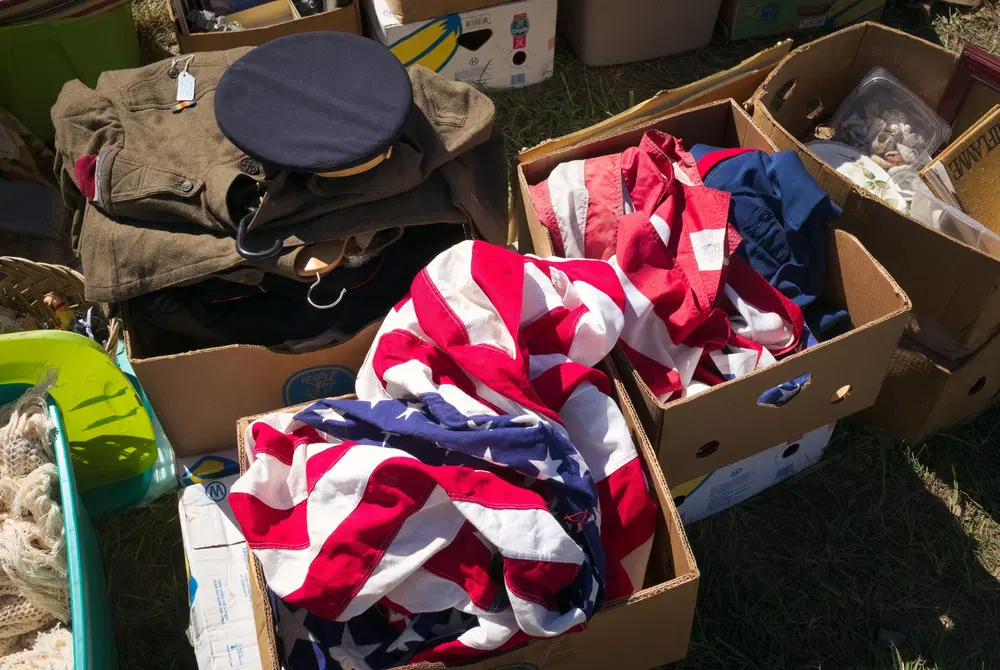
A collection of military medals can serve as a fascinating glimpse into the past, a cherished family heirloom, or even a potential financial asset. Occasionally, the hidden gem may be an innocuous photograph resting within a uniform pocket.
Such memorabilia often draws the interest of collectors, historians, museums, and dealers. However, it is crucial to recognize that sentimental value does not always equate to market value. A medal cherished by a family may only fetch $20, while an unassuming document might draw significant attention. Before converting your garage into a military antiques shop, a careful examination of inherited items is essential.
The Ordinary-Looking Items Can Be the Most Interesting
Military collections are rarely presented in an orderly fashion with clear descriptions. Items may be found scattered in various locations: ribbons in a cigar box, dog tags tucked in a desk drawer, uniforms hidden behind winter coats, or letters crammed into an old suitcase. While eye-catching items like swords or decorated medals may initially draw attention, collectors often prioritize the identity, history, rarity, and connection of an item to notable individuals or events.
A standard military medal may have limited resale value, but one associated with a documented recipient or a significant military action can generate much greater interest.
Documentation also plays a crucial role. Discharge papers, service photographs, diaries, letters, unit records, and original award documents can establish provenance, which is the item’s history and ownership trail. In the collectibles market, understanding the origin of an item distinguishes between an interesting object and a credible historical artifact.
A good rule of thumb: do not discard the envelope simply because the medal appears more impressive.
Medals, Uniforms, and Gear Have Very Different Markets
The military collectibles market is vast and varied. Common service medals, patches, buttons, and mass-produced equipment might only attract modest prices. In contrast, rare decorations, unique insignia, complete uniforms, and items linked to specific military events can command significantly higher prices.
Uniforms carry their own surprises. An intact jacket featuring original insignia, buttons, identifying marks, and accompanying photographs may be far more appealing to collectors than a heavily altered uniform. Factors like moth holes, missing components, replacement patches, and modern repairs can all impact value. The appeal of a uniform can also depend on its specific branch, unit, rank, and era.
Helmets, field equipment, photographs, military watches, maps, and personal items also have their own collector markets. However, age alone does not guarantee value. A 1940s mess kit may not outperform a newer item with unique markings or a documented connection to a particular unit. Specificity is rewarded in the market; vague descriptions like “old military helmet” offer little to buyers. Clear identification of model, manufacturer, date, condition, and history are critical for evaluation.
Resist the Urge to Polish Your Way to a Fortune
While cleaning inherited collectibles may seem like a responsible choice, aggressive cleaning can inadvertently erase details that are valuable to collectors. Polishing medals can damage their original finishes, while washing an old uniform might ruin fragile fabric or fade markings. Removing rust, repainting a helmet, or replacing original components can diminish collectible appeal.
It is wise to resist the temptation to clean. Instead, photograph each item in its current state, capturing markings, inscriptions, dates, maker stamps, stitching, and any unusual features. If a medal includes a ribbon or case, document those alongside it.
Keep related items together. A medal, its award certificate, and a photograph of the recipient can collectively tell a much richer story than if they are treated as separate objects in an online marketplace. Even notes from a family member detailing an item’s background can greatly enhance its historical context.
Online Prices Can Be Remarkably Fictional
A quick search online may yield a wide range of prices for similar-looking medals. One seller may list a medal for $400, while another offers the same for $45, and yet another believes a worn belt buckle deserves a hefty price tag.
Asking prices do not establish true market value. Instead, look for completed sales of items that closely match yours in terms of period, model, condition, completeness, markings, and documentation. Just because an item was listed for $800 does not mean buyers are willing to pay that amount. Consulting auction houses specializing in militaria, military antiques dealers, and reputable appraisers can provide valuable insights, as specialists may recognize unique features or connections that general dealers might overlook.
For potentially valuable collections, seeking multiple opinions is advisable. Exercise caution when someone offers a free valuation while simultaneously seeking to purchase everything on the spot. While this may not necessarily signal dishonesty, the buyer’s financial interest warrants careful consideration.
A formal appraisal may serve different purposes, such as insurance replacement value, estate valuation, or auction proceeds, and these figures are not interchangeable. Clarify the type of valuation being provided and what it encompasses.
Selling Everything Together Might Be a Mistake
Once you determine that your collection has market value, the next decision arises: should you sell items individually, as a complete collection, or keep certain pieces? Selling individual items often yields better results for particularly desirable collectibles but involves more effort—researching, photographing, listing, shipping, and communicating with buyers can quickly turn a small collection into a part-time job.
A dealer may offer a more convenient option through an outright purchase of the collection, typically trading some potential profit for ease and speed. Auction houses can also be a viable route, especially for specialized or potentially valuable items, although fees and timelines may vary.
Donating historically significant items to museums, veterans’ organizations, or military history institutions is another option, though not every organization will accept all items, so it’s best to contact them beforehand.
If the collection contains firearms, ammunition, explosives, or other hazardous military equipment, it is imperative to research applicable federal, state, and local regulations before handling, transporting, or selling these items. The approach for ordinary collectibles differs significantly from that for regulated items.
The Best Find May Be the Story, Not the Price
Cleaning out a family home can uncover objects that have been forgotten for decades. A medal could symbolize a perilous mission, a uniform might hint at a forgotten assignment, or a letter could reveal why someone avoided discussing their wartime experiences. These stories can imbue military memorabilia with deeper meaning, even if the market does not offer substantial financial rewards. The National Park Service identifies authenticity, condition, rarity, documentation, materials, and historical association as key factors influencing an item’s value.
Before selling, take inventory, preserve original conditions, research comparable completed sales, and seek a specialist’s opinion on any unusual items. Remember, not every inherited object needs to be converted into cash; sometimes, retaining a few pieces and sharing their stories with future generations can be more rewarding than any auction payout.
Have you ever stumbled upon something surprising while clearing out a family home? Was it valuable, historically significant, or an item that nobody could identify?

Brandon Marcus is a staff writer at District Media, Inc., where he delivers practical personal finance, DIY, family, and lifestyle advice with a relatable, no-nonsense style. Holding a BA degree and with over ten years of professional writing experience, he is an award-winning published author whose first book, Questions For Deep Thinkers, was released by Adams Media. His work has appeared in major publications including Fandom.com, CHUD.com, TheColdWire.com, and Fansided.com.







Discussion about this post