









Successful Orbital Insertion of BepiColombo Probes Around Mercury
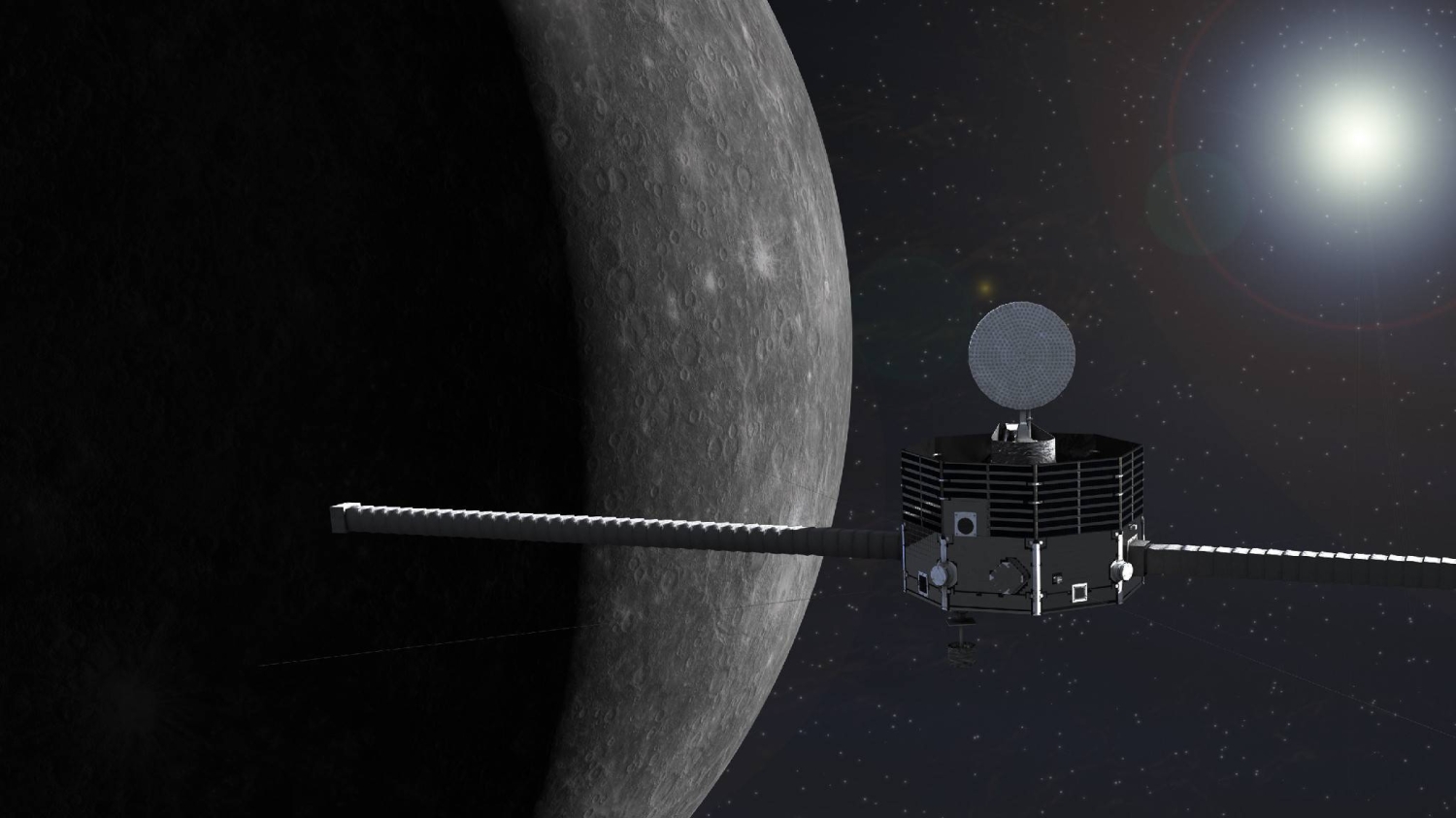
The European Space Agency (ESA) has announced a significant achievement in space exploration, with Japan and Europe successfully placing two probes into orbit around Mercury as part of the BepiColombo mission. This milestone marks a critical advancement in our understanding of the solar system’s innermost planet.
Probes Begin Their Mission After Eight-Year Journey
The Japan Aerospace Exploration Agency (JAXA) has confirmed that the Mio probe, along with the ESA’s Mercury Planetary Orbiter (MPO), commenced orbiting Mercury on Sunday, as per Japan’s local time. This event concludes an eight-year journey that began with the spacecraft’s launch in October 2018.
Distinct Roles of the Probes
The two probes have distinct scientific objectives: the Mio probe is tasked with studying Mercury’s magnetic fields, while the MPO will focus on examining the planet’s surface conditions. Initially, the probes were launched together, demonstrating a collaborative effort between JAXA and ESA.
Mission Timeline and Delays
Originally slated for arrival in December 2025, the mission experienced a delay of approximately one year due to issues with its propulsion system. This setback highlights the complexities of interplanetary missions and the need for robust engineering solutions.
Significance of the Mission
This successful insertion into orbit represents the second instance of a probe entering Mercury’s orbit. The first was NASA’s Messenger spacecraft, which achieved this feat in March 2011. The unique challenges of orbiting Mercury, including extreme temperatures and the planet’s intense gravitational pull from the Sun, require cutting-edge technology and innovative engineering.
Next Steps for the BepiColombo Mission
In a pivotal development, the Mio and MPO probes are scheduled to be separated around December 10 of this year. Following this separation, full-scale scientific observations are anticipated to commence around April of the following year, promising new insights into Mercury’s characteristics and environment.







Discussion about this post