









Lumo’s Great Southern Lights: A Milestone in Digital Advertising
On November 2, LED company Lumo launched its most expansive display to date, the Great Southern Lights, marking a significant continuation of a partnership that predates the company itself.
Early Collaborations
Blair Robertson, the APAC region manager for LED manufacturer Daktronics, first collaborated with Lumo’s co-founder and CEO, Phil Clemas, back in 2012. At the time, Clemas was with APN Outdoor, and Auckland Council was not yet convinced of the viability of LED billboards in urban settings. After returning to New Zealand from the UK, where digital billboards were flourishing, Robertson introduced a demonstration screen. This screen was strategically placed alongside a traditional static billboard on Beaumont Street, showcasing the same creative content.
The council officials were impressed with the display during the day, but it was the nighttime demonstration that truly swayed their opinion. The LED screen adjusted its brightness to suit the conditions, whereas the static billboard emitted more light and created glare. Clemas noted, “The static board was brighter and more distracting than the LED screen. They suddenly went, ‘we get it’.” This pivotal moment led to the swift approval of New Zealand’s first digital billboard, which went live at 350 Queen Street in July 2013. Today, there are over 550 digital billboards across the country.
Commitment to Quality
When Lumo launched in 2016, Clemas reached out to Robertson once again, concerned about the influx of cheaper LED products in the market. He emphasized the need for Lumo’s screens to stand out in quality. “We knew we had to pay a bit more to get the quality from Daktronics, but the lifetime cost is lower for us,” Clemas stated. “Ten years on, we’re seeing the benefit of that investment.”
Robertson echoed this sentiment, highlighting a mutual dedication to designing each screen for a minimum lifespan of ten years, a promise that few manufacturers could make at the time. “Partnership is a two-way thing. You’ve got to be open, honest, and transparent with everything,” he noted. “The closer we are to the application, where it’s going, what it needs to do and how long it needs to last, the better the solution we can offer.”
This level of commitment is crucial in a market where LED specifications are often unverified by independent bodies, leaving buyers to rely on manufacturers’ integrity and warranty.
Reliability and Performance
Robertson describes Daktronics as the world’s largest manufacturer of outdoor LED displays, emphasizing its rigorous testing processes. Components undergo extensive reliability testing at Daktronics’ facility in Brookings, South Dakota, with validation for a ten-year lifespan taking over 18 months. The results are evident in the superior display quality, color contrast, and overall reliability.
Typically, a screen designed for a decade requires only about 3% spare parts over its lifespan, compared to 10-15% for those with shorter lifespans. “In three, four, five years, the other LED products will start to look like a patchwork quilt, where the plastics on the front have aged at different rates and diodes start to fail,” Robertson explained. He emphasized that while the initial savings may seem attractive, making a wise investment from the beginning is essential for maximizing value over the screen’s lifetime.
Robin Arnold, Lumo’s chief operating officer, corroborated these findings, stating that their screens endure harsh environmental conditions in New Zealand, yet continue to perform reliably after seven to eight years with minimal repairs. “Our screens run hard, always on 24/7,” Arnold affirmed.
Innovative Engineering
The Great Southern Lights installation tested this commitment to the limit. The screen features a primary face approximately 20 meters wide, complemented by a six-meter return that wraps around one of the country’s busiest intersections, ensuring visibility from all four directions. Robertson mentioned that the detailed design phase took about six weeks, with over 300 in-house engineers at Daktronics collaborating closely with Lumo’s team on structural, installation, and long-term servicing considerations. The display was constructed modularly, with cabinets affixed to a specially designed subframe.
This corner installation also presented unique creative opportunities. Unlike flat screens, the return allows for genuine depth in 3D creative work. “Yes, it’s harder to do and costs more, but it creates real impact for advertisers,” Robertson remarked.
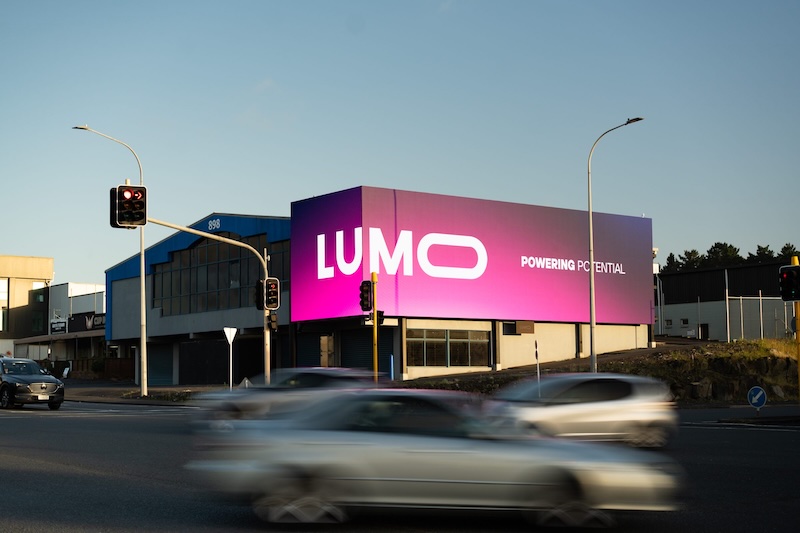
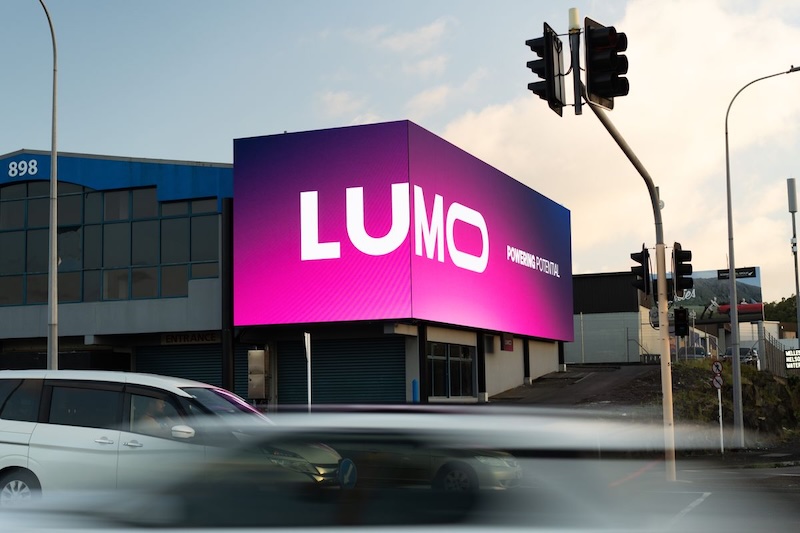
When asked what content he would showcase if given control of the screen for a day, Robertson did not hesitate to suggest 3D material centered around a significant sporting or national event. “It’s such a massive statement. It deserves great content,” he stated.
Robertson acknowledged that a long-term partnership is not without its challenges. “It doesn’t always go right. It’s electronics; things break down,” he admitted. “It’s about having the depth of partnership and trust to work through those moments and make it right. A partnership like this is quite rare, and we’re grateful to be on the journey.”







Discussion about this post