
The world is once again grappling with a rapidly shifting trade landscape. Since his return to power on January 20, the second administration of Donald Trump has moved swiftly to reshape global trade policy – leveraging tariffs as a primary tool to address trade imbalances. But while Washington is dominating headlines, a quieter yet equally transformative trade movement is taking place elsewhere: across the Asia-Pacific (APAC).
Trade policy activity in just the first two months of this year has outpaced the last four years – and not just in Washington. Across the globe, countries have responded swiftly, whether through rhetoric or reciprocal action. The good news is that not all of this action has been detrimental to the cause of free trade. While it may seem that the current trend of the U.S. imposing tariffs on specific countries, with the latter responding in kind, may be leading us to the trade version of mutually assured destruction, this is far from the truth. The dystopia of a highly inefficient global economy wherein goods, services, people, and even data are not allowed free movement may not be the only possible future.
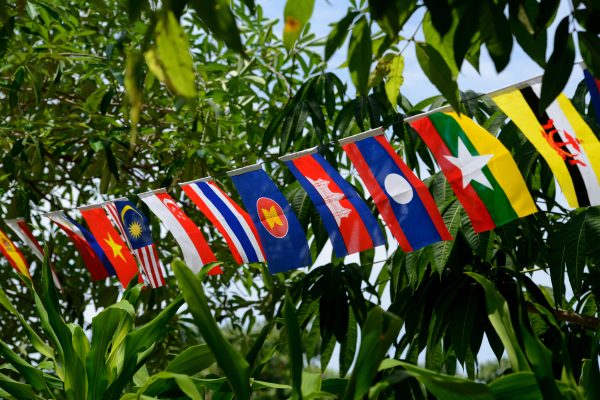
With all eyes on the United States recently, developing countries in Asia have been busy scripting a different narrative. This momentum is being led largely by members of the Association of Southeast Nations (ASEAN), which have definite cause to worry as the U.S. posted a $227.7 billion goods trade deficit with ASEAN last year. This was a 11.6 percent increase from 2023, with the deficit table topped by Vietnam ($123.5 billion), Thailand ($45.6 billion), and Malaysia ($24.8 billion). However, as ASEAN countries crunch numbers on their balance of trade with the U.S. to understand where they are likely to fall on the Trump tariff urgency scale, a new trend has been quietly emerging, with a force unlike that seen in Trump’s first term. This trend may dethrone the China-U.S. trade war as the centerpiece of global trade conversations, at least in APAC’s view of the world.
Tackling a Trade War the ASEAN Way
The Asia-Pacific, writ large, does not seem to be stepping back from promoting the cause of free trade. Most APAC countries are trade-dependent developing economies, which would see their future economic growth significantly upended with the dismantling of the global trade order. However, given their economic limitations, they may not be able to retaliate against future Trump administration tariffs in a reciprocal manner. Instead, these economies are proactively embracing a viable alternative to hedge their own trade aspirations.
In the last two months, developing countries in Asia have proactively stepped up their pursuit of free trade agreements (FTA), not only with their neighbors but, reaching all the way to Europe and the Middle East to forge new trade relationships. Most of this momentum is being led by Southeast Asian economies, with India fast growing into another focal point of trade policy movement in APAC.
It helps to know that ASEAN is expected to remain one of the fastest growing regions of the world economy over this decade, with this growth spearheaded by nations such as the Philippines, Indonesia, and Vietnam.
Current Trade Trend Lines From Developing Asia’s Lens
Confirmation of developing Asia’s growing economic importance came early this year when Indonesia became the first and only Southeast Asian country to gain acceptance into the BRICS bloc. Its neighbors, including Malaysia, Thailand, and Vietnam, were also granted partner status, indicating how Southeast Asia increasingly sees BRICS membership as a means of broadening its economic and diplomatic options.
The engagement with BRICS kicked off a wider movement of outreach to hitherto unexplored partners to initiate meaningful dialogue on trade. Three Southeast Asian countries are racing to finalize FTAs with the European Union. The trio of Malaysia, Thailand, and the Philippines have vowed to complete negotiations this year or the next. Malaysia was able to conclude its first trade agreement with European countries by signing a historic FTA with the European Free Trade Association (EFTA) in January.
This engagement with Europe is being well-complemented by the Middle East gaining traction as a valuable trade partner. Currently, Indonesia is actively pursuing conclusion of an FTA with the Gulf Cooperation Council (GCC) by the end of 2025. Indonesia has also indicated its intention to double bilateral trade with the United Arab Emirates (UAE). The latter is looking to deepen trade partnerships in Southeast Asia and signed a Comprehensive Economic Partnership Agreement (CEPA) with Malaysia this January.
Not all trade activity has been bilateral in nature. Canada recently accelerated its FTA talks with ASEAN to reach a meaningful conclusion for the ASEAN-Canada FTA by the end of this year. ASEAN also plans to undertake a substantial review of the ASEAN-India Trade in Goods Agreements (AITIGA) as an economic priority for 2025. ASEAN members’ key role in driving trade momentum for APAC has not gone unnoticed by the developed APAC economies. In February, Australia launched a comprehensive exercise to review its FTAs with Southeast Asian countries and upgrade them to match the promise and potential of the region.
The developing Asia trade story is incomplete without due consideration to India, which is fast emerging as the belle of the global trade ball. Earlier this year, for the first time ever, President of the European Commission Ursula von der Leyen descended upon India with her entire College of Commissioners. The group arrived with promises to conclude an FTA with India by the end of the year along with a proposal for a defense and security partnership, akin to recent agreements signed with Japan and South Korea. Closer to home, Australia has expressed great interest in enhancing trade with India and has published an ambitious roadmap to deepen and diversify its trade and investment ties. To help kickstart this, Canberra is investing $16 million to set up an Australia-India Trade and Investment Accelerator Fund, supporting Australian businesses looking to unlock new commercial opportunities in India. Thailand is not far behind, with its own arsenal of trade levers to boost bilateral trade relations with India. Up top is elevating FTA negotiations and supporting India’s goal of revisiting the ASEAN-India Trade Agreement to reach substantial conclusions by the end of 2025.
Whither China?
An important player absent from all the recent trade policy activity in the Asia-Pacific is China. There has been a distinct lack of reciprocal effort by APAC countries to engage with China as a viable alternative to the United States on enhancing trade relations.
China’s relative absence in these trade discussions is striking, as it is well-positioned to capitalize on reduced U.S. engagement in the region through deepening both bilateral relations and multilateral engagements. Yet, instead of stepping in, China appears to be taking a wait-and-see approach. Whether this is a strategic choice, or a missed opportunity remains to be seen – but as Southeast Asia races ahead in forging new trade ties, China’s hesitation may come at a cost.
What the Trade Tea Leaves Say, For Now
Considering developing Asia’s extraordinary resolve to respond to uncertainty on the future of trade with decisive and intentional action toward advancing its continued trade ambitions, all may not be lost for the free trade fandom. The rules-based global trade order of the late 20th century was thriving well into the early 21st century. Even today, it has not ended; it has simply evolved. In its 2.0 avatar, countries are taking charge of driving their own trade agendas, largely outside multilateral fora, by building deeper bilateral relationships. The latter allow developing countries greater agency in driving negotiations based more on domestic feasibility, as opposed to the largely aspirational terms set by developed countries driving multilateral negotiations.
While the future of multilateralism in trade remains uncertain, developing Asia is proving that the global trade order is still evolving. In this new landscape, it is perhaps not Washington or Beijing, but a network of fast-growing, trade-driven economies that are quietly rewriting the rules of free trade.
So, has the Trump 2.0 administration inadvertently led to a new global trade order in the making? Can this new order persist buoyed by a series of robust bilateral FTAs driven by fast-growing developing economies? The view from Asia is not that bad.


Discussion about this post