

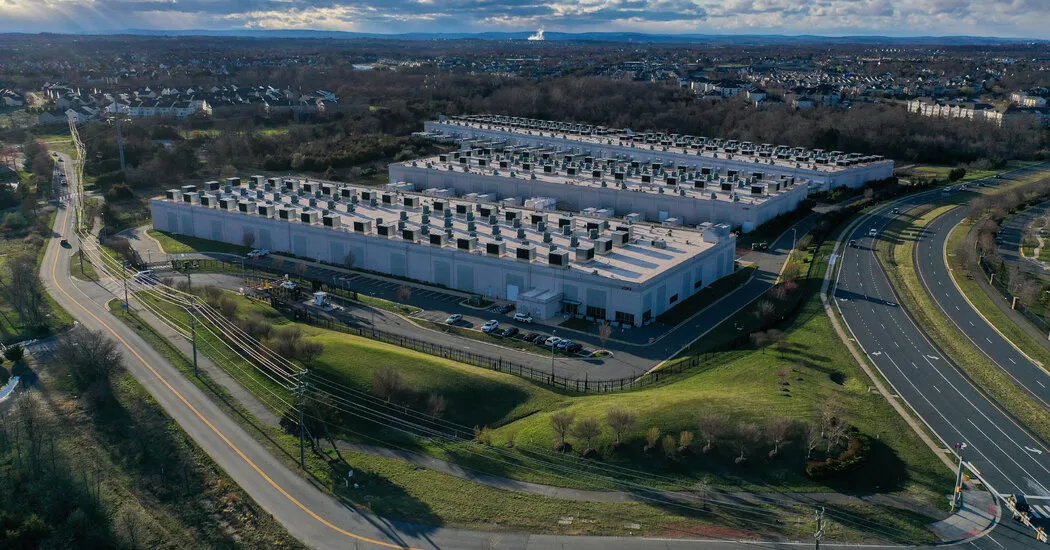
Tech Giants Reach Historic Spending Levels Amid AI Race
In a remarkable turn of events, four of the leading companies in the technology sector have broken spending records in their latest financial quarter, as they intensively vie to advance artificial intelligence (AI) capabilities. This unprecedented expenditure has raised a significant concern: all four companies are now spending more on building data centers than they are earning from their core business operations.
Soaring Investments and Future Projections
In recent announcements, Amazon, Microsoft, Google, and Meta revealed plans to exceed $720 billion in spending on data centers and other capital expenditures this year—an amount nearly three times higher than two years ago. Moreover, projections indicate that this trend will continue into next year. Such massive investment initiatives have contributed to the ongoing resilience of the U.S. economy amidst fluctuating market conditions.
Market Reactions and Investor Concerns
These hefty investments have prompted companies to explore various funding avenues, including loans and issuing new stocks, to secure the necessary capital for their bold initiatives. Although their fundamental business operations are largely stable, investor anxiety is growing as they speculate on whose investments will ultimately yield profits.
Stock sell-offs gained momentum on Friday, with the Nasdaq index experiencing a decline of over 2% in early trading, as market participants assessed the recent financial disclosures from these major AI investors.
Company Performance Amid Heavy Spending
Google faced scrutiny on Wednesday after reporting subpar results, leading to a stock plunge of more than 12%, erasing its year-to-date gains. Amazon followed suit on Thursday, reporting robust revenue yet still falling short of investor expectations, further contributing to a decline in its stock price. Meta also witnessed a 7% dip in its stock after disclosing significant cash outflows that necessitated issuing new equity to maintain funding.
Casualties of Financial Uncertainty
David Tsui, an analyst specializing in technology credit at S&P Global Ratings, highlighted that even minor discrepancies in performance metrics are causing significant market volatility and anticipates a prolonged period of uncertainty. This is primarily due to the nature of these aggressive investments, where returns might not materialize for several years.
The Expanding Investment Landscape
The trend of increasing capital expenditures isn’t limited to the major players. Companies like Oracle and SpaceX are also ramping up their financial commitments, approaching the scale of their larger competitors. As the industry shifts, many investors are monitoring a crucial metric: free cash flow, which indicates the liquidity available after covering operational and capital expenses. Most companies, except for Microsoft, have reported negative free cash flow, signaling heavy reliance on AI investments.
Amazon and Google’s Financial Reports
Amazon recently disclosed its quarterly results, with sales hitting $201.9 billion—a 12% increase from the previous year—although profits dipped slightly to $20.7 billion, falling short of expectations. Notably, Amazon’s cloud computing sector experienced its highest growth in nearly five years, with revenue swelling by 39% to reach $46 billion. CEO Andy Jassy expressed optimism for continual growth, predicting rates exceeding 40% annually through 2028.
On the other hand, Alphabet, Google’s parent firm, reported consecutive quarters of negative free cash flow despite its cloud division more than doubling in sales. Increasing capital outlays, which rose to $51 billion, raised investor apprehension, particularly regarding potential erosion of its core advertising business due to AI chatbots.
Meta’s Position and Future Commitments
For the first time since its IPO, Meta reported negative free cash flow last week, coupled with an increased forecast for capital expenditures and over $800 billion in future obligations. CEO Mark Zuckerberg emphasized the necessity of maximizing investments to transform early successes into profitable ventures.
Strategies for Financial Stability
To sustain these ambitious spending plans, companies are resorting to various financing methods including stock issuances and loans. Meta recently announced plans to raise up to $95 billion through stock sales to bolster its AI initiatives, while SpaceX secured $40 billion in loans for AI-related technology. Conversely, Microsoft is showcasing steady growth in its cloud services while managing costs effectively, indicating it will maintain positive free cash flow for at least the upcoming quarters.
As the competition intensifies, these tech giants continue navigating the landscape, wagering on the future potential of AI while ensuring they possess enough resources to sustain operations. Analysts emphasize that the stakes are high, as these companies vie for dominance in a market projected to be worth trillions of dollars.







Discussion about this post